How did Indore become the cleanest city in India? The answer lies in nearly a decade of consistent work on waste management, citizen participation and communication. Watch the full video on @down2earthindia's channel : https://t.co/hniSlZdEj2
India’s power demand hit an all-time high of 256 GW at 3:48pm on April 25, 2026, driven largely by an intense heatwave and cooling needs.
Here are the key takeaways from India’s record 256 GW Peak Power Demand (See thread🧵: 1/7)
Did you know that India imports 50 per cent of the natural gas that it consumes?
Compressed biogas (CBG) is emerging as a promising alternative to natural gas and a means of reducing India’s dependence on imports, while delivering environmental and economic benefits.
CSE's new report takes a deep-dive into Punjab, Haryana and Gujarat to understand the CBG ecosystem in India: its current status, challenges and opportunities.
The report presents a ‘national blueprint’ for upscaling the sector. Get the copy of the report now: https://t.co/gi1Me7u3u1
Report by @Shobhit_187 and Santosh Kumar.
Data and maps are shaping the way we understand and solve environmental challenges. From climate action and urban planning to research, journalism and policy, GIS skills are now in high demand across sectors.
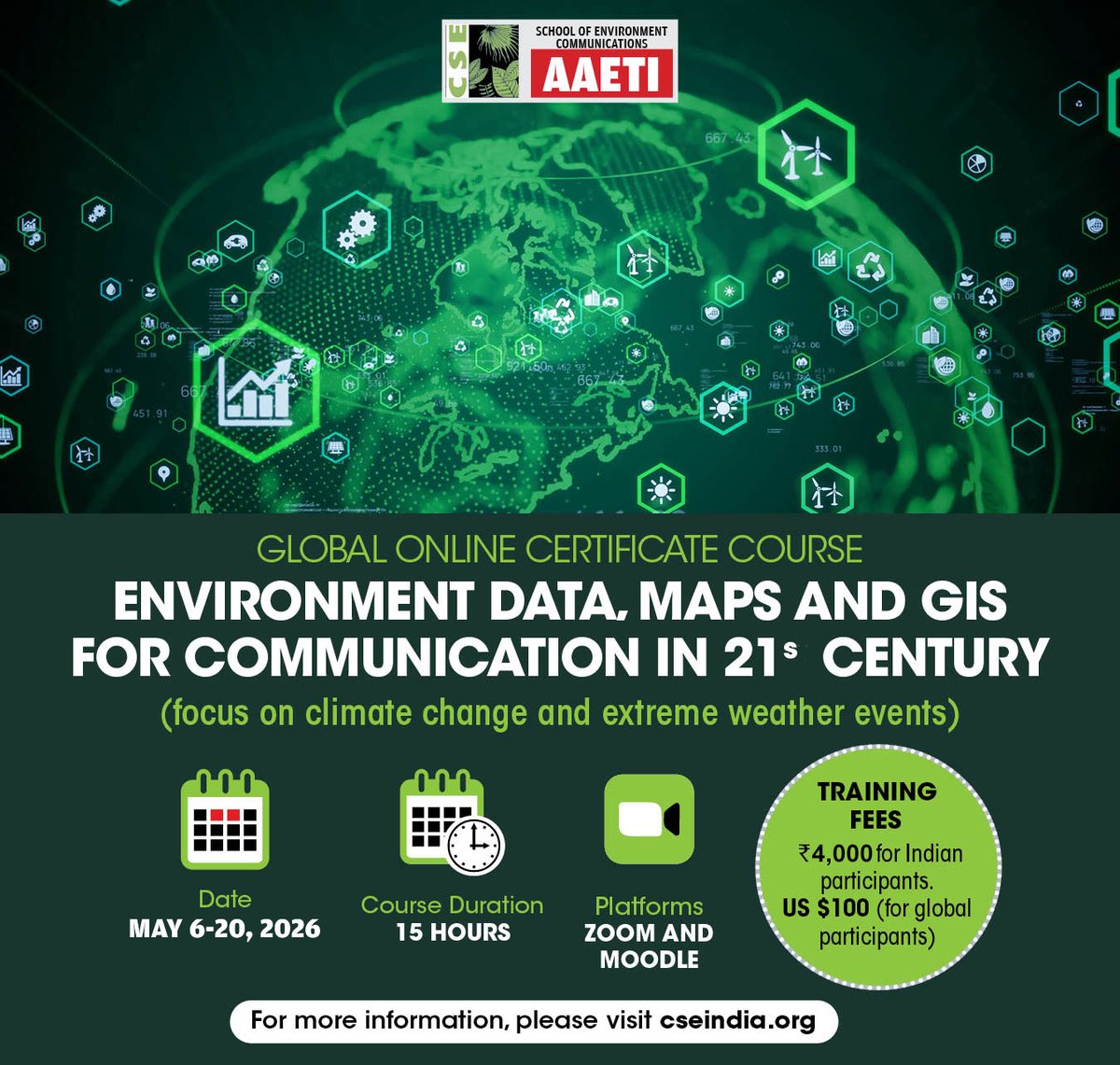
Build future-ready skills with CSE’s Global Online Certificate Course on Environment Data, Maps and GIS (Geographic Information System) for Communication in the 21st Century.
This course is designed to help students, young professionals and practitioners use data visualisation, mapping and GIS tools to strengthen careers and create impact.
Applications are now open. Apply today: https://t.co/xZjszK2z6o
How do you make environmental data easier to understand? We believe maps and visual tools can bridge that gap.
CSE’s Global Online Certificate Course on Environment Data, Maps and GIS is now open for registrations.
This is one of our flagship training programmes, designed for professionals, researchers, and students looking to strengthen their skills in spatial analysis and communication.
Through this course, you will learn how to:
• Work with environmental datasets
• Use GIS tools for analysis and mapping
• Communicate insights effectively through visualisation
If you are working at the intersection of environment, data, and policy, this course is for you. All you need is a computer/laptop and a high-speed internet connection.
🔗 Register here: https://t.co/xZjszK2z6o
If you have bought a car after April 2023, you are mostly in the clear. Those cars are built with materials designed to handle #E20 but what about the million of older cars already on the road?
@AnumitaRoychowd explains how 20 per cent Ethanol Blended Petrol will affect your vehicle, and what it could mean for India’s existing fleet.
Watch now: https://t.co/sNbgX3DhMw
New episode of the Sunita Narain Show is now out!
The latest episode tackles an "inconvenient reality". We know that humans are destroying the habitats of wild animals and doing much more to push them out of forests in search of easy food and prey. This conflict is also, in part, a consequence of successful wildlife protection that has increased animal numbers. But this cannot be an excuse to look away from desperate plight of farmers.
So how do we strike a balance between wildlife protection and the survival of communities on the frontlines?
▶️ Watch the full episode in the @down2earthindia channel: https://t.co/4ZI17llZNY
Read the editorial by @sunitanar here: https://t.co/y1o4AJ5AkC
Happening next week! @CSEINDIA, in collaboration with @tatatrusts, invites you to a webinar exploring the challenges faced by #WASH (Water, Sanitation and Hygiene) systems in villages transitioning to urban administration.
The discussion will be grounded in CSE’s study of peri-urban Bijnor (Uttar Pradesh), highlighting governance and economic factors influencing service delivery.
We will also explore what it takes to build inclusive, resilient, and sustainable WASH systems in the face of rapid urban expansion.
Sign up now: https://t.co/SUTN6fR8Ah
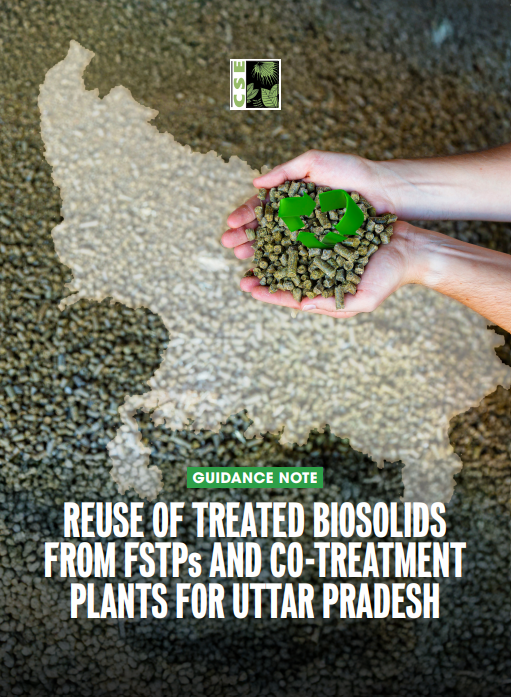
Just released: Reuse of Treated Biosolids from FSTPs and Co-Treatment Plants for Uttar Pradesh
Our new report looks at how treated biosolids from faecal sludge treatment plants (FSTPs) and co-treatment facilities in Uttar Pradesh can be safely reused, and how urban local bodies (ULBs) can make this shift happen.
The document also explores potential applications, policy frameworks, existing challenges, and practical recommendations to foster a circular economy.
Get your copy here: https://t.co/2fpcS7BPgd
Uttar Pradesh to adapt ambitious water reuse policy, with @CSEINDIA providing crucial technical support
New policy by India’s largest state signals a paradigm shift from conventional ‘treat-and-dispose’ practices to a circular economy approach, where wastewater is recognised as a valuable resource
https://t.co/8rHLDn06mj
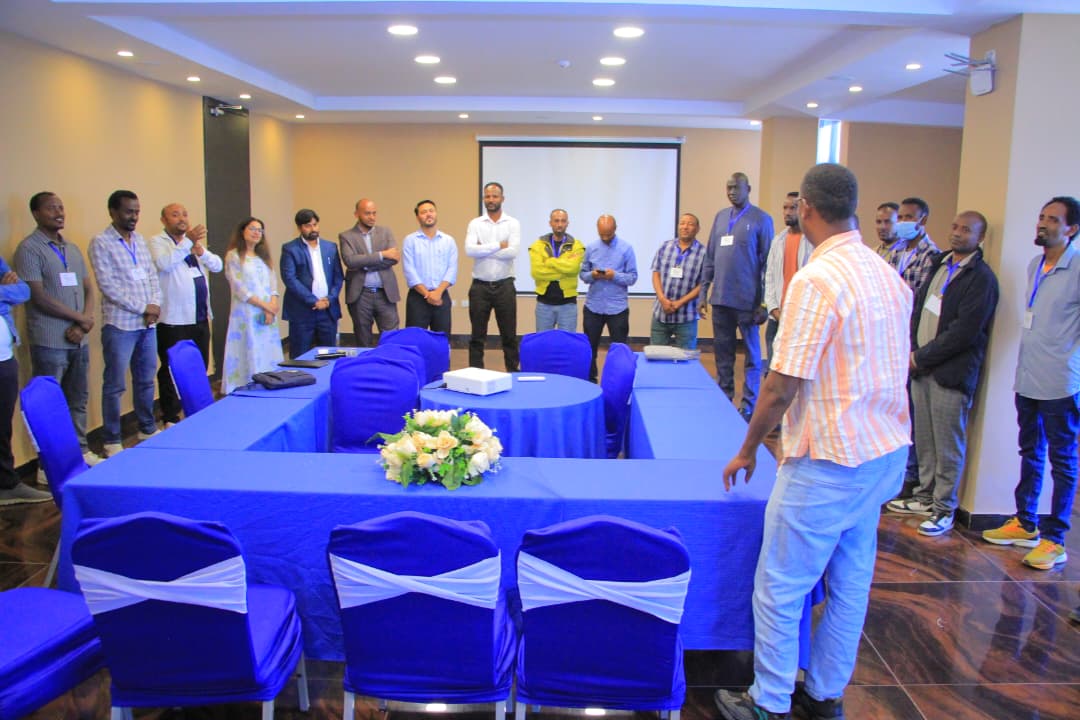
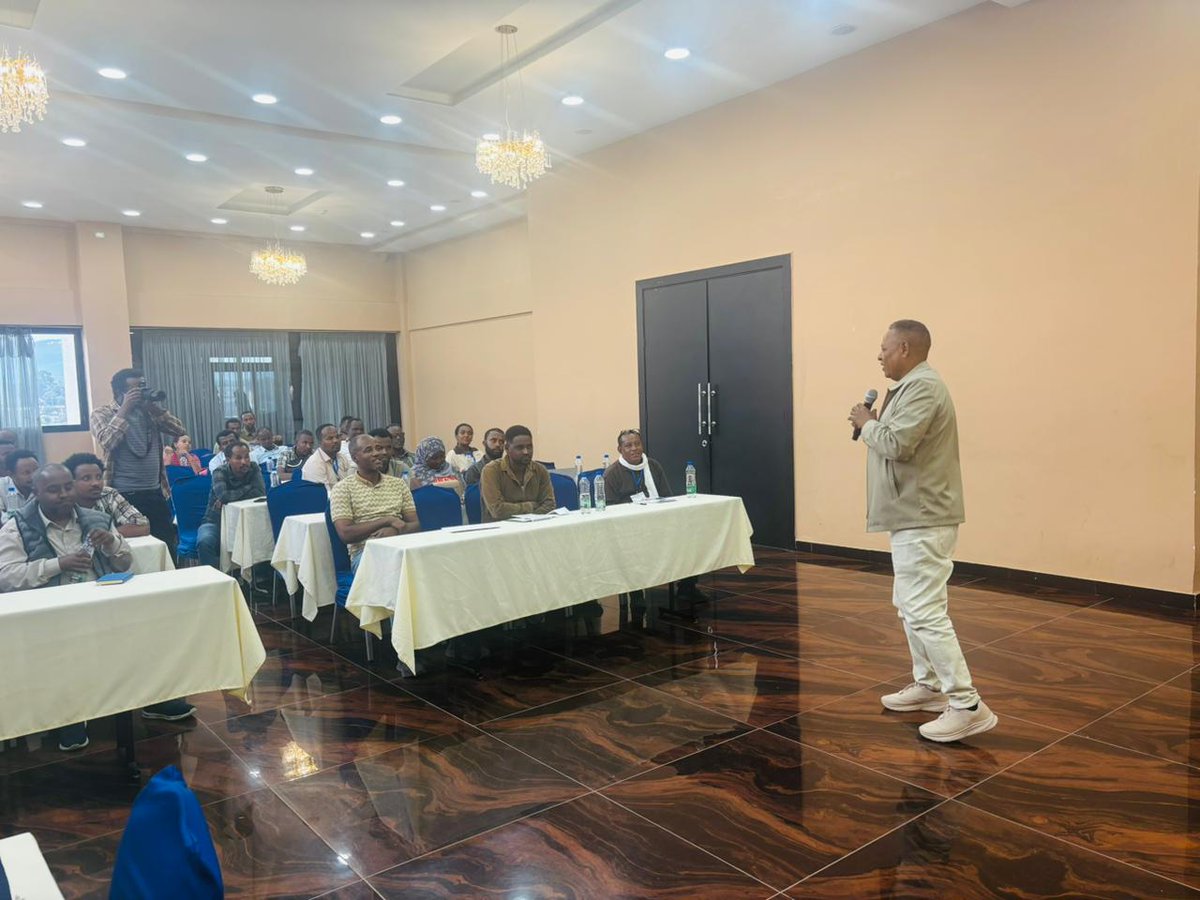
Ethiopia’s rapid urbanisation is putting increasing pressure on already stretched urban water and sanitation systems. A large share of the population still relies on on-site sanitation, while wastewater treatment infrastructure remains limited.
We are glad to have 55 participants from multiple cities across Ethiopia, especially from towns where Faecal Sludge Treatment Plants (FSTPs) are coming up. This makes the training highly relevant and timely, as these systems will soon require operational capacity on the ground.
The sessions kicked off with an ice-breaker that got people talking about their on-ground experiences and challenges.
Discussions with utility officials highlighted an important point: building infrastructure is just one part; strengthening operations, maintenance, and institutional readiness is equally critical.
The initial sessions helped build a common understanding around FSSM concepts, current practices, and the importance of structured O&M systems for long-term functionality of treatment plants.
Looking forward to the next sessions as we dive deeper into technical operations, safety practices, and real-world challenges in managing treatment systems.
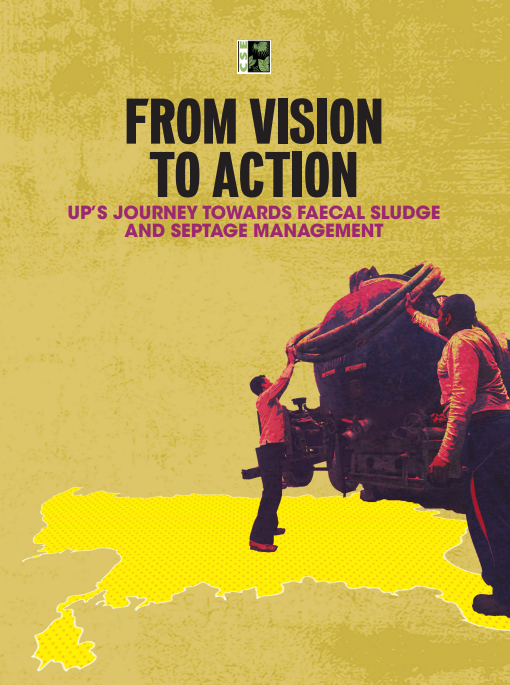
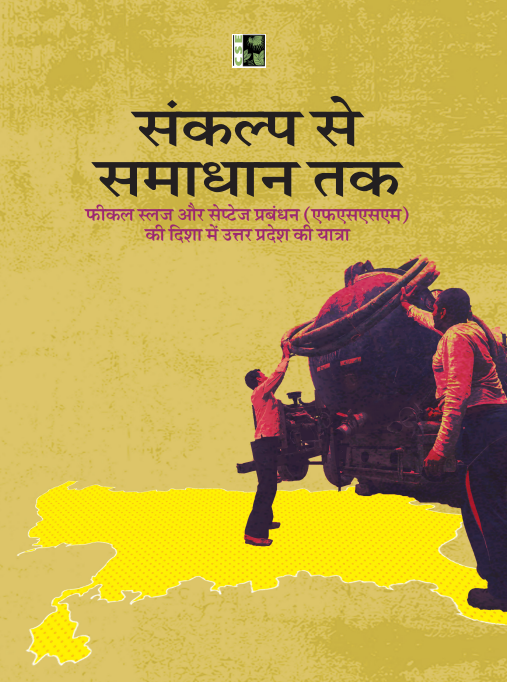
📢New Report Out! From Vision to Action: Uttar Pradesh’s Journey Towards Faecal Sludge and Septage Management
Our new report captures how the Urban Development Department, Government of Uttar Pradesh, has led the state’s transition from policy vision to on-ground implementation of faecal sludge and septage management across 56 towns, in partnership with CSE and other stakeholders.
The report also documents the lessons from this journey, starting from policy development and infrastructure creation to operational challenges and service delivery improvements. It also highlights areas that require continued focus to ensure sustainable and citywide sanitation services.
Read the full report:
In English: https://t.co/4AO40zIaIu
In Hindi: https://t.co/ZDu8798fp9
CSE’s School of Water and Waste invites you to an advanced training programme, ‘Reuse of Treated Water: Preparation of State and City Level Action Plans’.
The three- day training programme begins on March 11, 2026 at our training facility, Anil Agarwal Environment Training Institute. Location: https://t.co/FmDRv0fzbv
What’s in it for you?
- Learn to develop state and city-level reuse of treated water action plans
- Engage with experts and CSE’s latest findings
- Holistic understanding of the reuse of treated water in urban sustainability and climate resilience
Last Date to Apply: February 27, 2026
Note: We have limited seats for full and part scholarships.
To know more about the training and to register, visit:
https://t.co/3STBJPcFuF
The Water Programme at the @CSEINDIA yesterday organised a state-level workshop in Jaipur on strengthening the rural water sources across Rajasthan. The meeting was organised in collaboration with @WatershedRaj, @NITJaipur and @tatatrusts. More than 100 participants from government departments, academic institutions, non-profits and research organisations joined the discussion.
The workshop was inaugurated by @Suchak2001, Director, Water Programme, CSE. @lakewarriors, Senior Programme Manager, CSE set the context by linking climate change, water (mis) management and water security.
Sushila Yadav, Additional Director (GIS & Planning, Facilitation, and Coordination) talked about the successful initiatives in Rajasthan on watershed development and restoration. She emphasised the role of monitoring, inter-departmental convergence and the need to harness increased rainfall due to climate change for the benefit of communities through better preparedness.
Devashree Purohit (Tata Trusts) spoke about strengthening the partnership with CSE to address source sustainability and greywater management, leveraging CSE’s expertise while working closely with communities to build sustainable models.
The workshop also brought together key experts and discussants, including Ashok Kumar (@RajasthanPhed), Dr. Mahender Choudhary (MNIT), @ruchiniz (@UNICEF, Rajasthan), Dr. Shailendra Singh (@CGWB_CHQ), @Pradee_K_Mishra , @Swati13488, and @Vivek_s011 (CSE).
@DoWRRDGR_MoJS
Centre for Science and Environment (CSE) is conducting a state-level orientation workshop jointly with the Central Ground Water Board (@CGWB_CHQ), Northern Region, Lucknow on source sustainability and greywater management in the rural regions of Uttar Pradesh.
The workshop will bring together stakeholders from the rural water sector to discuss the state of drinking water sources and greywater management in the state, while building capacity on practical, scalable solutions for a safer and more secure water future.
To know more about the workshop, visit: https://t.co/MG7DNTvmao
We kicked off 2026 the CSE way, amid green trails, open gardens, music, and laughter at our AAETI campus in Nimli.
From dancing together to singing by the bonfire, and standing united in the fields, it was a joyful reminder of who we are and why we do what we do.
We step into 2026 recharged, connected, and ready to take on environmental challenges with renewed purpose.
Here’s to community, commitment, and making this year count. 🌍
📢New Report on Resource Recovery in Uttar Pradesh’s Sanitation Sector.
Our latest research “Reuse of Biosolids and Treated Wastewater: Assessing Potential and Practices in 56 FSSM Cities of Uttar Pradesh” is now out.
Despite significant investments in faecal sludge and septage management (FSSM) infrastructure across the state, a crucial opportunity remains under-realised: turning treatment by-products into valuable resources. Our study evaluates outputs from 59 FSSM facilities and provides an evidence-based assessment of how biosolids and treated wastewater are currently managed and reused.
Key insights from the report:
- Nearly 71,000 quintals of biosolids and approximately 200 million litres of treated effluent are generated annually, yet about 60 per cent of cities report zero reuse.
- Reuse practices that do exist are uneven and ad hoc, ranging from landscaping and on-site effluent use to informal distribution of biosolids.
- Barriers to reuse include the absence of regulatory guidelines, limited testing infrastructure, inadequate storage & handling systems, and low treatment plant utilisation.
- The report outlines practical recommendations, from regulatory frameworks and quality testing to infrastructure upgrades and market-based incentives, to catalyse safe, scaled resource recovery and circularity in sanitation services.
Read and download the full report here: https://t.co/9tgCbfwd1i
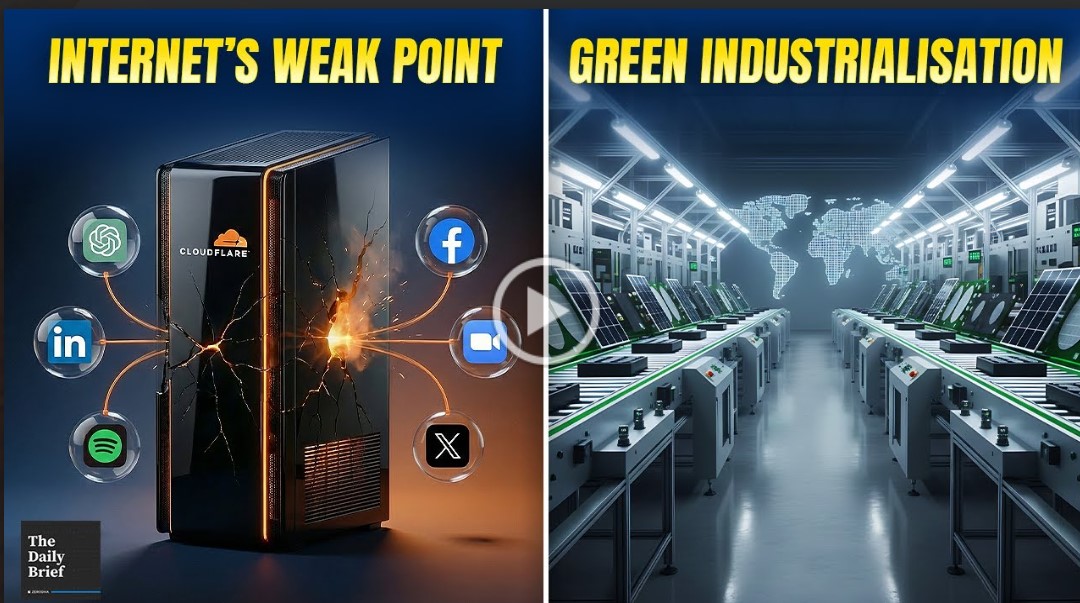
Our new CSE report, Clean Technology Manufacturing: Navigating the Green Industrialisation Dilemma, authored by @aygoswami and @TrishantDev, has sparked important conversations, and we are delighted to see it covered by The Daily Brief by @zerodha.
Their explainer distils the core issue we examine: What does green industrialisation look like for the Global South when clean-technology manufacturing is already a story of dominance, and when developing countries face steep barriers, from high capital costs to limited policy space?
Watch their coverage:
https://t.co/xL0LJe2ihw
Read the blog:
https://t.co/BHe2pIVzRr
We appreciate the Zerodha team for engaging with our findings and helping broaden public understanding of the clean-tech manufacturing landscape.
Download the full report here: https://t.co/KboWD1RzTt