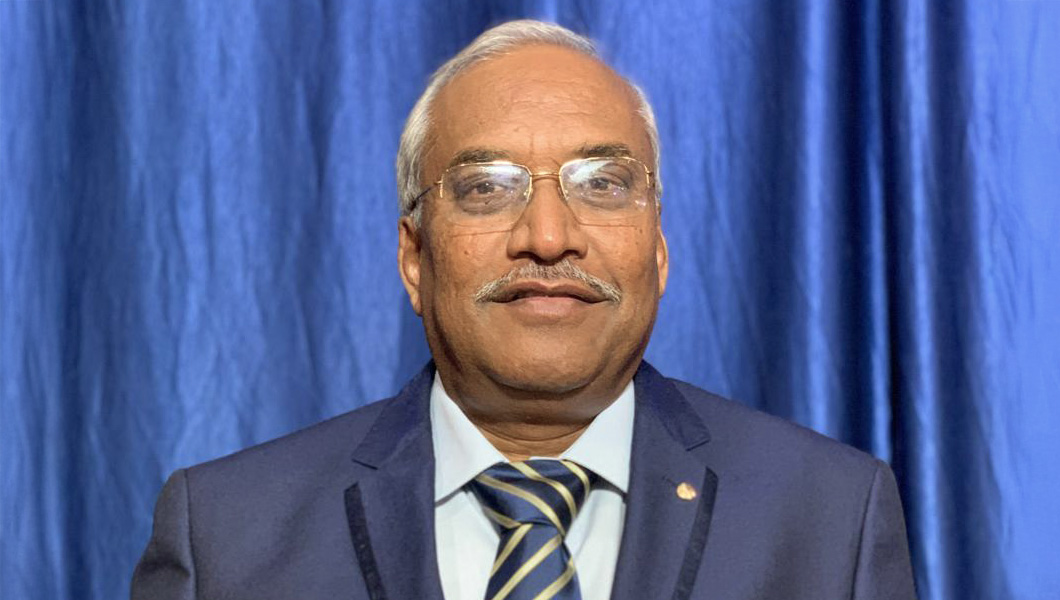
RIP #bunkerroy. Your work to build a better and more inclusive world where technology meets the needs of the poor and enables change is more important today than even yesterday. It will live on
Sanjit 'Bunker' Roy, founder of Barefoot College and a pioneer in rural development, women's empowerment, and sustainability, passes away at 81. His legacy of grassroots innovation and self-reliance will continue to inspire generations https://t.co/PJNZjcAQf7
🖋️ @NanditaBanerji_
#BunkerRoy #RuralDevelopment
Delhi’s early-winter air pollution has worsened in 2026, with higher particulate levels than in previous years.
A new analysis by the @CSEINDIA, released today, finds that emergency traffic curbs introduced by the government have not been enough to ease the pollution burden.
"Diwali pollution is an annual tipping point, but elevated particulate levels before the festival this year show that baseline pollution is higher than in previous years," says @AnumitaRoychowd, executive director, Research and Advocacy, CSE.
Among local sources, transport remains the largest contributor. While the share of stubble smoke rose during this period, severe pollution episodes continued even when farm fire contributions dropped.
"Delhi’s pre-winter pollution in 2026 was generally higher than in 2025, except for a brief late-September drop caused by rain. In both years, pollution surged in the days leading up to Diwali. However, the overall toxic burden during this pre-festive week was significantly worse in 2026 than in previous years," says @sharon_kour, deputy programme manager, Urban Lab, CSE.
Read the full analysis and press release: https://t.co/KZZ7uzjJP1
Can Delhi really fight air pollution by shutting down the city every winter?
GRAP was meant to be an emergency response, not a permanent solution, says @sunitanar
In the latest episode of The Sunita Narain Show, she explains why Delhi's pollution playbook needs to change.
Watch now: https://t.co/y5IbWRp2fs
#TheSunitaNarainShow #GRAP #AirPollution
COP31 has officially kicked off in Antalya, Türkiye!
CSE's @AnumitaRoychowd is already on the ground, with @aygoswami and @SehrRaheja joining her next week.
CSE will be part of several discussions and engagements throughout the summit. Visit our dedicated COP31 page to check the calendar of our engagements and follow our updates from Antalya: https://t.co/w47teudzOk
#Opinion | Pollution control needs action, not bans
#Delhi's winter #Pollution plan relies on restrictions, while gaps in public transport and cleaner alternatives remain unaddressed, argues @sunitanar.
https://t.co/II3l7YZou3
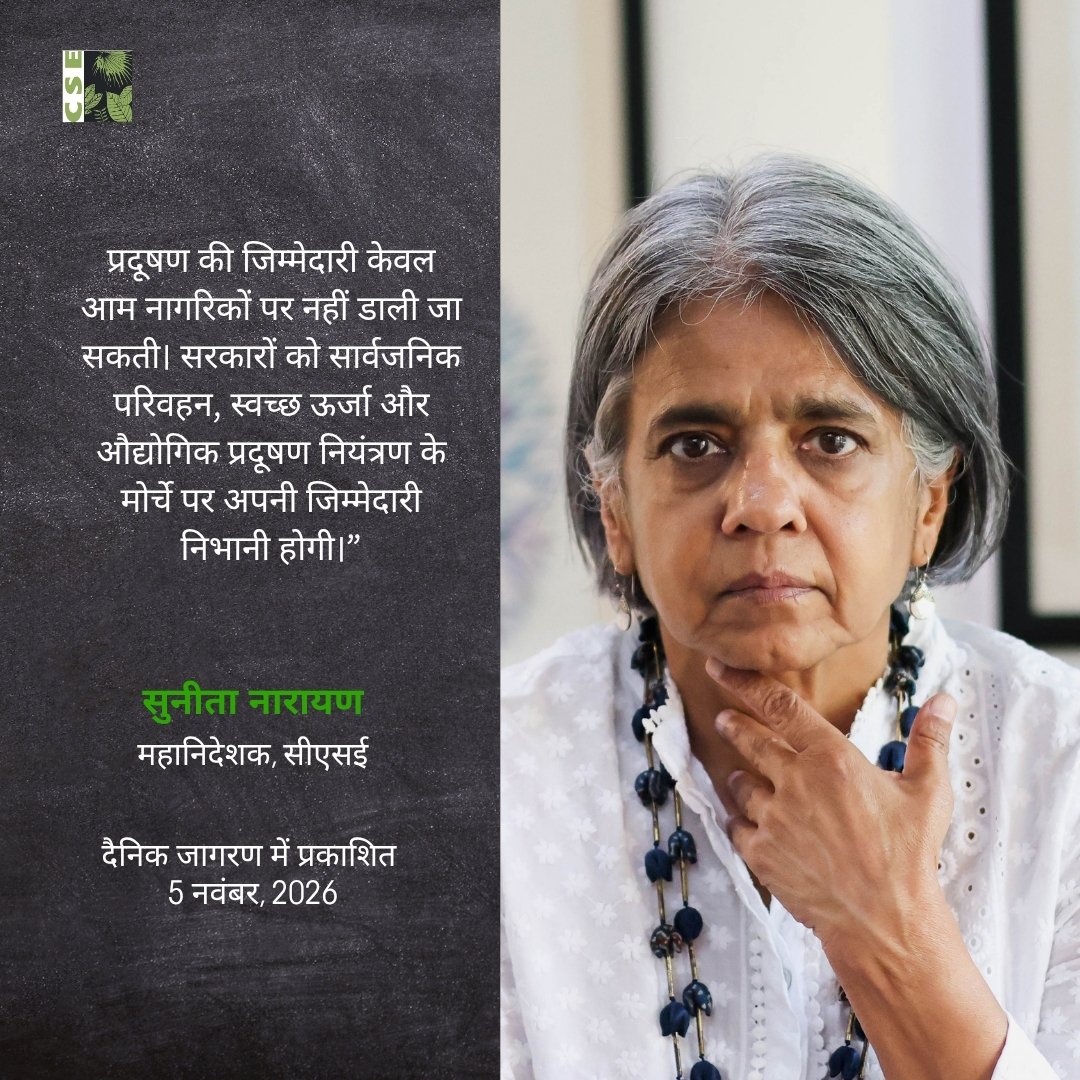
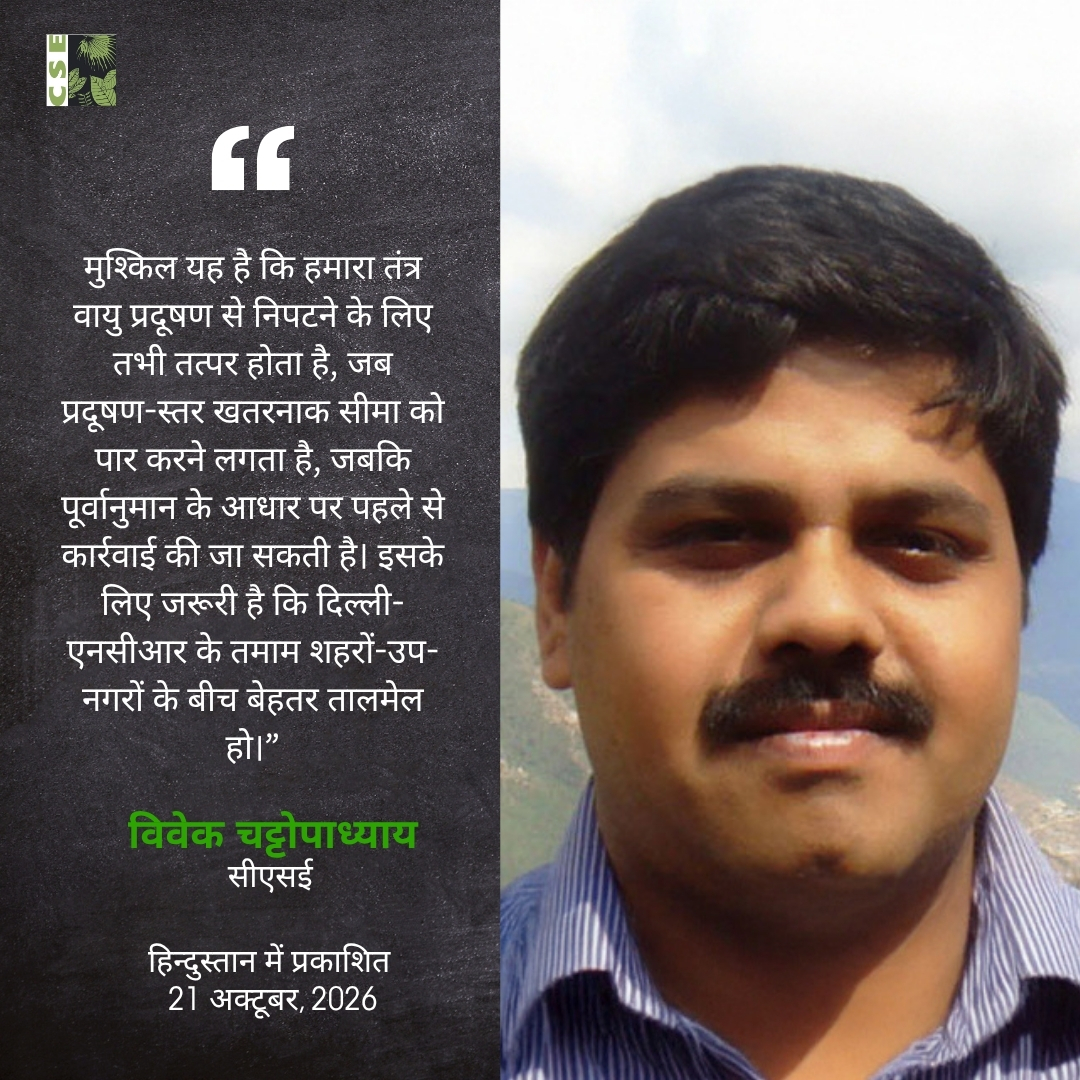
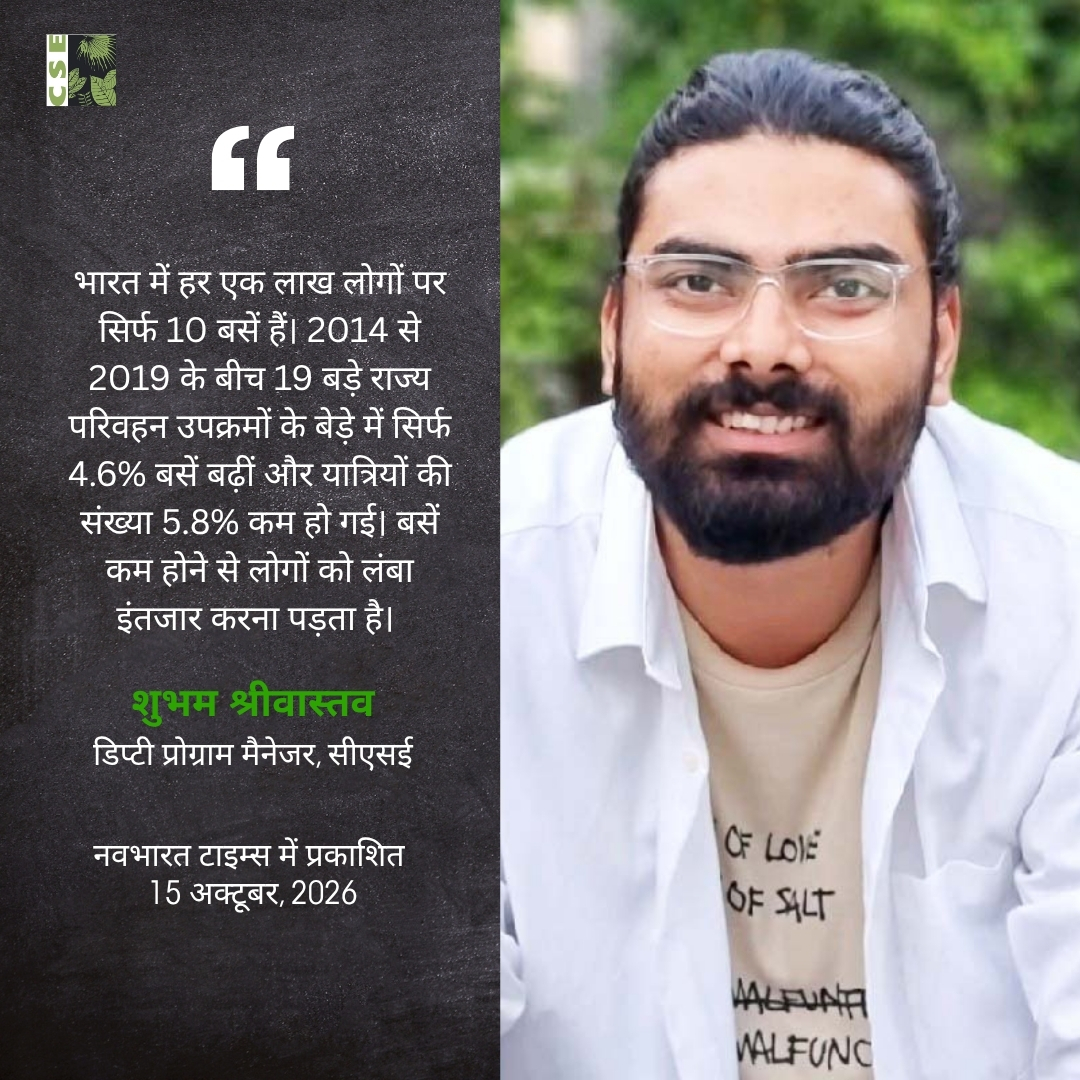
CSE's @sunitanar@VivekChatto@Shambhavi250992 and @shubham_srvstv have written for four Hindi media publications, sharing their perspectives on different aspects of air pollution and the steps needed to address it.
Read their contributions in @JagranNews@Live_Hindustan@prabhatkhabar and @NavbharatTimes.
Here are some excerpts from their articles. 👇
Vivek for Hindustan:
https://t.co/iyQbWq1B7f
Shambhavi for Prabhat Khabar: https://t.co/iY2NYsSasV
Shubham for NBT:
https://t.co/TzMST4zGF0
‘There will be more low-pressure area days in post monsoon season of 2026’
K J Ramesh, former director-general of the IMD, talks to @bluewrit about the role of El Niño and Indian Ocean warming in driving above-normal low-pressure days and cyclogenesis in the Bay of Bengal
https://t.co/MJ8Hv99pLw
Yesterday Delhi govt winter pollution plan kicked in. But is pollution control about work stoppage, which inconveniences people and is impossible to enforce? I ask this as one of the architects of the Graded Response Action Plan (GRAP). My plea is that GRAP was never a substitute for year long tough action, which it has become today sadly. Our right to clean air will not be secured this way Pollution control needs action not shutdowns https://t.co/lh1dsRXD3o #
Kochi, you showed up in a big way! 💙
Fort Kochi Beach saw a fantastic turnout today, as about 100 student leaders from five schools participated in The Kochi Coastal Collective.
It was heartening to see the enthusiasm with which students took part in the clean-up, collecting litter along the shore and learning more about the problem of marine litter.
We were honoured to have @PriyankaG_IAS, District Collector, Ernakulam, grace the occasion and encourage this collective effort.
Organised by CSE, in collaboration with PLAN (Pupil Leaders Action Network), the initiative is part of CSE's Marine Marshals programme under the Green Schools Programme.
A big shout-out to all the students, schools, teachers and partners who made this morning such a success!
Swipe through for glimpses from the beach clean-up!
Incredible energy and work of groups working at the roots to conserve seeds and build livelihoods and in this age of #ClimateEmergency where farmers are the first victims
At the 6th Kisan Swaraj Sammelan for Eastern and North Eastern India, being held in Kolkata from October 29–31, CSE Director General @sunitanar spoke about the importance of soil health and the need to ensure food production remains economically viable without harming the environment.
She also spoke on the Indian perspective on climate change, addressing farmers, students and researchers on the challenges India faces.
The inaugural session brought together Seno Tsuhah, food sovereignty activist from Nagaland; Dr Srijit Mishra, economist from Hyderabad; and Pushpa Khairwar, seed conservator from Bihar. @kkuruganti, co-convenor of the Alliance for Sustainable and Holistic Agriculture (ASHA), was also present.
The Sammelan brings together participants from across India to discuss sustainable agriculture and food sovereignty.
#KisanSwarajSammelan2026
The world is on fire. But who will put out the flames?
The youth are angry, and their anger is a mirror held up to us. Caught between rising temperatures, AI-driven job uncertainty and an economic model that works for the super-rich, they can see the writing on the wall.
It's time to get our heads out of the sand, writes @sunitanar https://t.co/RYvbHmQKx0
#ClimateCrisis #ClimateJustice #Inequality
CSE invites you to the launch of the fifth edition of "Climate India 2026: The Annual Assessment of Extreme Weather Events", a unique e-atlas examining the scale, spread and impacts of extreme weather across India.
Drawing on five years of daily tracking, the assessment examines extreme weather events and the resulting loss and damage during the first nine months of 2026, placing these findings in the context of trends over the past five years.
Join Sunita Narain, Richard Mahapatra and Kiran Pandey as they discuss the findings and what they mean for India's climate preparedness.
Date: November 4, 2026
Register now: https://t.co/W1x2DrFLB4
Why don’t people rely more on buses and the metro?
India has just 10 buses for every 1 lakh people. Limited bus services, long waiting times, poor last-mile connectivity and unsafe footpaths can make public transport difficult to access and use.
In this article published in @NavbharatTimes (NBT), @shubham_srvstv of @CSEINDIA examines why public transport often fails to become the preferred choice for daily commuters.
Along with increasing the availability of buses, cities need to improve service frequency, strengthen connections to metro stations, create safer walking infrastructure and manage private vehicle use.
Read the full piece 👇
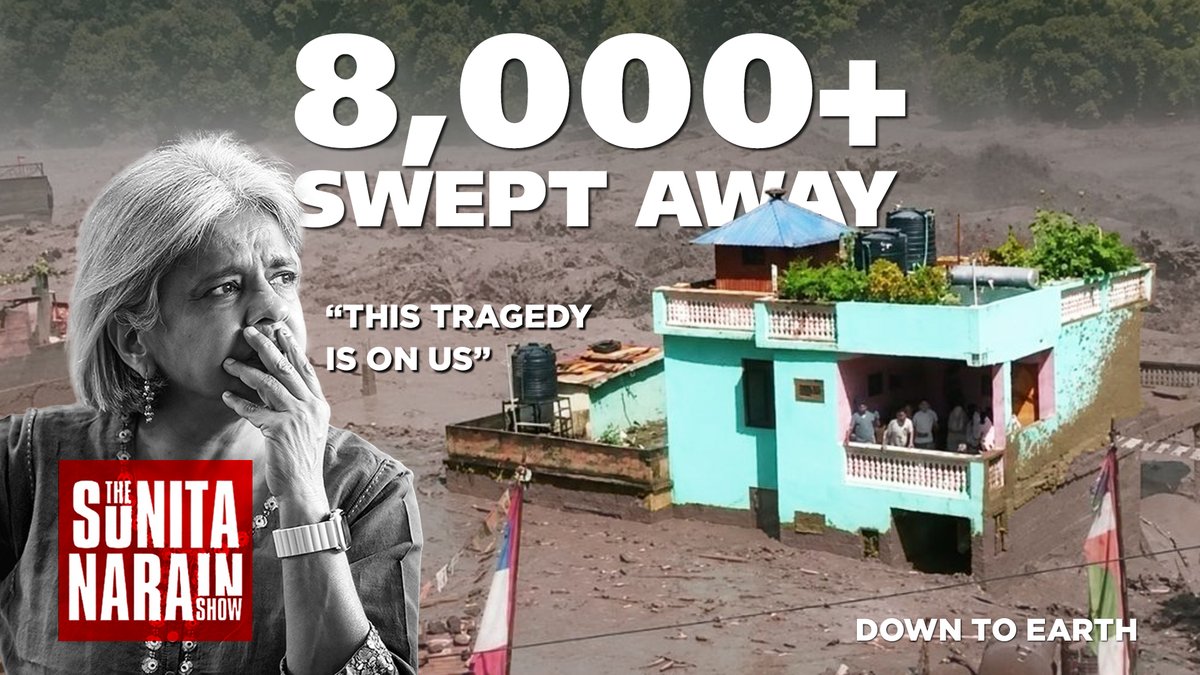
The recent tragedy in Nepal, where floods and landslides have claimed lives and left thousands missing, is not just a story of extreme weather or climate change.
It is also about the way we continue to treat the Himalayas, believing that we can re-engineer fragile ecosystems without consequences.
In her latest episode of the Sunita Narain Show, she asks us to confront this mindset and rethink the way we develop the Himalayas.
Watch the full episode in @hindidown2earth's Youtube Channel: https://t.co/XPl3uhLq5p
दस साल पहले आज ही के दिन यानी एक अक्टूबर 2016 को डाउन टू अर्थ हिंदी का पहला अंक प्रकाशित हुआ था। तब से यह सफर अनवरत जारी है। आप इस सफर के हमसफर बने, आपका शुक्रिया। यह सफर जारी है, उम्मीद है कि आप भी साथ नहीं छोड़ेंगे। शुक्रिया...
The Himalayas are sending us a message, loud and clear. But are we listening?
As floods and landslides devastate the region, Sunita Narain @sunitanar warns that climate change and reckless development are turning fragile mountains into disaster zones.
“We really believe that we can continue to do what we do, without consequences.”
Change your mindset. Change or perish.
Watch the latest episode of The Sunita Narain Show : https://t.co/VGo0RatHe8
#Himalayas #ClimateChange #NepalFloods #SunitaNarain
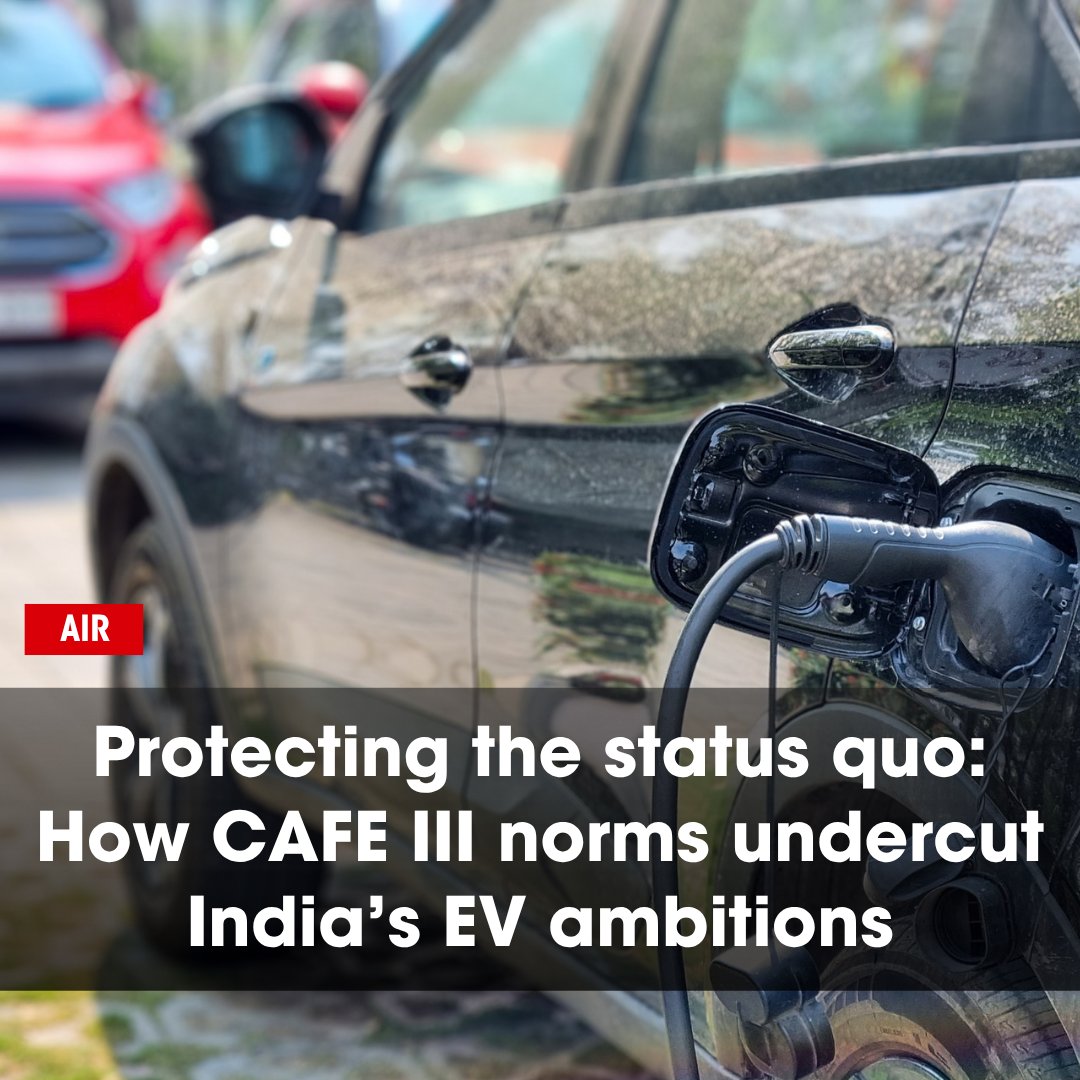
Are India’s new fuel-efficiency rules slowing the shift to electric vehicles?
The CAFE III norms could allow automakers to meet emissions targets on paper without substantial investment in EVs. Anumita Roychowdhury (@AnumitaRoychowd) examines how regulatory discounts and compliance credits risk protecting conventional vehicles at the expense of cleaner technologies.
🔗 Read the full analysis: https://t.co/N8tzHBotnf
#CAFEIII #ElectricVehicles #EVPolicy #CleanMobility