Every LLM reads your input fast (prefill) and writes the answer slow (decode)
For classification, extraction, and summarization, the answer is already in the context you provided. So we built models that skip the slow part to pass the consistency and speed/cost savings on to you
You already gave the LLM the answer. So why is it writing it out from scratch?
Introducing a new AI model architecture: Constrained Decoding Models (CDMs)
LLMs were built to write. Most production workloads just need an answer: fast, consistent, and affordable.
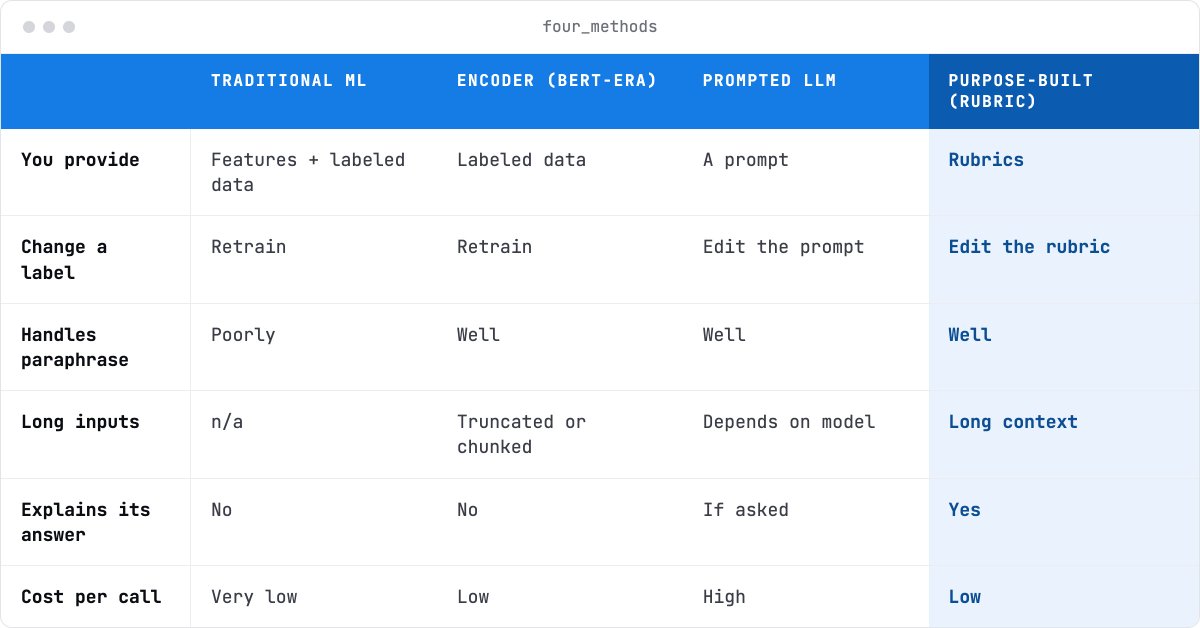
CDMs are purpose-built for 1 task each. They read your input once and skip the token-by-token generative loop that makes LLMs slow and expensive.
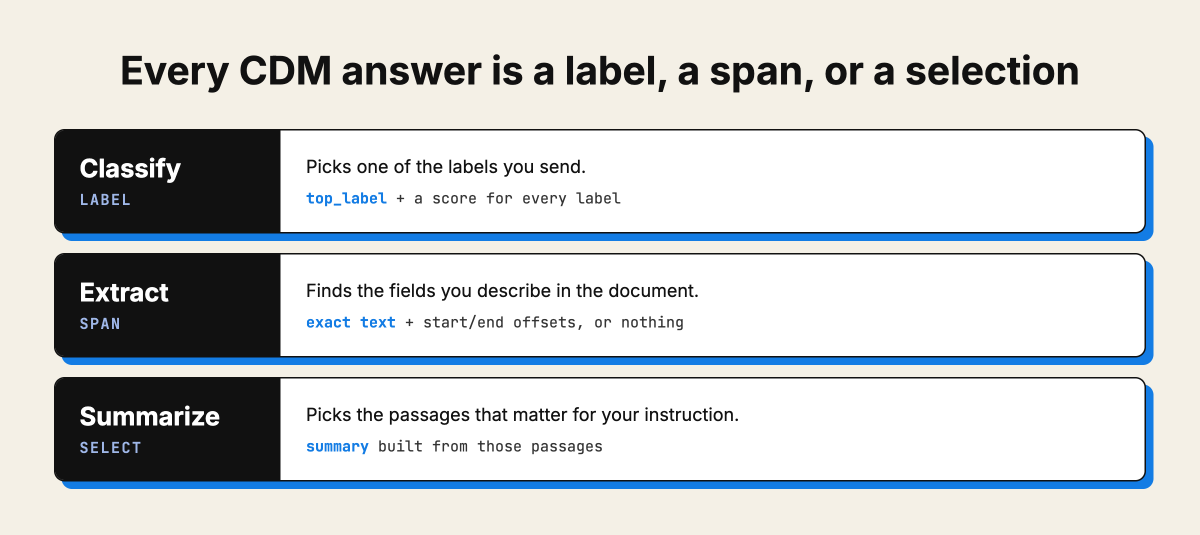
Not just a decision model, but a family of 3 CDMs live today:
• Classify: define your labels and get back a calibrated probability + reason for each. Used for routing, tagging, and intent detection.
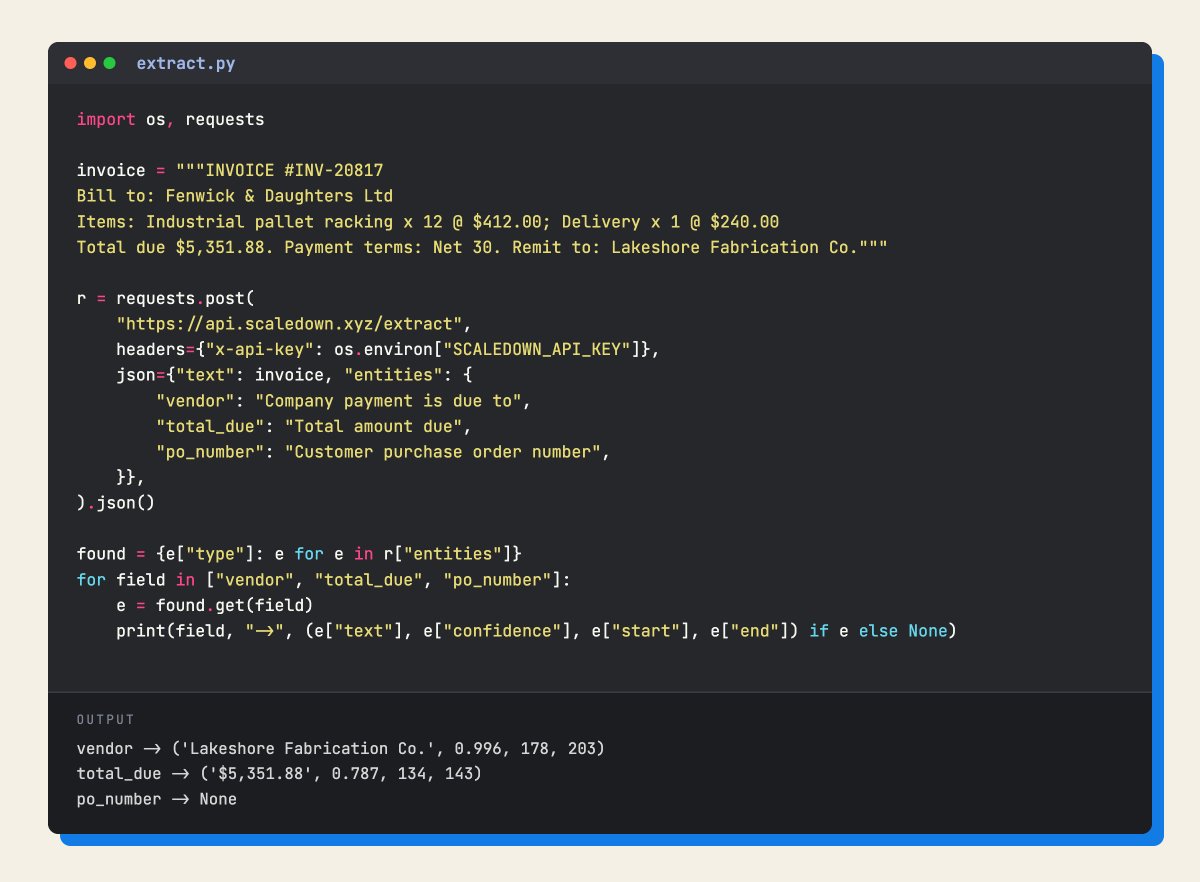
• Extract: describe the entities in natural language and get back well-formed JSON with confidence scores + citations. Used for web scraping, document processing, and PII redaction.
• Summarize: pass in long text, images, or PDFs and get back a consistent summary under 1,000 tokens. Used for context compaction, metadata generation, and transcript digests.
Built for production:
• 1M tokens of multimodal (text + image) input, 31x larger than Jev
• 77.2% on DecisionBench vs Jev's 72%
• 200x faster, 467x cheaper than frontier LLM APIs
• $0.05/M input tokens. Output is free (yes, even for summarize)
Live on your favorite platforms today:
@OpenRouter@vercel_dev@LiteLLM@LangChain@TrustedRouter@itsArthurAI@useRouterPlus
Get 50M input tokens for free (for the first 50 hours) at link below 👀
We profiled Jev's latency across 9,984 prompts to find its backbone.
Our answer: Qwen3.5-35B-A3B, an MoE
> Qwen's tokenizer tracks Jev's latency better than Jev's own token counts
> While self-identifying, Jev rejects DeepSeek and Gemma, but favors Qwen
> Its throughput tracks the closest with Qwen3.5-35B-A3B
ScaleDown Extract is now on OpenRouter
u describe the text fields u need and get each value back with a confidence score. try here: https://t.co/2XIDIS1Zlb
The Extractions API is now live in alpha on OpenRouter.
Use it to pull specific details out of text, images, and PDFs by describing the fields you need, like the names in an email or the total on a receipt, and get each one back as structured data.
Read the guide: https://t.co/PUmN7Glclt
at scaledown we always say "pick the right model for the job"
classification, data extraction and summarization need no open-ended writing, so they fit a constrained decoding model (CDM), whereas calculations go to code, and writing to an upset customer goes to a generative model
code and results for each of the 3 in the blog
https://t.co/K0CuObraVk
@scaledown_team pulled the value straight off the page, exactly as written, 98 times out of 100 whereas gemini did it 56 times, haiku 42, and gpt-5 nano 39
the LLMs kept changing what they returned so $41M came back as 41000000, $49 as 49, 250,000 as 250000
try it yourself:
https://t.co/HWcoNPiWyN
@scaledown_team beat every major model family we tested on accuracy: openai, anthropic, google, xai, deepseek, qwen, all of em
cheaper and faster on all 6, and on cost it’s not even close. now we’re coming for newer models
got a model u want us to go against? drop it below
https://t.co/bWhdZbjj5d
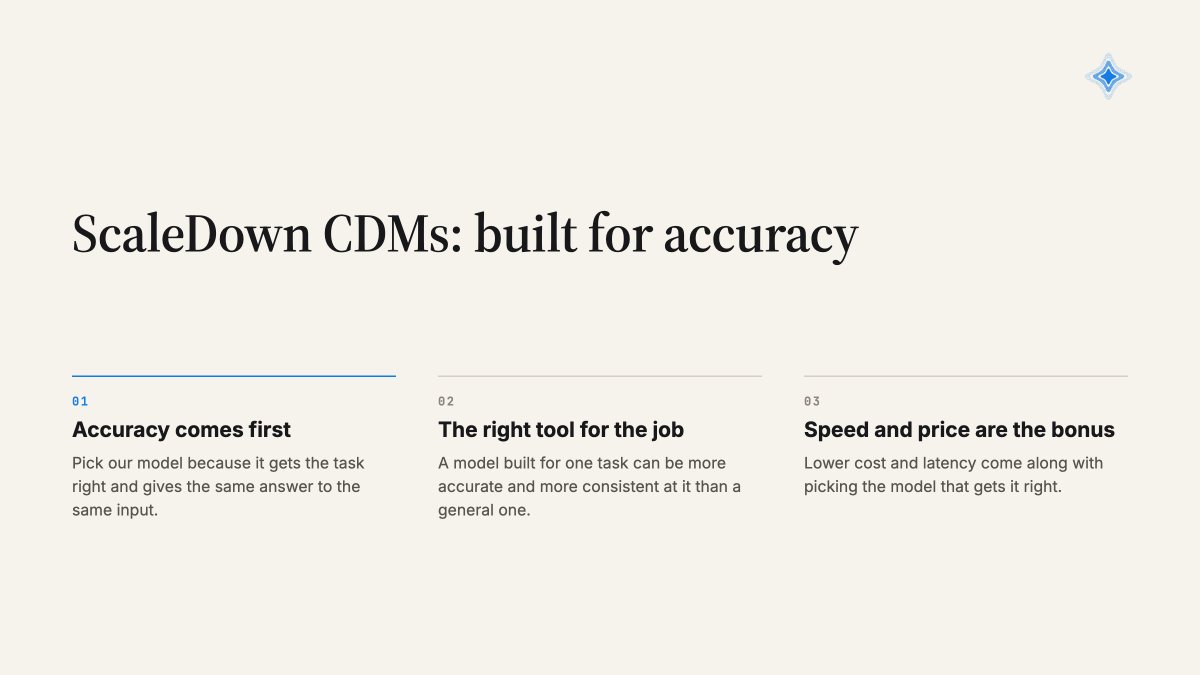
we optimize for one thing: did the model get it right?
speed and price kinda come as a bonus with @scaledown_team
more on this: https://t.co/QlckPXn40I
ScaleDown extract copied all 108 invoice fields in 6 languages exactly as written, whereas gpt-5-nano got 99 and claude haiku 5.5 got 105 only
setup: 6 supplier invoices in german, french, spanish, italian, dutch and japanese
6 fields each, named in english, and 3 runs per model
rule: a field only counted if it matched the invoice character for character
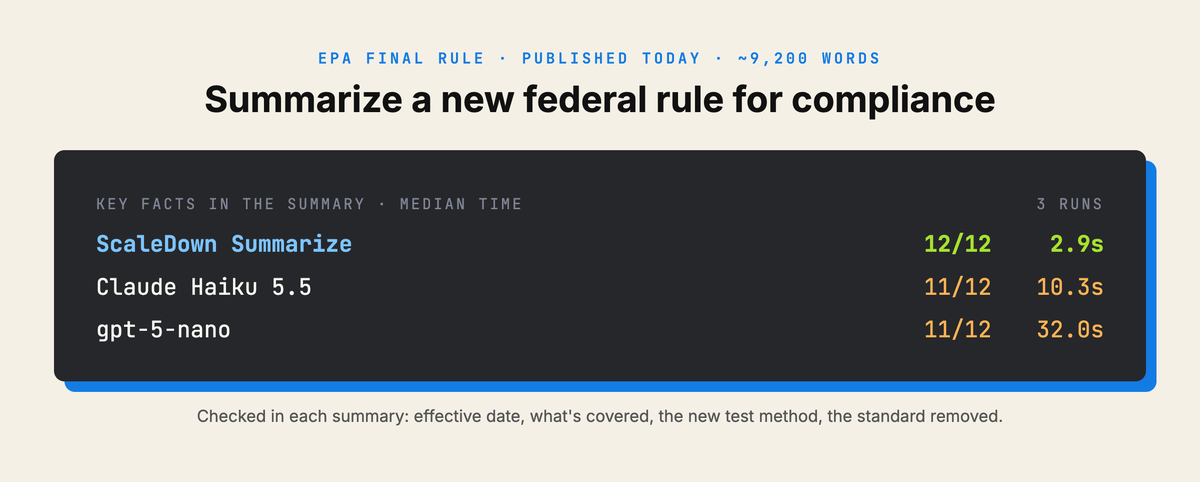
ScaleDown summarize read a 9,200-word federal rule and got every key fact on 3 out of 3 runs. 2.9 seconds whereas claude haiku 5.5 and gpt-5 nano both missed one while taking 10.3s and 32s respectively
the rule: a new EPA update on how furniture makers test wood, checked for the 4 things an importer’s compliance lead needs to know
scraping stuff every morning? point it at ScaleDown summarize and read the lines that matter the most: https://t.co/bYJWBlEElg
Our launch got nearly 2M views and 229 technical questions about Constrained Decoding Models, so we answered the 5 most asked in a blog:
1. What is a Constrained Decoding Model?
2. Where does the time in an LLM call go?
3. Can I trust Classify’s confidence score?
4. Isn’t Extract just grammar-constrained decoding with a new name?
5. How fast is Summarize on a long thread?
Full answers, graphs and code:
https://t.co/rrVoe4GKIa
More answers coming over the next few weeks.
a lot of u asked for extract on @vercel_dev AI Gateway, so here it is
model: ‘scaledown/scaledown-extract-1’
send it an invoice and name the fields u want, each value comes back with a confidence score and its exact character range in the doc
https://t.co/Z7cHLIVoP7
ScaleDown Summarize takes up to 1M tokens of text, images or PDFs.
You say who the summary is for in plain language and get back a consistent one under 1,000 tokens.
$0.05/M input, output is free.
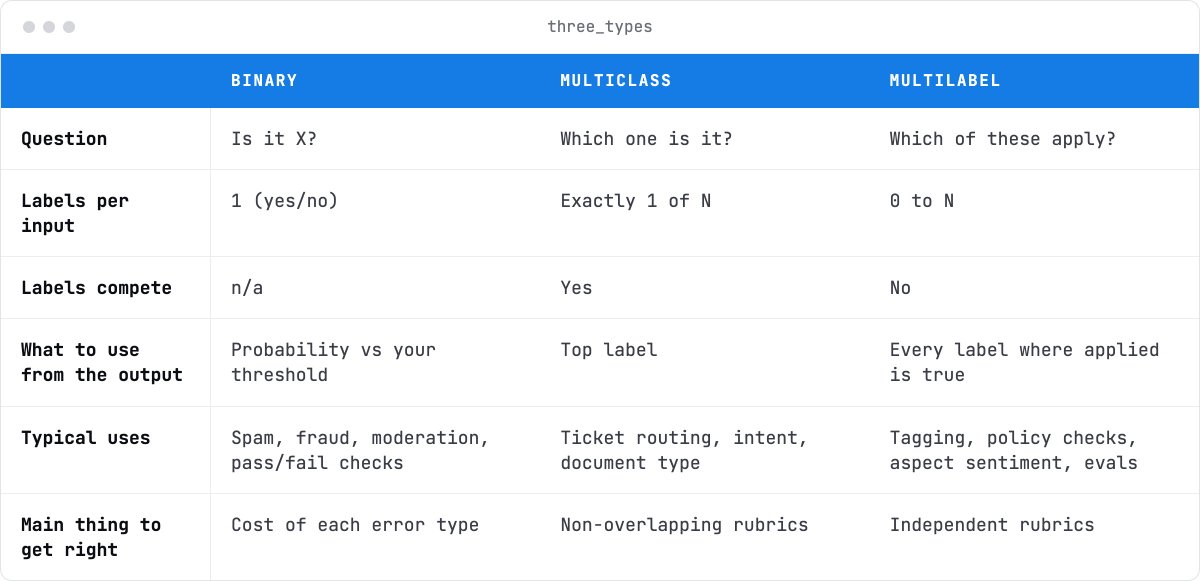
Jev, Laya, Span-01, ScaleDown Classify...everyone's talking about decision models
But classification has been around forever
We broke down the 3 types (binary, multiclass, multilabel) and how the tech evolved from word counts > BERT > LLMs > decision models
https://t.co/OpM3rcGOSv
$935 per million requests down to $1. that's what you'll walk away with, give us a real prompt from your product and we'll run it through what you use today, then through @scaledown_team
dev tool founders who want to lower AI costs, register 👇 https://t.co/p3YtALoJym
fine-tuning is the loosest term in ai rn
it only changes the weights and never the architecture, so ur still paying full model cost either way. whereas, task-specific changes the architecture itself, smaller, often encoder-only, built for one job
for the strongest systems we suggest using small model, and then fine-tuning on their data.
full breakdown on the blog 👉https://t.co/uurorswSQP