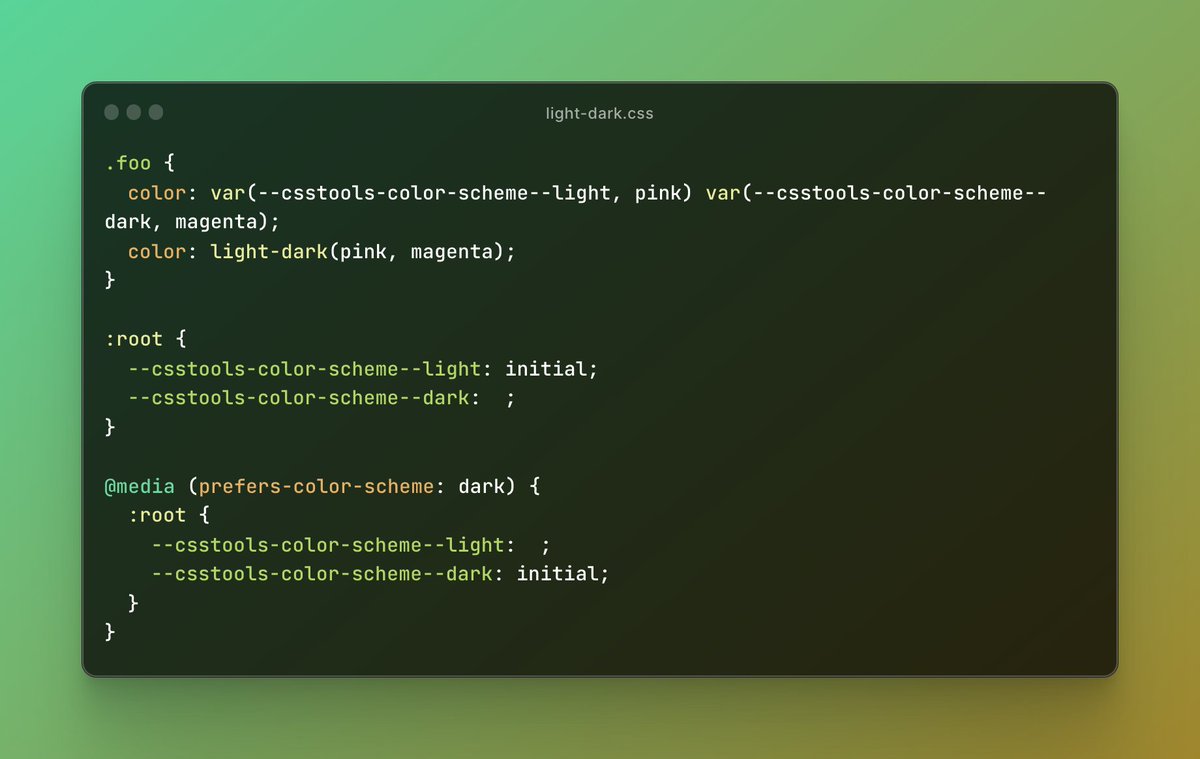
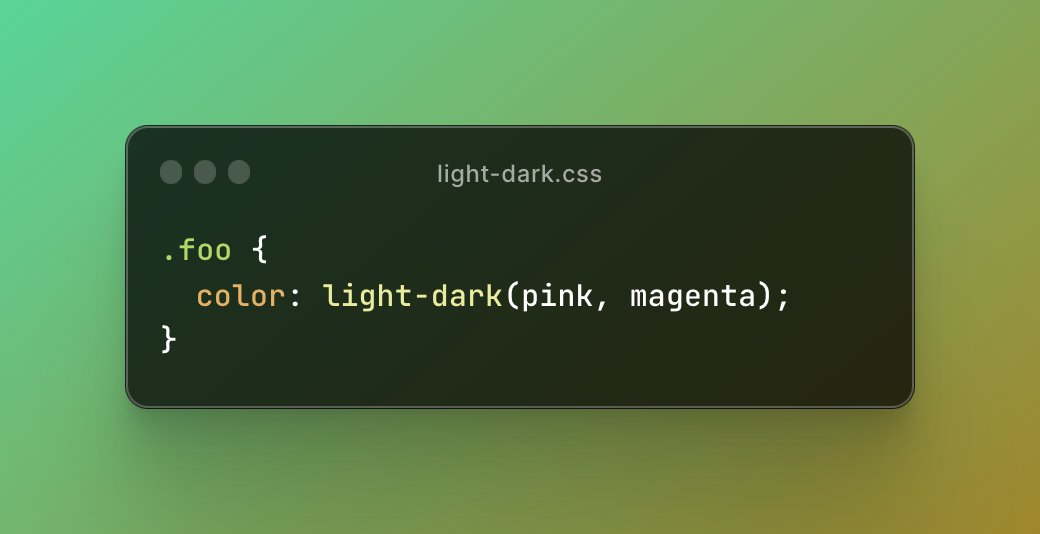
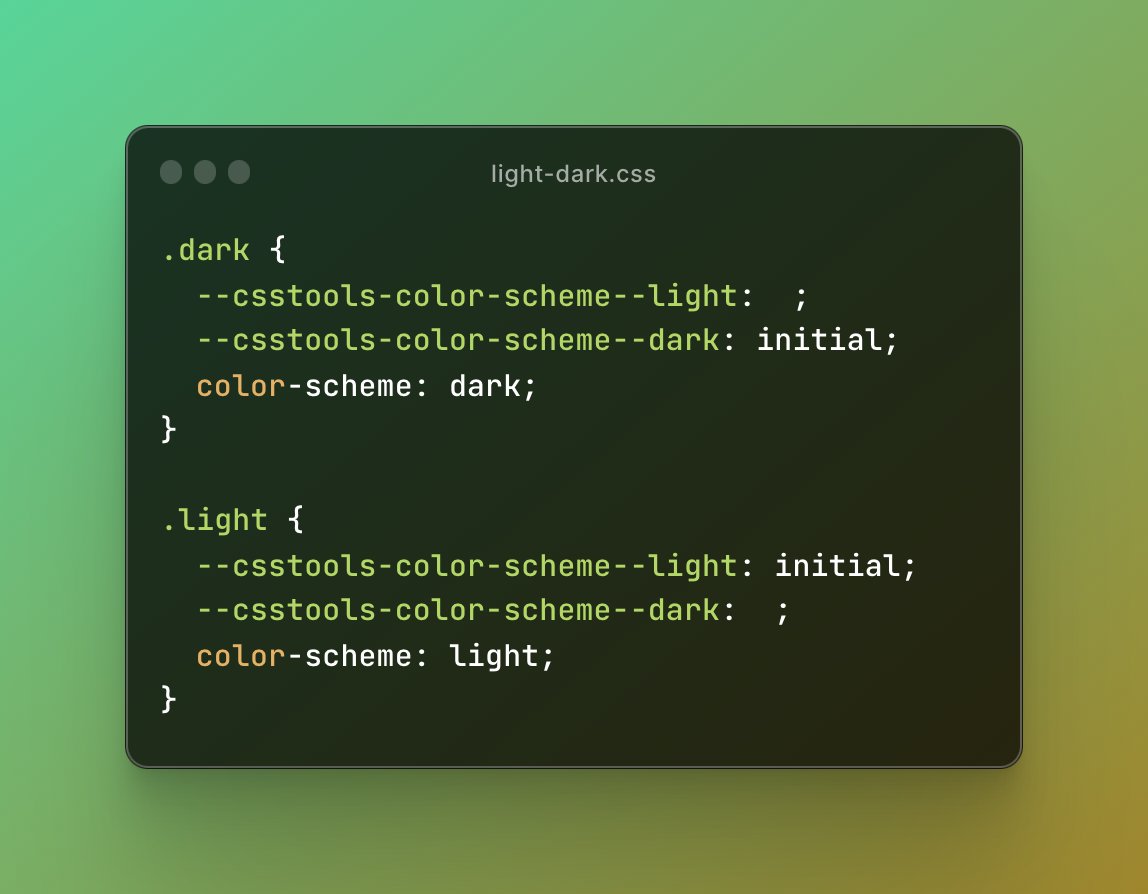
The fallback is quite fancy because the values toggle when the matched element will have a dark or light color scheme. It is not purely based on the media query.
To mimick this we inject space toggles each time you set a color-scheme property.
🎉 We just released @PostCSS Preset Env 9.2.0
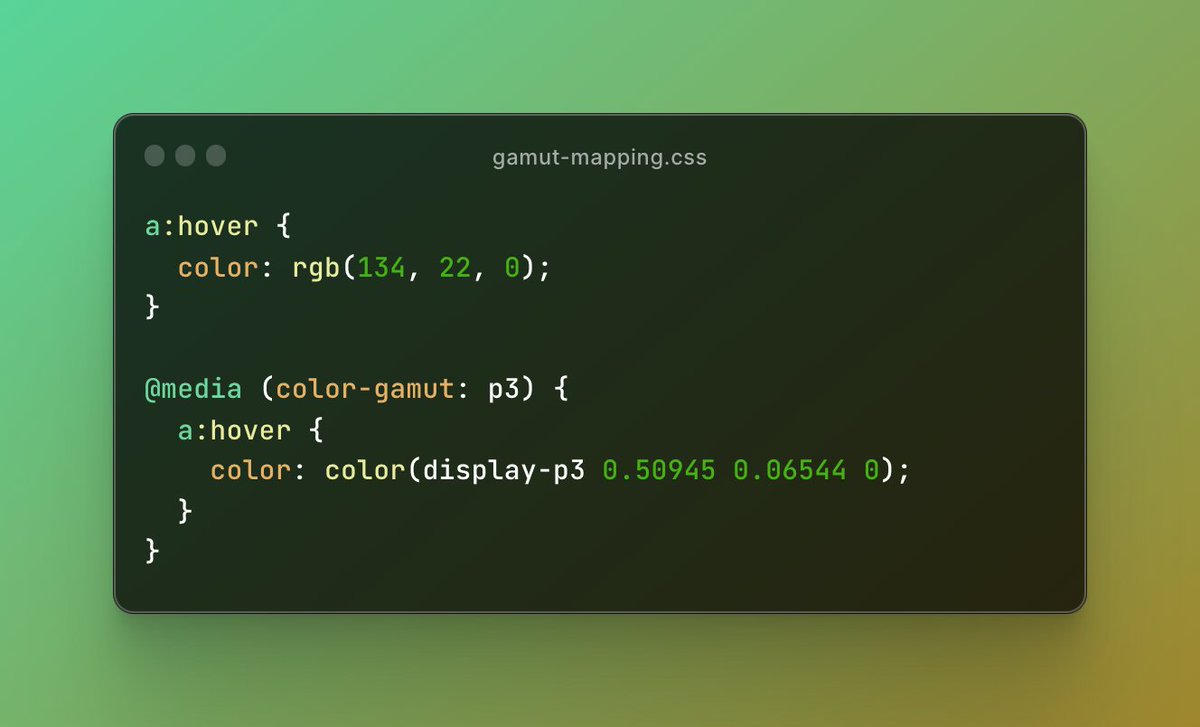
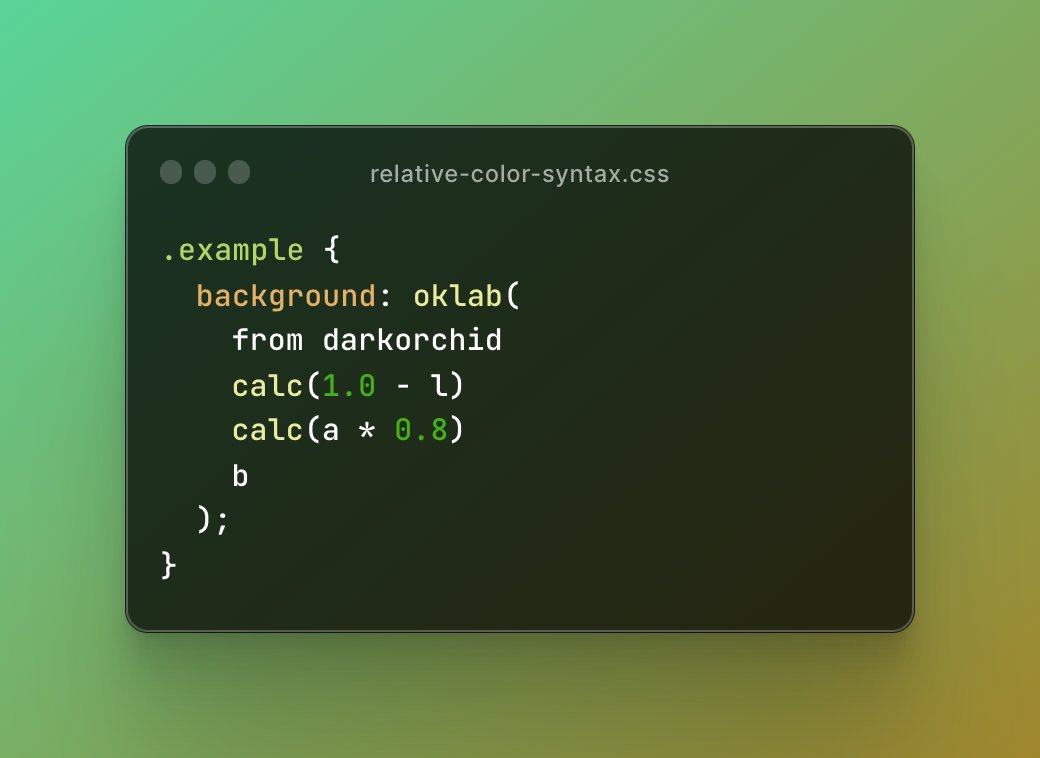
This version includes support for gamut mapping wide gamut colors through a new plugin : https://t.co/sGGud8NFkd
Browsers don't support this part of CSS Color 4 yet.
So if you want to have correct colors on all displays you should include both narrow and wide gamut color values. This new plugin helps you to do just that.
https://t.co/FyYQOElo90
esbuild was happy to engage with us and has been rolling out fixes for a bunch of small details.
This new bundler brings the same level of correctness to #PostCSS.
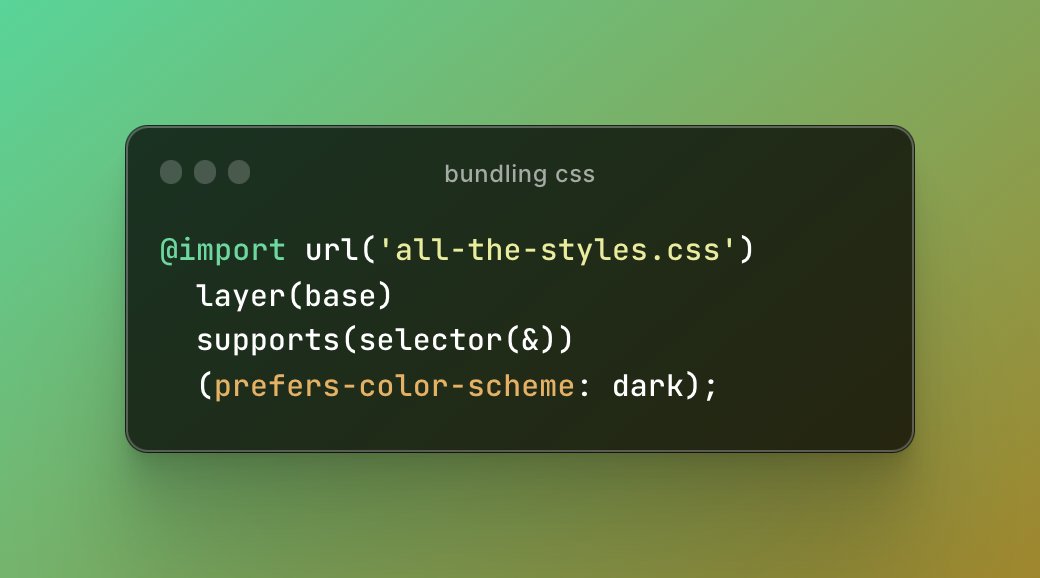
We made a CSS bundler for #PostCSS and a bunch of related tools and test suites 🎉
Our focus during this project was on interop with other bundlers and specification compliance.
https://t.co/EBXOrxWc2U
Important news ⚡️
Together with @jon_neal it was decided to move a bunch of #PostCSS plugins to an MIT-0 license.
https://t.co/QX1upXx3yB
We have just released new major versions of each affected plugin.
New release for @PostCSS Preset Env 🎉
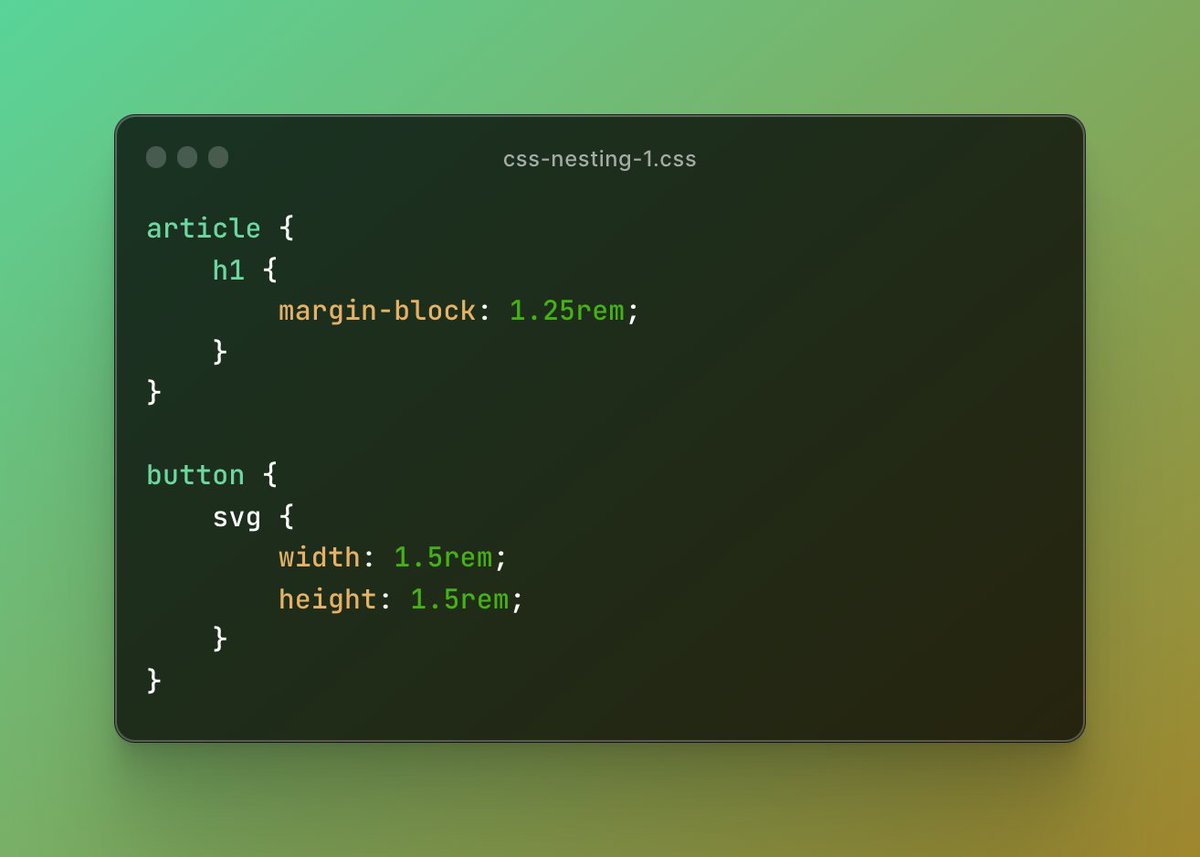
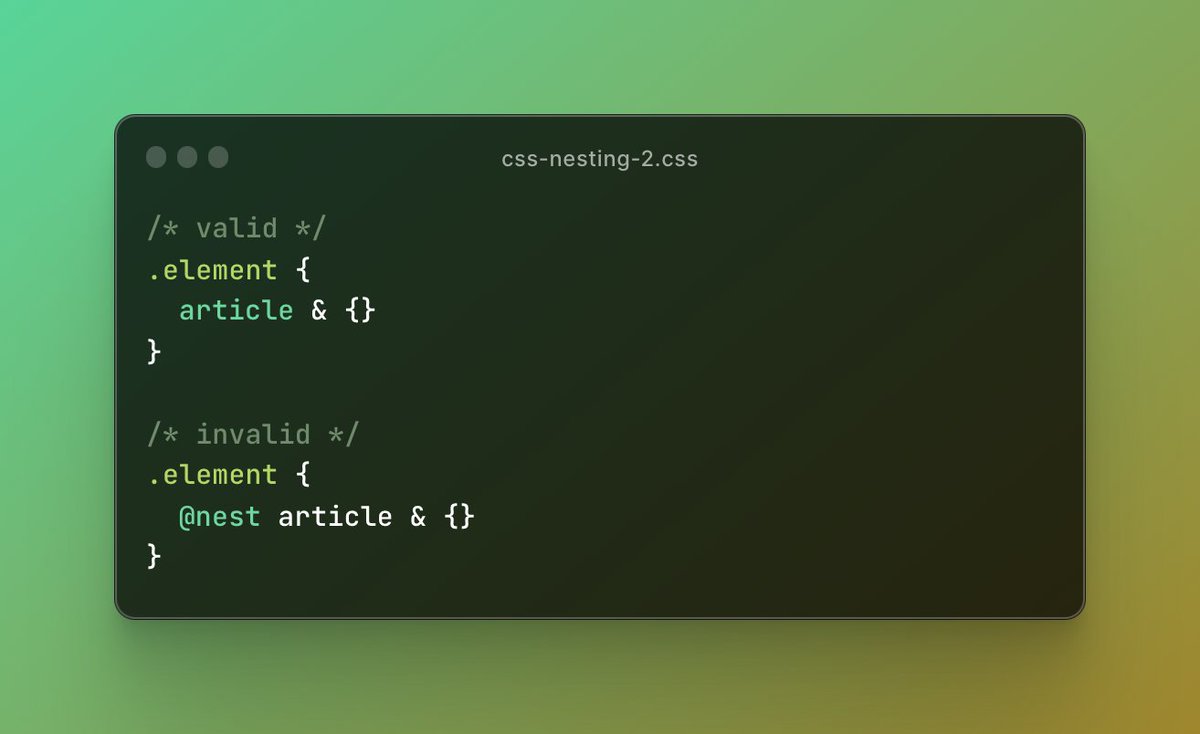
This includes the latest version of postcss-nesting and allows you to start nested selectors with a letter.
https://t.co/PAdVL7ixiH
We also released a @stylelint plugin to help you migrate away from "at-nest" rules if you have codebases for earlier versions of the specification :
https://t.co/oY3DoZ4VXQ
@theadamaho Yeah, the first example isn't supported.
We can not determine the value of "var(--foo)" there.
That can only be done on a page, for each DOM element individually.