When a client is deeply attached to a story about themselves, others, or the world, how can we stay curious?
Join Karen King for “Clinical Neutrality: Part 1,” the Center’s first live online training.
Nov 20 | 12–2 PM CST
Register: https://t.co/g4d6agdFxW
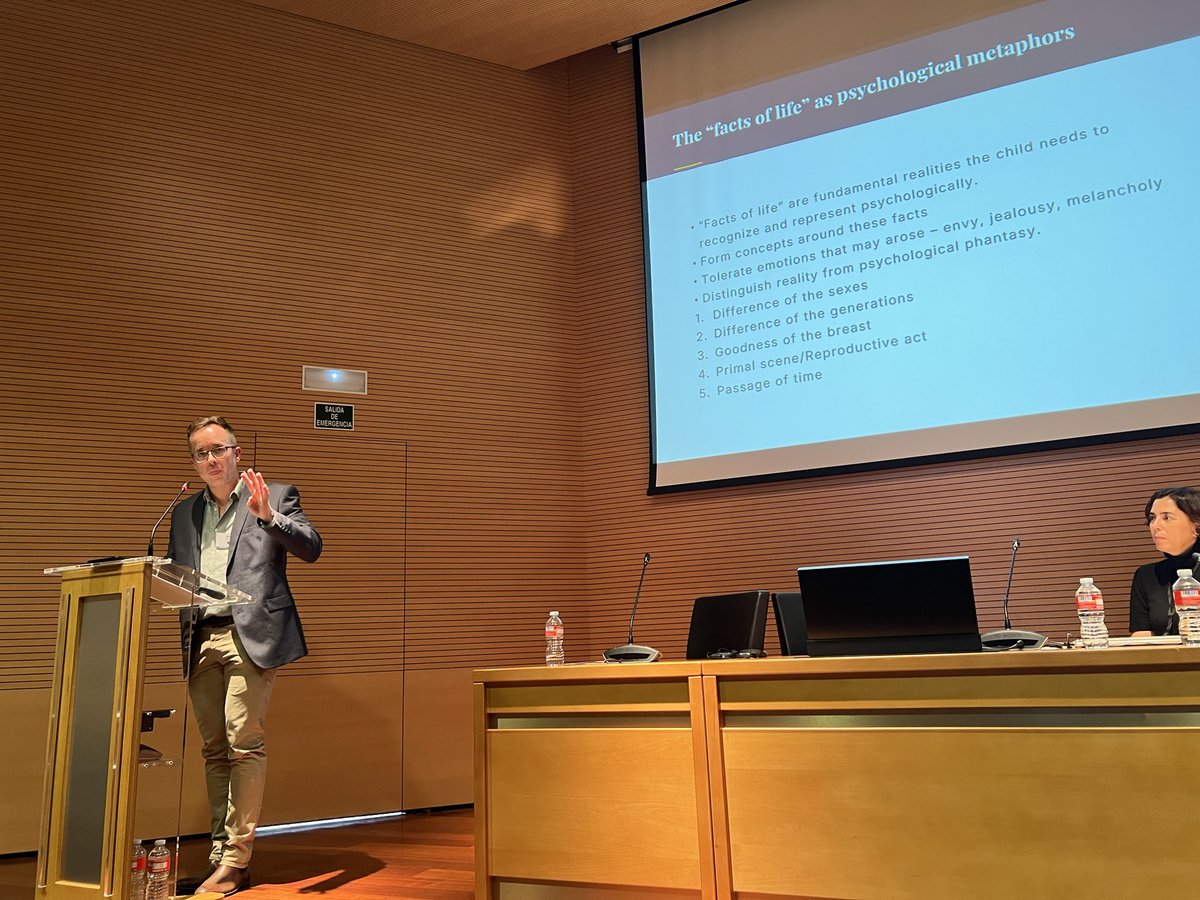
Excellent presentation by @Jaco_v_Z at the @Amanda_DGIR conference in Madrid explaining how children respond to the “facts of life” as understood in psychoanalysis.
One of the facts of life is the lesson that the passage of time shows us that both good and bad times don’t last forever; that’s how we build frustration tolerance
Therapists may have heard of "clinical neutrality," but what does it look like in practice?
We look forward to hosting Karen King for the Center's first public training, "Clinical Neutrality: Part 1," online Friday, Nov 20, 12–2 PM CST.
Register: https://t.co/g4d6agednu
1/4
When a client is deeply attached to a story about themselves, others, or the world, how can we stay curious?
Join Karen King for “Clinical Neutrality: Part 1,” the Center’s first live online training.
Nov 20 | 12–2 PM CST
Register: https://t.co/g4d6agdFxW
@anonpsyk Thank you for raising this. It's a question we take seriously. Judgment, attunement, and the therapeutic relationship are exactly what's at stake as AI tools spread, and we plan to take it up in upcoming conversations.
At the Center for Therapeutic Advancement, we believe foundational skills deserve greater attention. Our goal is to help clinicians develop timeless sensibilities—even as trends come and go.
Join the waitlist: https://t.co/Z8pVzg89Be
5/5