DOORDASH HITS THE OVAL OFFICE. 🍟
$11,000 refund DELIVERED — all thanks to No Tax on Tips!
Millions of drivers across America are leveling up this tax season. 💸
NEWS: NVIDIA just announced Alpamayo, what CEO Jensen Huang calls the world’s first thinking, reasoning autonomous vehicle AI, launching on U.S. roads later this year, starting with the Mercedes CLA.
Jensen: "It's trained end-to-end. Literally from camera in to actuation out; It reasons what action it is about to take, the reason by which is came about that action, and the trajectory."
Alpamayo introduces Vision-Language-Action (VLA) models, which enable self-driving systems to interpret what they see, reason about complex driving scenarios, and generate driving actions. The platform includes large reasoning models, simulation tools for testing rare and edge-case scenarios, and open datasets for training and validation.
NVIDIA says the approach improves transparency, safety, and robustness in autonomous systems, particularly in complex real-world environments, and supports progress toward higher levels of vehicle autonomy:
"With a 10-billion-parameter architecture, Alpamayo 1 uses video input to generate trajectories alongside reasoning traces, showing the logic behind each decision. Developers can adapt Alpamayo 1 into smaller runtime models for vehicle development, or use it as a foundation for AV development tools such as reasoning-based evaluators and auto-labeling systems. Alpamayo 1 provides open model weights and open-source inferencing scripts. Future models in the family will feature larger parameter counts, more detailed reasoning capabilities, more input and output flexibility, and options for commercial usage."
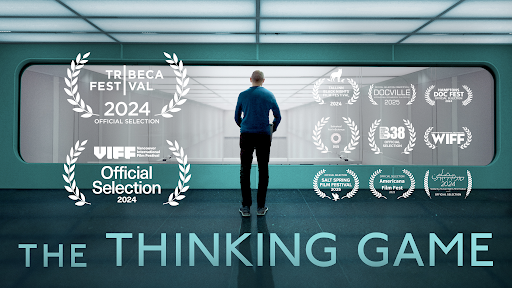
‘The Thinking Game’ documentary has just passed 200M views on YouTube in just 4 weeks! 🤯Perfect holiday viewing if you’re interested in a behind-the-scenes look at how an AGI lab works, or what goes into making a Nobel Prize winning project like AlphaFold happen.🧬🚀
Dave Ricks has been at @EliLillyandCo for 20% of its 150-year history. He came to the pub, poured his own Guinness, and gave us a 2-hour state of the pharma union: drug prices, clinical trials, patent clocks, the rise of generics, Chinese peptides, compounding pharmacies, the US healthcare system, and how the broad success of GLP-1s have transformed Lilly's business. If you've never heard Dave speak before, you're in for a treat.
Timestamps:
00:00 Intro
05:08 Making R&D decisions
10:11 Clinical trials
24:59 Drug pricing
32:43 Stimulating more R&D
45:16 Pros and cons of US healthcare
58:20 New pharma business models
01:05:53 Stripe + enterprises
01:07:00 China
01:16:31 Generics
01:22:37 GLP-1s
1:37:43 r/Peptides
01:41:25 LillyDirect
01:46:35 Why do investors love LLY?
I think this is superb advice. Worth a careful read:
Michael Milken – Lessons on Money, Family, and Success
(Forum for Family Asset Management, Milken Conference, Mexico City –
paraphrased notes)
Spend time with your kids — you’ll pay for it (for better or worse) either now or
later.
Think about how you measure meaning and success in your children and
grandchildren. Give them purpose.
For children raised in very successful households, it’s often hard to emulate
success — especially financial success.
Most successful people are too busy to see their kids and grandkids. That
absence shows up later in life.
The center of success is the ability to dream.
Real success is the freedom to live your life.
The financial media is obsessed with lists. Forbes today is mostly about
ranking wealth by dollars.
There are countless stories of wealthy people who never had a good day with
their kids.
You’re only as happy as your least happy child — think about that often.
He shared a story about a wealthy Chicago family whose fortune was divided into 1/13th shares after one heir demanded his part. That decision ended up dividing the entire family.
Be careful not to do something that provides financially but destroys the
family.
The most important thing to teach children is financial literacy.
The greatest failure among wealthy families is not providing financial literacy to their members.
Example: an extremely wealthy Latin American family where the
great-grandfather is still alive — his mindset is completely different from that of his great-grandchildren.
In Asia, inheritance traditionally went only to men — that has changed in
recent decades.
Recommended reading: Economic Mobility Program – Invest in America.
Example: Apollo bought the Venetian Hotel and gave all 7,000 employees
stock. They paid a dividend the first year through a recap — everyone saw it as a “Christmas bonus.” The next year, when there was no dividend,
employees were upset. No one had explained the difference between a
dividend and a bonus.
The biggest mistake over the last 50 years has been financial illiteracy — not understanding the business or the source of wealth. Families and employees both need to learn this.
Best example of a united family: an Austrian family that’s 11 generations old. They own a resort used only by the five branches of the family. Ownership
rotates every three years. To be invited when your branch isn’t in charge, you
must get along with the others.
No matter how much you build or earn, what truly matters in the long run is
your relationship with your kids and grandkids.
Define what success means to you — it’s what makes you happy.
Entrepreneurs don’t just build companies; they can build nations or religions.
One of the most successful entrepreneurs in history is Lee Kuan Yew.
It’s not about how many things you own.
If you’ve never been responsible for making payroll, your view of the world is very different.
Hug your kids and grandkids. Let everyone find their own path.
Children growing up around success feel enormous pressure. Remind them
how valuable they are.
Let kids make mistakes when the stakes are low — not high.
“There's not a line of code that you can point to,“ says @tobinmarcus on the China using TikTok to influence users. “Even if you have total access to the source code, it is not necessarily going to be easy to identify efforts to change...what kinds of content people are seeing.”