@LiamDeacon Give us an English Parliament and it can decide who qualifies for English civil citizenship.
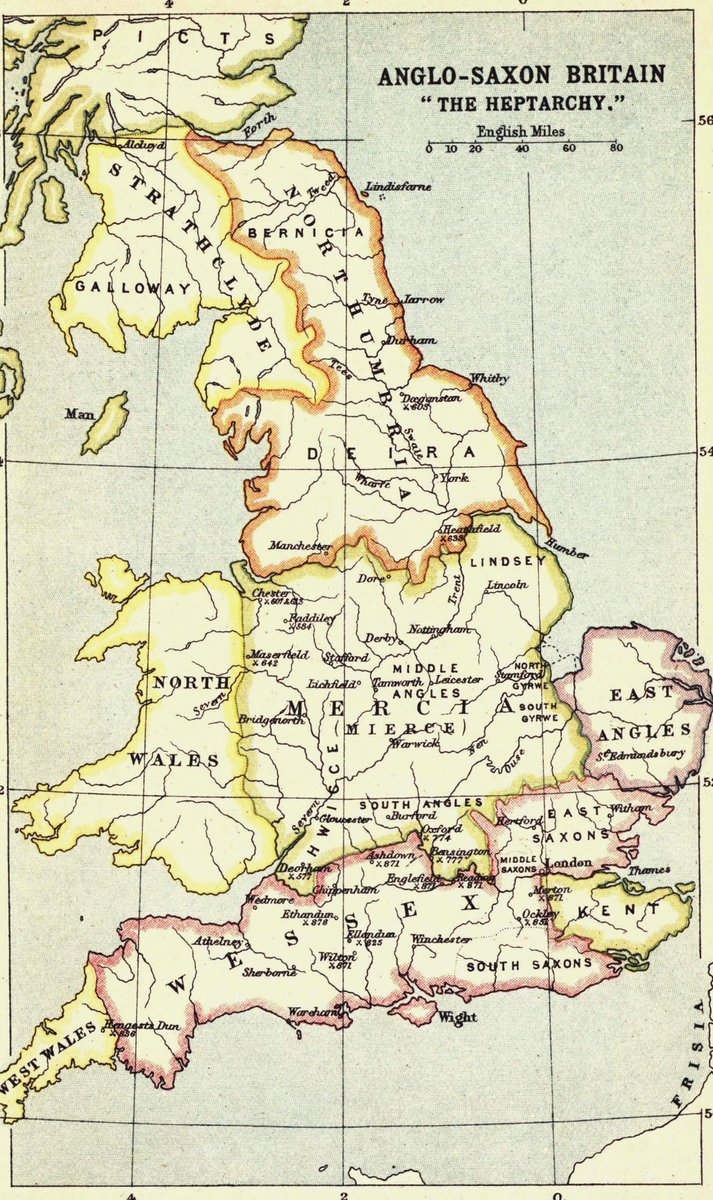
But English ethnicity is Anglo-Saxon, with tiny admixtures...
@thinkdefence The process is run - in the main - by Very Clever ™ people who think they're preventing waste by cautious procurement, yet waste billions of ££ and years.
The only part of procurement that works as it should is the UOR cycle, which has much more direct military involvement.
@oscarwdctruther In the UK ... because pubs and bars are licensed to sell booze for consumption "on the premises" and shops that sell booze but are not bars or pubs are licensed to sell booze for consumption "off the premises" ... therefore "Off Licence".
Everyone in the West is on a path of slow decline. Eventually, civil war will follow wherever there is diversity.
The first society that frees itself from liberalism, diversity, and the managerial state can reap enormous benefits. The initial shock will be very harsh, but the subsequent growth could be phenomenal.
On the one hand, it is true that remigration would trigger a massive economic crisis - especially for the banking sector and retail. House prices would collapse if 20% of the population left. Lots of people with mortgages would owe the bank more than their properties are worth - this will have to be sorted out.
New housing construction would seize up. Developers would have to sell some of their land banks. Infrastructure expansion would become unnecessary, and maintenance would be cheaper. Consumer demand would plummet. Prisons would have far more places. Welfare spending would collapse. Medical services would face far less demand. Etc...
The reality is that this is necessary and beneficial in the long run.
Breaking the banks and especially the mortgage industry would be good, even if extremely painful. State banks can replace existing banks, and focus solely on investment. No more living your working life in debt. Far less consumer credit.
Cuts to VAT, income tax, and corporation tax could generate a lot more growth. Lots of financial services are unrelated to consumer lending or mortgages, and would continue and perhaps thrive, as talent currently in Dubai and Singapore finds a cheaper and safer Britain more appealing.
An aged society needs more medical services - freeing up demand could make some services cheaper and waiting times shorter.
Massive retailers can still make a profit in a couple of years' time after the adjustment ends, even if they suffer a brief downturn and inflation temporarily follows.
Deregulation could lead to an expansion in energy and food production, generating new industries.
Lots of unemployed men and women would be forced into the job market as welfare is cut. The underemployed in academia, HR, compliance, and many other state-created industries would need new jobs. As labour markets rebalance, and shortages emerge in some sectors, big developments in automation would follow.
Tourism could surge if London were cleaned up and taxes were cut.
Many cities, neighbourhoods, and homes would need to be redeveloped as migrants exit. Maintaining infrastructure would be cheaper.
And ending feminism and future pensions would result in a baby boom. That itself would generate a lot more growth in the future.
The alternative is national suicide, civil war, and quite possibly the total subjugation of whatever of Christendom remains.
All renewal is naturally painful.
As a Caribbean man, David Lammy wants reparations from England.
… but he’s also English, because he “feels” like it. And because being English is a “choice” based on “personality.”
So … if I feel like a Caribbean, and I choose to be Caribbean because my personality aligns with being Caribbean … does David Lammy, he being an Englishman, owe me reparations?
And this, dear friends, is the mental gymnastics of woke ideology.
For some reason, my timeline is full of people saying:
I've been using X for 14 years, and I'm only just discovering that you can take a screenshot of a tweet directly from the Copy Link option.
@SarahLudford Give us an English Parliament and it can decide who qualifies for English citizenship. But English ethnicity is Anglo-Saxon, with tiny admixtures... none from Africa or South America.
I'm a Pakistani Muslim.
My great grandmother Iranian.
My children are half White.
I have Jewish family.
My friendships diverse.
We laugh at ourselves.
We appreciate our differences and share common ground.
This is my idea of a beautiful world.
This is the future.
@Bushra1Shaikh Again, civic and ethnic identities are not the same.
Create an English Parliament and it can decide who is English in a civic sense, but only dna, shared history and traditions. tells us who is English in an ethnic sense.
The United States says economic warfare is crippling the Islamic Republic so effectively that a full-scale military offensive is unnecessary.
Marco Rubio said the sanctions campaign and naval blockade are inflicting “extraordinary” economic pain that is intensifying every day.
“We don’t need to conduct military strikes if we’re achieving the same objective through economic means and economic pressure.”
The numbers support his assessment.
The Islamic Republic loaded no crude or condensate onto tankers throughout September, the first full month without loadings since modern tracking began. No new cargo has been loaded since approximately August 25, while tankers filled since mid-July remain trapped inside the blockade zone.
Iranian oil stored at sea outside the blockade has fallen from nearly 89 million barrels in July to zero. Another 43 million barrels remain stranded inside the restricted area.
Without functioning export routes, production has reportedly fallen from pre-war levels of approximately 3.3–3.6 million barrels per day to around 2 million or less.
CENTCOM estimates the blockade has already prevented more than $25 billion in crude exports.
Because Chinese buyers normally pay weeks after receiving shipments, the regime is still collecting delayed revenue from earlier deliveries. If the blockade holds, however, its crude and condensate income could approach zero by mid-December.
This is succeeding where conventional sanctions repeatedly failed.
Sanctions could be circumvented through shell companies, falsified documents, ship-to-ship transfers and shadow fleets. The physical blockade prevents tankers from leaving Iranian ports and transporting oil through the Persian Gulf and Gulf of Oman.
The Islamic Republic has also failed to sustain the global energy crisis it expected would force the United States to retreat.
Other Persian Gulf producers have increased exports, regional oil flows have recovered and Brent has fallen toward $90 after recently approaching $118.
The regime is losing its oil revenue while the international market adapts around it.
The United States is now expanding the pressure beyond maritime routes.
Task Force Iron Gate is targeting weapons, dual-use technology, sanctioned materials and illicit revenue moving across Iran’s land borders and the Caspian Sea.
It is not a physical ground blockade, but it is designed to disrupt the alternative routes the Islamic Republic needs to finance itself and rebuild its missile, drone and military capabilities.
This does not eliminate the risk of escalation.
A regime losing its primary source of foreign currency could retaliate through shipping attacks, cyber operations, proxies or direct military action.
But launching a wider offensive while the existing strategy is steadily draining the regime’s revenue would create enormous military, economic and political risks before the blockade has reached its full effect.
The strategy is working because it forces the Islamic Republic to absorb compounding damage while denying it the oil shock, American casualties and regional chaos it needs to fracture the coalition against it.
The Islamic Republic expected energy disruption to become its ultimate weapon.
The United States is turning the regime’s dependence on energy exports into the weapon being used against it.