One giant leap for mankind
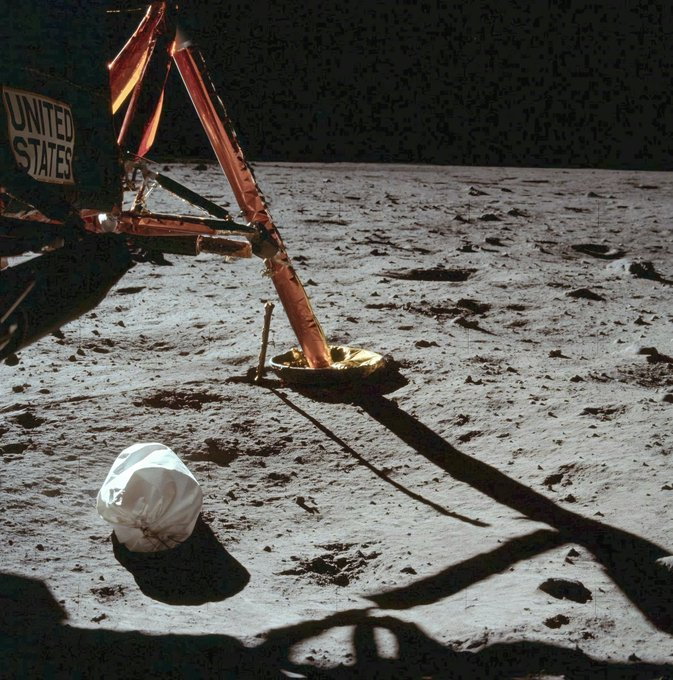
History was made on July 20, 1969, when Apollo 11's Neil Armstrong and Buzz Aldrin became the first to set foot on the Moon.
For more than 5 decades, the total number of moonwalkers has remained at 12. NASA will change that with Artemis IV.
July 20, 1969. 20:17 GMT. "Houston. Tranquility base. The Eagle has landed." "That's one small step for a man. One giant leap for mankind." Unforgettable and inspiring to a 7 year old kid.
https://t.co/c3jCbUQFcO
https://t.co/38OK3ZphGJ
One of the most iconic photographs of all time: Buzz Aldrin on the moon during the #Apollo11 mission, taken by Neil Armstrong | NASA. July 20, 1969
https://t.co/c3jCbUQFcO
https://t.co/38OK3ZphGJ
🆕 Two independent teams using Webb and ground-based data from ESO have discovered a new exoplanet! 🕵️♂️
Beta Pictoris d is the third planet to be found orbiting the young star Beta Pictoris. It is only 2.4 times more massive than Jupiter, making it one of the lightest ever imaged from the ground.
Read more: https://t.co/phYnLOmamR
📷 ESO /B. Sutlieff, M. Bonse et al.
This summer, the #SubaruTelescope will begin on-sky engineering observations of NINJA, a new near-infrared spectrograph designed for rapid follow-up of fast-evolving cosmic events, including the electromagnetic counterparts of gravitational-wave sources.
https://t.co/Fv5FLNaTrE
Astronomers using the @keckobservatory on Maunakea, Hawaiʻi Island, have helped to confirm two-thirds (21 of 31) of the most ancient quasars from the @ESA_Euclid mission, including two of the most distant ever observed.
🔗learn more: https://t.co/YiqQoDeDTB
📷 animation credit W. M. Keck Observatory / Adam Makarenko
Our @ztfsurvey PI Mansi Kasliwal delivered one of the plenary talks at the #SPIE2026 conference in Copenhagen, stressing the potential for science impact in the infrared and describing ongoing efforts such as RAPID and Cryoscope. https://t.co/g6phHe2uzR