In 1910, New York built a Roman bath for trains. On Oct 28, 1963, demolition began.
Its great eagles were saved. Its stone and some of its goddesses went to a New Jersey swamp. Losing it helped give the city its Landmarks Law.
Now New York is planning a new Penn Station. If we value a beautiful building only after destroying it, what does that say about our judgment?
The most seductive thing these Italian actors do is stand still.
Under Ludovica Rambelli’s direction, they recreate Caravaggio’s paintings with their bodies, draped cloth, everyday objects and a single cut of light.
They build each scene before the audience, hold it, then dismantle it to become another.
Think about the physical discipline that demands. Supporting another person’s weight. Holding an awkward angle. Keeping a face suspended in grief while your muscles strain.
That tension gives the paintings a disturbing intimacy.
In 1910, New York built a Roman bath for trains. On Oct 28, 1963, demolition began.
Its great eagles were saved. Its stone and some of its goddesses went to a New Jersey swamp. Losing it helped give the city its Landmarks Law.
Now New York is planning a new Penn Station. If we value a beautiful building only after destroying it, what does that say about our judgment?
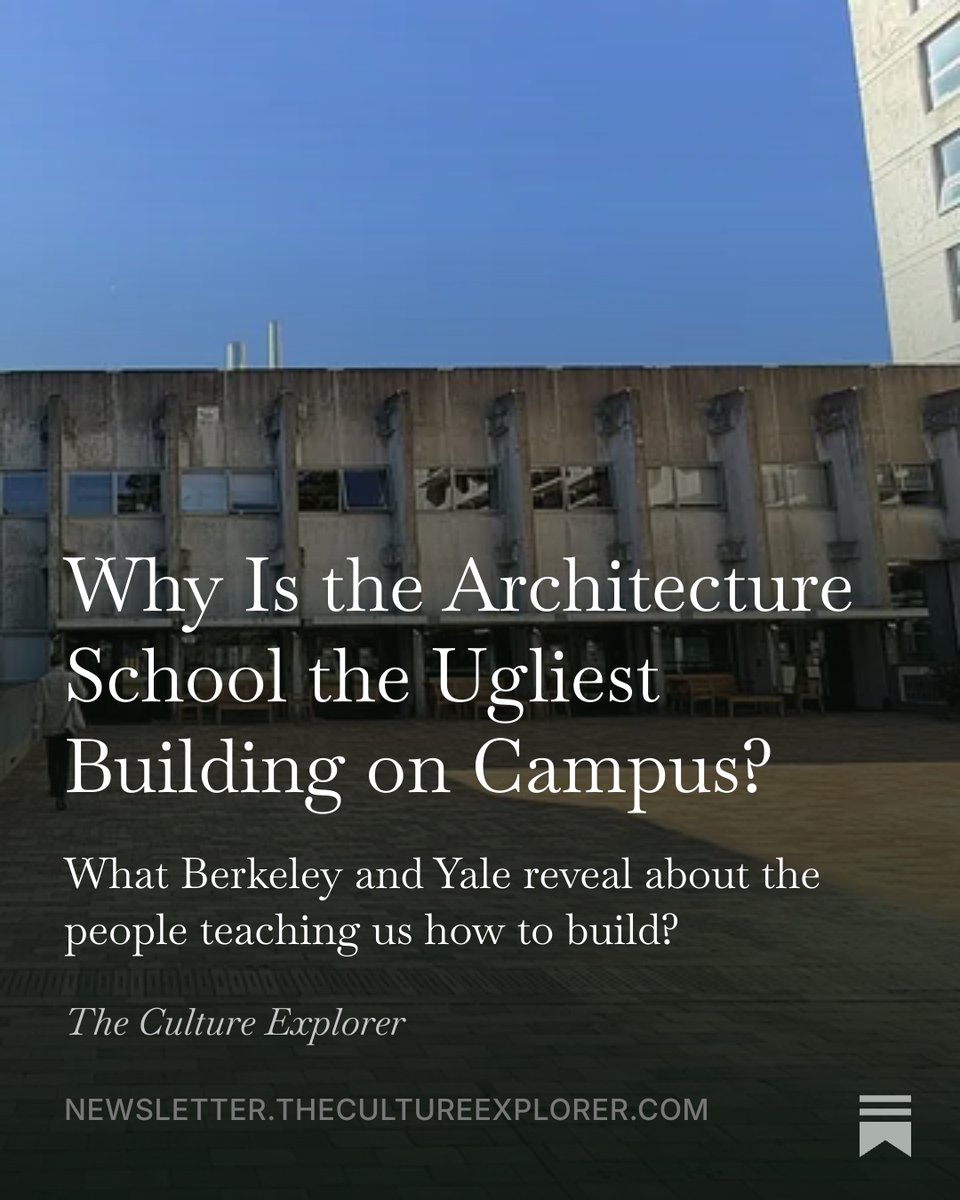
On a visit to UC Berkeley, I admired its beautiful hillside campus, then discovered that one of its ugliest buildings housed the #2 nation ranked architectural school.
Its appearance was deliberate: the founding dean wanted “a ruin that no regent would like.”
Yale’s Rudolph Hall raises the same uncomfortable question about what architecture schools teach students to value.
Ruskin and Scruton have explained why beauty matters to the people who inherit buildings and live beside them.
We should care because the judgments formed inside these schools eventually shape the streets we walk and the view from our homes.
Read the full article in The Culture Explorer newsletter and consider whether architects are learning to build places people love or explain why they should accept less.
https://t.co/Hc731pNBLa
The most seductive thing these Italian actors do is stand still.
Under Ludovica Rambelli’s direction, they recreate Caravaggio’s paintings with their bodies, draped cloth, everyday objects and a single cut of light.
They build each scene before the audience, hold it, then dismantle it to become another.
Think about the physical discipline that demands. Supporting another person’s weight. Holding an awkward angle. Keeping a face suspended in grief while your muscles strain.
That tension gives the paintings a disturbing intimacy.
On a visit to UC Berkeley, I admired its beautiful hillside campus, then discovered that one of its ugliest buildings housed the #2 nation ranked architectural school.
Its appearance was deliberate: the founding dean wanted “a ruin that no regent would like.”
Yale’s Rudolph Hall raises the same uncomfortable question about what architecture schools teach students to value.
Ruskin and Scruton have explained why beauty matters to the people who inherit buildings and live beside them.
We should care because the judgments formed inside these schools eventually shape the streets we walk and the view from our homes.
Read the full article in The Culture Explorer newsletter and consider whether architects are learning to build places people love or explain why they should accept less.
https://t.co/Hc731pNBLa
New York once put brass chandeliers in a subway station.
What would we call that today? A waste of money?
On October 27, 1904, the city opened its first subway: 28 stations across 9.1 miles.
At City Hall, passengers waited beneath Rafael Guastavino’s tiled vaults, with daylight entering through three amethyst-glass skylights.
The station was designed to persuade people to try a new way of travelling. Beauty had a practical job.
It closed in 1945. Its tight curve struggled to accommodate longer trains, and nearby Brooklyn Bridge station drew more passengers.
Even this architectural showpiece had to answer to everyday use.
But look at the ambition: a transit company believed beautiful surroundings could help sell an ordinary journey.
Why are we so willing to call beauty an investment in a luxury hotel and an extravagance in a public station?
Credits in ALT.
Would you call someone a peacemaker if they sat down with your enemy?
In 1219, during the Fifth Crusade, Francis of Assisi entered the Muslim camp in Egypt to meet Sultan al-Kamil. A Christian friar and a Muslim ruler spoke while their fellow believers fought.
“Blessed are the peacemakers.”
Matthew 5:9
It is an easy verse to admire until making peace means speaking to someone your own side has taught you to hate.
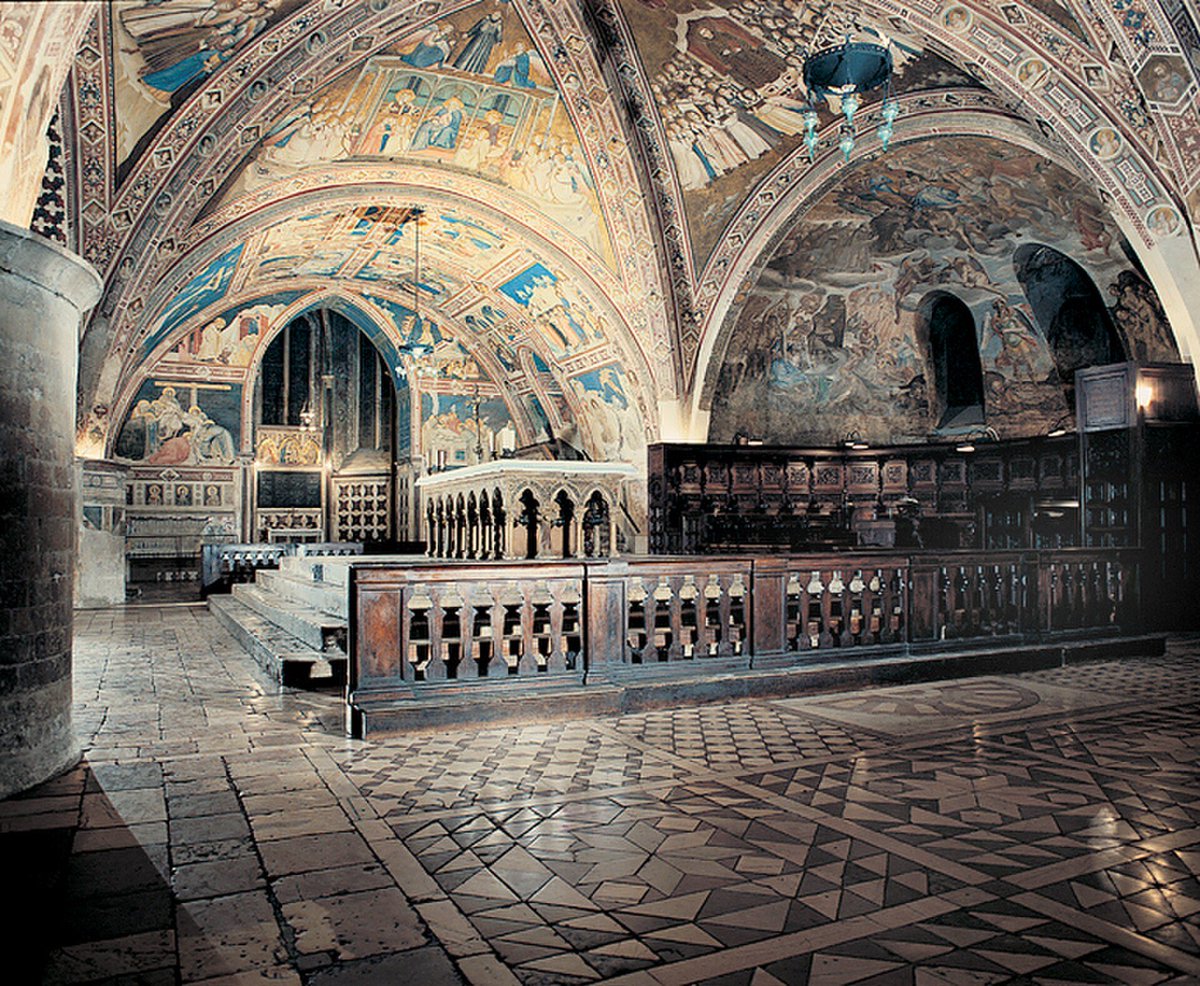
The Basilica of Saint Francis in Assisi honors a man who took that risk. Its beauty deserves our attention. His example deserves an answer.
Who would you be condemned for speaking to today?