Solo questa frase vale le mie due volte al cinema in dieci giorni.
"The most we want is what the most we can't have, and what the most we can't have is what we already had and lost."
Odysseus, The Odyssey
#nolan#odissea
We grew up watching hand-drawn Disney, and now it's gone. We don't talk about this enough.
Most people have no idea what level of work went into these films...
To draw one cathedral, Disney's artists went and spent days inside the real one, climbing through the passageways and towers of Notre-Dame with a historian, so that a cartoon would get the stones right.
That was for The Hunchback of Notre Dame in 1996. The team made more than one trip to Paris, and the film was the first made at Disney's new animation studio in the city, a collaboration between American artists and Parisian ones led by the brothers Paul and Gaëtan Brizzi.
This is the thread that runs through Disney's Paris: the city keeps pulling the studio back. The Aristocats, in 1970, is a valentine to an older Paris of grand apartments and rooftop cats, though the animators packed the skyline so tightly that Notre-Dame ends up standing almost next to the Eiffel Tower.
It will never cease to amaze me: every single frame of the old Disney movies was put down by a human hand. Today everything chases realism, and somehow, the more real it looks, the less alive it feels…
Modern luxury is the ability to live quietly. No drama. No noise. No pretending to be someone you are not. Just living low-key. Reading. Thinking. Listening to music. Staring at walls. Going for walks. Watching old movies. Being bored. Working on your purpose. And feeling life deeply. That is peace.
L'Odissea sta avendo così tanto successo perchè st'estate tra voli cancellati a cazzo, sciopero treni, aumenti traghetti e prezzo record della benzina, tutto sommato Ulisse non ha fatto un brutto viaggio dai
This the trailer for the upcoming Croatian epic historical movie about Roman emperor Diocletian.
The movie is in Latin language!
I translated the trailer so you can see what the movie will be about. The movie will be in cinemas on 29 October 2026.
1984 short film Orpheus and Eurydice by animator Lesley Keen🏺
The entire film is masterfully animated in the exact style of ancient Greek red-figure and black-figure pottery. Without a single word of dialogue, characters glide across the screen like a rotating classical vase.
Non siamo soli, siamo solo troppo lontani nel tempo. Civiltà intere nascono e muoiono prima che la loro luce ci raggiunga.
E se la vera solitudine non fosse l'assenza di vita, ma sapere che quando finalmente vedremo il loro segnale loro saranno già estinti da milioni di anni?
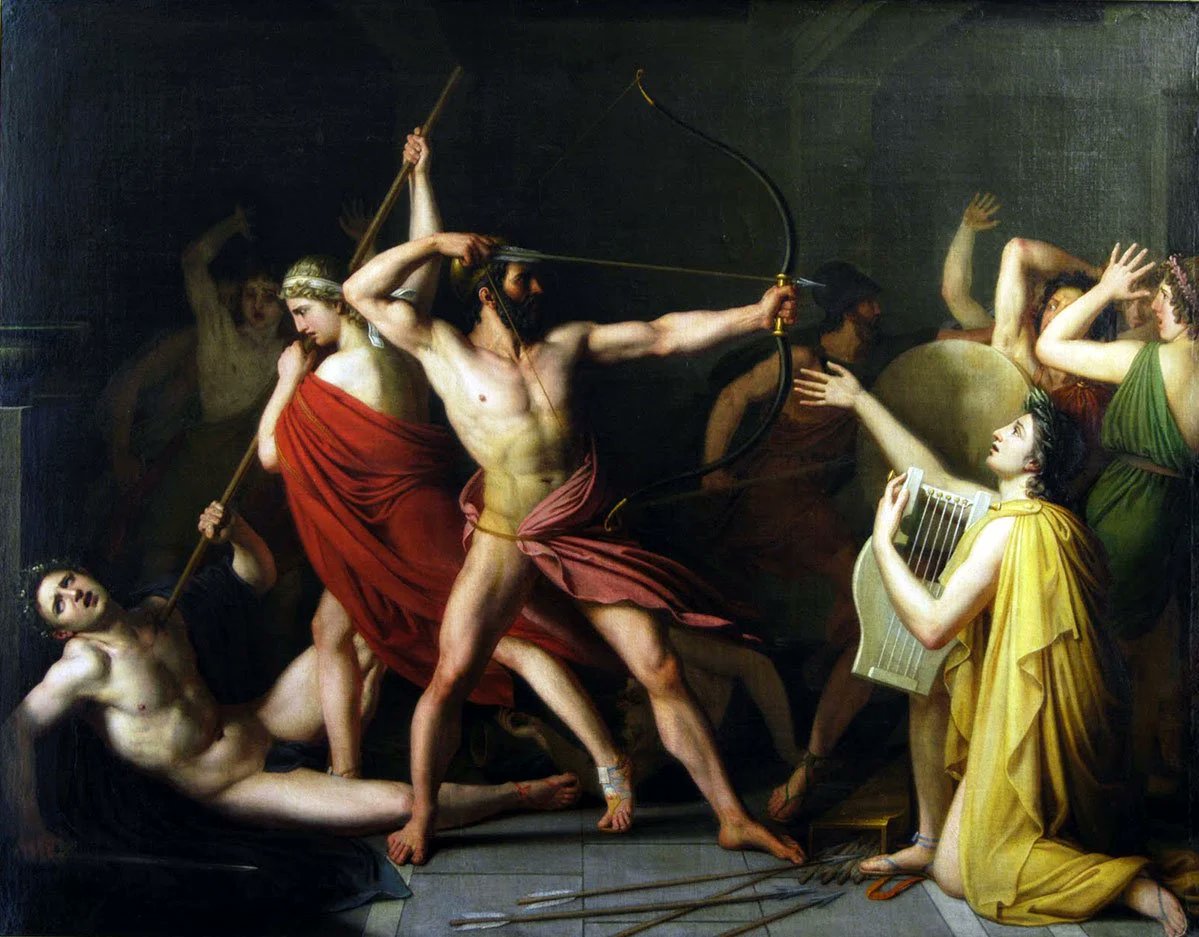
There are some powerful secrets and symbols in the Odyssey that you can only understand if you speak Greek. The Odyssey, apart from being a literary work, also conceals a profound philosophy that most people are unaware of, not intentionally, but because this philosophy cannot be fully understood in the English language; it can only be grasped in Greek, thanks to the richness of its philology and the etymology of its words. The three most important suitors who die are Antinous, Eurymachus, and Amphinomus. In English, these names mean nothing, but in the Greek language, they carry great significance due to Homer's deliberate choice of them.
The name Antinous means the one who opposes rational arguments, the irrational one ('anti' + 'nous' = mind/intellect). Antinous is the first to speak, the most irreverent of all, and the first to be killed. Odysseus reveals his true self, he has changed after ten years fighting at Troy and another ten struggling against the seas. The first trial he faces upon his return is a war within his own mind, his reason. That is why Homer creates Antinous as his first enemy: the one who fights against logic, according to his name. Odysseus triumphs over him.
Next comes Eurymachus. He is warlike but also two-faced. His name means the broad, great fighter ('eurys' = wide/broad + 'machites' = fighter). Eurymachus puts Odysseus in a dilemma and tries to shift the blame onto Antinous. He personifies discord and duplicity, a man without morals, capable of anything to avoid punishment. Yet Odysseus overcomes this obstacle as well, which symbolizes moral superiority. He does not yield, and his mind is not poisoned.
Third is Amphinomus. His name means the one who distorts the law ('amphi' = around/both sides + 'nomos' = law). He is the most compassionate of the suitors. Amphinomus tries twice to discourage the other suitors from murdering Telemachus. Odysseus even tries to warn Amphinomus to leave the house before the final battle. Nevertheless, Amphinomus stays and dies along with the others.
Through this, Odysseus, and by extension Homer, teaches us that in life, sacrifices are required, even when they demand that we show no compassion when the goal is more important and serves a greater purpose that will improve things overall. These are sacrifices that most people, even brave and heroic ones, cannot make.
That is why there are many people, but few are truly heroes.
Homer Pavlos