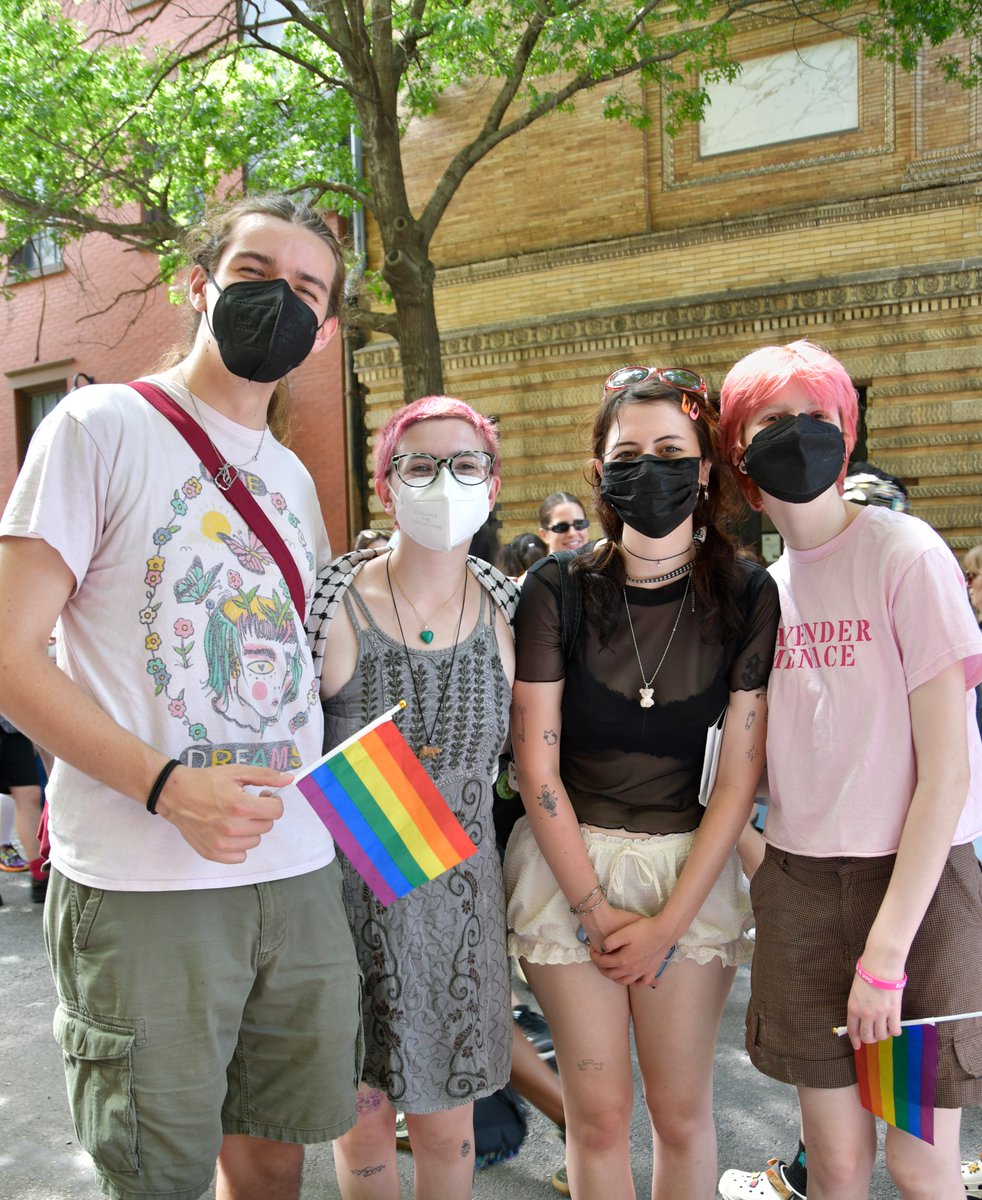
Sharing a heartfelt story featuring @UpStGranolaNY owner Sara Bear who masks up at the farmers markets (Kingston NY, Beacon NY and Troy NY) in the Hudson Valley. Read the interview by @MsJulieSLam
👉https://t.co/wDqe2b9v8H
👉https://t.co/iXUjVBiutr
Ignorant scientists just dropped a 'post-pandemic diabetes' paper that pretends COVID-19 vanished in 2023.
Title screams “COVID-19’s Lasting Impact” yet the entire analysis dodges the elephant:
→ SARS-CoV-2 is causing new-onset diabetes in millions,
→ Science papers: 1.37% incidence in infected patients, 40%+ higher risk persisting 3–12 months, beta-cell destruction, chronic inflammation,
Global Burden of Disease (GBD) numbers didn’t magically accelerate, because of the “pandemic,”
SarsCoV2 is still driving them,
Calling it “post-pandemic era” while ignoring the active viral trigger isn’t science, this is wilful blindness,
This is how you gaslight a global metabolic catastrophe!😡
Wake up!!
#COVIDDiabetes #ScienceFail
https://t.co/R5gkb8OZf4
Sooner or later, almost every colleague, expert, institution, and idol disappoints us on this issue.
They almost have to.
Because accepting that COVID still poses meaningful risks would force a painful audit of years of assumptions, interpretations, and decisions.
It would require changing behavior.
It might require admitting mistakes.
It might require changing identity.
That’s a heavy lift.
Denial is lighter.
And that’s why it’s so popular.
“If I just convince myself that Covid people are crazy and that Covid doesn’t really exist or that I can fix it with supplements then I feel a whole lot better about stuff and I can just continue to shop and eat brunch”
The problem isn’t that people can’t understand the evidence.
The problem is that the evidence comes with consequences.
If they’re right, nothing changes.
If we’re right, they have to rethink years of decisions, behaviors, and beliefs.
That’s why denial remains the most popular intervention.
Current public health response to *checks notes* literally every disaster happening in the world right now
Always nice to see problems being addressed immediately after they become unmanageable.
📢 Long COVID Advocacy Opportunity: FDA Announces New Focus on Repurposed Meds!
This week, the @US_FDA put out a call for a renewed focus on repurposed medications. They signaled their willingness to consider treatment data under existing legislation known as the Real World Evidence (RWE) pathway.
Real World Evidence is a legal and regulatory pathway that allows the FDA to make decisions about drug approval based on the real life experiences of patients, rather than relying only on clinical trials.
This pathway can be used to bring answers to patients more urgently. In the past, RWE has been used to expand access to lifesaving medications based on small numbers of case studies, whereas a full placebo-controlled clinical trial wouldn’t have been ethical. It has also been used to expand the eligibility criteria for who can receive a certain medication without waiting for expensive, multi-year clinical trials.
In this recent announcement, the FDA signaled that they’re specifically looking to repurpose medications for these conditions - particularly for drugs which don’t currently have much commercial interest.
This is a perfect opportunity for those in the Long COVID Community to make ourselves heard!
While it thankfully would be inaccurate to say there is no commercial interest in LC, we all know that pharmaceutical investment has been slow, as the companies say they are waiting for more established biomarkers before running trials.
We believe, as many researchers do, that there are existing medications currently sitting unused on shelves right now that could be treating, or even curing people, as in our founder Rohan’s personal experience.
We are interested in repurposed treatments such as:
👉Antivirals: Paxlovid, molnupiravir, anti-EBV medications, ensitrelvir (which is under review for possible approval as post-exposure prophylaxis)
👉Monoclonal antibodies - Evusheld is what cured Rohan, see also this case study of recoveries from Regen-Cov, we are also gathering data from patients in our Patient Registry who’ve seen improvements on Pemgarda and Sipavibart
👉IVIG
👉Immunomodulators to increase antiviral immune response - PD-1 inhibitors are an existing treatment for cancer and are about to be studied for Long COVID in an upcoming clinical trial.
The FDA has requested public comment at the link below. You can share your thoughts and upload any supporting documentation. The deadline to comment is June 11, 2026.
https://t.co/z1joaFmaAI
Noting @WHO's mission is to "promote health, keep the world safe, & serve the vulnerable," & they advise us to, "Make wearing a mask a normal part of being around other people," at a minimum, you'd think @DrTedros would pop on a respirator while on a UN Aid plane to DRC.
Nope.
Hey @WIRED, how about interviewing neuroscientists who are actually studying the brains of people with #LongCovid? I'm available, and so are many others in the field.
"When the brain gets stuck in a feedback loop of fight or flight" What does that even mean? #Pseudoscience
@antiviral_mktng 🫠🫠. I CAN’T. I would take that as an invitation & email them all on LC, esp. highlighting the section on PREVENTION/transmission. Here’s the answer to your questions... 😆
As a clinical health psychologist who has written >20 papers on COVID, I would emphasize 4 facts:
1) Long COVID is not a psychological diagnosis nor manifestation of a psychological condition
2) Billions of dollars need to be invested in biomedical treatments and preventives, and that money is not being invested because of wealthy short-term interests, which prop up various narratives, including in the media
3) Behavioral interventions can help with infection/reinfection prevention (e.g., COVI-CAN pilot) and stress/coping support (gaslighting/ostracism as huge issues), but these are not cures, and the same interventions are relevant to people with cancer, organ failure, immunocompromising conditions, etc.
4) Many psychological/behavioral "treatments" for Long COVID are directly harmful to patients and are indirectly harmful to society by incorrectly framing the issues
I would consider these issues obvious in summer 2020.
Articles like this should not be written in 2026, but it is a consequences of cultural evolution, or organizational selection by consequences. The organizations that write puff pieces propping up pseudoscience get the gold, while truth tellers do not. It would be useful to examine the organizational practices at WIRED that led to the incentive systems that allowed this piece to manifest.
“In-person schooling is necessary for kids’ mental health” was a slap in the face of every parent who homeschooled their kids before the pandemic, often because of bullying at school. It was pure politics that made schools a political football.
Cartels are building tunnels with sophisticated ventilation & electricity.
Meanwhile, California, the 4th largest economy on earth, doesn't guarantee basic ventilation/ healthy airflow in public schools. The contrast is wild & deserves coverage, @ABC. @CAgovernor@GovPressOffice
Happy Pride Month 🏳️🌈🏳️⚧️ Let’s share masked selfies and stories to support a global celebration of LGBTQ+ culture, history, and community. We are stronger together! 📸: @MsJulieSLam
https://t.co/D6ogso0xF9
https://t.co/BjkeY0tzXD
16 year-olds dying of Guillain-Barré syndrome, pneumonia and lupus
But, sure...go on believing that this has always happened
Whatever allows you to sleep at night
https://t.co/ycooJv0uvr
#3 – Displacement – When someone takes their pandemic anxiety and redirects their discomfort toward someone or something else.
Examples:
Angry, seemingly inexplicable outbursts by co-workers, strangers, or family
White affluent people caring less about the pandemic after learning that it disproportionately affects lower-socioeconomic status people of color
Scapegoating based on vaccination status, masking behavior, etc.
“Pandemic of the unvaccinated”
Vax and relax
“How many of them were vaccinated?” (troll comment on Covid deaths or long Covid)
Redirecting anxiety about mitigating a highly-contagious airborne virus by encouraging people to do simple ineffective mitigation like handwashing
“You do you” (complainers are the problem, not Covid)
Telling people to get vaccinated or take other precautions against the flu or RSV but not mentioning Covid
Parents artificially reducing their own anxiety by placing children in poorly mitigated environments
Clinicians artificially reducing their own anxiety by placing patients in poorly mitigated environments
Housework to distract from stress
Peer pressure not to mask