Explore a collection of articles from Current Biology, Molecular Plant, Plant Communications, and Trends in Plant Science which showcases cutting-edge tools and approaches for crop improvements
https://t.co/9r4ZQiGNwr
Fixed it for ya, bruh...
The study was published in Current Biology
https://t.co/IgymbsU3q0
where, coincidentally, one can also find a very interesting primer on Programmed DNA elimination by Kazufumi Mochizuki https://t.co/WwP5N2PIJl
We often assume that an organism carries the same genome within all of its cells. But in many cases — from nematodes to hagfish, lampreys to songbirds — the truth is far messier.
At least 100 species are known to do something called “programmed DNA elimination,” in which large swaths of the genome is removed from somatic cells during development.
Marie Delattre, a cell biologist at the École Normale Supérieure, studies this phenomenon in a worm called M. belari, which belongs to the same family as C. elegans. Her research group “compared the genomes of M. belari’s germline cells — the specialized reproductive cells like sperm and eggs — with the genomes of the worm’s somatic (nonreproductive) cells,” according to reporting in Quanta Magazine.
“The somatic genomes were missing long strings of sequences present in germline genomes. Sometime between the embryo’s growth from seven cells to 32, huge chunks of DNA had vanished.”
“The scientists then watched nematode embryos develop under a microscope. As the cells grew and replicated their genomes, they broke 20 chromosomes down into fragments and then reassembled them into 40 miniature chromosomes. Most of the fragments rejoined in this new, smaller genome — but a substantial fraction were left out.”
Specifically, the worm eliminated about one-third of its own genome from somatic cells. This DNA removal process begins during early embryogenesis, typically during the first few rounds of cell division. Germline cells (those destined to become gametes; eggs or sperm) retain the entire intact genome. The exact amount of eliminated DNA varies widely between species; a parasitic nematode found in cow stomachs, called Parascaris univalens, eliminates 90% of its genome!!
The question, of course, is why organisms bother to do this at all.
It seems that the eliminated genes are useful in the germline but unnecessary, or even harmful, in somatic cells. The eliminated sequences include transposons, which are "self-replicating DNA sequences that steal the cell’s machinery to copy themselves by the thousands or millions," according to the Quanta article.
"This amounts to molecular grand larceny, as well as a waste of the time and energy that the cell must spend to suppress these sequences. Cells routinely curb transposons with epigenetic marks that silence them, or by intercepting and destroying their RNA. But some species, such as M. belari, may remove them entirely through [programmed DNA elimination]."
This process, then, is basically a way to partition the genome, keeping the full sequence safely in the germline while paring down somatic DNA for energetic efficiency or stability. If somatic cells contain a bunch of excess genes that are no longer needed, and it takes lots of energy to continuously 'silence' those genes, then it's just more efficient to cut them out entirely.
The excision is not random, either. In the best-studied nematode that does this, called Ascaris, the same exact genes and DNA segments are eliminated in every embryo, every time. Eliminated DNA sequences tend to be AT-rich and repetitive. They are usually tagged with methyl groups, which alerts the cell that this DNA should be tightly packed and kept ‘silenced’.
Programmed DNA elimination sounds esoteric, but any strange phenomenon is usually a rich source of material for biotechnology discovery. Clearly these organisms have evolved an effective means to silence genes, streamline genomes, and keep transposons from causing trouble. Instead of relying on reversible switches, though, they just cut out the unneeded pieces. If we understood and harnessed this, perhaps we could build smaller synthetic genomes or reprogram chromosomes in useful ways.
Thanks for reading.
My favorite kinds of scientists are
1) Crazy enough to publish a paper where you give ecstasy to octopuses and study their social behavior
2) Detail-oriented enough to specify in the figure that 30 minutes is exactly 1800 seconds
https://t.co/suzrs17lpU
Are dancing and infant-directed song (incl. lullabies) human universals? Like many people, I've long thought so.
But in a new paper in @CurrentBiology, Kim Hill & I report that the Northern Aché (Paraguay) lacked both behaviors, likely losing them during cultural declines.
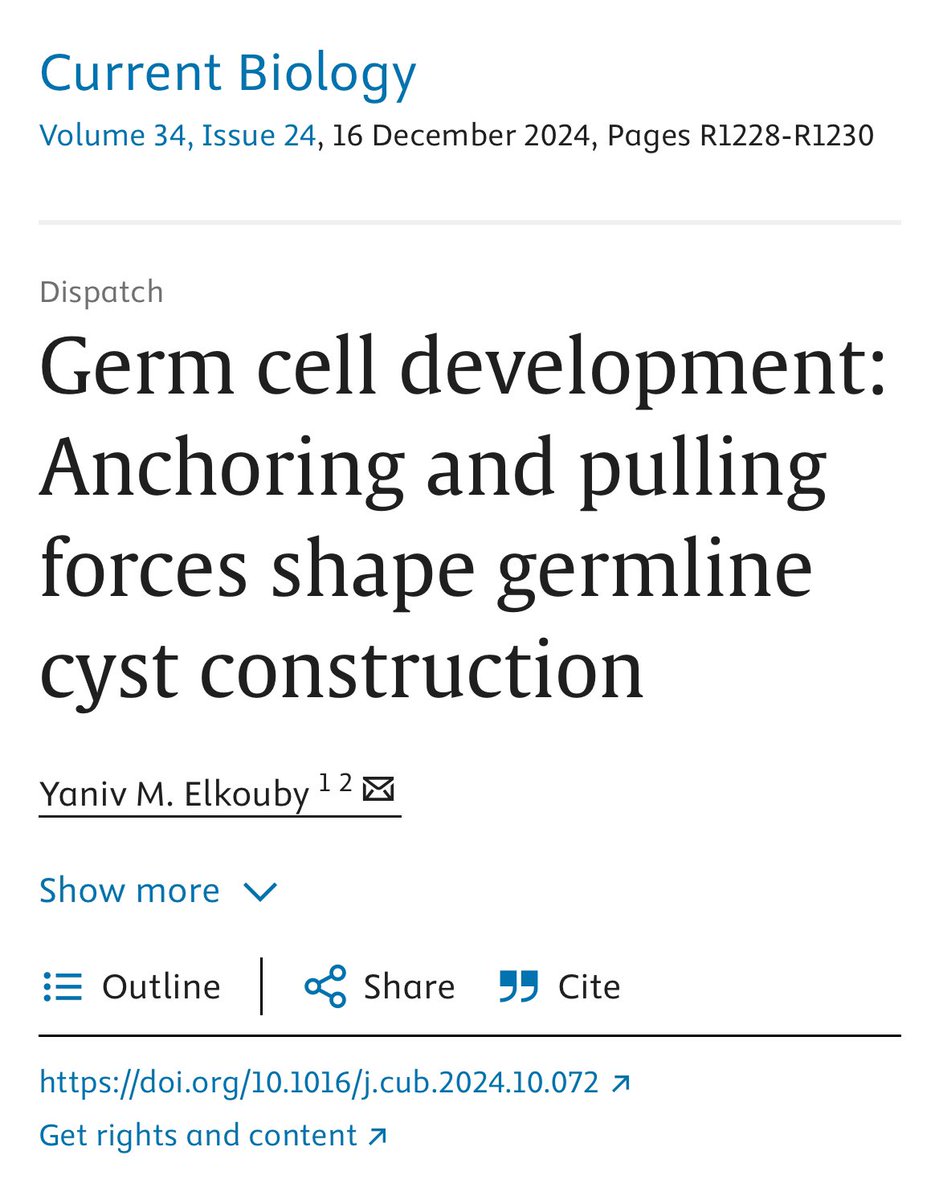
An intriguing mechanism of germline cyst formation through innovative live imaging in fetal mice gonads, and computational modeling.
Check out my dispatch in @CurrentBiology on this beautiful work.
https://t.co/MYARR8aQzg
Mary’s long, luxurious baths have drawn so much attention that an envious elephant at the Berlin Zoo has figured out how to shut the water off on her supersoaking rival—a type of sabotage rarely seen among animals.
Learn more: https://t.co/WYEh3U3EVe
Mary’s long, luxurious baths have drawn so much attention that an envious elephant at the Berlin Zoo has figured out how to shut the water off on her supersoaking rival—a type of sabotage rarely seen among animals.
Learn more: https://t.co/WYEh3U3EVe
Excited to share our new paper in @CurrentBiology! 🚀📄
"Retinal direction of motion is reliably transmitted to visual cortex via highly selective thalamocortical connections" https://t.co/y8v2Z0n2A0
Metabolite-level regulation of enzymatic activity controls awakening of cyanobacteria from metabolic dormancy: Current Biology https://t.co/qU3ouCfeAg @CurrentBiology
I digested two @Nature papers from @crezaval and
@MikeCrickmore about flexible integration and decision-making in Drosophila courtship and mating. Out came this dispatch for @CurrentBiology:
https://t.co/xxP0VLN5Kd
Enjoy reading!
When we enter a new environment, we use visual input to rapidly build an internal model of the local spatial environment. How does our brain do this? We review past literature and suggest some new ways forward in our new review in @CurrentBiology: https://t.co/tS5ZB8TXGa
Guard cells count the number of unitary cytosolic Ca2+ signals to regulate stomatal dynamics @CurrentBiology
https://t.co/jYXOqIET2A
Movie: Faster stomata closure in XXM2.0 (ChannelRhodopsin 2 variant. D156H mutant, extra high expression and medium open state)
Genome dynamics across the evolutionary transition to endosymbiosis
@CurrentBiology by @sio_stef et al from Gregory Hurst @TheLadybirdman
with @acdarby, @kaylacking, Mike Brockhurst
https://t.co/I827PAtAAs
In this #50ScientistsThatInspire Q&A, chemical engineer Dr. Eranda Nikolla underlines the importance of mentoring future engineers and scientists and discusses the lack of representation of women in STEMM. #CP50
Read the full interview: https://t.co/BsM3weDQgn
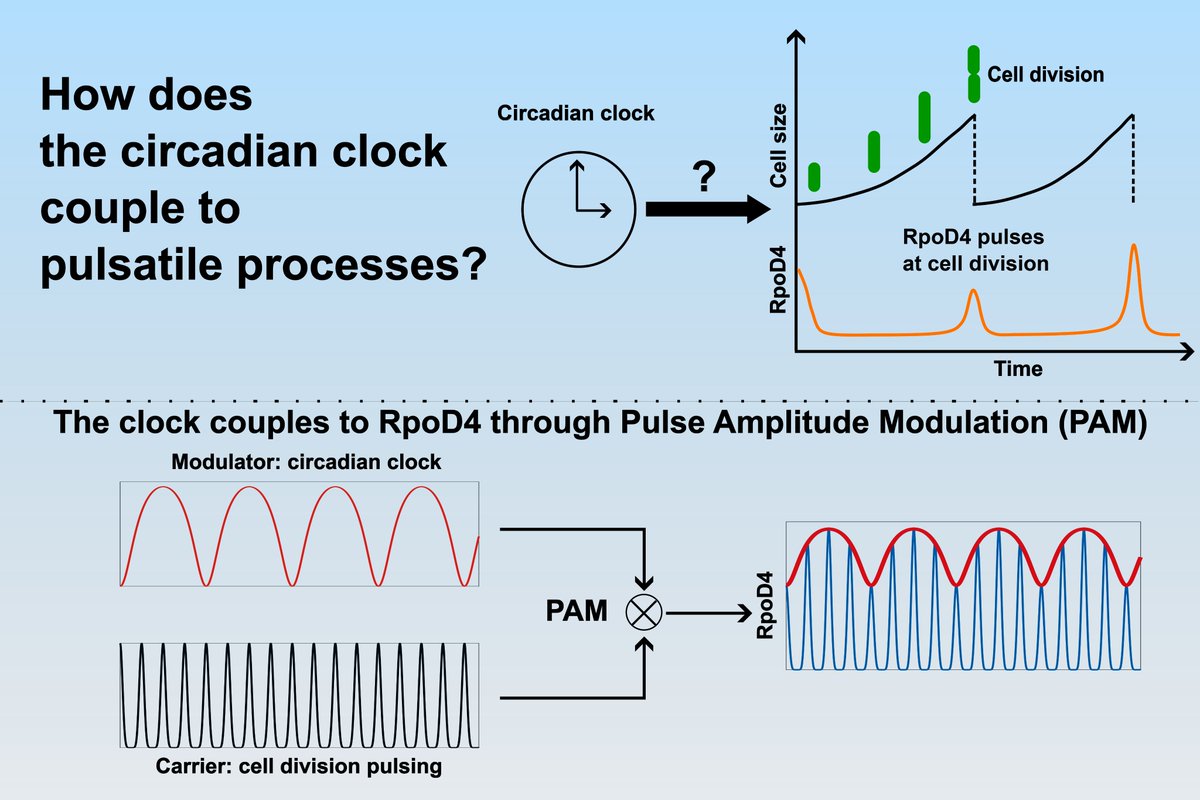
Cyanobacteria, an ancient lineage of bacteria that perform photosynthesis, have been found to regulate their genes using the same physics principle used in AM radio transmission
With @uniofwarwick
Out now in @CurrentBiology
➡️ https://t.co/uPda4j05ra
➡️ https://t.co/Xg6aT0J8xz
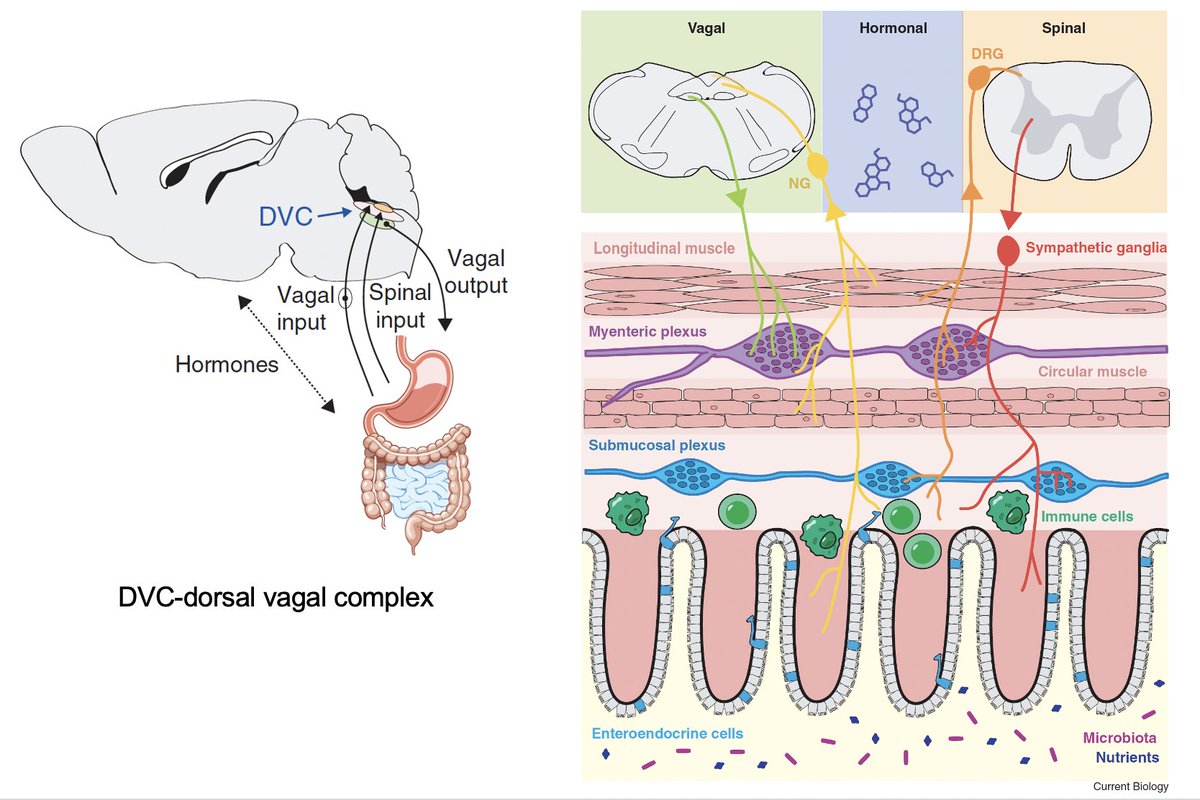
Very good, concise summary of the gut-brain axis of communication and interoception
https://t.co/97oqHFrhoi—%20to%20provide%20central
open-access @CurrentBiology@AmberAlhadeff


![NikoMcCarty's tweet photo. We often assume that an organism carries the same genome within all of its cells. But in many cases — from nematodes to hagfish, lampreys to songbirds — the truth is far messier.
At least 100 species are known to do something called “programmed DNA elimination,” in which large swaths of the genome is removed from somatic cells during development.
Marie Delattre, a cell biologist at the École Normale Supérieure, studies this phenomenon in a worm called M. belari, which belongs to the same family as C. elegans. Her research group “compared the genomes of M. belari’s germline cells — the specialized reproductive cells like sperm and eggs — with the genomes of the worm’s somatic (nonreproductive) cells,” according to reporting in Quanta Magazine.
“The somatic genomes were missing long strings of sequences present in germline genomes. Sometime between the embryo’s growth from seven cells to 32, huge chunks of DNA had vanished.”
“The scientists then watched nematode embryos develop under a microscope. As the cells grew and replicated their genomes, they broke 20 chromosomes down into fragments and then reassembled them into 40 miniature chromosomes. Most of the fragments rejoined in this new, smaller genome — but a substantial fraction were left out.”
Specifically, the worm eliminated about one-third of its own genome from somatic cells. This DNA removal process begins during early embryogenesis, typically during the first few rounds of cell division. Germline cells (those destined to become gametes; eggs or sperm) retain the entire intact genome. The exact amount of eliminated DNA varies widely between species; a parasitic nematode found in cow stomachs, called Parascaris univalens, eliminates 90% of its genome!!
The question, of course, is why organisms bother to do this at all.
It seems that the eliminated genes are useful in the germline but unnecessary, or even harmful, in somatic cells. The eliminated sequences include transposons, which are "self-replicating DNA sequences that steal the cell’s machinery to copy themselves by the thousands or millions," according to the Quanta article.
"This amounts to molecular grand larceny, as well as a waste of the time and energy that the cell must spend to suppress these sequences. Cells routinely curb transposons with epigenetic marks that silence them, or by intercepting and destroying their RNA. But some species, such as M. belari, may remove them entirely through [programmed DNA elimination]."
This process, then, is basically a way to partition the genome, keeping the full sequence safely in the germline while paring down somatic DNA for energetic efficiency or stability. If somatic cells contain a bunch of excess genes that are no longer needed, and it takes lots of energy to continuously 'silence' those genes, then it's just more efficient to cut them out entirely.
The excision is not random, either. In the best-studied nematode that does this, called Ascaris, the same exact genes and DNA segments are eliminated in every embryo, every time. Eliminated DNA sequences tend to be AT-rich and repetitive. They are usually tagged with methyl groups, which alerts the cell that this DNA should be tightly packed and kept ‘silenced’.
Programmed DNA elimination sounds esoteric, but any strange phenomenon is usually a rich source of material for biotechnology discovery. Clearly these organisms have evolved an effective means to silence genes, streamline genomes, and keep transposons from causing trouble. Instead of relying on reversible switches, though, they just cut out the unneeded pieces. If we understood and harnessed this, perhaps we could build smaller synthetic genomes or reprogram chromosomes in useful ways.
Thanks for reading.](https://pbs.twimg.com/media/G0aQhiObQAAPK19.png)
![NikoMcCarty's tweet photo. We often assume that an organism carries the same genome within all of its cells. But in many cases — from nematodes to hagfish, lampreys to songbirds — the truth is far messier.
At least 100 species are known to do something called “programmed DNA elimination,” in which large swaths of the genome is removed from somatic cells during development.
Marie Delattre, a cell biologist at the École Normale Supérieure, studies this phenomenon in a worm called M. belari, which belongs to the same family as C. elegans. Her research group “compared the genomes of M. belari’s germline cells — the specialized reproductive cells like sperm and eggs — with the genomes of the worm’s somatic (nonreproductive) cells,” according to reporting in Quanta Magazine.
“The somatic genomes were missing long strings of sequences present in germline genomes. Sometime between the embryo’s growth from seven cells to 32, huge chunks of DNA had vanished.”
“The scientists then watched nematode embryos develop under a microscope. As the cells grew and replicated their genomes, they broke 20 chromosomes down into fragments and then reassembled them into 40 miniature chromosomes. Most of the fragments rejoined in this new, smaller genome — but a substantial fraction were left out.”
Specifically, the worm eliminated about one-third of its own genome from somatic cells. This DNA removal process begins during early embryogenesis, typically during the first few rounds of cell division. Germline cells (those destined to become gametes; eggs or sperm) retain the entire intact genome. The exact amount of eliminated DNA varies widely between species; a parasitic nematode found in cow stomachs, called Parascaris univalens, eliminates 90% of its genome!!
The question, of course, is why organisms bother to do this at all.
It seems that the eliminated genes are useful in the germline but unnecessary, or even harmful, in somatic cells. The eliminated sequences include transposons, which are "self-replicating DNA sequences that steal the cell’s machinery to copy themselves by the thousands or millions," according to the Quanta article.
"This amounts to molecular grand larceny, as well as a waste of the time and energy that the cell must spend to suppress these sequences. Cells routinely curb transposons with epigenetic marks that silence them, or by intercepting and destroying their RNA. But some species, such as M. belari, may remove them entirely through [programmed DNA elimination]."
This process, then, is basically a way to partition the genome, keeping the full sequence safely in the germline while paring down somatic DNA for energetic efficiency or stability. If somatic cells contain a bunch of excess genes that are no longer needed, and it takes lots of energy to continuously 'silence' those genes, then it's just more efficient to cut them out entirely.
The excision is not random, either. In the best-studied nematode that does this, called Ascaris, the same exact genes and DNA segments are eliminated in every embryo, every time. Eliminated DNA sequences tend to be AT-rich and repetitive. They are usually tagged with methyl groups, which alerts the cell that this DNA should be tightly packed and kept ‘silenced’.
Programmed DNA elimination sounds esoteric, but any strange phenomenon is usually a rich source of material for biotechnology discovery. Clearly these organisms have evolved an effective means to silence genes, streamline genomes, and keep transposons from causing trouble. Instead of relying on reversible switches, though, they just cut out the unneeded pieces. If we understood and harnessed this, perhaps we could build smaller synthetic genomes or reprogram chromosomes in useful ways.
Thanks for reading.](https://pbs.twimg.com/media/G0aQhUyacAE1dfu.jpg)




![NikoMcCarty's tweet photo. We often assume that an organism carries the same genome within all of its cells. But in many cases — from nematodes to hagfish, lampreys to songbirds — the truth is far messier.
At least 100 species are known to do something called “programmed DNA elimination,” in which large swaths of the genome is removed from somatic cells during development.
Marie Delattre, a cell biologist at the École Normale Supérieure, studies this phenomenon in a worm called M. belari, which belongs to the same family as C. elegans. Her research group “compared the genomes of M. belari’s germline cells — the specialized reproductive cells like sperm and eggs — with the genomes of the worm’s somatic (nonreproductive) cells,” according to reporting in Quanta Magazine.
“The somatic genomes were missing long strings of sequences present in germline genomes. Sometime between the embryo’s growth from seven cells to 32, huge chunks of DNA had vanished.”
“The scientists then watched nematode embryos develop under a microscope. As the cells grew and replicated their genomes, they broke 20 chromosomes down into fragments and then reassembled them into 40 miniature chromosomes. Most of the fragments rejoined in this new, smaller genome — but a substantial fraction were left out.”
Specifically, the worm eliminated about one-third of its own genome from somatic cells. This DNA removal process begins during early embryogenesis, typically during the first few rounds of cell division. Germline cells (those destined to become gametes; eggs or sperm) retain the entire intact genome. The exact amount of eliminated DNA varies widely between species; a parasitic nematode found in cow stomachs, called Parascaris univalens, eliminates 90% of its genome!!
The question, of course, is why organisms bother to do this at all.
It seems that the eliminated genes are useful in the germline but unnecessary, or even harmful, in somatic cells. The eliminated sequences include transposons, which are "self-replicating DNA sequences that steal the cell’s machinery to copy themselves by the thousands or millions," according to the Quanta article.
"This amounts to molecular grand larceny, as well as a waste of the time and energy that the cell must spend to suppress these sequences. Cells routinely curb transposons with epigenetic marks that silence them, or by intercepting and destroying their RNA. But some species, such as M. belari, may remove them entirely through [programmed DNA elimination]."
This process, then, is basically a way to partition the genome, keeping the full sequence safely in the germline while paring down somatic DNA for energetic efficiency or stability. If somatic cells contain a bunch of excess genes that are no longer needed, and it takes lots of energy to continuously 'silence' those genes, then it's just more efficient to cut them out entirely.
The excision is not random, either. In the best-studied nematode that does this, called Ascaris, the same exact genes and DNA segments are eliminated in every embryo, every time. Eliminated DNA sequences tend to be AT-rich and repetitive. They are usually tagged with methyl groups, which alerts the cell that this DNA should be tightly packed and kept ‘silenced’.
Programmed DNA elimination sounds esoteric, but any strange phenomenon is usually a rich source of material for biotechnology discovery. Clearly these organisms have evolved an effective means to silence genes, streamline genomes, and keep transposons from causing trouble. Instead of relying on reversible switches, though, they just cut out the unneeded pieces. If we understood and harnessed this, perhaps we could build smaller synthetic genomes or reprogram chromosomes in useful ways.
Thanks for reading.](https://pbs.twimg.com/media/G0aQhyDbgAAzfU1.jpg)