new red-letter edition of Elementary Applied Topology!
full pdf on my website -- physical book for $15 from amazon...
https://t.co/vvBN2AcZBW
short story:
* new chapter on background material (chapter 0)
* new chapter on persistence (chapter 6)
* so many errors... fixed!
* some new artwork...
this book, begun in 2009 when the field was emerging, means a great deal to me. it was always an art project more than a textbook; indeed, the minimalist images were and are the only exercises in the text. if you can figure out what the image means, you have figured out the math behind it.
i hope that keeping the pdf available on my site encourages a new generation of students to learn topology. though it might take some time, as the page count went up by a third. also, the bibliography has grown quite a bit, given the developments in the field...
Why do we divide by n-1 instead of n when we want to estimate the variance? This is Bessel's correction term, and it made no sense to me back in university when I first learned it.
But I finally understood why!
Got 2 minutes to spare? Here's the explanation!!
Very cool AI-assisted work!
I'm currently in an email thread (via Dana Scott) w/ Jan von Plato, who led this effort, & he sent us his Claude-assisted writeup.
While Gödel's notes do *not* actually have a proof of the independence of AC from full set theory (ZF), from what I can tell so far:
1. Gödel's notebooks instead contained a proof of independence of the axiom of constructibility in type theory (by 1942).
2. Jan, working w/ Claude, reconstructed and completed Gödel's unfinished argument to prove the independence of the Axiom of Choice *in type theory* (Gödel was missing a key definition that makes comprehension hold in the model where AC fails).
3. In proving 1, Gödel had anticipated, 23-24 years prior, many of the central ideas from Boolean-valued forcing (BVF), which was Dana & Bob Solovay's '65-66 simplification of Cohen's original '63 forcing, for which Cohen got the only Fields Medal in logic.
For example, it looks like Gödel had much of the machinery for assigning Boolean truth values to mathematical statements*, but hadn't completed the construction of an entire universe of sets governed by those truth values.
* - E.g. Gödel had finite observations playing the role of Cohen forcing conditions, regular open sets as Boolean truth values, and Boolean interpretations of logical connectives & quantifiers. (However, Gödel lacked the full transfinite construction of a Boolean-valued universe of sets, together with a proof that it obeys all the rules of ZF set theory.)
4. On Jan's reading, in how Gödel develops the precursors to Boolean-valued forcing, you can see how his post-1944 Platonism could coexist with his earlier use of intuitionistic methods which, prior to this, was a bit of a puzzle that Sol Feferman & others acknowledged.
Namely, Gödel's precursors to BVF support a philosophical view of observations from a finite observer defining neighborhoods of possible worlds & regular open sets giving Boolean truth values.
In other words, Gödel believed mathematical reality needn't be limited solely to what a finite observer can construct or determine.
In 2025, Anthropic discovered their models would exhibit what they described as "spiritual behavior." Since then, some have wondered: was this unique to Claude or emergent behavior in LLMs generally?
I tested 141 models to find out.
The results are now posted on LessWrong.
I’ve been trying to think more about what human academic work products should look like as AI becomes increasingly capable. It seems likely to me that papers will decline dramatically in value as it becomes easier to automate their production; possibly the median paper will be one that no human, not even the author, has read. It is not clear to me how many traditional institutional organs of academia (journals, metrics, etc.) should adapt to this.
A couple of models I like, which already exist in mathematics but are relatively unusual, include: courses on one’s research (with accompanying notes), or research seminars (with proceedings), à la Grothendieck’s SGA seminar. These have the benefit of keeping humans in the loop, and also have built-in mechanisms to ensure that participants are gaining some expertise.
“The university is called to be a training ground for talent and a laboratory of meaning, a place where intelligence does not bow to utility, but rather serves the truth faithfully.”
https://t.co/ORk8aUM6UI
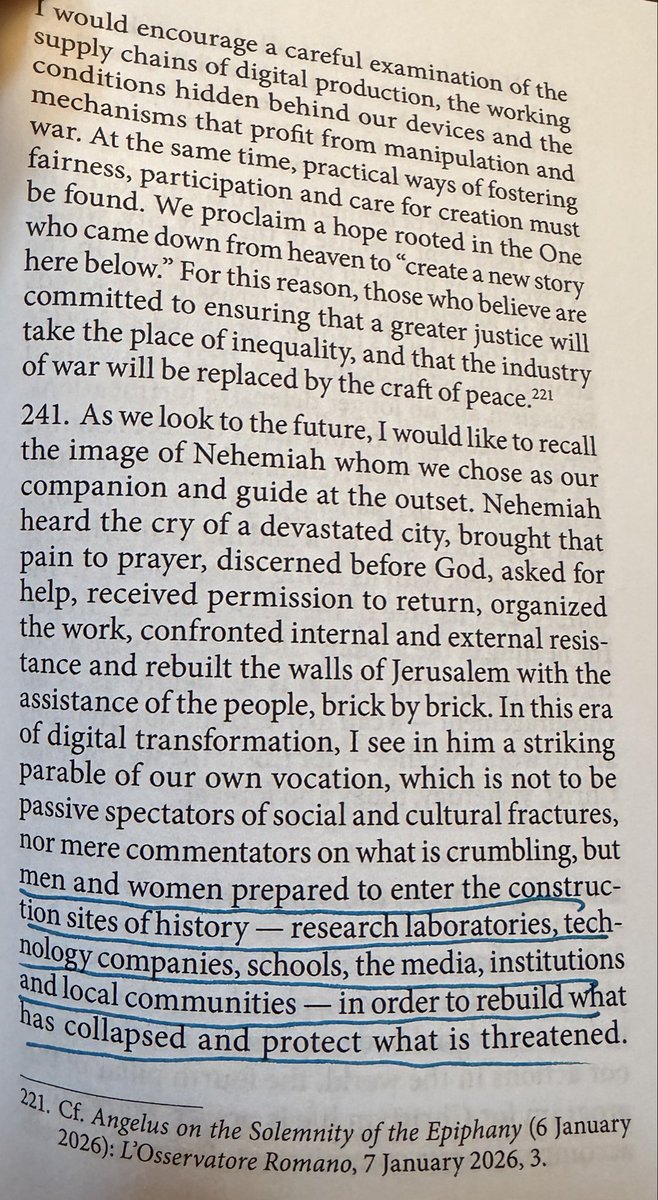
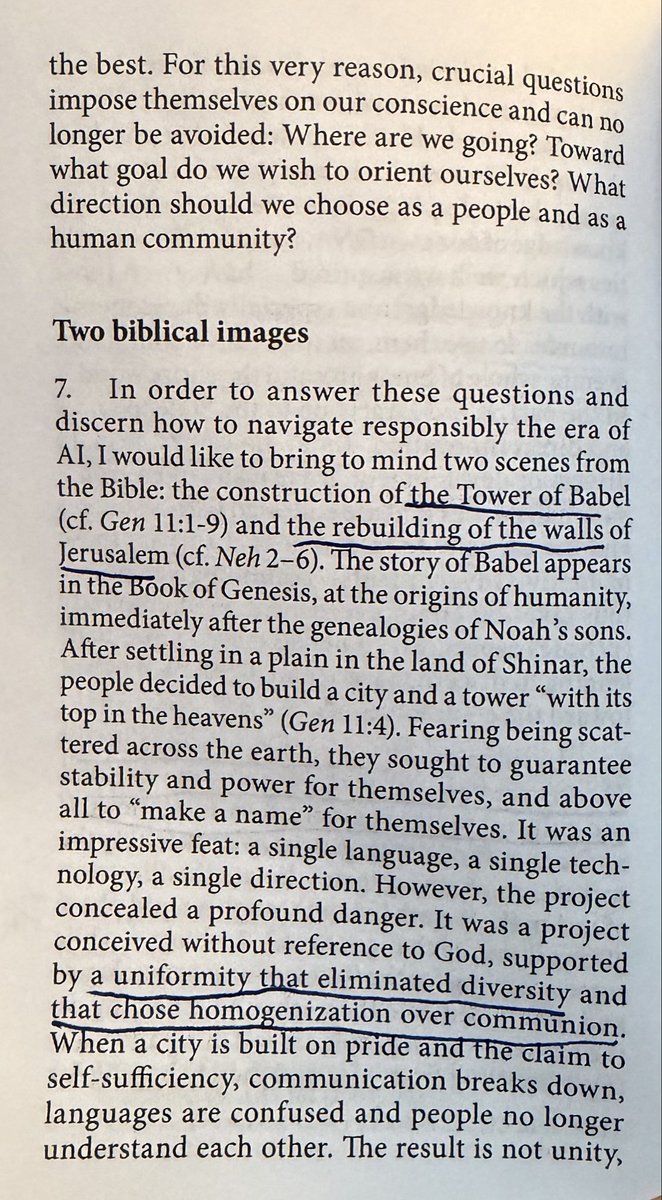
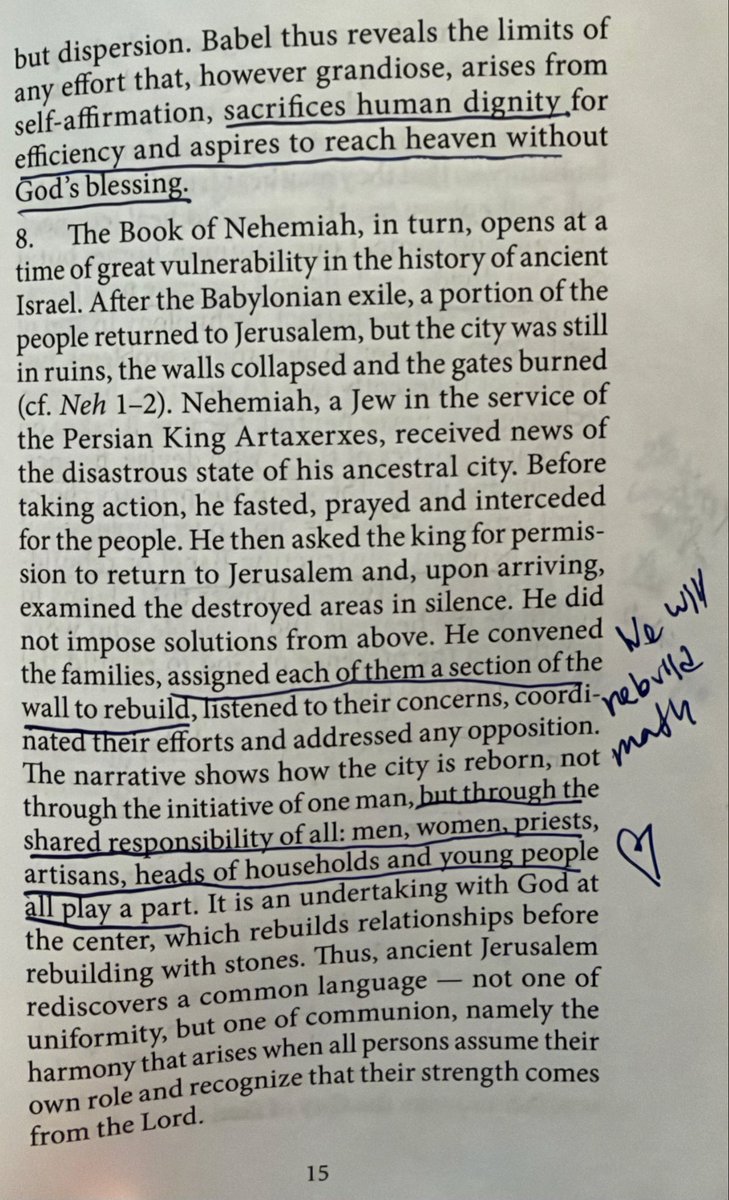
Just finished reading Pontifex’s Magnifica Humanitas and found myself thinking of you. Leo lays out competing visions of the future: AI as a Tower of Babel that we must avoid or AI as presenting a destruction from which we must rebuild, channeling the image of Nehemiah. I hope jobs come your way so you can help us rebuild math!
In 1966, Paul Cohen won the Fields medal for showing the independence of: the continuum hypothesis and the axiom of choice.
Gödel reacted to Cohen’s Fields medal by saying that he had already proved the result in the 1940s. Yet when pushed for a proof by his peers, Gödel was unable to reconstruct one from his notes.
"The first task von Plato set Claude was to discover if Gödel’s workbooks had a proof of the independence of the axiom of choice, which would reveal that Gödel had been telling the truth in 1966.
The answer came back: yes, almost. “He was just one step away,”"
This podcast has no
1) crying
2) Sad Fields Medalists
3)Claims about Math being "over", "wiped out" or "solved"
Jesse Wolfson explain why would should be bullish on careers in mathematics
Finally published:
“Symmetry as a common origin of hierarchical emergence and abstraction”
https://t.co/tyN59jdI0Y
Symmetry generate hierarchical macroscales and shape the structure of Bayesian beliefs, making inference of high-dimensional systems tractable
Hidden secrets unlocked in Gödel's notebooks, with AI translating the mysterious Gabelsberger script, finding numerous unknown proofs, including an argument for the consistency of the negation of the axiom of choice.
https://t.co/1RPHtKC6Vm
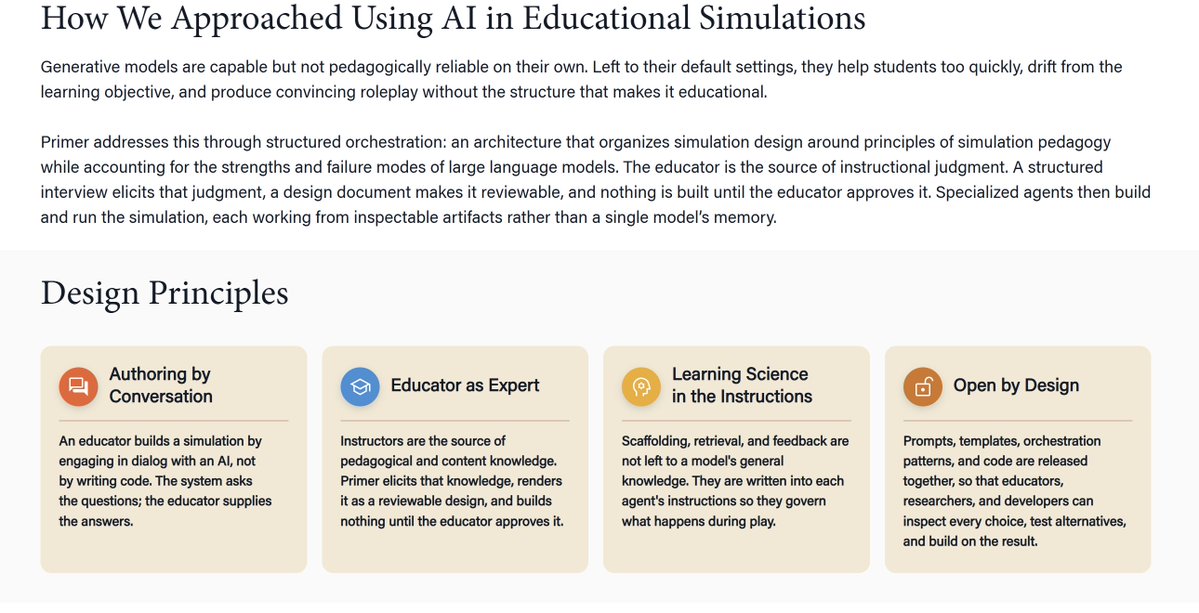
🚨 Our Generative AI Lab is releasing Primer: an agent-driven system where a teacher talks through lessons & gets back a playable simulation for their students, grounded in pedagogy. We hope educators & researchers build on it. Paper/prompts/code are open: https://t.co/ltSbgjTeGp