AI needs GPUs to run, but the cost of renting that computing power can change over time.
for AI companies and GPU providers, that creates a financial risk that hasn’t had many dedicated tools to manage.
@injective is working on a solution.
$SICI tracks rental prices across five NVIDIA GPUs, creating an onchain AI compute index. now, injective options makes it possible to hedge against movements in that index.
here’s a practical example:
→ an AI company worried about rising compute costs could use $SICI calls to hedge against price increases.
→ a GPU provider concerned about rental prices falling could use puts to hedge against a potential decline.
both sides can manage their exposure to changes in the same market.
and it doesn’t stop at AI compute. injective options also covers US equities, gold, silver, and oil, with positions fully collateralized using native injective USDC.
developers can also build custom derivatives markets and white-label exchanges using the underlying infrastructure, without starting from scratch.
as AI infrastructure expands, managing the cost of compute could become increasingly important.
injective is bringing tools to hedge that risk onchain.
the demo below walks through how to execute AI compute index options on injective.
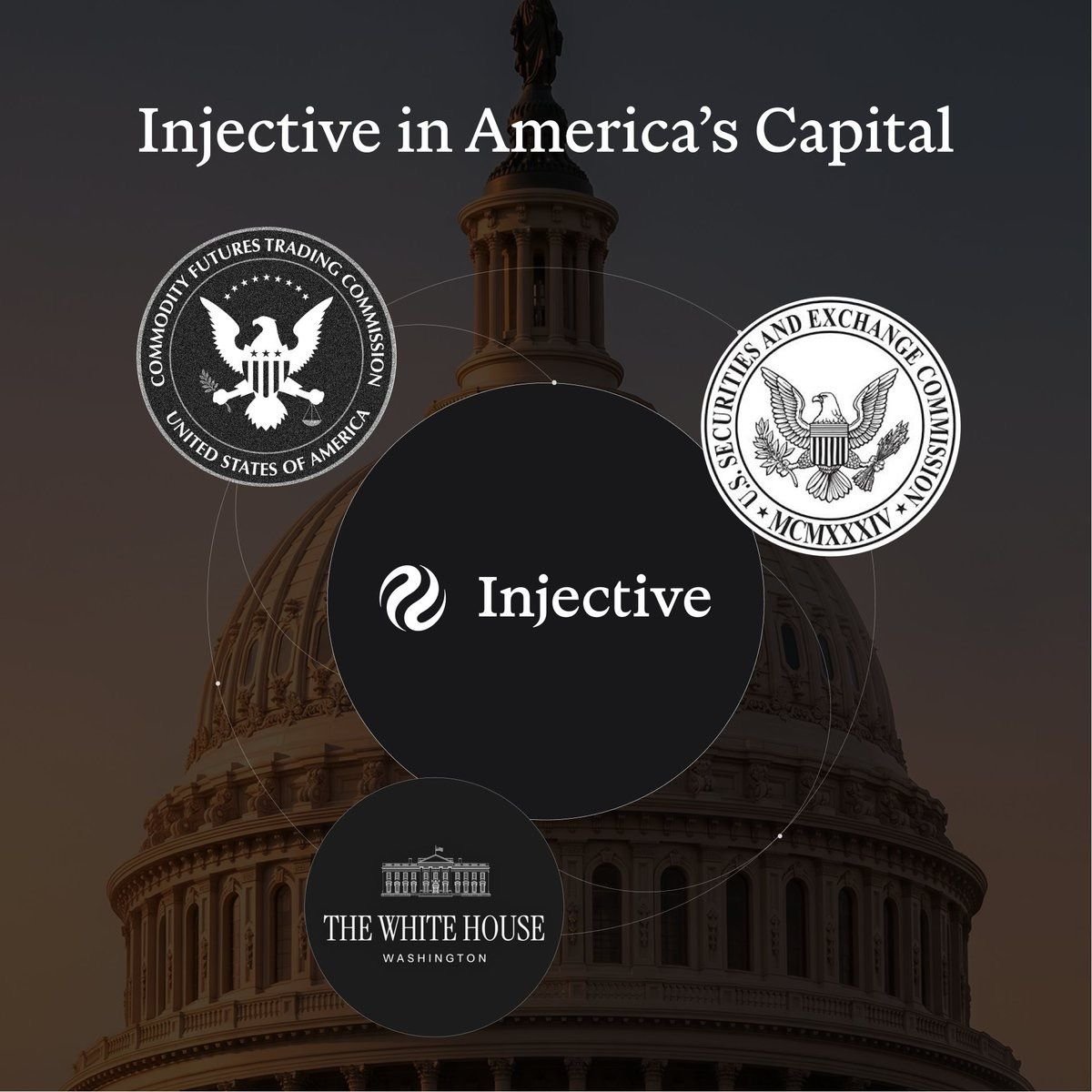
Injective is making moves on the regulatory side in the U.S.
This month, @ericinjective met with officials from the White House, SEC and CFTC in Washington, alongside members of @injective legal, policy and research teams.
A thread 🧵
.@injective launched $SICI just yesterday, and now there’s another development to look at.
injective options is live on testnet, bringing a new layer of onchain financial infrastructure to developers and everyday users.
here’s what you need to know 🧵
The move toward onchain finance is becoming harder to ignore.
@The_DTCC is starting to put major financial assets on blockchain rails, including Russell 1000 stocks, large ETFs, and U.S. Treasuries.
And this isn't a small experiment involving a handful of crypto companies, more than 50 firms are involved, including @BlackRock, @GoldmanSachs, and @JPMorgan.
The institutions that handle the settlement of traditional markets are beginning to test what happens when those same assets can exist and move onchain.
Once that starts working at scale, the focus naturally shifts to the networks underneath it.
Can they handle real markets? Can assets settle quickly? Is there enough liquidity? Can institutions operate within the rules they already have to follow?
@injective is already building around those needs. Its onchain markets bring exposure to real world asset prices, with settlement using native USDC.
The assets of traditional finance are starting to move toward blockchain, and the infrastructure is becoming increasingly important.
Moving funds between an exchange and a blockchain should be as straightforward as possible.
@krakenfx now supports native USDC deposits and withdrawals on @injective, making it easier for users to transfer @circle's USDC directly between the exchange and the network.
For anyone using Injective, this means a simpler way to access its growing ecosystem without dealing with extra conversions or unnecessary steps.
This builds on a relationship that has been growing over the years.
Kraken first supported $INJ in 2021, giving its users access to the network's native token.
Now, users can also move native USDC directly onto Injective and use it across trading, payments, tokenized assets, and other onchain applications.
The integration is powered by Injective's MultiVM architecture, which keeps USDC as one native asset across both the EVM and native environments.
Instead of separate versions of the same token, users interact with a single unified balance throughout the network.
Kraken's involvement with Injective goes beyond exchange support.
It also operates an institutional validator on the network and helps secure Pineapple's $100 million $INJ treasury, showing its continued commitment to the ecosystem.
As one of the industry's oldest exchanges, Kraken processed around $2 trillion in trading volume during 2025.
Adding native USDC support gives its global user base a more direct way to enter the Injective ecosystem and start using its financial applications.
Read more About the announcement here 👇
https://t.co/6Pw1ubM6mL