Exciting breakthrough technology from the lab, now live in @CellCellPress ! Instead of cutting the genome where proteins bind (e.g., Cut&Tag), D&D-seq scars the DNA with a deaminase, allowing single cell genome mapping of TFs and chromatin remodellers!
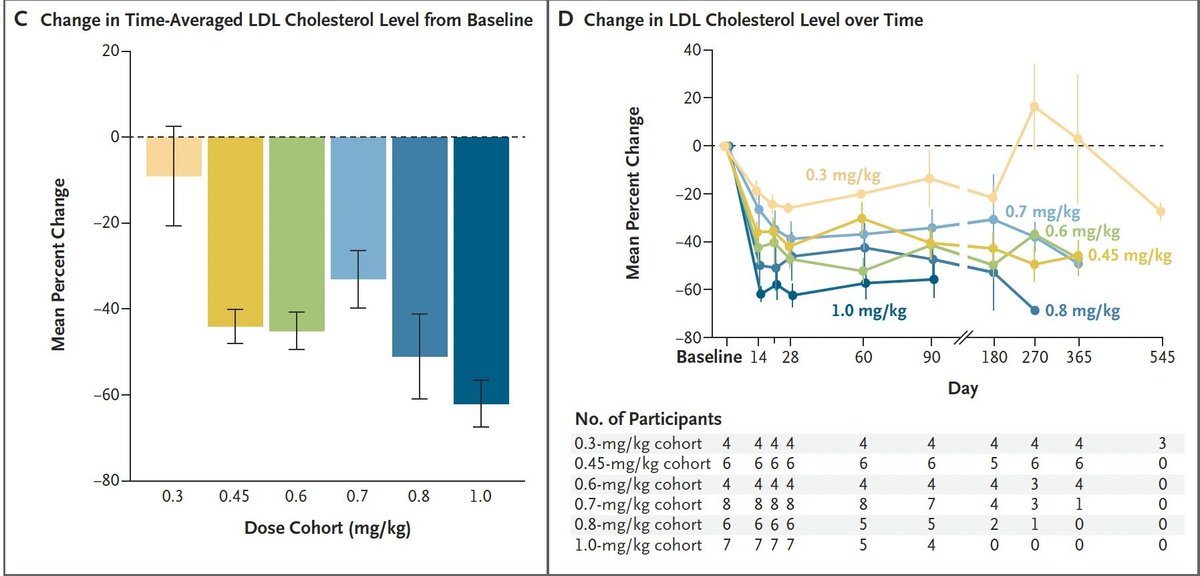
Eli Lilly has done it.
They've gone and made what seems to be a powerful, permanent gene therapy for LDL cholesterol.
That means they'll be able to effectively prevent most heart disease with a single infusion!
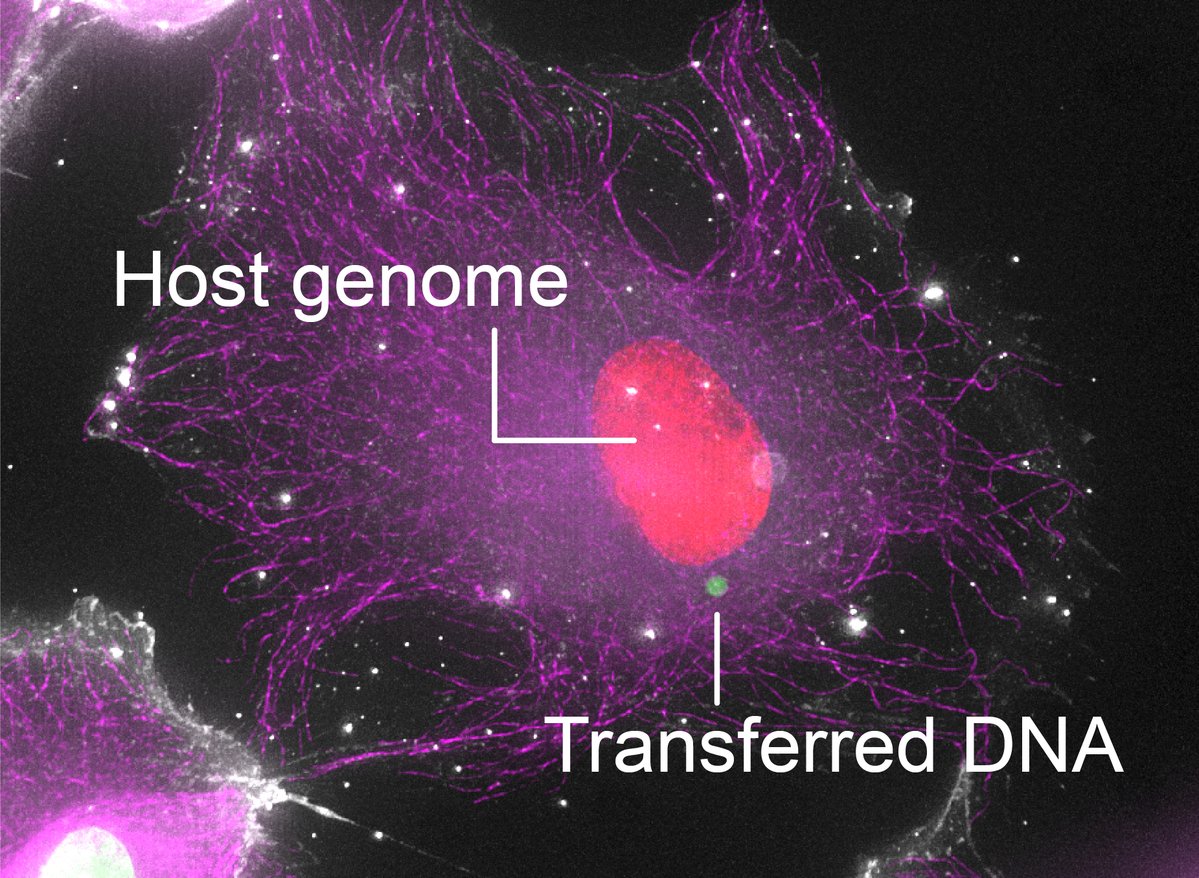
Excited to share our latest paper, out today @CellCellPress. We found that large pieces of the human genome can transfer between cells upon direct contact, endowing recipient cells with heritable phenotypic changes. (1/7)
https://t.co/SbshGhofN0
🧬We are born with hundreds of de novo DNA mutations that were not present in genomes of our parents. But why do some people have more of them than others?
In a new preprint the authors analyzed 28,985 sibling pairs and identified more than 800,000 de novo mutations. The main factor is parental age especially paternal age with about 1.5 extra mutations per year of the father’s age and 0.4 per year of the mother’s age
The authors did not find convincing evidence that the total number of de novo mutations is associated with genetic ancestry or parental smoking
The most interesting part is rare variants in DNA repair and replication genes. Disruptive variants in REV1 were associated with about a 16% increase in the total mutation rate while variants in LIG1 were linked to a 24 to 26% increase in CpG to TpG mutations
A key feature of the study was the analysis of IBD-segments in siblings genomic regions that both children inherited from the same parental chromosomes. Differences within these regions can point to new mutations.
https://t.co/qh5NN4yezC
#deNovo #mutations #reparation #inheritance #siblings
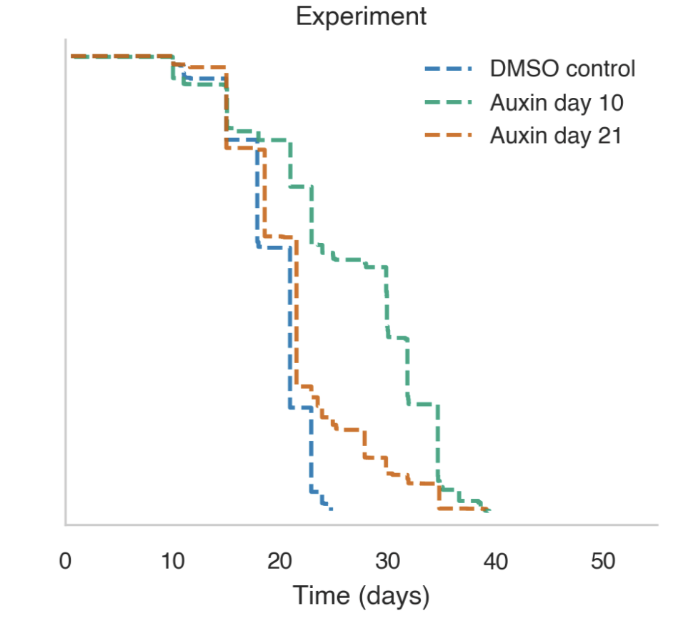
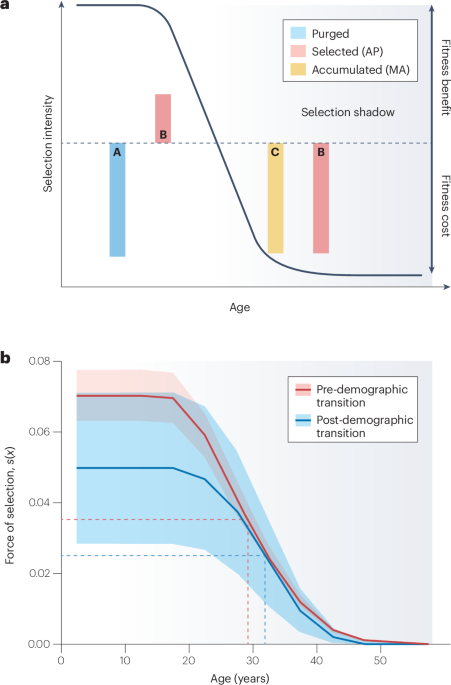
Worms have a gene that, when switched off, doubles lifespan. Even in animals already close to death.
That shouldn't be possible. If aging is just damage piling up, by the time you're old, you've missed your window. But old worms, visibly falling apart, respond just as powerfully as young ones. All that damage is still there. They live longer anyway.
The explanation — from the Fedichev-Gruber dynamical framework — is that what kills you isn't accumulated damage. It's your proximity to a failure threshold on an unstable trajectory. The organism's physiological state drifts along an unstable mode — slowly at first, then exponentially, then in runaway collapse. Death is a first-passage event: the moment the trajectory crosses the edge.
75% of the worms had already died by day 21. They weren't older in chronological time — they were further along the instability trajectory. The survivors, by chance, were still early in the exponential regime. Biologically younger, despite identical ages. Reduce the instability rate for those lucky few, and they respond as powerfully as young animals — because dynamically, they still are.
No damage reversal. No clock reset. Just a change in the slope of the landscape for animals who happened to still be far enough from the edge.
The precision of the prediction is striking. Irreversible structural damage — pharyngeal degeneration, gonadal atrophy, uterine tumors — persists after treatment, exactly as the model predicts. But proteostasis recovers and stress resilience returns — because these are coupled to the dynamical mode the intervention modulates.
Worms age in the unstable regime from birth. Humans don't — damage slowly erodes our stability over decades. The interventions that work here will be transient in us. Our targets are different: the rate of damage accumulation and the biological noise separating average lifespan from maximum lifespan.
Aging and death are not one thing. Death is the result of a transition between two dynamical regimes. Nematodes are great examples of aging in an unstable regime, and experiments confirm the theory works exactly as predicted.
Please find a moment to like, follow, and repost. The full piece is linked below. Discussion welcome.
Spatial genomics has existed for many years, but it has often been limited by complex imaging systems, specialized equipment, and $$$.
With IRISeq, we wanted to simplify this to a simple PCR rxn. https://t.co/jmS3N6PRu2
"Human hepatocytes show continuous and lifelong turnover, allowing the liver to remain a young organ (average age <3 years)." Yet, "physiological liver cell renewal in humans is mainly dependent on diploid hepatocytes, whereas polyploid cells are compromised in their ability to divide." We get more polyploid cells as we age, and limit the ability of the liver to regenerate (at least so far): https://t.co/WYB55EhGXy.
Perturb-MARS: Reading mouse experiments through a human lens
https://t.co/JtINuErDfg
During my first week at @NOETIK_ai, there was one project in particular I was immediately enamored with, and have been excited to write about since. Eleven months later, it is finally ready to be put out there.
This is an essay over Perturb-MARS. In short: a multiplexed in-vivo mouse perturbation screen, read out by a foundation model trained only on human cancer tissue. This model (TARIO-2, which we've written about before) takes mouse H&E and returns predictions in human spatial-transcriptomic space.
No retraining. no ortholog mapping. It just works, and allows us to answer questions the current preclinical apparatus is structurally incapable of answering, such as discovering combination therapy antagonism.
And more importantly, Perturb-MARS offers us the substrate of a scalable, active-learning flywheel.
This rarely exists in biology, and doesn't exist at all in in vivo settings. As in, environments where a model can make predictions, the wet lab can test them at scale, and the results come back in the same coordinate system the predictions were made in. Code and math have this. Biology largely doesn't.
@NOETIK_ai's goal is to build simulators of human biology. You need active-learning environments to do this well. And Perturb-MARS gets us closer to that than anything I'm aware of.
We are extremely interested in partnerships over this work! Reach out to [email protected] to start that discussion.
One of the clear, and significant findings derived from the single cell (sc) analysis of biological systems has been the realization that phenotypically homogeneous populations are heterogeneities at the level of gene expression (GE). https://t.co/gmvOEXfqIx 🧵