Happy to share our latest preprint on how the human DNA damage response drives nuclear metamorphosis (nucleomorphosis) and its role in DNA repair via a molecular code distributed on cytoskeletal and membrane-related elements.
https://t.co/Qayge9BdTP
When cells in different phases fuse, nuclei play a mitotic tug-of-war
Olga Afonso, Daniel Feliciano and Jennifer Lippincott-Schwartz investigate the fate of syncytia containing nuclei at different cell cycle stages.
Highlight: https://t.co/SKpcuboIKI
Our recent paper on CCAN organization was just out in @ScienceAdvances. We combined MD simulation with expansion microscopy to observe an interesting structure in the kinetochore. Congrats, @yj_sakai, Mariko, and @yasuhhirano17 !! Please check it out.
https://t.co/zZF4FNHJ1z
The Department of Biological Chemistry at UCI is seeking a tenure-track Assistant Professor!
This is a broad search across biomedical sciences, including genome stability. Join a dynamic department with great faculty benefits and year-round sunshine!
https://t.co/xLAkV0NxOA
Out today in @JCellBiol Work from the Mogessie, @FachinettiLab & @DrSteffi labs reveals how CENP-A/B/C cooperate to maintain kinetochore function in oocytes and how declining centromere strength predisposes aging eggs to aneuploidy. @pewhealth@HFSP
https://t.co/Q2hYFCL9i1
We are looking to hire post-doctoral fellows to work on somatic mosaicism, regeneration, and cancer development, please reach out to me if you are interested! @CRI_UTSW
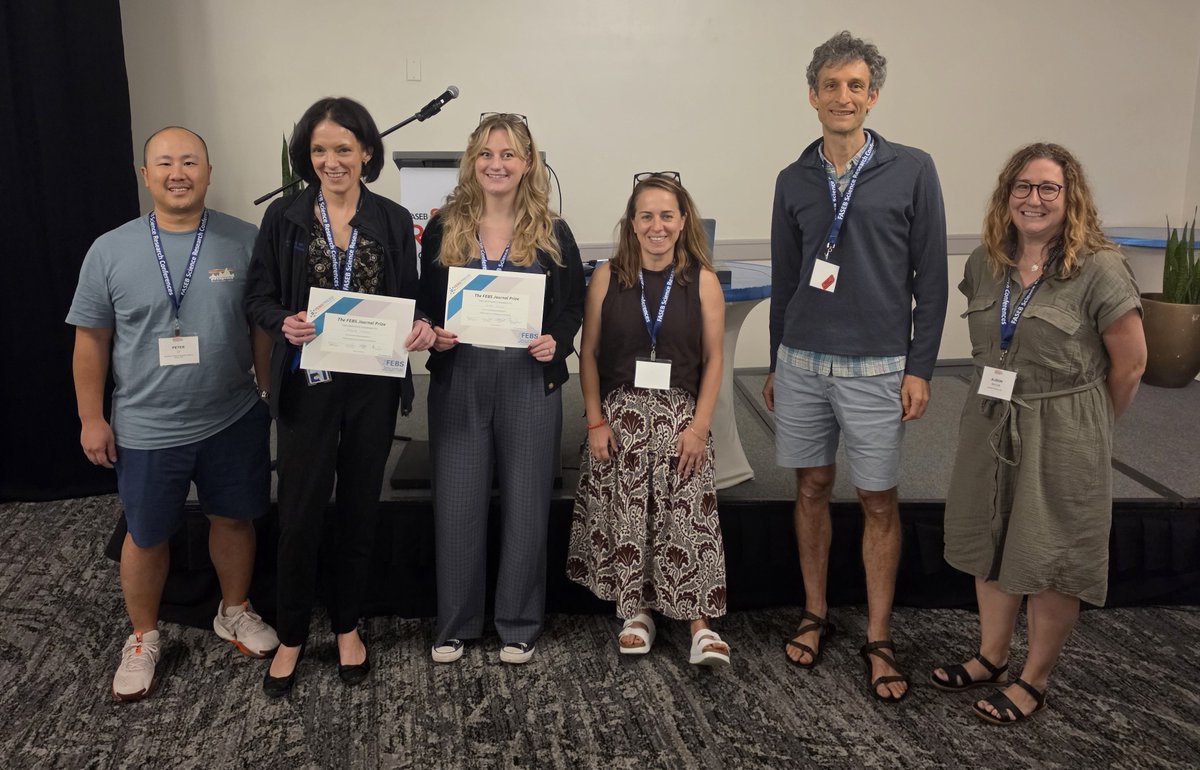
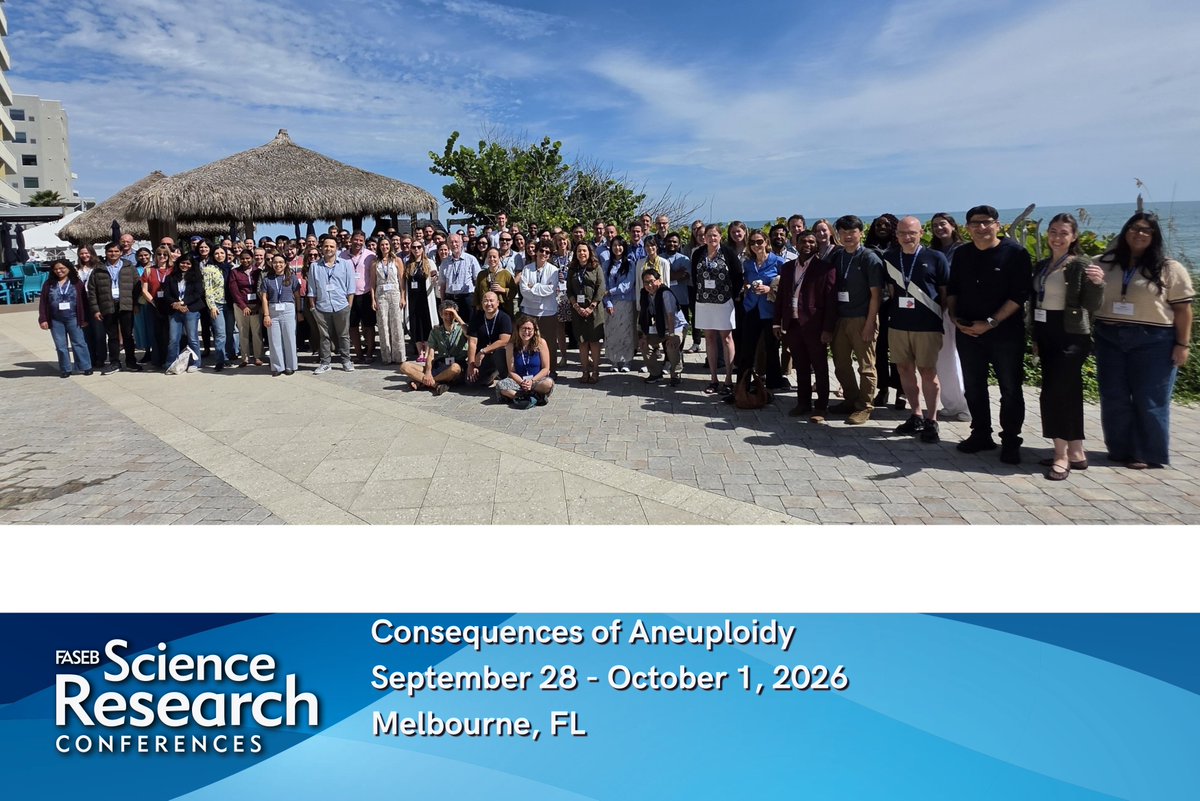
That’s a wrap for FASEB Aneuploidy 2026! Thanks to all the attendees for making it a special meeting. The science was so out-of-this-world that NASA even launched a spaceship for us. 🚀
See you again in 2029! #ANESRC
Check out our latest, just out in @MolecularCell! We reveal how typically harmless forms of DNA damage synergise with DNA replication defects in ATM-deficient cells to drive cancer responses to PARP inhibitors—and propose that a similar synergy may contribute to A-T pathogenesis.
We are recruiting new faculty at all levels who seek to solve fundamental problems in biology and disease. @CRI_UTSW is an exceptional and highly collaborative environment to build a research program and pursue ambitious science. Join us!
😊 New preprint! In budding yeast, Dna2-intrinsic condensation regulates long-range DNA-end resection. Analyses suggest redistribution of condensate grammar in humans. Congrats to Chris Jordan and the Mekhail, Wyatt, Cowen & Hakem labs! More to come soon.
https://t.co/0MR2Jr9LSI
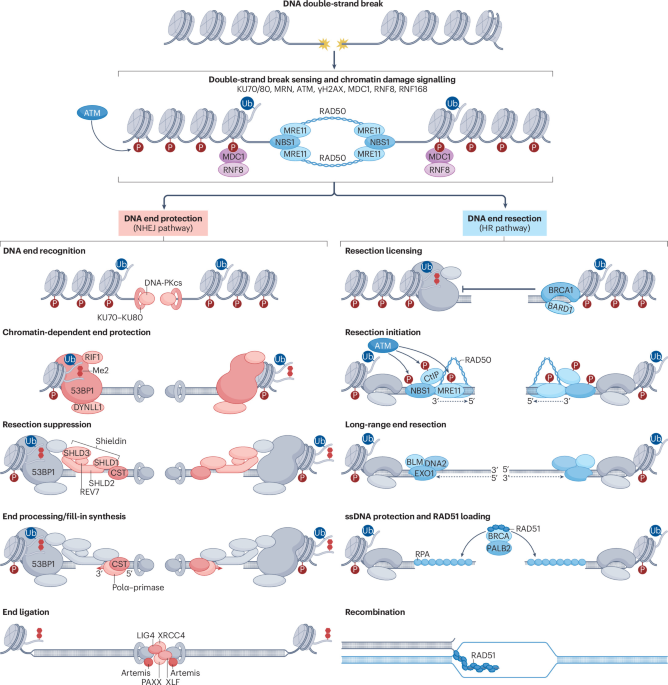
A big week for the lab! Two new papers on how cells repair DNA double-strand breaks: one on getting NHEJ started in chromatin, one on processing the ends before ligation. Years of work by a fantastic team.
How are mitotic chromosomes built? 🏗️ Our Review @TrendsGenetics revisits the classical chromosome scaffold model and connects it to condensins, topoIIα, and physical forces. We propose interphase chromatin domains as “building blocks”🧩of chromosomes:
https://t.co/AQgiZlSjYS
Very happy to share our new Perspective in Nature Reviews Genetics, led and written primarily by my colleague Liam P. Shaw:
“The shared evolutionary capacities of plasmids and extrachromosomal DNA”
https://t.co/Y0lwYwrJdO
Excited to share our new @ScienceAdvances paper! During interphase, centromeres form 3D shells organized by the CENP-A chaperone complex at their core. Led by Hindol Gupta, with the @TakashiAkeraLab , Losada, and Shroff labs.
https://t.co/Fs3C0lCepW
🎉 Excited to share the first preprint from the Panday Lab!
https://t.co/bTPXUqbz32
We identify FANCM as an adaptive genome-maintenance dependency in BRCA1-deficient breast cancer and uncover its role in restraining ongoing structural genome evolution.