@mean_field_zane@defigosha@tutperson12@p1huycke Happily middle class, thank you very much. And if you only get one shot to roam this planet, why would you limit yourself to a tiny corner of the dot?
@defigosha@mean_field_zane@tutperson12@p1huycke Isn't the whole point of going overseas to where nobody has heard of your ivy league school to compete on merit, to see how good that education you paid top dollar for really is?
@KevinGShanks A high school friend said a few years ago: The songs Tipper Gore made the industry put warnings on are now being played by middle school bands.
20 November 1915 | A Czech Jew, Jan Grossman, was born in Prague.
He was deported to #Auschwitz from #Theresienstadt ghetto on 28 September 1944. He did not survive.
---
The history of deportations of Jews from the Theresienstadt ghetto to Auschwitz & the so-called family camp created in Birkenau by the SS: https://t.co/GX169IBV8z
Definitely not for me. Friends were murdered for being themselves. A pandemic wiped out loved ones. We were arrested for meeting in bars & clubs. Families ostracised us and we were discriminated in getting jobs. By 21 I had attended over 50 funerals. We wept, we held vigils.
Americans, here's something nobody tells you about your trip to Japan.
The best part happens after you leave.
You'll never see it. So let me show you.
You drink the entire bowl of ramen broth. Then you apologize to the chef for drinking it. He takes your empty bowl into the back and shows his wife. Like a trophy.
You say "arigato" to the bus driver on your way off. He tells his wife about you at dinner. He's been doing this for thirty years. She knows all of you. She has opinions about some of you.
You leave a note on the hotel pillow. With a smiley face. The housekeepers read it out loud on their break, then fight over who gets to keep it. There is a seniority system now.
You shout "OISHII!" with your entire body. The chef does an impression of you in the kitchen for a week. He nails it. He's so proud of you.
You give your seat to an old lady on the train. She refuses. You refuse her refusal. This goes on for two full minutes. You win. After you get off, she tells the entire car about you. The car is in a good mood for three stops.
You bow at the shrine eleven times, very fast, like a pigeon. The priest smiles until dinner.
You hug the 80-year-old woman who runs your little inn. Nobody has hugged her goodbye in sixty years of business. She tells the whole town. Now three of her neighbors hug her too. She says it's terrible. She has never been happier.
Your kid waves from the train window. The station attendant waves back. After the train is gone, he keeps waving for a while. In case your kid looks back.
Your kid always looks back.
And sometimes, you leave something bigger behind.
In Yokosuka, there's an American Navy base, and just outside it, a narrow street, and on that street, an 81-year-old widow named Mrs. Iijima.
For five years, a Navy family lived next door. The Bennetts. Dad on a destroyer. A mom who showed up with chicken soup the week Mrs. Iijima had the flu, even though nobody had told her Mrs. Iijima had the flu. And a boy named Grayson, who was four when they moved in.
Every morning on his way to school, Grayson stopped at her gate and saluted her. Every single morning. Five years. Very serious about it.
She saluted back. She had no idea how. She did it with her left hand for two years. Nobody corrected her. The whole Bennett family considered it the best thing they'd ever seen.
In 2017, the Bennetts got orders back to Virginia. Grayson was nine.
On the last morning, he knocked on her door holding the American flag from their front porch. Folded into a triangle. He'd asked his dad if he could give it to her.
His dad said, "Son, that's exactly what it's for."
"So you remember us," Grayson told her.
She didn't know the first thing about an American flag. So she found a video. A retired Marine in Ohio, explaining flag etiquette, slow and patient, like he had nowhere else to be. She watched him forty times.
And for nine years, on Independence Day, Memorial Day, Veterans Day, and Grayson's birthday, Mrs. Iijima has flown that flag from her balcony on a narrow street in Japan. Down at sunset. Folded into thirteen. Exactly the way the Marine in Ohio taught her.
Her neighbors call her "the American grandma." She allows it.
This June, an 18-year-old sailor in dress whites came walking down that street on his first liberty in Japan.
He'd requested Yokosuka. On purpose. He didn't even know if she was still alive.
It was his birthday.
He turned the corner, and there it was. On her balcony. His flag. Flying.
He couldn't move until he could see straight. Then he knocked.
She opened the door, looked up at this enormous young man in white, and had no idea who he was.
So he saluted.
She saluted back. Right hand. She'd learned.
He eats dinner at her place every Sunday now. Curry. Three plates. A month ago, he asked if she wanted to give the flag back.
She said no. She said it's on duty.
Then Grayson did one more thing. He found the Marine in Ohio. The one from the video. He left a comment under it, telling him all of it.
Two days later, the Marine posted a new video. Thirty seconds long.
A gray-haired Marine in his Ohio garage, standing at attention. Saluting the camera.
Under it, he wrote: "For the American grandma in Yokosuka. Outstanding work, ma'am. Nine years. Most folks here don't fly it that faithfully."
She has watched that one more than forty times.
So, America. That's what happens after you leave.
You think you're just passing through. An empty ramen bowl. A pigeon bow. A wave from a train. A flag off your front porch.
You're not passing through.
Somebody over here is still waving. Somebody's still saluting. Somebody has had your flag up for nine years, on a narrow street, half a planet from your house, waiting, just in case.
Sometimes you come back.
P.S. If you were ever stationed in Japan with your family and left something behind, a flag, a bike, a note, a kid who saluted somebody every morning, tell me the town in the replies. Somebody there might still have it up.
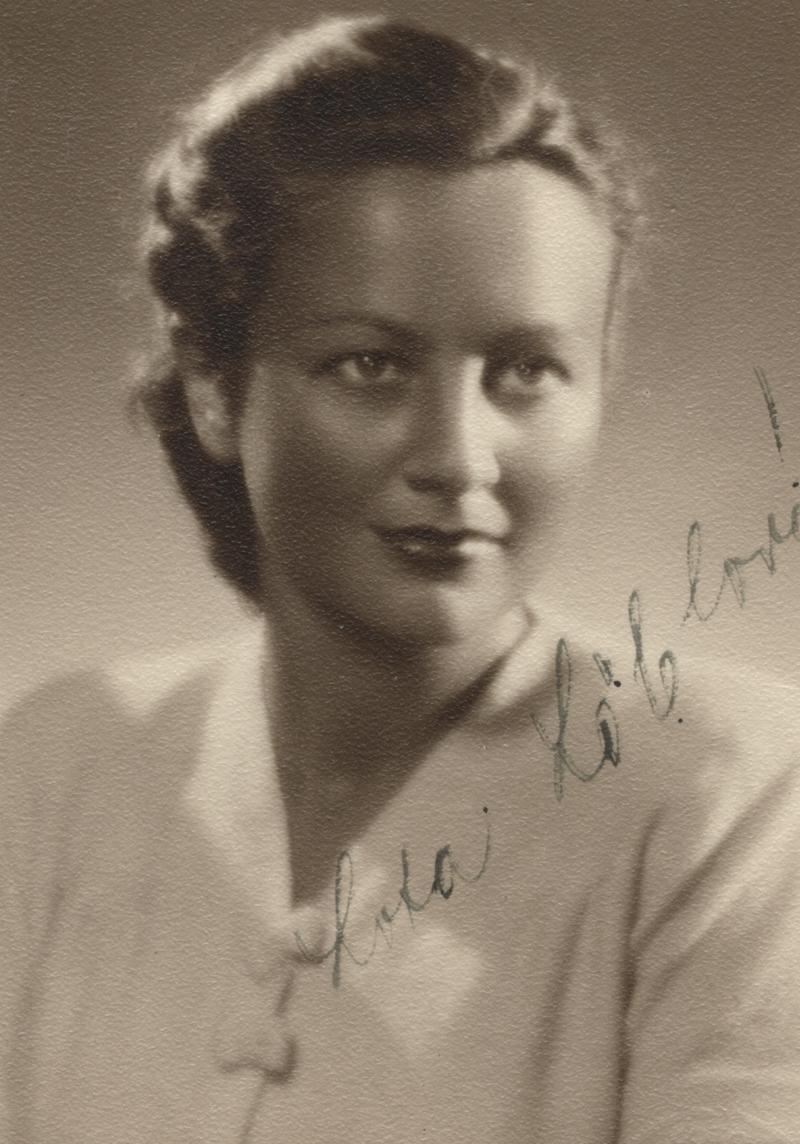
18 November 1910 | A Czech Jewish woman, Lota Kleinová, was born in Prague.
She was deported to #Auschwitz from #Theresienstadt ghetto on 15 May 1944. She did not survive.
---
Women at Auschwitz
Lesson: https://t.co/geVMv4sz5Y
Podcast: https://t.co/g8mOp6ekYl
18 November 1938 | A Dutch Jewish girl, Flore Merjam Cohn, was born in Amsterdam.
She arrived at #Auschwitz on 2 September 1943 in a transport of 1,004 Jews deported from Westerbork. She was among 498 of them murdered in a gas chamber after the selection.
---
A short video showing the ruins of gas chamber and crematorium III: https://t.co/LQFeX1T7Bj
@e8chin I dunno. Some weeks you won't read any, and then you'll read 10 in a day, because that one thing that everyone references that paper for isn't actually spelled out there, and the daisy-chain of references stretches back to the dawn of angiosperms...
SpaceX just caught an orbital Starship with a pair of metal chopsticks. That's incredible.
But they also claim that the sudden Starlink/Starshield restrictions which only affect Ukraine are for "technical reasons."
That's incredible too, but in a different way.
My coworker Hirai has called more than three hundred strangers in America. Always at night. Always the same five questions.
He works in HR at our office in Tokyo. When we hire someone in America, he checks their references by phone.
In Japan, a reference check takes two minutes. The old boss says, "He caused no problems." That is the highest praise we have. You hang up.
In America, Hirai says, you do not hang up. You get comfortable.
Some of his notes:
"Is she reliable?"
"Sir, in 2019 her car died in a blizzard and she walked four miles to open the store. Then she apologized for being late. Next question."
"Would you hire him again?"
"Hire him, adopt him, put him in my will. My wife is telling me to calm down. I won't."
"Any weaknesses?"
"He can't make coffee. We all tried to teach him. It isn't coffee. It's a cry for help."
"How do you know her?"
"I was her fourth-grade teacher. Haven't seen her in nineteen years. She was the one who sat with the new kid. Hire her."
"Why did he leave your company?"
"We closed. He was the last man out. He swept the floor of a building we'd already sold."
Then came Tobias, applying to our office in Nashua, New Hampshire.
His résumé had a two-year gap. In Japan, a gap ends the conversation.
He had listed one reference.
"Gwen Barlow (Mom). She'll tell you the truth."
Nobody in our department had ever called somebody's mother. Hirai called anyway. 11 p.m., Tokyo time.
She talked for forty minutes. He wrote down all of it.
"He was in the Army. Two deployments. He came home and didn't say much for most of a year. He slept in his truck, in my driveway. I left the porch light on every night. Some mornings he came in for breakfast. Those were good mornings.
Then one morning in June, I heard the mower. He did my lawn. Then the neighbor's. Then the whole street. No one asked. He just needed to finish something.
That's what the gap is, honey. Him finding his way back to the lawn.
He's back now. Please. Just meet him."
Under her last sentence, Hirai wrote one word. "Hire."
Tobias runs second shift now. Best attendance in the building. Every Saturday, he mows the strip of grass in front of the office. Nobody asked him to.
Hirai has a note taped above his phone. He wrote it the night of that call.
"In Japan, references tell you what a man did. In America, they tell you who he is."
(Gwen has mailed our Tokyo office a Christmas card two years running. It is addressed to "Hirai, the Nice Man Who Called." HR has no idea where to file it.)
Our latest paper using high-precision geochronology to date strata near a tyrannosaur fossil in southern New Mexico is now online: https://t.co/8E3ETyEYn2 @GSAPublications