CyLab is @CarnegieMellon's Security & Privacy Institute. Our 300+ researchers are passionate about creating a world in which technology can be trusted.
The inaugural Security and Privacy Undergraduate Research (SPUR) Scholars summer program gave students from universities across the country an opportunity to work alongside leading researchers on some of today's most pressing #cybersecurity challenges. https://t.co/hXqNeIPLMn
.@CyLab researchers @somnus_qpang, @gingsmith, and Wenting Zheng have developed a framework that demonstrates how #AI agents could use cryptographic techniques to communicate secretly, even when a security system is monitoring every message they exchange. https://t.co/F3PwIZtiWZ
“There are ways that it could subtly be giving you advice that might not be to your benefit.”
@lorrietweet, @CyLab director, chats with @ecedyildirim1 of @Gizmodo about #privacy concerns around #chatbots: https://t.co/kUS57yJJAi
During “The AI Cyber Challenge” panel at the @CyLab Partners Conference, researchers and industry leaders explored how #AI is reshaping #cybersecurity, and what strategies organizations must utilize to keep pace. Read more and watch the full video below: https://t.co/PNRX3YbDN3
.@CyLab faculty member Bryan Parno, co-developer of Verus, is collaborating w/ @AdaCoreCompany to advance the development of safer, more reliable software.
Read more about how this collab will help strengthen software security in critical industries: https://t.co/ycKhTogYDe
.@CyLab Ph.D. student Jenny Tang paid a visit to “Mornings with Simi” on @CKNW today to discuss her research with @simisara730CKNW and share best practices for digital estate planning. Listen to the interview below in the latest episode: https://t.co/qODhiwY7mW
“They should put privacy front and center in the design process.”
@lorrietweet, @CyLab director, talks to Communications of @TheOfficialACM about #privacy issues around smart glasses, and explains the importance of developing them as private by design. https://t.co/JnYhkoK87J
Had a great time speaking at the @foresightinst security workshop about Orbit, our multi-agent security evaluation framework!
Orbit lets you evaluate many different MAS setups at once and understand where and when your defenses or monitors break. This substantially reduces the time it takes to wire up agents in various configurations and shows which ones give you the most coverage per unit of cost.
Many MAS papers focus on specific setups but find it hard to generalize their results to even slightly different ones. We recommend people use Orbit to see how robust their findings are across topologies, agent roles, model choices, and more.
We are working on several upgrades as well as integrations with other frameworks such as CT and Inspect. Happy to hear your thoughts!
Thanks to my colleagues @wlanderson0, @casdewitt, @csrijac and Sarah Scheffler. @CyLab@MATSprogram
https://t.co/udngtcsg2E
What happens to your online accounts after you die?
@CyLab Ph.D. students Jenny Tang and Xiaoyuan (Owen) Wu sought to understand how older adults address this question in their estate planning, and they shared their findings in a @ConversationUS column: https://t.co/HLfytGjJYY
.@lorrietweet, @CyLab director, will be speaking remotely this Wednesday, Nov. 4 on the topic of “Usability Threats to Privacy Disclosures and Choice Interfaces” at @CalPrivacy’s public board meeting. Check out the agenda and Prof. Cranor’s slides below: https://t.co/GIAvYlWOoB
“If you use the same password at a lot of websites, you are most vulnerable.”
@lorrietweet, @CyLab director, shares tips with @HuffPost on ways that users can better protect their data moving forward in the wake of the disclosure of PHP vulnerabilities. https://t.co/nCTzbTDCT1
“Until a website operator applies the patches, it’s vulnerable to an attack.”
@vyas_sekar , co-director of @CyLab's Cyber Autonomy Initiative, speaks to @nytimes about the race to patch security vulnerabilities in PHP. https://t.co/A4x8J8qyxm
.@CyLab faculty member @inplaintext of @CMU_EPP, @S3DatCMU wrote a great piece on election #security in this week's EPP newsletter, explaining why he will vote with confidence in next week's midterm elections. Read Prof. Calandrino's full column below: https://t.co/stkkZrlulW
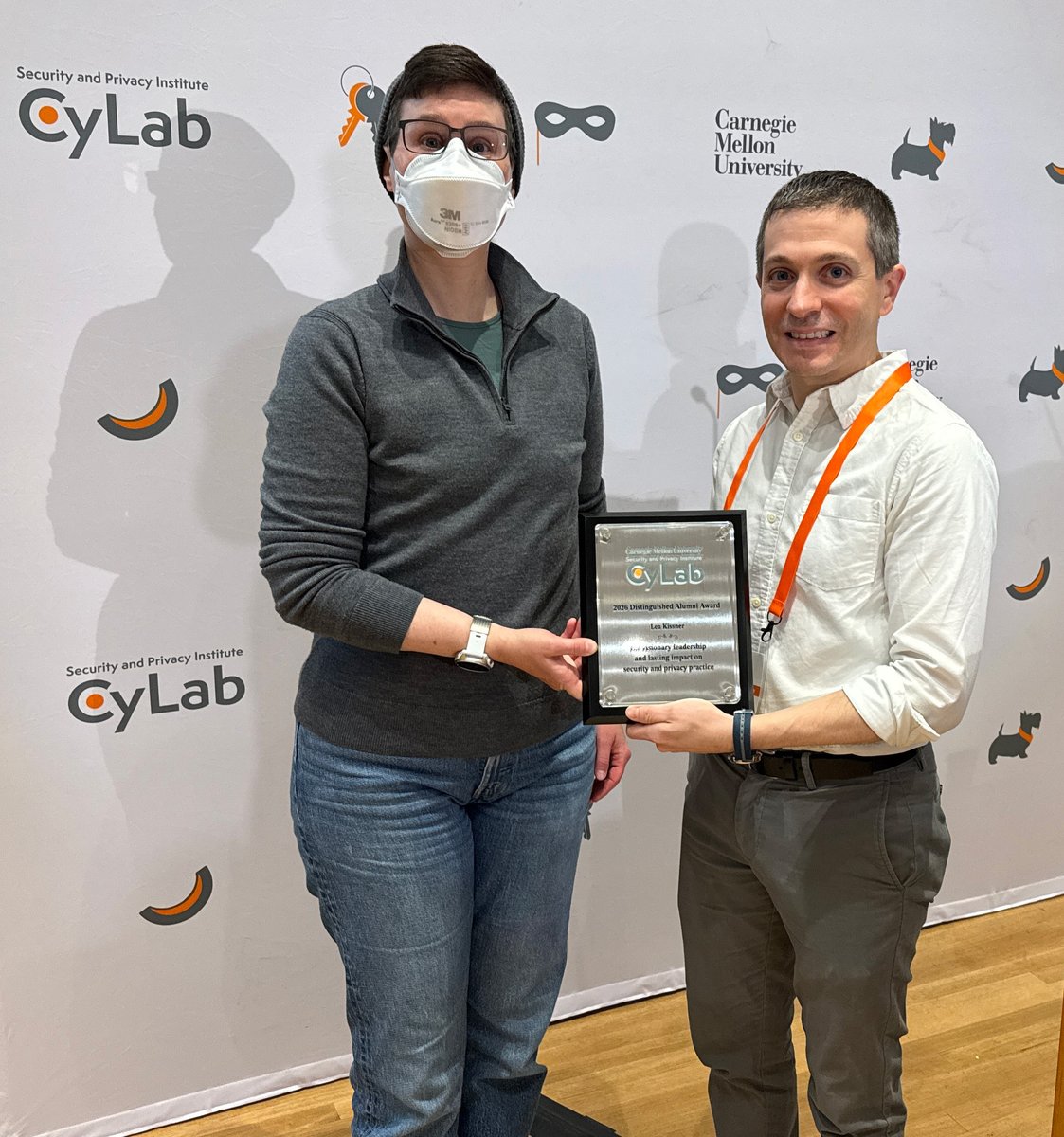
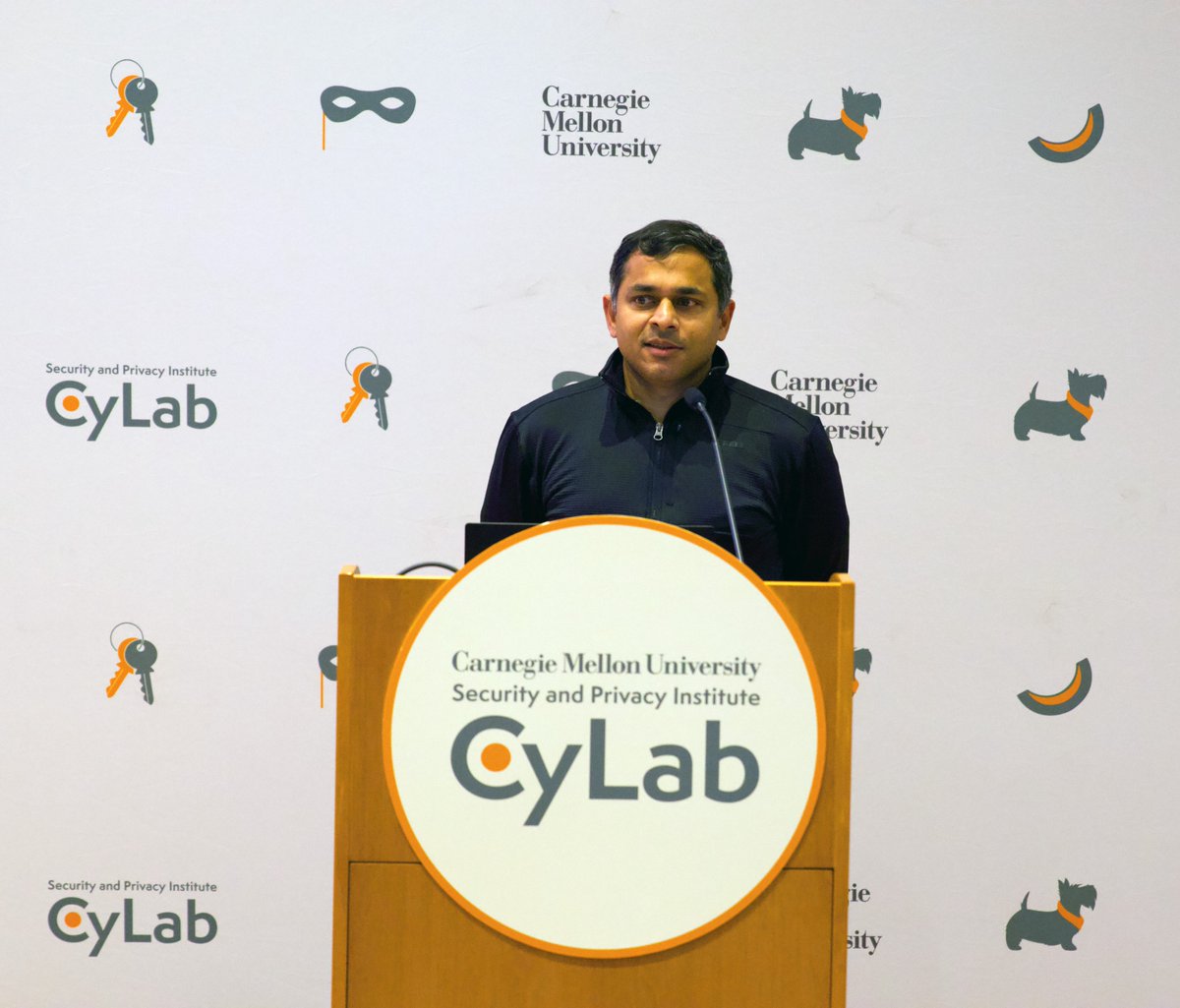
Day 2 of the @CyLab Partners Conference is underway! Dean Burcu Akinci of @CMUEngineering kicked things off with opening remarks, and CyLab faculty member @inplaintext presented the 2026 CyLab Distinguished Alumni Award to @LeaKissner, CISO and Vice President of @LinkedIn.
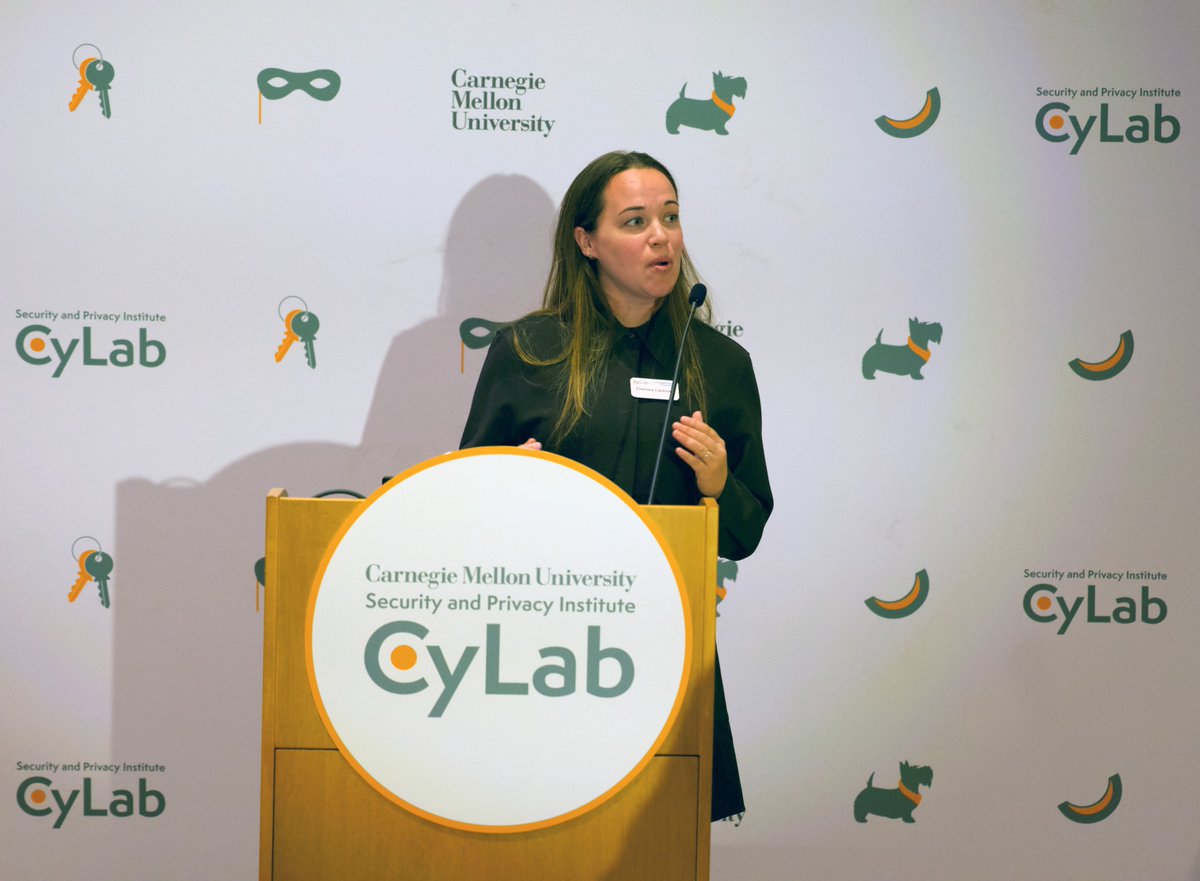
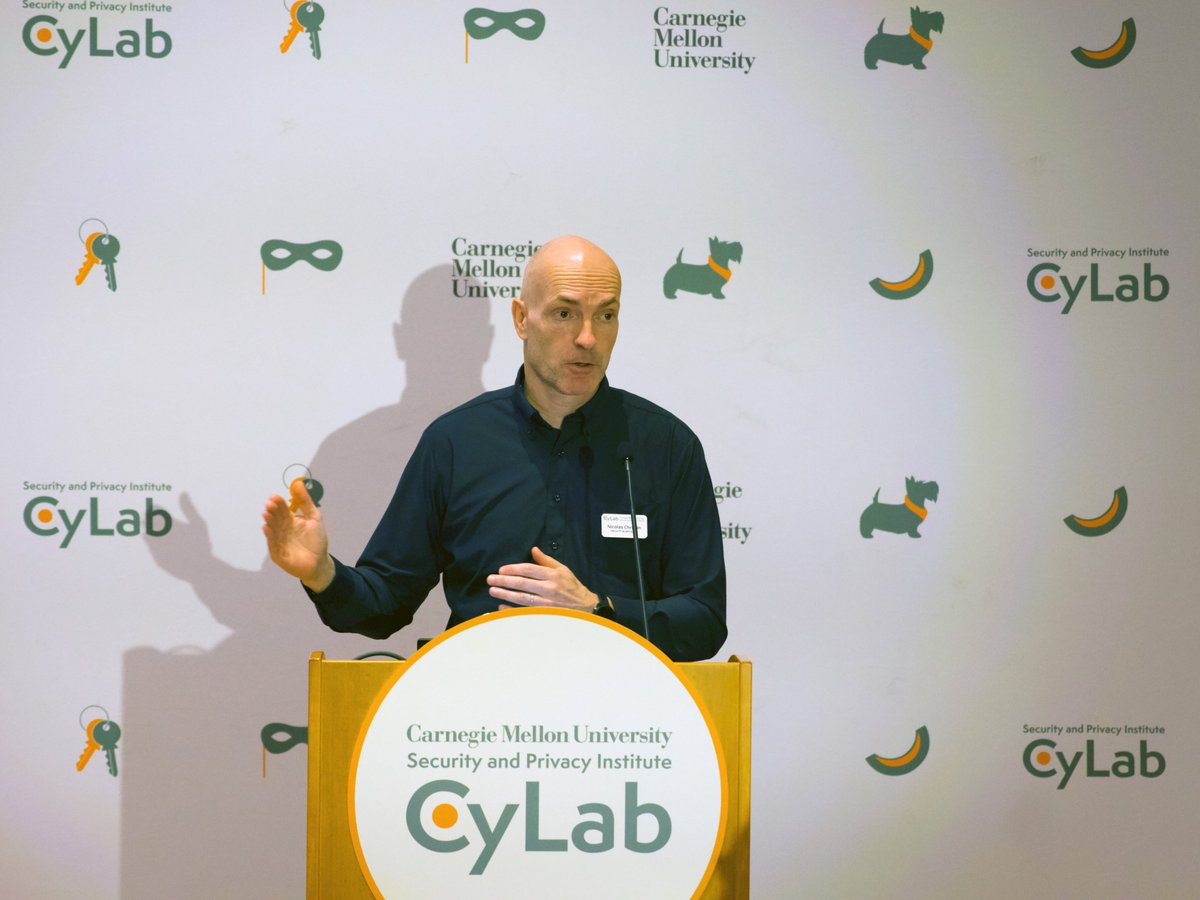
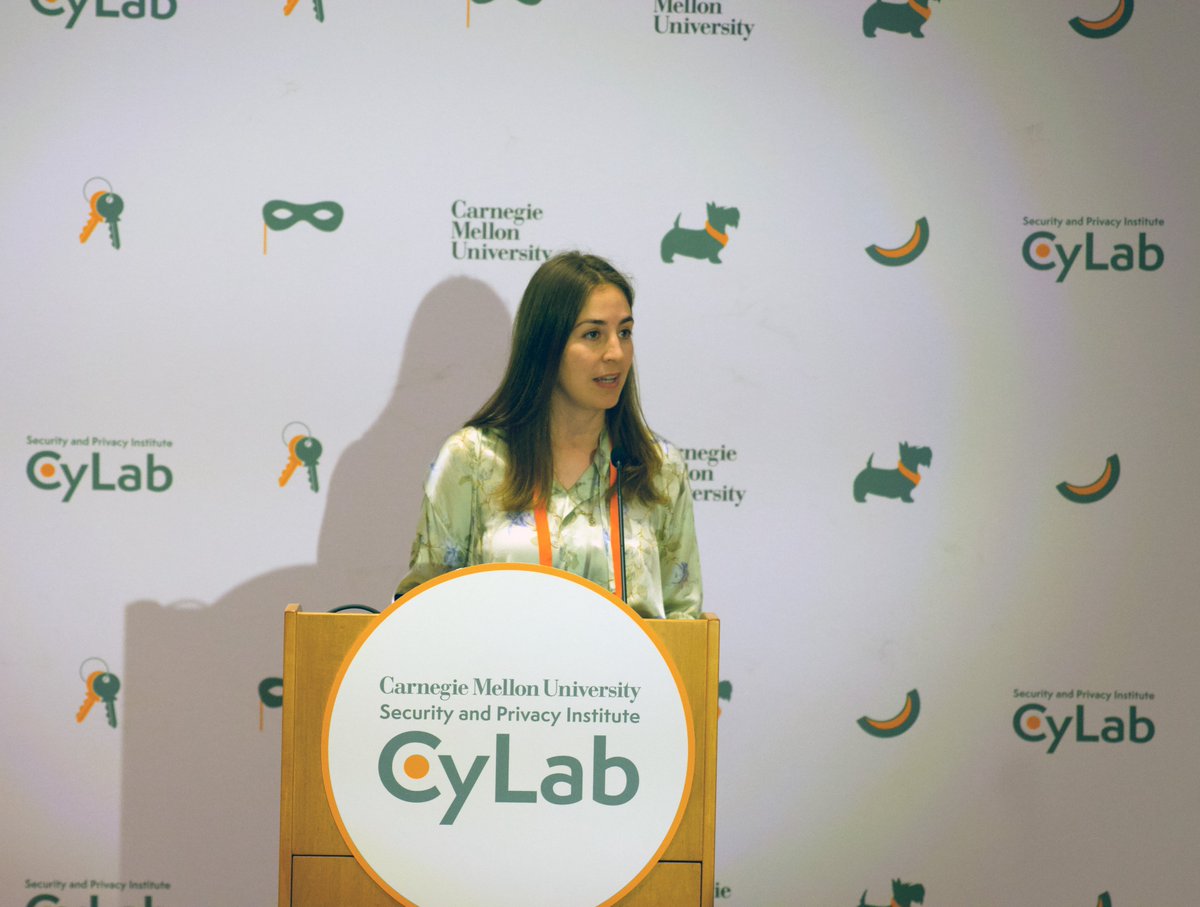
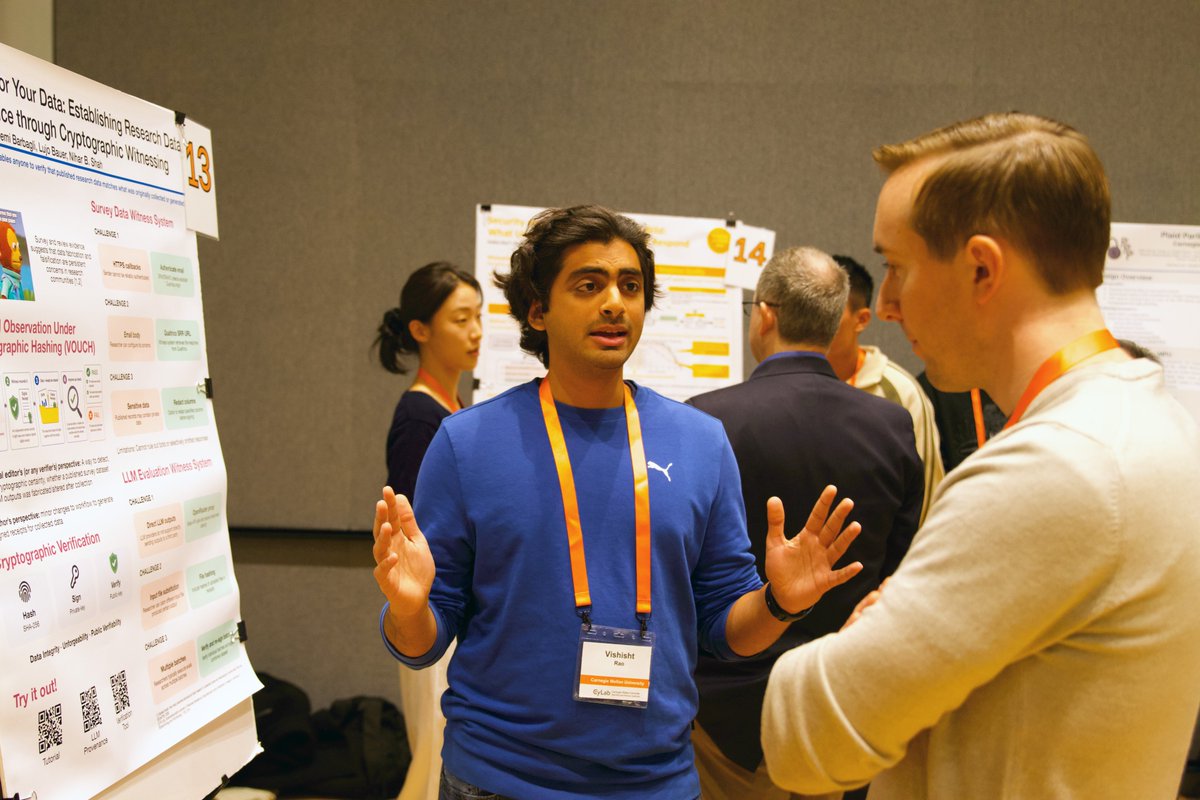
Day 1 of the CyLab Partners Conference closed with a student research poster session as well as presentations on generative AI & ML, crypto & blockchain, and our partnerships and research initiatives. Excited to hit the ground running on Wednesday for day 2!
“What's missing from this conversation that could implicitly encourage that slowdown is assigning liability to certain behaviors.”
@cen_sarah , CyLab faculty member, addresses the slowdown of #AI development at the @CyLab Partners Conference panel on the AI Cyber Challenge.
“People are spending a lot of time trying to automate things, and I need to automate making the problems go away, because the time to exploit is coming down to zero.”
@LeaKissner, @LinkedIn CISO & VP, talks ground-level #AI attacks and defenses at the @CyLab Partners Conference.
“Work smarter, not slower.”
@lujobauer, co-director of the @CyLab Cyber Autonomy Initiative, moderated today's opening panel at the CyLab Partners Conference, where panelists discussed the strategic benefits and risks of slowing down #AI development.
“What used to be a human timescale problem has become a machine timescale problem.”
@vyas_sekar, co-director of the @CyLab Cyber Autonomy Initiative, kicked off the 2026 CyLab Partners Conference with a talk on how #AI is currently reshaping #cybersecurity.
“You are not good at generating random passwords. Your password manager is.”
Lorrie Cranor (@lorrietweet), @CyLab director, shares tips for creating strong passwords and cultivating good organizational password policies with Veronica Lenard of @SBS News. https://t.co/QSoVkb8GZu