Building the Decision Management for AI workforces @ OMNI | 3 exits, $330M+ in returns
former: Deloitte Consulting, 2x Science-incubated founder, SHOPX
1/ Product leaders are still making bets in planning, waiting 6–18 weeks, and hoping they were right.
That cadence breaks when AI starts building faster.
OMNI helps leadership make decisions and steer product in real time.
We’re opening 5 spots in our Phase 2 pilot.
DM me if you want one 👇
@DavidSacks Also this is creating a bottleneck of decisions needed to be made by leadership. Enter @omni3_ai to help orgs make decisions at the speed of AI delivery
Also this is creating a bottleneck of decisions needed to be made by leadership. Enter @omni3_ai to help orgs make decisions at the speed of AI delivery
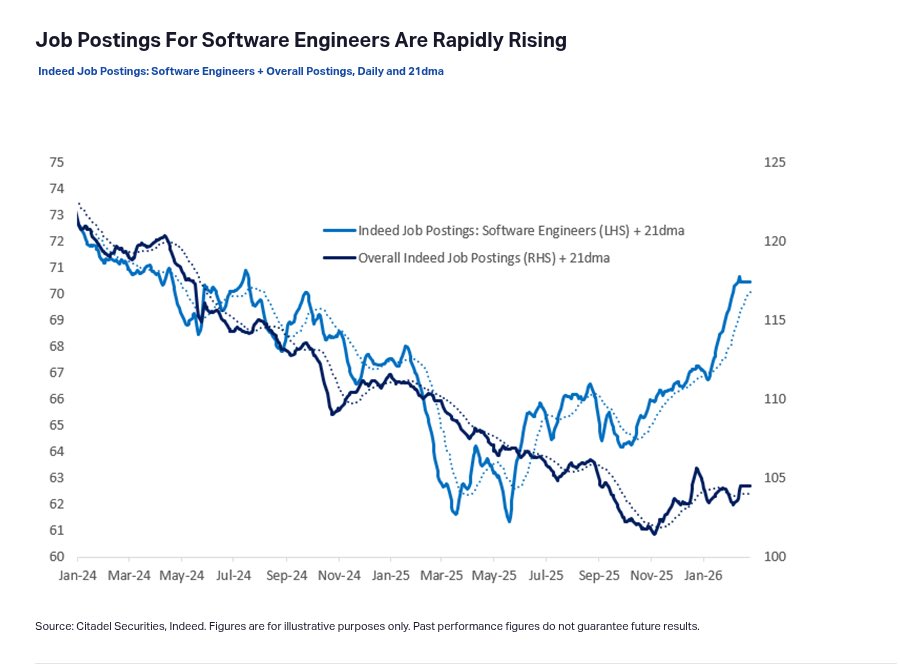
Q: How are job postings for software engineers rising rapidly despite AI agents automating coding?
A: Because there’s far more code to manage than ever before. We’re already seeing a 14x YoY increase in GitHub commits, and it’s accelerating.
AI has dramatically lowered the cost of writing code, so it’s now being used across far more businesses, applications, and use cases.
We’re at the beginning of a massive productivity boom driven by the proliferation of bespoke software throughout the entire economy.
Coding has been AI’s breakout use case this year. The fact that it’s increased demand for software engineers — rather than decreased it — should call into question the entire “AI will cause mass job loss” narrative.
Q: How are job postings for software engineers rising rapidly despite AI agents automating coding?
A: Because there’s far more code to manage than ever before. We’re already seeing a 14x YoY increase in GitHub commits, and it’s accelerating.
AI has dramatically lowered the cost of writing code, so it’s now being used across far more businesses, applications, and use cases.
We’re at the beginning of a massive productivity boom driven by the proliferation of bespoke software throughout the entire economy.
Coding has been AI’s breakout use case this year. The fact that it’s increased demand for software engineers — rather than decreased it — should call into question the entire “AI will cause mass job loss” narrative.
@geoffreywoo data models need to change. They aren't SOR entries anymore, they are something that triggers a workflow. DM me you want to see what I am talking about :)
4/ That means leadership stops watching from the sidelines and starts steering in real time.
✂️ Cut a feature → AI capacity redirects today 📈 Raise the bar on a spec → agents rewrite it tonight 🔁 A bet’s not paying off → reroute before the quarter is over
Leaders steer. AI executes.
That’s what we built OMNI to do.
1/ Product leaders are still making bets in planning, waiting 6–18 weeks, and hoping they were right.
That cadence breaks when AI starts building faster.
OMNI helps leadership make decisions and steer product in real time.
We’re opening 5 spots in our Phase 2 pilot.
DM me if you want one 👇
3/ When humans build, every decision costs weeks of rework.
So you lock in roadmaps, hold the line, and don’t find out you were wrong until the next QBR.
But when AI builds, the math changes.
Build-and-verify cycles drop from quarters to hours.
The easiest job in tech is Head of Growth at a consumer company with PMF.
I did it at Rappi and thought I was a genius.
Everything you try works.
Tweak onboarding → conversion jumps.
Unlock referrals → growth explodes.
Turn on paid → infinite scale.
And if something fails… it was an “experiment.”
But that’s a fallacy. It’s like losing weight on GLP-1 and thinking you mastered discipline.
Because when you become a founder, you realize the only hard growth problem is building a product people actually want.
I’m a growth person, but I have infinitely more admiration for 0→1 product people than 1→100 growth people.
@staysaasy Software caught up to hardware and now its limited in innovation. We need another hardware revolution before you get apps recommended to you again.