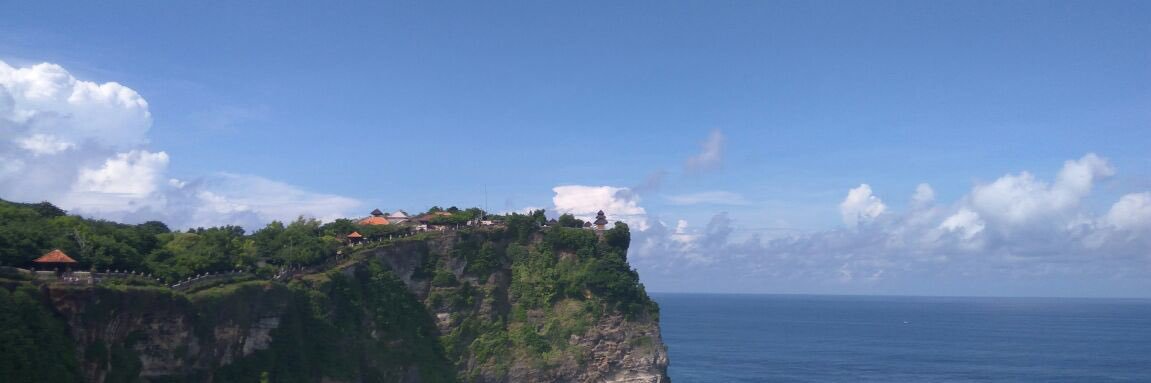
@GBA_office sir this is almost a daily activity in evening or morning. Behind Vidya Niketan school Hebbal, near the Church. People burn plastic in open air which a criminal offence. Pl take action to stop. Today morning since 945am.
@krishnabgowda
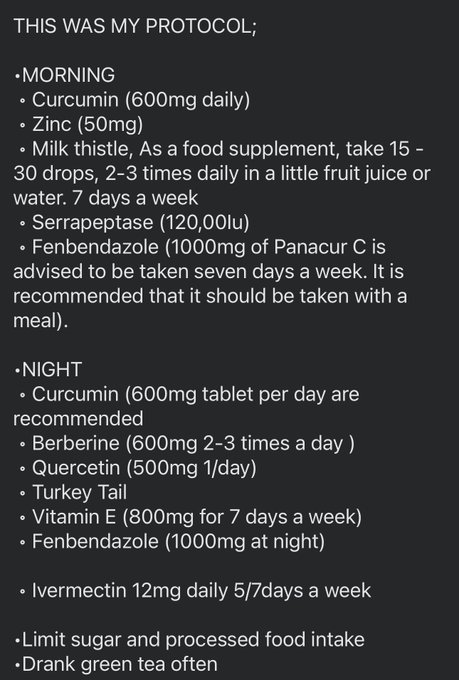
STROKE at the age of 34.
Runs 5k on weekends.
Normal blood pressure.
No diabetes. No smoking.
But ONE common stress relief habit quietly tore a major blood vessel and caused a massive brain attack.
A medical thread on what actually happened 👇
@BlrCityPolice@blrcitytraffic at U turn towards Hebbal before Kodigehalli signal, lady is popping her head out of sunroof at 1034pm 20th June 2026, dangerous to passenger and others around. Pl take action under MVA Section 177
Opinions are cheap because there is no longer any cost to having one. You can be loud without being right, certain without being experienced, and critical without being accountable. What’s rare now is an opinion that has been earned through contact with reality.
Gurugram-based Vivek Agarwal and seven of his family members were staying at Hotel Flourish Stays because Vivek's father was undergoing treatment in the ICU at the nearby Max Hospital.
All eight died. Entire family wiped out!
And now the ritual begins, ₹4 lakh compensation, an inquiry, promises of strict action. None of it matters now.
These were not accidental deaths. They were preventable deaths caused by greed, negligence, and a complete collapse of accountability. If the hotel owners had even a shred of conscience, if the officials responsible for inspections and enforcement had done their jobs honestly instead of looking the other way, this family might still be alive.
@airtelindia service request 656449184 was raised, we have received messages that customer was not available.. no calls received by us, we have tried calling back but no response on those numbers. Pl assist and assign service engineer
Krishna Rao is the CFO of Anthropic, and this is his first podcast appearance.
He joined the company two years ago when run-rate revenue was about $250M. Today it is $30B. He has helped raise ~$75B and is responsible for the procurement and allocation of compute.
I feel lucky we get to hear what it is like to sit inside a company this consequential at a moment this pivotal.
We discuss:
- The cone of uncertainty
- How he allocates compute across Trainium, TPUs, and GPUs
- What investors misunderstand about model companies
- Why the returns to frontier intelligence keep rising
- Platform vs application and where Anthropic builds its own products
- How Anthropic uses Claude internally
I have asked my closing question about the kindest thing more than 500 times. Krishna's answer is one I have never heard before.
Enjoy!
Timestamps:
0:00 Intro
2:38 The Compute Canvas
6:51 The "Cone of Uncertainty"
11:58 Why the Returns to Frontier Intelligence Are So High
16:45 Recursive Self-Improvement
20:20 Scaling Laws
23:30 Sourcing $100 Billion in Compute
28:05 Platform vs. Application Strategy
32:52 Pricing Dynamics
38:48 How Anthropic’s Finance Team Uses Claude
43:24 Raising Capital & Overcoming Investor Skepticism
52:32 Public Perception, Risks, and Government Regulation
57:25 Mythos Release
1:12:33 What Could Derail the AI Revolution?
1:13:47 Biotech and Healthcare
1:15:31 The Kindest Thing
@law_ninja 250 people. 3 months. 3% adoption.
Before blaming HR where was the CEO in week one?
250 is small enough to address daily. A standup. “What did you use AI for today?”
Adoption fails at the top first.
India's peak power demand hit 260 GW yesterday. New all-time record. During a heatwave with 47°C temperatures across North India.
The grid held. No blackouts. That sentence alone is an engineering achievement most people will not appreciate.
Five years ago India had chronic power deficits. Load shedding was normal. In 2023, peak demand hit 243 GW and several states struggled. In April 2026, the grid delivered 260 GW without a single major failure.
What changed: 26.5 GW of new capacity added in FY26 — largest annual addition in a decade. Solar alone contributed 18 GW. New HVDC transmission corridors connecting surplus regions to deficit ones. Battery storage deployments cushioning peak load.
But the margin is razor thin. India's grid is designed for about 270 GW. We just touched 260 GW. That is 96% utilisation during peak hours. One more heatwave spike or an unexpected plant outage and the buffer disappears.
This is why every power stock hit 52-week highs. The market sees what the headlines miss — India needs $150 billion in power infrastructure investment over five years just to keep up. Data centres, EVs, semiconductor fabs, industrial expansion — all need reliable 24/7 power. The grid is the bottleneck holding everything else together.
This is wild: Citrini sent a dude with $15,000 cash, recording sunglasses, and a pack of Cuban cigars to the Strait of Hormuz. What he found flips everything Wall Street thinks about the strait on its head.
Every hedge fund, every macro desk, every retired general on CNBC is watching the same AIS shipping data to price Hormuz risk. The analyst signed a pledge at an Omani checkpoint promising not to gather information, then smuggled in a gimbal, a microphone kit, and a 150x zoom Leica camera past the border officer who inspected his bag.
What he discovered on the ground: the AIS data everyone is trading on is missing roughly half of what's actually transiting the strait on any given day. Ships are going dark, spoofing destinations, broadcasting "CHINESE CREW OWNER" through transponder fields to avoid getting hit. Iran's ghost fleet is running 29+ laden tankers inside the Gulf with transponders off, moving an estimated $3B in crude to Malaysia since the war started.
The entire market is pricing a "closed" strait off satellite imagery and transponder data that has a 50% blind spot. Every oil model, every supply forecast, every macro call built on AIS throughput numbers is working from a dataset that systematically overstates the disruption.
When the signals deliberately go dark, the people staring at dashboards are the last to know what's happening. Citrini figured that out by putting a guy on a speedboat 18 miles from the Iranian coast while Shahed drones flew overhead.
The gap between "what AIS says" and "what's actually transiting" is the most mispriced variable in energy right now.
On 23 March, two tunnel boring machines — each weighing over 2,000 tonnes, each wider than a four-lane highway — were unloaded at Mumbai's JNPT port.
They were meant to arrive in October 2024.
This thread, and the accompanying story, is about what held them up.
📷