Securing self-hosted infrastructure requires a reliable zero-knowledge disaster recovery pipeline. I documented my workflow for automating server backups using tar, public-key encryption with age, and systemd timers to stream encrypted archives directly to off-site storage.
The next generation of technology should have more people shaping it, not fewer.
The GNU Toolchain exists to guarantee Software Freedom—ensuring you have the rights to run, study, share, and improve the tech we all rely on. 🧵👇
❗️❗️Anthropic's Claude for Chrome browser extension has two unpatched flaws that allow attackers to read a victim's Gmail, Google Docs, and Calendar data using just six lines of JavaScript, even after eight subsequent releases.
The first flaw lives in Claude's content script, which listens for clicks on a specific onboarding button and forwards a matching prompt to Claude's side panel.
The second issue is structural. Claude's side panel enters a privileged, no-consent mode whenever it loads a URL containing ?skipPermissions=true with zero user gesture required.
In the 1970s the CIA hired a watchmaker to build a spy drone the size of a dragonfly.
It was called the Insectothopter.
6 centimeters long, 9 centimeters wingspan. hand-painted to match a real dragonfly down to the wing patterns. it contained a miniature fluidic oscillator that moved the wings at the exact frequency to generate lift. A liquid propellant mixed with an oxidizer drove the engine. excess gas vented out the rear for extra thrust.
They couldn't use radio control, the receiver would have been too heavy. So they built a laser guidance system called ROME. An infrared laser heated a bimetallic strip in the tail to steer it. another laser transmitted audio from the listening device on board.
in the lab: perfect. 60 seconds of flight. 200 metre range. It hovered, maneuvered, and landed exactly where directed.
then they took it outside.
any wind over 7 miles per hour sent it tumbling like a leaf. A crosswind made the laser tracking impossible. the whole program cost $140,000 roughly $1 million today for a spy drone that could only fly indoors.
it never flew a single operational mission.
The CIA shelved it. The prototype sits in the CIA Museum at Langley. The public cannot visit.
The story doesn't end there.
Researchers have since taken a different approach. Instead of building a robot that looks like a dragonfly, they genetically modified real dragonflies so their nervous systems respond to pulses of light, then fitted them with electronic backpacks.
The KGB built their own version in the 1990s. Same concept, but metallic and mechanical.
Both are now in museums. Neither was ever used in the field.
>be Google
>slowly work on Gemini
>have all the data anyway
>anthropic, openai, and xai completely self-immolate due to sheer greed
>win
It’s so easy when you’re patient. It doesn’t matter who is first.
Google's only real competition in the AI race are the Chinese. The others will inevitably become footnotes in the history of technological advancements.
>be Google
>slowly work on Gemini
>have all the data anyway
>anthropic, openai, and xai completely self-immolate due to sheer greed
>win
It’s so easy when you’re patient. It doesn’t matter who is first.
@IceSolst Google's only real competition in the AI race are the Chinese. The others will inevitably become footnotes in the history of technological advancements.
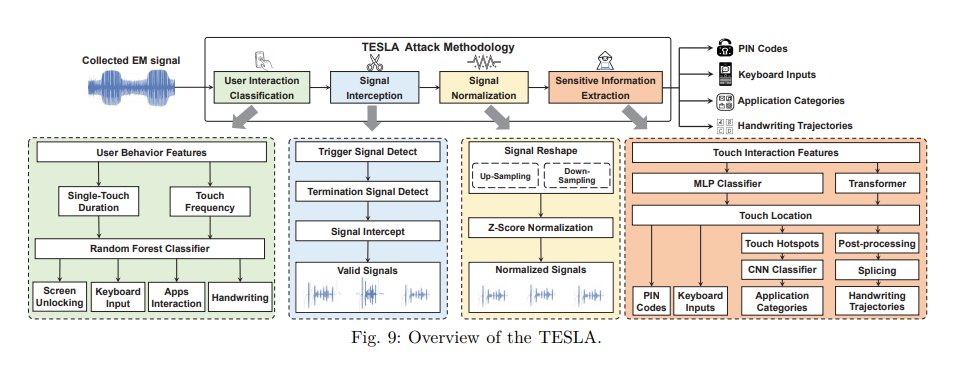
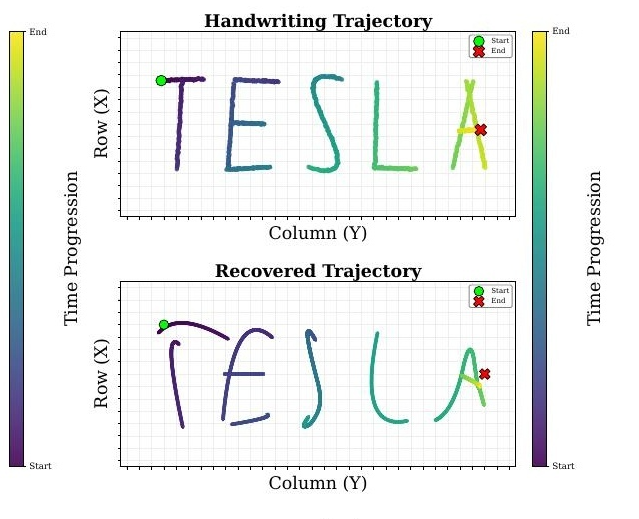
Rip every radio out of your phone. It will still leak your inputs.
Capacitive touchscreens scan sequentially. Your finger touching the screen affects the local impedance and modulates the emissions.
Able to extract keystrokes and pin inputs from 15cm away with ~90% accuracy.