✨ Lo mejor de 2025 en el tratamiento de la insuficiencia cardiaca
👉 Descubre las claves que han marcado 2025 en IC: https://t.co/czXN3qAaS1
🧠📈 La IC sigue creciendo y cambia el perfil del paciente: de riesgo “vascular” a uno claramente cardiometabólico (cardiometabolic shift), con auge de la IC-FEp.
💊🛡️ iSGLT2 se consolidan en más escenarios: prevención primaria, muy ancianos, mujeres con IC-FEp y en la “vida real” de la IC + fibrilación auricular.
⚖️🔥 Nuevas vías en IC-FEp con obesidad: semaglutide y tirzepatide mejoran síntomas y capacidad funcional, complementando la terapia base.
🧪🎯 Medicina de precisión en marcha: vericiguat con inicio acelerado (VELOCITY), aficamten en MCH obstructiva (SEQUOIA-HCM) y acetazolamida IV para optimizar descongestión en IC aguda.
🫀 Lo mejor del 2025 en imagen cardiovascular
Lee el artículo completo y descubre las claves que marcaron la imagen CV en 2025: https://t.co/Ug6o3HgvKW
🤖 IA en cardiología: del ECG “inteligente” a modelos que afinan el diagnóstico en eco (ojo: 1 de cada 3 informes automáticos de ECG requiere corrección médica).
🫀 Ecocardiografía en IC: enfoque más fenotípico y hemodinámico (IC avanzada), eco de esfuerzo en HFpEF y la grasa epicárdica como marcador con valor pronóstico.
🩺 Intervencionismo estructural: más protagonismo de la eco intracardíaca, actualización de TEE intraoperatorio (AHA 2025) y protocolos post-TAVI más estandarizados.
📈 Imagen avanzada y cardio-oncología: strain como herramienta para detectar disfunción subclínica y guías 2025 que refuerzan la vigilancia en tratamientos cardiotóxicos (antraciclinas/trastuzumab).
Clinical Outcome in Athletes With Ventricular Ectopic Beats and Normal Cardiac MRI: Preliminary Results of a Longitudinal Study
https://t.co/RSYVawFERA
#sportscardiology#arrhythmias#CMR
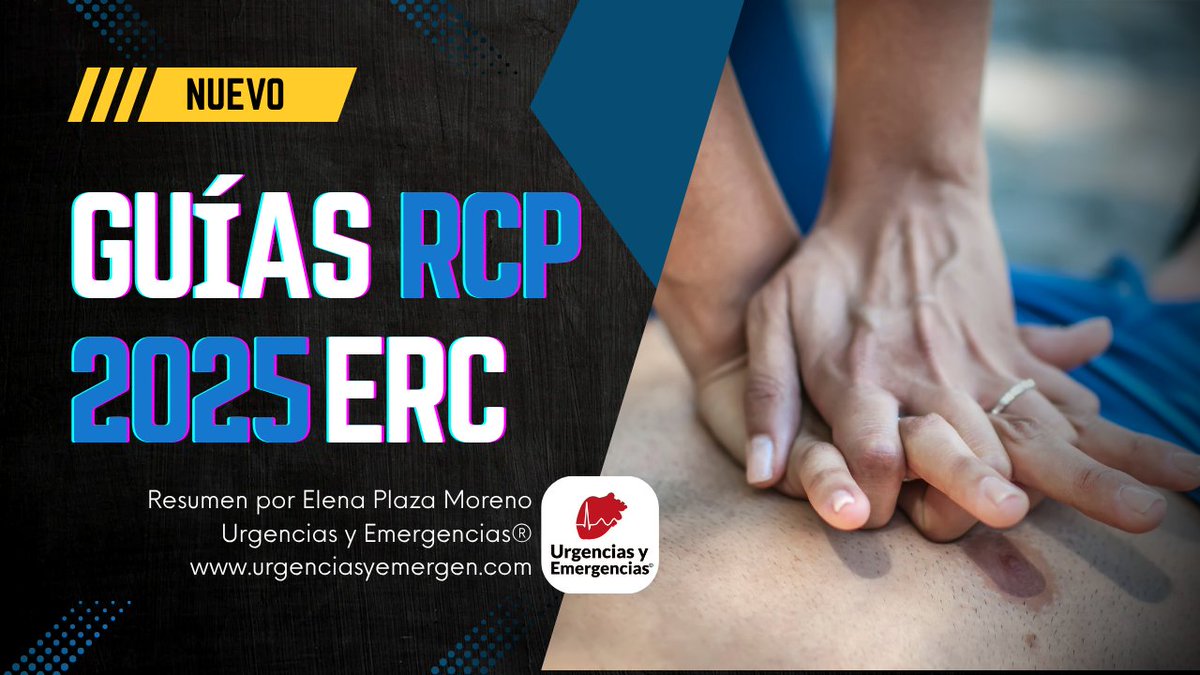
Ya tenemos las nuevas #guías de #RCP 2025 disponibles. De momento te dejo un resumen de los principales cambios en las guías #ERC y un chatbot para que puedas preguntar lo que quieras.
https://t.co/7sOytgUkDb
#CPRguidelines
🚨🫀 #ESC2025 en Madrid está dejando MUCHA tela que cortar.
Aquí va un hilo 🧵 con lo más 🔝 para la práctica clínica
(En cristiano, pero científico..)
Spoiler: algunos estudios cambian lo que hacemos mañana en consulta
👇
(A los opositores MIR: esto NO entra❤️🫶😂)
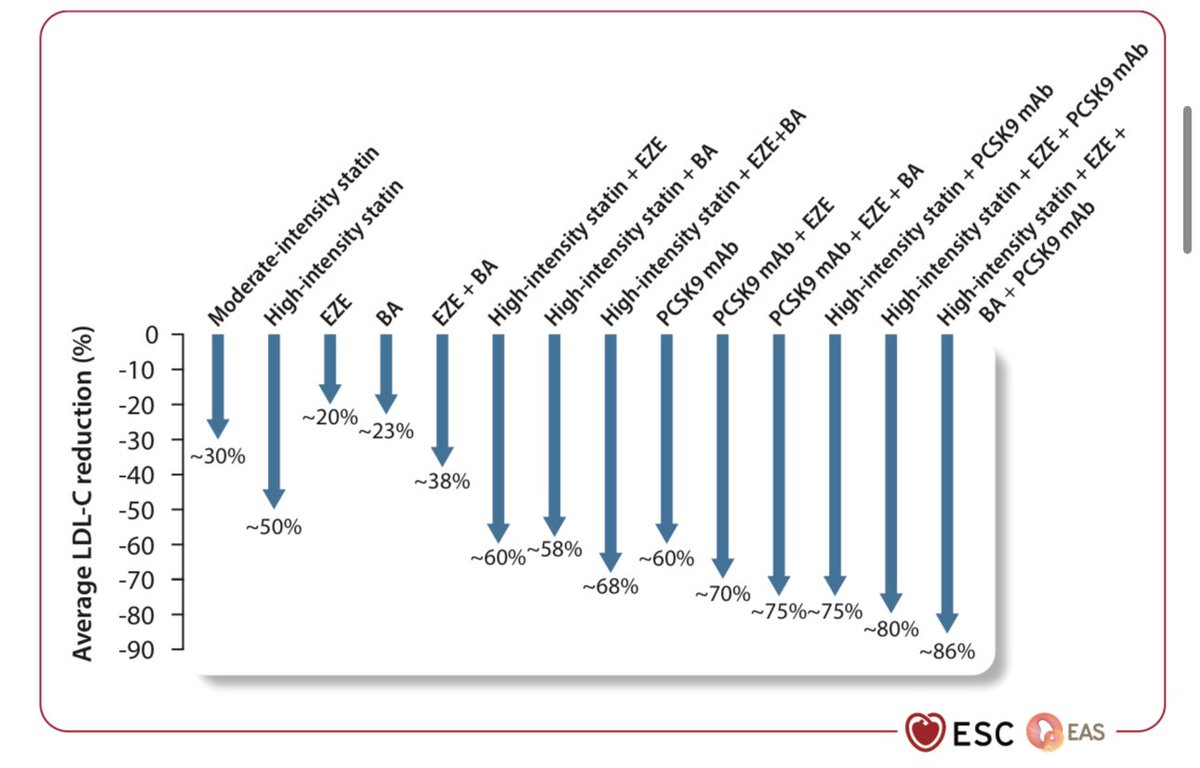
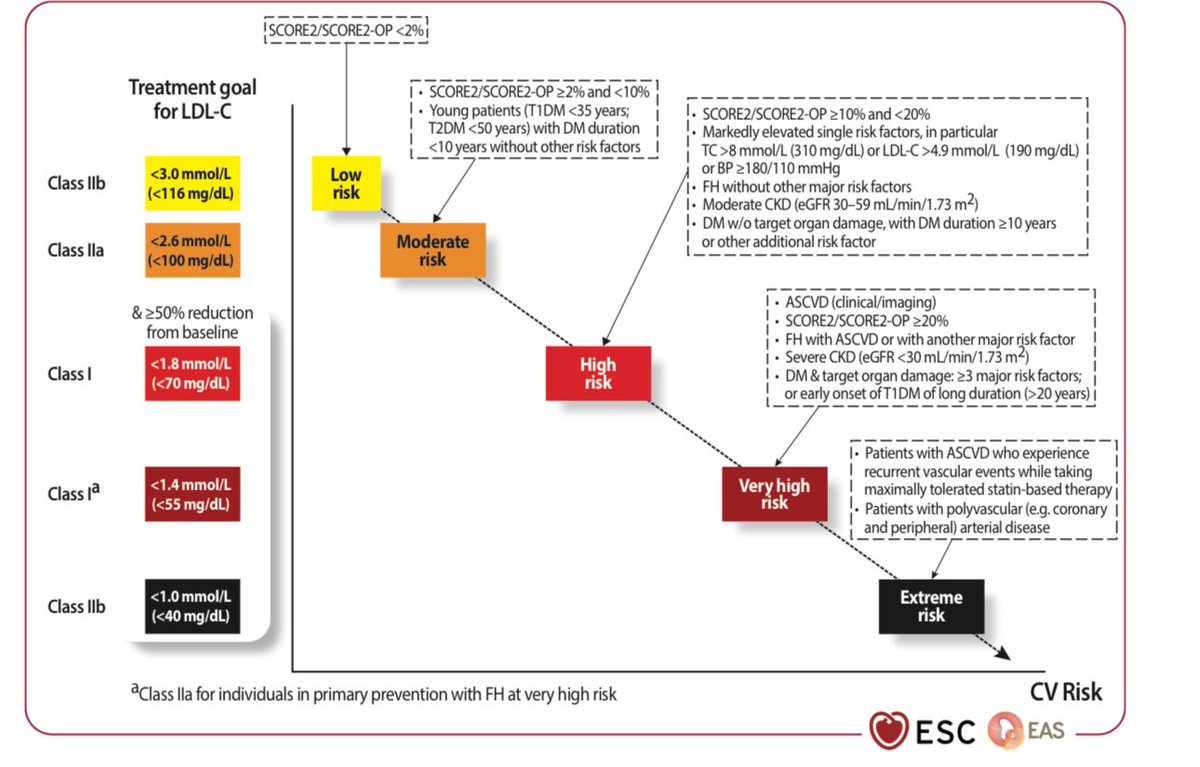
🚨 2025 Focused Update of the 2019 ESC/EAS Guidelines for the management of dyslipidaemias
#Cardiology#ESC2025#LipidUpdate
1️⃣ NEW cardiovascular risk estimation:
Use updated #SCORE2 & #SCORE2OP algorithms for 10-year risk in adults aged 40–89, calibrated to local mortality rates.
Risk categories: Very High, High, Moderate, Low.
2️⃣ LDL-C remains the main target ⚡
Lowering #LDLC reduces #ASCVD risk—start pharmacological therapy at thresholds determined by risk and baseline LDL-C.
Goal: “The lower, the better!”
3️⃣ 👨⚕️📉 Innovations in therapy 🧪
•Bempedoic acid now recommended for statin-intolerant/high-risk patients!
•Evinacumab for homozygous familial hypercholesterolemia (FH).
•Inclisiran: ongoing trials, promising ~50% LDL-C reduction.
4️⃣ Acute coronary syndromes (ACS): Early & intensive lipid lowering 🏥
•Initiate high-intensity statin + ezetimibe during ACS hospitalization.
•Combination therapy = Faster & deeper LDL-C reductions, improved outcomes.
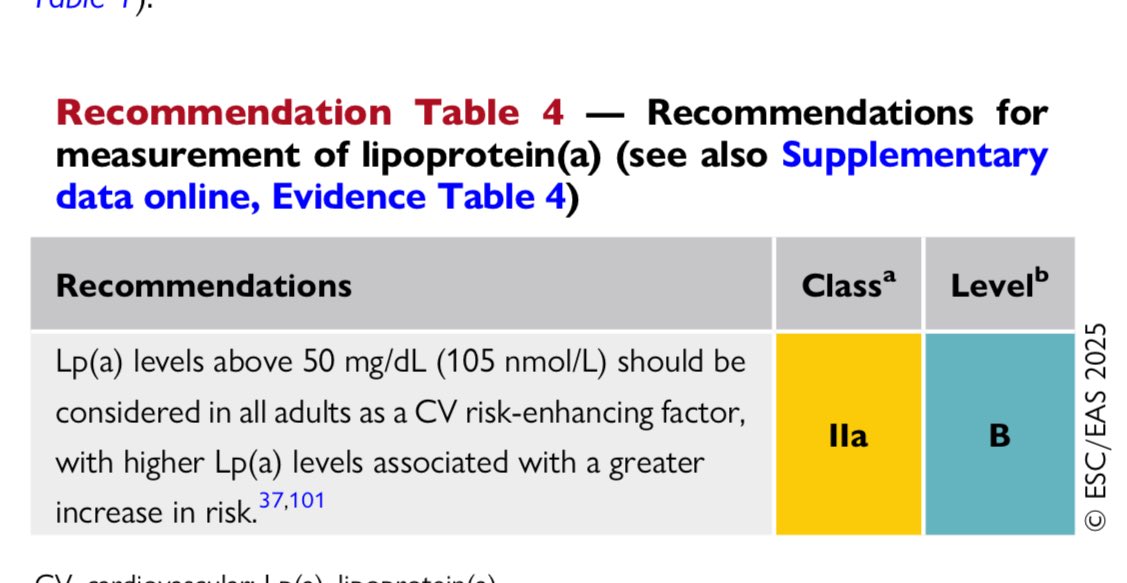
5️⃣ Lipoprotein(a): Causal role confirmed
•Measure #Lp(a) at least once in all adults.
•Levels >50 mg/dL (≥105 nmol/L) are risk-enhancing, require aggressive management.
6️⃣ Hypertriglyceridaemia update
•Statins first-line; fibrates not indicated for CV event reduction.
•High-dose icosapent ethyl (4g/day) for high-risk patients with tg 135–499 mg/dL, proven CV event reduction.
•Volanesorsen for familial chylomicronaemia syndrome.
7️⃣ Special populations
•HIV: Statins recommended ≥40 years regardless of LDL-C.
•Oncology: Statins considered in high CV toxicity risk during anthracyclines.
8️⃣ Dietary supplements: 🚫 NOT recommended
•No supplement/vitamin without proven safety & LDL-C efficacy reduces #ASCVD risk.
•Statins and evidence-based therapies continue to lead.
#Guidelines #ESC #Dyslipidaemia #PreventiveMedicine
🚨 New study alert for cardiologists & geriatric care!
🚨 Multidomain Rehabilitation for Older
Patients with Myocardial Infarction
#Cardiology #Geriatrics #MyocardialInfarction #Rehabilitation
1/ Older patients (≥65) post-MI with impaired physical function often underrepresented in trials.
👵👴 Older adults post-heart attack are often underrepresented in trials. This changes! #CardioRehab #ElderlyCardiology #HeartHealth
2/ This randomized trial (N=512, median age 80) in Italy compared a multidomain rehab intervention vs usual care.
#CardioRehab #ElderlyCardiology #HeartHealth
3/ Intervention included: cardiovascular risk control, dietary counseling, and structured exercise training over 12 months.
🏥💪 Multidomain approach: risk control + diet + exercise #CardioRehab #ElderlyCardiology #HeartHealth
4/ Primary outcome: CV death or unplanned CV hospitalization within 1 year.
#CardioRehab #ElderlyCardiology #HeartHealth
5/ Result: Intervention group had significantly fewer primary outcome events (12.6% vs 20.6%, HR 0.57, P=0.01).
📉 Significant reduction in heart complications & hospital visits!
6/ Intervention reduced unplanned hospitalizations, especially for heart failure (HR 0.20).
7/ Physical function and quality of life improved with the intervention.
🌟 Better physical function & quality of life
8/ No serious adverse events reported with the intervention.
9/ Tailored, long-term, multidomain rehab could be key in older post-MI care.
💡 Tailored, long-term rehab plans are vital for our aging patients.
10/ Limitations: selected 1-month survivors, patients aware of group allocation, unclear impact of home exercise alone.
📎 https://t.co/kzPLUAAvHh
Muy interesante la editorial de @Marisolbravoam2 sobre nuestro estudio RECORVAL. Agradecimientos en nombre de todos los autores por tu valiosa perspectiva y destacaría la importancia de una visión global y socioeconómica de los pacientes isquémicos.
https://t.co/Z92ed8jRO8
As a follow-up to my post yesterday on the somatic mutation theory vs. the mitochondrial (metabolic) theory of cancer, it is important to highlight that mitochondrial dysfunction is not a singular or isolated event—it is a multifactorial process with various possible causes.
As I discuss in this paper, https://t.co/h2uFDBTsIy, mitochondrial dysfunction or decay is well documented to arise from a range of contributors, including genetic mutations, infections, aging, and physical inactivity. Therefore, it is important not to oversimplify the term "mitochondrial dysfunction" when considering it as a root cause of cancer, as this dysfunction is often a downstream consequence of diverse or multifaceted upstream insults.
Furthermore, as discussed in my paper and illustrated in the figure below, mitochondrial dysfunction or decay also plays a central role in the pathogenesis of numerous diseases characterized by profound disruptions in cellular bioenergetics.
Finerenone with Empagliflozin in Chronic
Kidney Disease and Type 2 Diabetes
🔗 https://t.co/uJo4HA0OFc
🧵1NEW in @NEJM: Combining #Finerenone + #Empagliflozin significantly reduced albuminuria in patients with #CKD & #T2D.
The CONFIDENCE trial offers a new strategy in tackling cardiorenal risk.
#CardioTwitter #NephTwitter #EndoTwitter
👥 Who were the patients?
•CKD: eGFR 30–90 ml/min/1.73m²
•Albuminuria: UACR 100–5000 mg/g
•All had T2D
•All on RAS inhibitors
✅ Randomized to:
1.Finerenone
2.Empagliflozin
3.Both combined
#Diabetes #Nephrology
🎯 Primary endpoint:
Reduction in urinary albumin-to-creatinine ratio (UACR) at 180 days.
📉 Combo therapy reduced UACR:
•🆚 Finerenone: −29% more
•🆚 Empagliflozin: −32% more
All statistically significant (p<0.001)
#SGLT2i #MRAs #Cardiorenal
🛡️ Safety profile:
•No unexpected adverse events
•Low rates of hypotension, hyperkalemia, AKI
•No excess discontinuation
A reassuring signal for dual initiation 💊💊
#PatientSafety #MedTwitter
🧠 Take-home:
✅ Dual blockade with finerenone + SGLT2i > monotherapy in reducing albuminuria
💡 May suggest additive renal protection
🧪 Awaiting hard outcomes (e.g. eGFR slope, CV events)
#RenalProtection #HeartKidneyAxis