@Mr_Andrew_Fox Very much appreciated. You do thoughtful, considered and authoritative work which has been a joy to follow the past 3 years. Wish more Brits cared about the truth as much as you do.
Ah yes, Iran has executed over 900 since the start of the year, many others are currently sentenced to be executed by kangaroo courts & what is exercising the attention of Amnesty Ireland are two football matches between Israel & Ireland. I remember a time when Amnesty had a laser focus on the plight of political prisoners.
The Irish have completely lost their minds over Jews and Israel. Everything they believe about Israel is false. They endlessly parrot the genocide and apartheid lies, and with such certainty and ferocity, when they know absolutely nothing about the conflict or the region. It is wilful gross ignorance at this point, and a severe mental illness. No doubt about it.
It seems reporting my post has now had the opposite intended effect. It’s now trending.
Never be afraid of talking the truth.
There has never been a Genocide or Famine in Gaza.
It’s a vicious lie that has been used by the Islamist propaganda machine to try and justify a real genocide in the destruction of Israel and 7 million Jews.
A farmer dies in April 2026.
His son inherits the farm. The farm has been in the family since 1847.
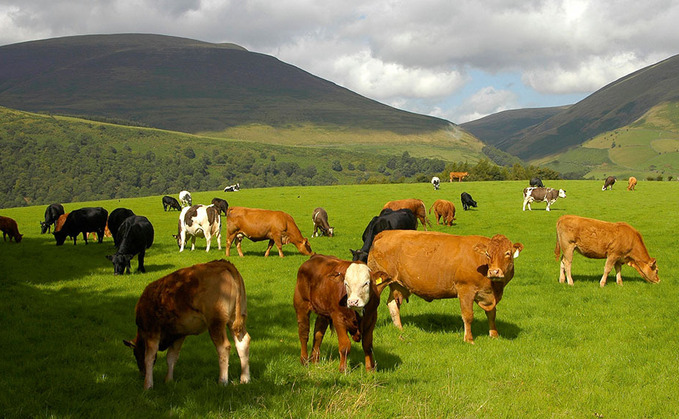
The farm consists of: 300 acres of grazing pasture, a farmhouse built in 1892, a barn, a milking parlour, two tractors of varying ages, a Land Rover that runs about 70% of the time, and a herd of 180 Hereford-cross cattle.
On paper, the farm is worth approximately £3.2 million. This is because land near him has been bought recently by a London hedge fund looking for carbon credits, which has dragged the comparable value of every field within forty miles upward to a number nobody local can justify.
In cash, the farm produces a profit of about £28,000 a year in a good year. In a bad year it loses money. The son also works as a fencing contractor three days a week to keep the operation viable.
The inheritance tax bill on a £3.2 million estate, even at the reduced 20% rate, comes to approximately £140,000 after the increased threshold is applied. The son does not have £140,000. The son has never had £140,000. The son has £4,200 in his current account and an overdraft.
The son sells 60 acres to a developer to pay the tax. The developer puts solar panels on the 60 acres. The remaining herd cannot be sustained on the reduced land. The herd is sold. The barn becomes a holiday let.
A different family eats Brazilian beef this Christmas without knowing why the price went up.
The Treasury collects £140,000.
The land never produces British food again.
I think Polanski is super retarded. Like, village idiot low IQ levels. I keep thinking it can't get worse and my expectations have hit rock bottom.
Yet somehow he keeps surprising me with new levels of stupidity.
@afalkhatib Good post. Building and constructing is better than demolishing and destroying. Focus on building a state, not destroying the one next door. That’s what the sane people want. Prosperity for all.
@DanFriedman81 US and Israeli pilots need a break. So do Israeli and Gulf civilians. But be in no doubt: Gulf states, Israel and the US will resume once they are rested and resupplied until the Straits are open and the Iranian people have the opportunity to overthrow what remains of the IRGC.
Food for thought.
Trump, Hormuz and the End of the Free Ride
For half a century, Western strategists have known that the Strait of Hormuz is the acute point where energy, sea power and political will intersect. That knowledge is not in dispute. What is new in this war with Iran is that the United States, under Donald Trump, has chosen not to rush to “solve” the problem. In Hegelian terms, he is refusing an easy synthesis in order to force the underlying contradiction to the surface.
The old thesis was simple: the US guarantees open sea lanes in the Gulf, and everyone else structures their economies and politics around that free insurance. Europe and the UK embraced ambitious green policies, ran down hard‑power capabilities and lectured Washington on multilateral virtue, secure in the assumption that American carriers would always appear off Hormuz. The political class behaved as if the American security guarantee were a law of nature, not a contingent choice. Their conduct today is closer to Chamberlain than Churchill: temporising, issuing statements, hoping the storm will pass without a fundamental reordering of their responsibilities.
Trump’s antithesis is to withhold the automatic guarantee at the moment of maximum stress. Militarily, the US can break Iran’s residual ability to contest the Strait; that is not the binding constraint. The point is to delay that act. By allowing a closure or semi‑closure to bite, Trump ensures that the immediate pain is concentrated in exactly the jurisdictions that have most conspicuously free‑ridden on US power: the EU and the UK. Their industries, consumers and energy‑transition assumptions are exposed.
In that context, his reported blunt message to European and British leaders, you need the oil out of the Strait more than we do; why don’t you go and take it? Is not a throwaway line. It is the verbalisation of the antithesis. It openly reverses the traditional presumption that America will carry the burden while its allies emote from the sidelines.
In this dialectic, the prize is not simply the reopening of a chokepoint. The prize is a reordered system in which the United States effectively arbitrages and controls the global flow of oil. A world in which US‑aligned production in the Americas plus a discretionary capability to secure,or not secure, Hormuz places Washington at the centre of the hydrocarbon chessboard. For that strategic end, a rapid restoration of the old status quo would be counterproductive.
A quick, surgical “fix” of Hormuz would short‑circuit the dialectic. If Trump rapidly crushed Iran’s remaining coastal capabilities, swept the mines and escorted tankers back through the Strait, Europe and the UK would heave a sigh of relief and return to business as usual: underfunded militaries, maximalist green posturing and performative disdain for US power, all underwritten by that same power. The contradiction between their dependence and their posture would remain latent.
By declining to supply the synthesis on demand, and by explicitly telling London and Brussels to “go and take it” themselves, Trump forces a reckoning. European and British leaders must confront the fact that their energy systems, their industrial bases and their geopolitical sermons all rest on an American hard‑power foundation they neither finance nor politically respect. The longer the contradiction is allowed to unfold, the stronger the eventual synthesis can be: a new order in which access to secure flows, Hormuz, Venezuela and beyond, is explicitly conditional on real contributions, not assumed as a right.
In that sense, the delay in “taking” the Strait, and the challenge issued to US allies to do it themselves, is not indecision. It is the negative moment Hegel insisted was necessary for history to move. Only by withholding the old guarantee, and by saying so out loud to those who depended on it, can Trump hope to end the free ride.