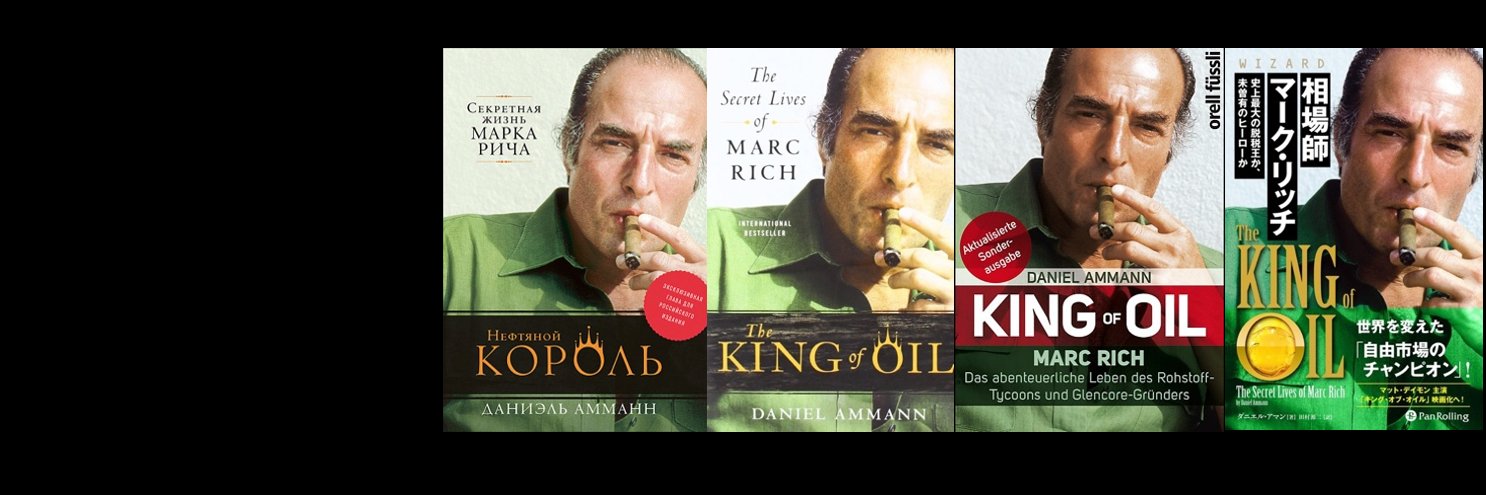
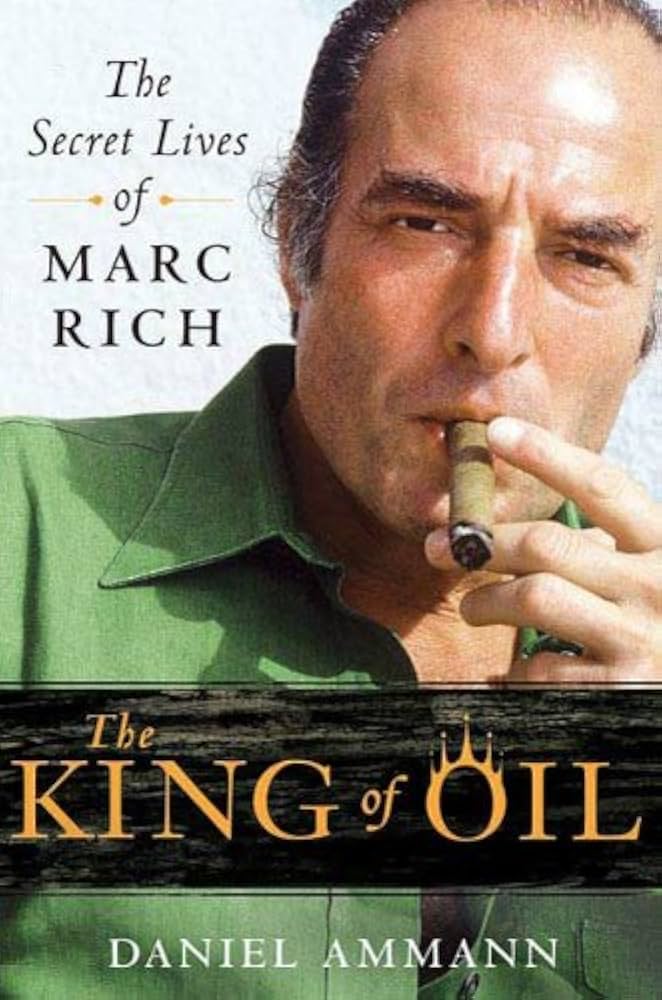
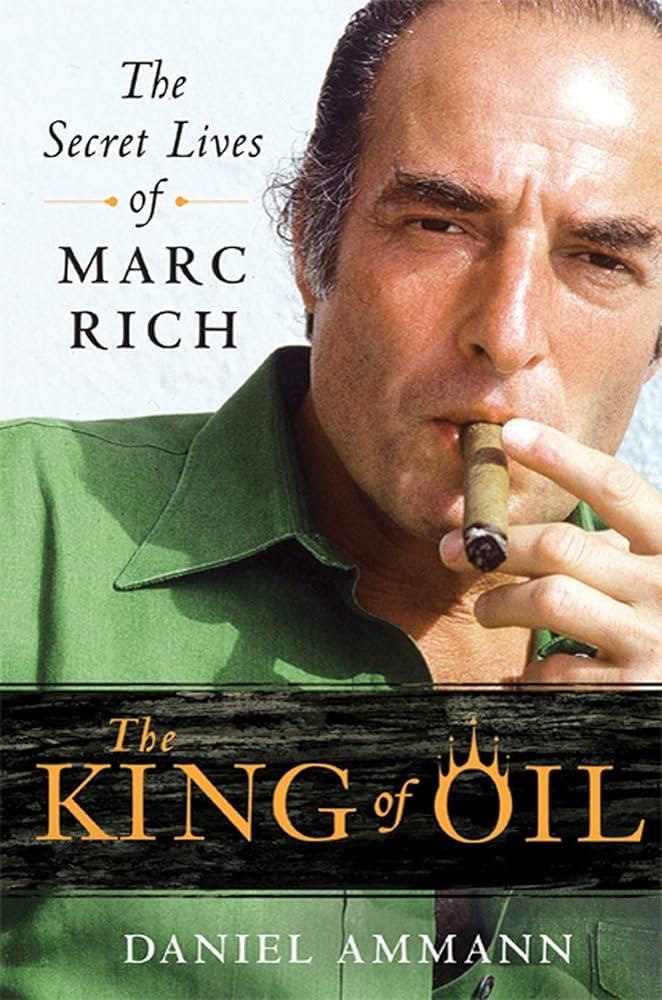
«The King of Oil - The Secret Lives of Marc Rich» received its 900th review today at @amazon. Most readers like my book. 63% gave 5 stars and 25% gave 4 stars. «Brilliant Read», says Kumarin. «A Truly Awful Book» comments Alan, who gave 1 star (2% agree).
https://t.co/H68TdpA2mn
OBITUARY: Willy Strothotte, who played a key role in the history of commodity trading by leading the deal that created Glencore, has died. He was 82.
https://t.co/RkSwikvDHe
Von guten Mächten wunderbar geborgen,erwarten wir getrost,
was kommen mag.
Gott ist bei uns am Abend und am Morgen
und ganz gewiss an jedem neuen Tag.
Am 9.4.1945 wird Dietrich Bonhoeffer von den Nazis ermordet. „Von guten Mächten“ ist Teil seines letzten Briefs an seine Frau.
In relation to the above - If you want to know a bit more about Iranian-Israeli oil trade I can recommend reading “The King of Oil: The Secret Lives of Marc Rich” by Daniel Ammann.
@dan_ammann This, combined with the ability to navigate disparate regimes and interests with calculated impartiality and exclusive focus on just providing the service his customers would find valuable at a fair price, made him a trusted advisor to Western presidents and EM Dictators alike
Because of the ongoing Strait of Hormuz blockade i picked up the book King of Oil and I came across how Marc Rich sold Iran’s oil to Israel (both sworn enemies) after the 1979 revolution
After the 1979 Iranian Revolution, the US imposed an embargo on Iranian crude and most Western oil companies stopped touching it overnight
On one hand Iran had millions of barrels it couldn’t easily sell, on the other hand the world was starving for oil, but nobody wanted to be seen buying from Iran
Enter Marc Rich
He built a shadow supply chain which worked like this-
The oil would still originate with the National Iranian Oil Company and load normally at Iranian terminals in the Persian Gulf
On paper the cargo was loaded because it wad sold to a small trading firm in registered in Panama/ Liechtenstein
Then, at sea the tankers would
pump the crude into another vessel and once the cargo changed ships, the could also forge the orgins of the cargo, it was not the orginal ship, so suddenly the oil was also no longer “Iranian crude”
The ship swapping made it extremely difficult for regulators or banks to trace where the oil had originally come from
Then once the oil reached the Red Sea, it was offloaded at Eilat (a port town in Israel), and was pumped through the Eilat–Ashkelon pipeline, and reloaded on tankers at Ashkelon in the Mediterranean
And this oil was sold across the world from Israel’s port Ashkelon (including countries which had sanctioned Iran)
Marc Rich isn’t around anymore, but i know for sure there is some savvy commodity trader pulling some tricks to make the most of the current crisis, and we’ll probably get to know about it 20 years later (or maybe never)
Of course that’s your contention. You just read @JavierBlas The World for Sale. Now that the Strait is closed you’re going to read King of Oil. When it becomes inevitable you won’t escape the AI Underclass you get into softs and you’ll start reading Merchants of Grain.
Marc Rich cambió el mundo del petróleo para siempre.
Y su biografía es brutal.
Aquí sus 20 mejores ideas:
1. Marc Rich escapó del Holocausto cuando era niño, huyendo de Bélgica hacia los Estados Unidos con su familia en la pobreza absoluta.
2. A pesar de sus humildes comienzos, logró amasar una inmensa fortuna y revolucionar la industria mundial.
3. El éxito temprano de Rich se basó en la confianza mutua, llegando a cerrar tratos multimillonarios con un simple apretón de manos.
4. Históricamente, el comercio mundial de petróleo estaba dominado por un cártel de siete grandes compañías petroleras conocidas como las Seven Sisters.
5. Rich rompió este monopolio tradicional al comprar directamente a los países productores y vender a los consumidores (creando los petropaíses).
6. Sostenía que un imperio comercial internacional no podía funcionar basándose en simpatías personales o políticas. Hizo negocios con todo tipo de regímenes, desde la España de la dictadura, la Cuba de Fidel Castro o la Sudáfrica del apartheid.
7. Para ganar la lealtad de sus clientes, financiaba a gobiernos sin liquidez, como Jamaica y Angola, a cambio de derechos exclusivos sobre recursos como el aluminio o el petróleo.
8. La Unión Soviética denunciaba públicamente al apartheid y a Israel, pero le vendía su petróleo en secreto a Rich para esos países.
9. Una de sus operaciones encubiertas más exitosas fue utilizar un oleoducto secreto en Israel para canalizar petróleo iraní hacia Europa y España.
10. Irán había jurado públicamente destruir Israel. Extraoficialmente ambas naciones operaban una empresa conjunta altamente clasificada (el oleoducto secreto).
11. Su empresa original, que hoy forma parte de Glencore, desarrolló una legendaria reputación de absoluto hermetismo y secreto comercial.
12. El secreto absoluto era indispensable para poder intermediar con éxito entre países y regímenes que oficialmente no mantenían ninguna clase de relaciones diplomáticas.
13. Pero en 1983, en Estados Unidos, se le imputaron 51 cargos que incluían fraude, evasión de 48 millones de dólares en impuestos y comercio con el enemigo.
14. Rich lo vió como una persecución personal con motivación política y huyó a Suiza (no creía que fuera a tener un juicio justo).
15. El gobierno de EE. UU. provocó un severo conflicto diplomático ya que Suiza se negó obstinadamente a extraditar a Rich, aclarando que la evasión fiscal no era causa de extradición en su país.
16. Mientras era fugitivo, Rich colaboró estrechamente con la inteligencia israel, utilizando sus contactos comerciales globales para ayudar a la seguridad de Israel.
17. Tras 17 años siendo perseguido por Estados Unidos, Rich aceptó la estrategia de intentar obtener un indulto presidencial.
18. La inteligencia israelita consiguió el apoyo del propio presidente Bill Clinton.
19. En las últimas horas de su mandato, el 20 de enero de 2001, Bill Clinton otorgó a Marc Rich el indulto incondicional.
20. En resumen, Marc Rich cambió el mercado del petróleo para siempre. Además, su falta de escrúpulos le hizo hacerse inmensamente rico.
Cada semana envío un e-mail con las mejores ideas de un libro de no ficción.
Te apuntas aquí: https://t.co/usrIcKbJKR
@SizweLo@MilosGobinski Marc Rich supplied oil he bought from Revolutionary Iran directly to the Apartheid regime. According to him, all parties involved were aware of the arrangement. When national interests are at stake, political and religious ideologies tend to recede.
@MilosGobinski These two books.
Iran’s Foreign Policy, 1941-1979 by Rouhollah K. Ramazani;
The King of Oil by Daniel Ammann
This paper https://t.co/4tNLUMLVvl
This article https://t.co/p4UK50OkvG