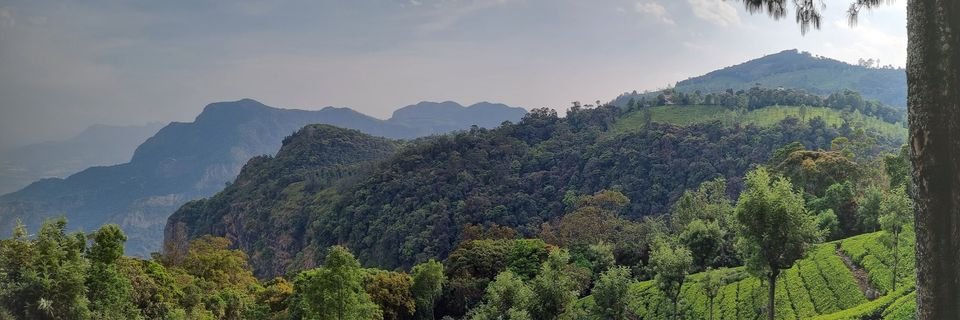
Taxonomy Workbench has grown considerably since I launched it in March. This experimental AI-assisted botanical toolkit now puts regional identification guides at its centre, with interactive keys, selected-taxa comparisons, and more. Here’s what’s changed 🧵
Anthropic and OpenAI’s language models can design proteins and predict their sequences and structures — capabilities previously seen only in specialized AI tools
https://t.co/GiCZuudeKf
In testing GPT-6.2, I used it to make a significant historical discovery which I detail in the post below. This suggests that the process of research and discovery we’re already seeing in verifiable domains like math is starting to generalize to non-deterministic fields like history.
You can read the full post here:
https://t.co/Vm7MA2R3aQ
In a nutshell, Yale’s Beinecke Library holds an anonymous sketchbook of an 1808 journey from Montreal to Lake Superior and back. I’ve spent many hours over the years trying to figure out who made the sketches with no luck. The artist could literally be any one of several thousand people. There are few clues: only four dated and labelled images.
With minimal prompting, in just 22 minutes, Astra used publicly available sources to identify a minor French aristocrat, the vicomte de Chabot, as the artist and suggested that we test the hypothesis by ordering copies of a little known microfilmed diary of Chabot’s trip it also found.
I was truly stunned. I’d never heard of Chabot or this diary! New document finds are also exceedingly rare in a well worn field like fur trade history.
I ordered scans of the journal from microfilm and when they arrived the handwriting matched the captions in the sketchbook. The itinerary also aligned perfectly with the few dated drawings in the book. But there was actually the type of conclusive evidence we rarely get as historians: on 18 June 1808, after Chabot’s canoe reached Fort St. Joseph, he wrote “I took a sketch” before describing the exact view of the fort depicted in a matching drawing.
The journal itself is also a major find. It had been mentioned once in a dissertation footnote, but in a completely different area of history and is unknown to fur trade or Canadian historians. It’s long and detailed, covering some 162 notebook pages which makes this a significant new document to my field. Attached to the journal was another trove of documents too: excerpts from long-destroyed North West Company papers, journals, and letters. Again, this almost never happens. Both finds equally surprised the other leading experts I consulted.
Although we can construct a coherent narrative in hindsight, I cannot emphasize enough how exceedingly difficult this sort of thinking and recall is for humans. Unlike a human, Astra was able to tackle the problem from both ends at once: working forward from the scant facts of the 1808 journey pictured in the sketchbook and backwards from the immense number of surviving facts about 1808 British North America in general.
While we can technically explain Astra’s path to this find as a product of enhanced search capabilities, it conducted the investigation from end to end. I basically acted as the research assistant, restricting copies of the paper documents it needed.
To my mind, this puts historians in a similar position as the mathematicians found themselves about eleven months ago, when LLMs started to solve the first Erdős problems. Over the past year, we’ve watched these same models go from learning to read handwriting, to beginning to think historically, to mastering the undergraduate essay, and finally to making small but real contributions to human knowledge more or less autonomously.
The trajectory seems clear.
My 2026 iNaturalist Year in Review is in. A bit of a smaller haul than average (6,421 observations) since I travelled less this year—especially compared to my 2024 peak of over 14k.
JUST IN: Birdwatching expert tracks down all 60 bird species in GTA 6, praising the game as “the most accurate version of modern birding ever put to screen.”
@morobanini Yes, just Gemini (4 Neon with thinking level High in AI Studio). My verbatim prompt was, "Are you able to confidently identify this plant to the species level? It was photographed on Mar 28, 2023, at 11:35 AM IST at lat:10.04998, lon:77.0778783333."
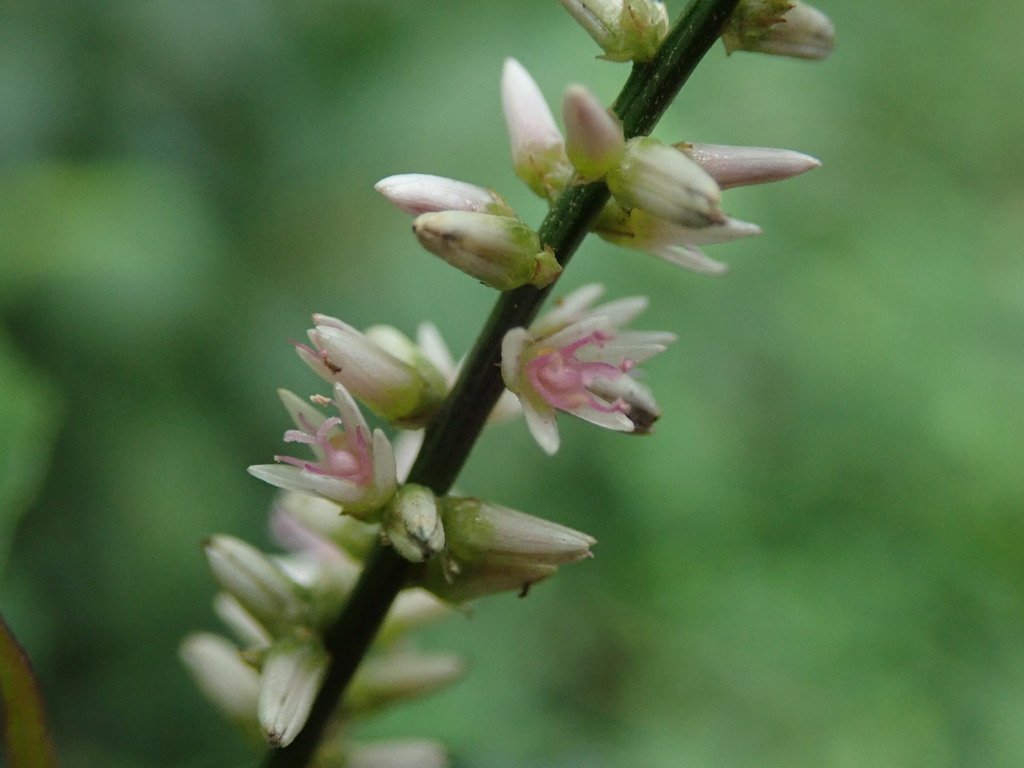
An update to my priors on AI plant ID: I gave Gemini 4 Neon (High) four photos of an unidentified plant from Kerala, plus the date and GPS coordinates. No morphological description whatsoever. It identified it as Indobanalia thyrsiflora (Amaranthaceae). (1/5)
According to the most recent data, African birth rates are falling far faster than anyone predicted. If the current trends continue, Africa will reach below replacement level decades ahead of the UN projections.
One caveat: a convincing diagnosis doesn't prove every character was resolved in the photos. An LLM can infer characters from a proposed name, and one case isn't a benchmark. Still, for an obscure, image-poor taxon, this was a striking result. I've updated my priors. (5/5)
Until recently, I thought LLM-based plant ID required me to describe the morphology first. Photos went to specialist classifiers; text descriptions and floras went to LLMs. This case made me realise how much multimodal models have narrowed that divide. (4/5)
Gemini-powered agents are accelerating discoveries across our @GoogleDeepMind Science missions.
Today, our team is sharing how this paradigm is able to increase the efficiency of quantum circuits, bringing forward the implementation of these algorithms on quantum hardware. 💻
Our agents found new algorithms that cut estimated compute costs by 10.9x for a fusion simulation, 8.1x for photochemistry, and 2.5x for simulating a molecule involved in drug metabolism. Similar to our recent software verification breakthrough with AlphaProof, each quantum circuit result is mathematically proved in Lean .
This agentic-powered method compresses work that once took years, and empowers researchers to focus on defining problems and interpreting results.
There is certainly more work to do — practical quantum simulations will require more powerful hardware than first-generation error-corrected machines — but these efficiency gains are promising.
Congrats to @benjaderberg, Johannes Bausch, @SergeyShir994 and the broader @GoogleDeepMind and @GoogleQuantumAI teams who collaborated on this project.
Read our blog for more details and a link to our technical paper: https://t.co/yrt3n4f8Rx
3. RAG tools like Gemini Notebook, where you provide flora accounts and taxonomic treatments to constrain the model.
The future is a blend of all three—low-latency and effortless in the field or at a desk with just a smartphone camera and mic. (5/5)
What sets Gemini 4 Neon (High) apart is that it’s the first model that consistently 'gets' plant taxonomy. Ask it to ID a Hieracium without exhaustive detail, and it’ll simply admit it can't do so confidently—rather than hallucinating an answer. (1/5)
Right now, I see 3 main approaches to AI-assisted plant ID:
1. Computer vision (CNNs/transformers) like Pl@ntNet from photos.
2. Text-based reasoning, now much stronger with Neon—hopefully labs keep building in this scientific-analysis direction. (4/5)
The Lean FRO and Mathlib Initiative have released a joint statement on the Lean verification of the Riemann Hypothesis.
On November 20, Levent Alpöge released a proof of the Riemann Hypothesis as a Lean library of 17 million lines of code. Over the past day, the Lean and Mathlib communities worked together to verify it. The statement certifies the proof as correct and describes how it meets all necessary verification criteria.
Congratulations to Levent on this achievement, and thank you to everyone in the community who contributed to the verification.
Full statement: https://t.co/edxEbkodw7