This deal is a huge win for both the American and Venezuelan people.
It demonstrates how President Trump's bold foreign policy is driving America First wins: securing stable reserves and low-cost oil in our Hemisphere and lowering gas prices here at home.
For the Venezuelan people, this deal will bring nearly $100 billion in private investment, support thousands of high-paying jobs, and drive the reconstruction of Venezuela's economy.
NASA’s Habitable Worlds Observatory: the telescope designed to search for another Earth.
NASA is already developing the technologies for what could become one of the most ambitious astronomical observatories ever built. The Habitable Worlds Observatory, or HWO, is being conceived as NASA’s next major flagship astrophysics mission after the Nancy Grace Roman Space Telescope. Its defining objective is extraordinarily simple to state and extraordinarily difficult to achieve: directly photograph rocky planets similar to Earth around nearby Sun-like stars and analyze their atmospheres for evidence that some of them might support life. NASA’s current science goal is to directly image and characterize roughly 25 potentially habitable worlds.
HWO is not simply a larger version of Hubble or Webb. It combines lessons from Hubble, JWST and Roman with technology developed during the earlier LUVOIR and HabEx mission studies. NASA is currently exploring several possible architectures rather than committing to a final telescope design. The engineering concepts being studied include a 6-meter segmented off-axis telescope, another 6-meter configuration using a central keystone-shaped mirror surrounded by segments, and an 8-meter on-axis design. NASA explicitly warns that none of these should yet be interpreted as the final appearance of HWO.
The reason such a large telescope is required becomes obvious when we consider what HWO is trying to see. An Earth-like planet observed in reflected visible light can be approximately ten billion times fainter than its host star. Worse, from tens of light-years away the planet appears extremely close to that star in the sky. HWO must therefore separate two sources that are both enormously different in brightness and separated by only a tiny angle. It is rather like trying to detect an extraordinarily faint point of light immediately beside a searchlight, except that both are light-years away. NASA’s technology development is consequently aimed at contrasts approaching 10⁻¹⁰.
The baseline solution is an extremely advanced coronagraph located inside HWO. A coronagraph suppresses the light from the star while allowing light from surrounding planets to reach the detector. This sounds straightforward, but at a contrast of one part in ten billion, tiny imperfections in the optical system become important. Minute distortions of a mirror can scatter enough starlight into the image to imitate or completely hide a planet. HWO will therefore combine coronagraphic masks with deformable mirrors, precision wavefront sensing and active wavefront control to create an exceptionally dark region around the stellar image where planets can be detected. NASA refers to the process of creating this high-contrast region as digging a coronagraphic “dark hole.”
This is why HWO also needs to be one of the most optically stable spacecraft ever constructed. NASA says its optical system may need to remain stable at scales comparable to the width of an atom, while wavefront control requirements reach into the picometer regime. Thermal changes, mechanical vibration, reaction-wheel disturbances, structural creep and even very small motions between individual primary-mirror segments can destroy the contrast required to see an Earth analogue. Technologies under development therefore include ultra-stable mirror assemblies, extremely stiff structures, millikelvin-level thermal control, low-disturbance mechanisms, precision segment sensing and control, vibration isolation and microthrusters.
One of the most visually striking technologies associated with HWO is the huge flower-shaped starshade seen in many NASA demonstrations. The flower shape is not decorative. A starshade is an external occulter: instead of blocking the star inside the telescope, an independent spacecraft places an enormous opaque screen between the telescope and the target star. The telescope then sits inside the extraordinarily dark shadow created behind it while the light from planets located slightly to either side of the star continues past the shade and reaches the telescope.
A simple circular disk would not work well enough because light diffracts around its edge. In fact, diffraction would partially refill the shadow with stellar light. The strange elongated petals are engineered specifically to manipulate that Fresnel diffraction pattern. Their carefully calculated edges make the transition between opaque and transparent space gradual from the point of view of the propagating wavefront, dramatically suppressing diffracted starlight in the central shadow. In other words, the “flower” exists because of wave optics: each petal contributes to shaping the diffraction field so that the telescope occupies a region where the stellar electric field is almost cancelled. NASA laboratory demonstrations have already achieved broadband starshade contrasts below approximately 10⁻¹⁰ at flight-like Fresnel numbers.
A flight starshade for an observatory such as HWO would be enormous. Different concepts range from roughly 35 to 60 meters or more in diameter, while experimental NASA concepts have investigated sizes approaching 100 meters for other applications. It would fly tens of thousands of kilometers from HWO; current technology studies commonly consider separations of order 100,000 km, depending on starshade diameter and wavelength. Both spacecraft would have to maintain extremely accurate alignment with the target star while effectively operating as a single optical instrument across an enormous baseline.
There is an important distinction, however. NASA currently plans HWO around an internal coronagraph, not around a starshade. Coronagraphs have major operational advantages: they are integrated into the telescope, can move rapidly from one target to another and do not require a second giant spacecraft to reposition itself across interplanetary-scale distances. A starshade, by contrast, would require substantial propulsion every time it moved between target stars and would introduce another complex spacecraft and formation-flying system. Nevertheless, NASA continues to study starshades because they have attractive properties. They suppress starlight before it enters the telescope, are relatively insensitive to many telescope optical imperfections and could extend HWO’s scientific capability, potentially including wavelengths where internal coronagraphy becomes particularly challenging. NASA has even studied launching such a system separately and allowing it to rendezvous with a telescope later in its mission.
Once HWO has isolated the light from an exoplanet, simply obtaining a photograph will not be the most scientifically important part. The crucial information will come from spectroscopy. By separating the planet’s reflected light into its constituent wavelengths, HWO could identify absorption produced by molecules in its atmosphere. Water vapor could provide information about habitability, while gases such as oxygen, ozone and methane could become part of a search for possible biosignatures. No single molecule would constitute proof of life: atmospheric chemistry has abiotic pathways capable of producing potentially misleading signals, so HWO will need to study combinations of gases together with the planet, its star and the wider planetary environment.
Its wavelength coverage is therefore fundamental. HWO is being developed as an ultraviolet, optical and infrared observatory. In addition to visible and near-infrared measurements of exoplanets, ultraviolet capability can reveal species such as ozone and provide information about stellar radiation and atmospheric photochemistry. NASA is consequently developing high-efficiency UV detectors, advanced mirror coatings, ultraviolet gratings and filters, low-noise visible detectors and photon-counting technologies capable of extracting extremely small numbers of photons from distant planets. Some of the relevant observations will be so photon-starved that obtaining a useful spectrum of a single world could require very long integrations.
The telescope will also be a general-purpose astrophysical observatory. Just as Hubble became far more scientifically important than any single problem it was originally designed to solve, HWO is intended to study everything from nearby stellar and planetary systems to galaxy evolution and the distant universe. Its combination of a large aperture, diffraction-limited imaging and ultraviolet-to-near-infrared spectroscopy would give astronomers capabilities unavailable from either Webb or ground-based observatories.
Another unusual aspect of the architecture is longevity. NASA is planning HWO to operate near the Sun-Earth L2 region and to be robotically serviceable. Instruments could potentially be repaired or replaced and consumables replenished, allowing the observatory to evolve technologically rather than remaining frozen in the configuration it had at launch. That capability could also make a later-generation coronagraph, new detectors or potentially complementary technology such as a starshade scientifically relevant decades after HWO first begins operating.
HWO remains in its technology and mission-maturation phase. NASA is deliberately exploring the trade space before fixing the final architecture, with major work continuing on coronagraphs, deformable mirrors, telescope stability, detectors, UV instrumentation, deployable structures and servicing technology. Current NASA planning aims to mature many of the enabling technologies around the end of this decade, while a launch is generally discussed for around 2040 or in the 2040s rather than as a fixed launch date. In January 2026 NASA awarded additional industry contracts specifically to advance key HWO technologies, showing that the project has moved beyond a purely hypothetical observatory even though its final design has not yet been selected.
If HWO succeeds, its most memorable image may not initially look very spectacular: perhaps only a tiny pale dot beside a carefully suppressed star. But contained inside the spectrum of that dot could be water, clouds, atmospheric chemistry and, potentially, the first observational evidence that biology is not unique to Earth. The central technological problem of HWO is therefore not simply building a bigger telescope. It is learning how to remove almost every photon from a nearby star while preserving the vanishingly small number of photons arriving from a planet beside it. The coronagraph, the picometer-stable telescope and perhaps one day that enormous artificial flower flying tens of thousands of kilometres away are all different solutions to that same problem.
Video: This is one of the technologies being investigated for future direct imaging of Earth-like worlds and potentially for use with HWO. Not necessarily the final design.
Every discovery begins with light.
Explore @NASARoman before launch to see how it will capture light, turn it into data, and send its observations back to Earth from about a million miles away.
Explore the spacecraft: https://t.co/dLekuwXszE
SUPER HEAVY B21 COMPLETA TESTE ESTÁTICO!
Aparentemente os 33 Raptors do Booster do voo 14 foram ativados neste teste, que prepara o veículo para um lançamento já em meados de setembro!
BREAKING: NASA chief Jared Isaacman says America will build a “MOON BASE” on the lunar surface.
“We will launch our robotic landers, our rovers, and begin establishing an enduring presence on the Moon: the Moon base. This time we are going back to stay.”
@PallottaPedro De Pai para pai que curte o espaço a fronteira final, Parabéns Pedrão uma criança é uma benção na família, vida longa é próspera para você e família.
NEW: President Trump announces NASA is working on a nuclear-powered interplanetary spacecraft set to launch on a mission to Mars in 2028.
"This ship will be among the first of what will ultimately be a massive American Star fleet, making space travel almost as common as ocean travel today."
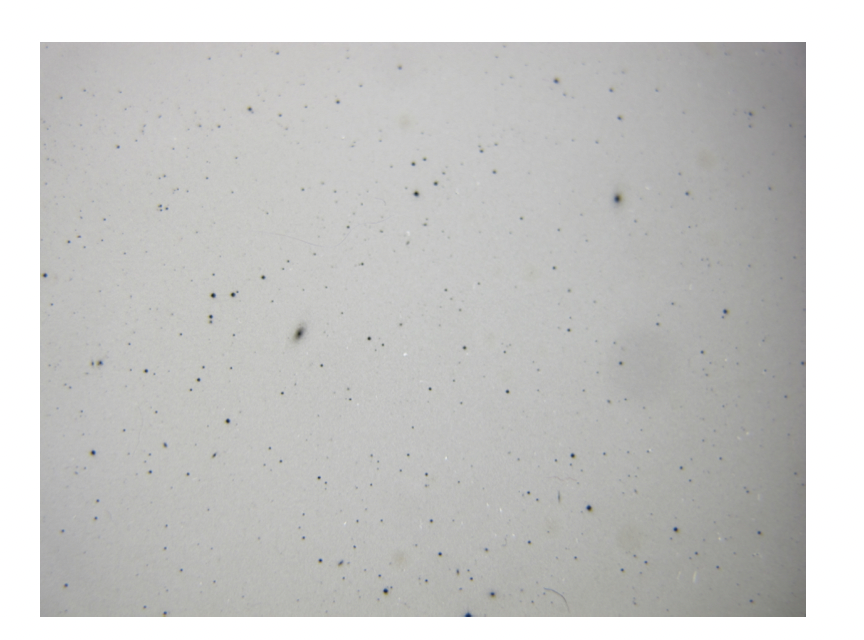
Jun Yang at Harvard University and I have submitted a paper. We examine the original photographic plate material for two famous multiple-transient events from the Palomar Sky Survey: the nine transients of April 12, 1950, and the triple transient of July 19, 1952.
The candidates are present on the photographic material and appear sharp and compact. They look just as they do in the digitized images -- star-like, yet a little sharper and rounder than the other stars in the field, just as one would expect from a sub-second transient in an image with 50 min exposure time. But as there is no clear definition of the shapes and properties of emulsion defects, a hypothetical emulsion defect could take any shape, including a sharper and rounder one. This highlights exactly why microscopy assessment is not going to solve the mystery, and why working with population-level statistics like the Earth’s shadow results is the correct way forward.
A small terminology note: in the paper, “microscopy” is used as an umbrella term for high-magnification inspection of the plate material, encompassing both microscope imaging and 25× magnifier inspection.
Read paper: https://t.co/ilr5tZ7lh8
💍Unusual shape of Fomalhaut’s debris ring shows evidence of sculpting by ancient planets, rewriting story of planetary system evolution.
📷: 2025, Artist’s impression. ALMA. @NSF /AUI/NSF @TheNRAO /B. Saxton
DOMINGÃO DO FOGUETÃO VINDO AÍ COM LANÇAMENTO DO FALCON HEAVY!
O foguete da SpaceX decola neste dia 30 de agosto, levando para a órbita o telescópio espacial Nancy Grace Roman.
Como de costume, o booster central será descartado, e os laterais retornarão para o solo!
Scientists deserve access to reportedly retrieved first-hand UAP evidence.
It makes little sense to keep analyzing blurry videos with insufficient information if a shortcut to the truth is already at hand. Whistleblowers should therefore receive the legal assurances needed to disclose everything they know about UAP without fear of retaliation. The historic memo issued by Aaron Lucas, Principal Deputy Director of National Intelligence, recently waived non-disclosure agreements and contractual obligations that prevented former and current government employees from sharing UAP information.
On October 1, something unique is happening in Stockholm.
Beyond Institute is bringing together international whistleblowers, researchers, military personnel, legal experts, and investigators for an evening dedicated to one of the most widely debated questions of our time: UAP -- Unidentified Anomalous Phenomena (formerly known as “UFOs”).
On stage, you will meet Jake Barber, Dylan Borland, Jonathan Caplan KC, John Blitch, Jeff Nuccetelli, Marik von Rennenkampff, Beatriz Villarroel, and Jesse Michels, alongside Stephen Bruehl, Jordan Flowers, Mart Sander, Ted Persson, and Dennis Åsberg.
What do we really know? What have people within the military, scientific community, and government agencies seen and experienced? What data exists—and what remains unexplained?
This will be an evening of testimony, research, discussions, and questions that are now being addressed at the highest levels internationally.
📍 Hilton Stockholm Slussen
📅 October 1, 2026
⏰ 6:00–11:00 PM — doors open at 5:00 PM
Only 270 seats are available. We expect considerable interest, so don’t wait too long if you want to join us.
🎟️ Tickets: https://t.co/UC7ltfRdp3
This is only the beginning.
Beyond Institute
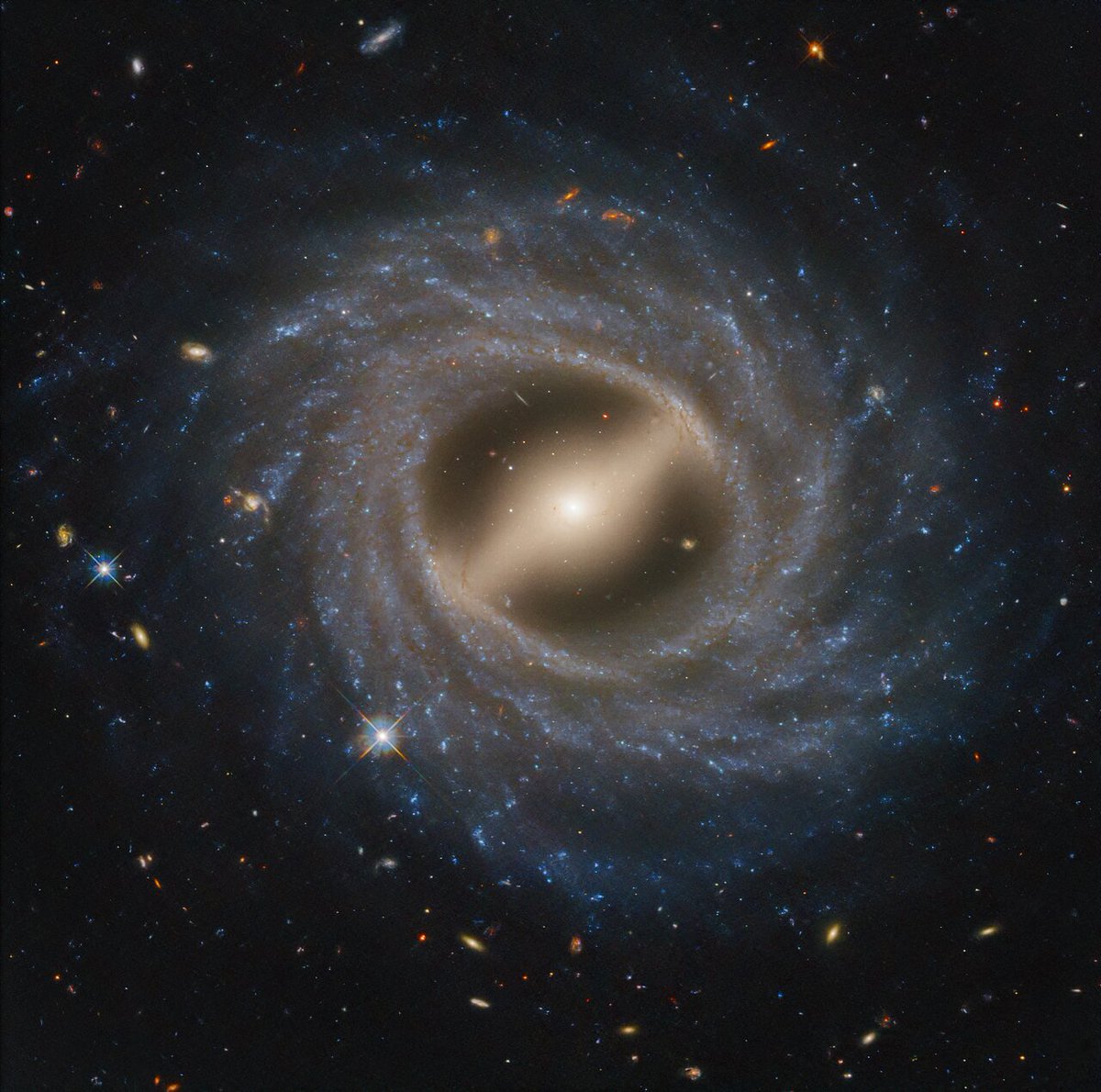
Our #HubbleTopImage features a barred spiral galaxy!
NGC 5335 is categorized as a flocculent spiral galaxy, with patchy streamers of star formation across its disk. There is a striking lack of well-defined spiral arms that are commonly found among galaxies. 1/2
This is not a regular interview. This is an exceptionally well-produced documentary featuring Ross Coulthart , exploring what is known about Soviet UFOs and alleged crashed saucers. It brings together a wealth of new information, historical context, and details about the Soviet UFO investigations and crash-retrieval program. Please enjoy.
@rosscoulthart@dennis_asberg@g_knapp
If David is fully authorized to share the evidence supporting his claims, I would welcome the opportunity to work with him immediately to scientifically verify it. Claims of this importance deserve a serious, open-minded scientific examination of the evidence.
The universe is full of questions.
@NASARoman is built to help answer some of them. 🌌
Go behind the mission with NASA’s Curious Universe podcast, exploring the science, technology, and people behind this next-generation observatory. 🎧 https://t.co/KR0kmQj9yh
A @itatiaia publicou sobre o caso que nos ocorreu na Espanha.
Se você ainda não tinha visto o vídeo que publicamos sobre o tema, assista para entender melhor.
https://t.co/KxNvZYFISc