Had a very interesting conversation with @PhilipfvBell on how to think historically about AI and 'technology' more generally. @KingsCHoSTM@kingshistory https://t.co/77CvpqppT9
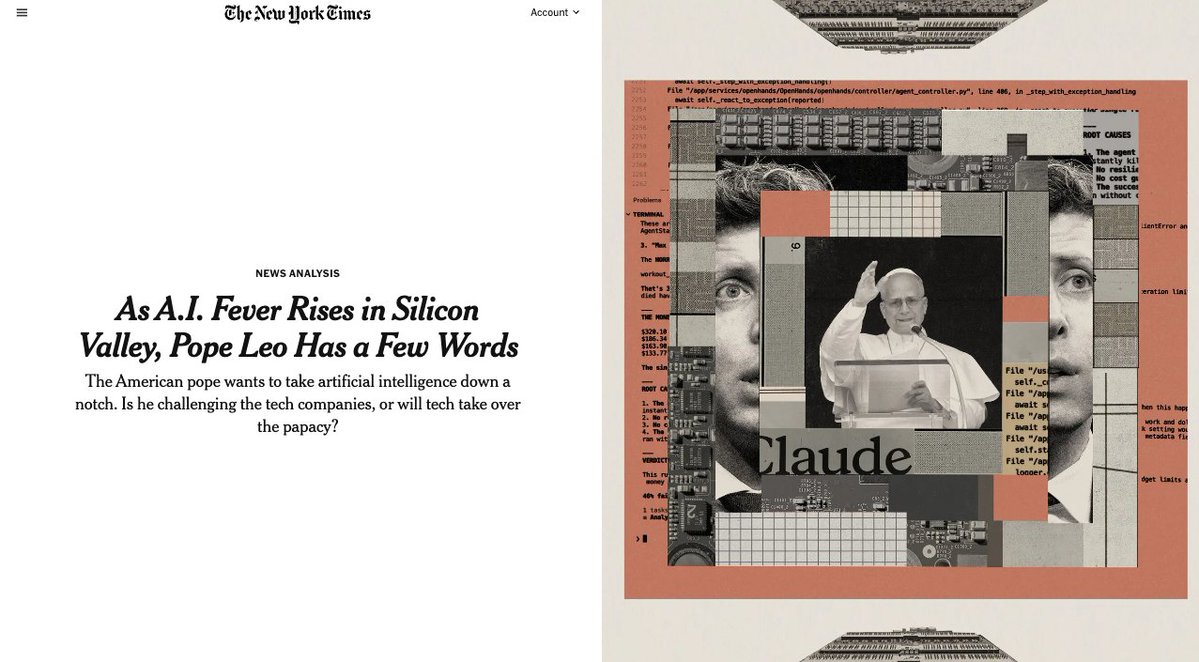
“Big Tech is essentially its own religion with its own theology and rites, not to mention its own power and influence. Pope Leo’s encyclical will be automatically viewed as false doctrine.” https://t.co/9NTZAqVR3X
Luckily since the Louvre made NFTs of their jewelry, even though the crowns physically were stolen, they still own the same assets. Because the tokens still exist and are in limited supply just as before. Nothing has changed. few understand blockchain technology.
@Lily_Eunseo I think it’s made it less linear and less cohesive - sometimes feels faster, sometimes slower and like very little has changed since the 90s. It’s janky and glitchy
@erikmbaker I think the way digital tech changed the historical time of art is underappreciated tho also. E.g. most electronic music genres have always been defined by ploughing up samples and styles from the past and recombining. Has deffo made pace of cultural change less linear but 🤷
12 July 1957 lecture by Adorno to UChicago students on “the purpose of education” defending disciplinary specialization. “the shortest path to genuine universality is to be found precisely when we abandon the quest for the merely general.”
@erikmbaker Do you know Thomas park Hughes’s Rescuing Prometheus? If u wanna nerd out on how large technological/infrastructure projects became hellishly complex and expensive in the digital era
@HarrisDebra21 The history is psychiatry is messy and complicated. In the nineteenth century, by far the most popular diagnosis was “neurasthenia,” an idea that the disorientating experience of modernity had basically short-circuited people’s brains. Not so different to modern ideas of ADHD etc