🚨New Review!
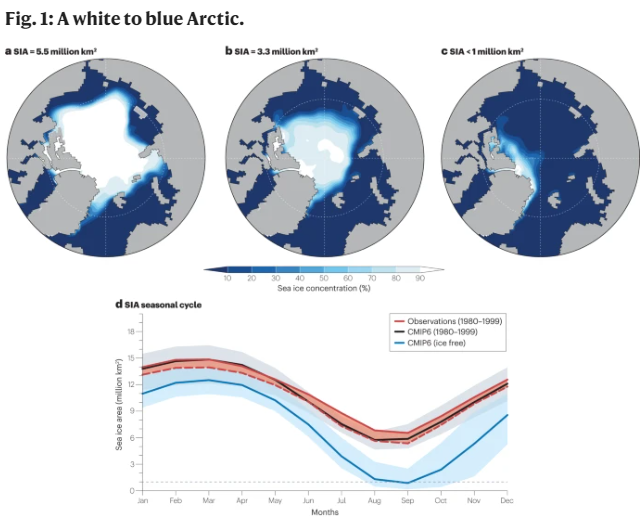
Projections of an ice-free Arctic Ocean
The earliest ice-free conditions in the Arctic could occur in 2020–2030s under all emission trajectories & are likely to occur by 2050
https://t.co/iREWFVKgCQ @SeaIceClimate @CUBoulderATOC@INSTAAR@CUBoulder@NCAR_CGD
New study: the Atlantic overturning circulation AMOC “is on tipping course”.
The paper by Dutch colleagues adds more weight to recent warnings, such as the OECD Climate Tipping Points report of 2022 and the Global Tipping Points report published 2023.
https://t.co/yJjUGRlqXm
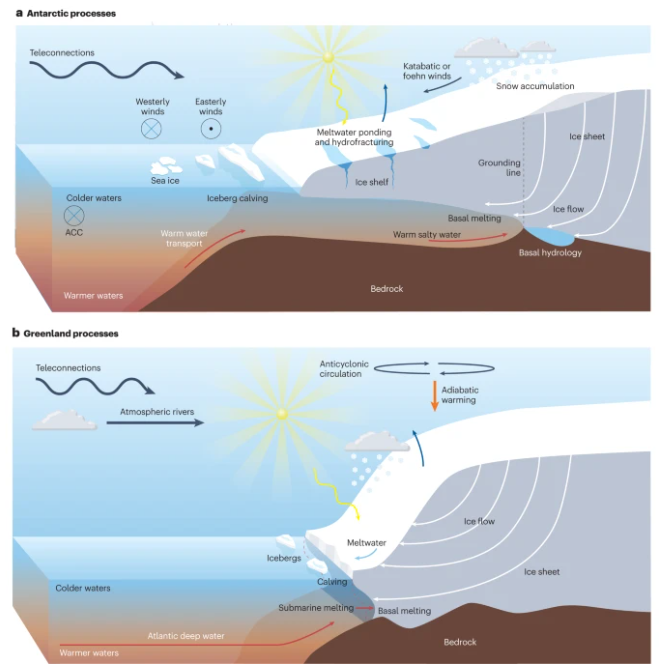
Out today! Our new Review paper in @NatRevEarthEnv "Short- and long-term variability of the Antarctic and Greenland ice sheets" https://t.co/7DvQDwcT3e
The conclusions about caution of model projections due to dynamical biases are much in line with what we know for Arctic sea ice ( https://t.co/L7klyKZaoF )Could be interesting if there is a common driver behind underestimated dynamics in models between the Arctic and midlat too
Heat extremes in Western Europe warmed faster than simulated. Our new @NatureComms paper led by @RobertVautard shows that this due to more frequent southerly flows, an observed atmospheric circulation trend, which is larger than in climate models.
https://t.co/ewwsrZuCMy
The ‘Polar Amplification and lower latitude connections’ AGU23 session already has a nice lineup of abstracts (incl mine 😏). Submissions are still open until 2 Aug, consider if interested👇🏼
session by @polar_james Yutian Wu Lantao Sun Qinghua Ding
https://t.co/JRivdttoJt
We highlight tropical Pacific drivers of Arctic and Greenland ice loss. Convection changes (lower frequency than ENSO) in the tropics is key to drive atmospheric Rossby-waves into the Arctic, but these low frequency changes are not fully captured in CMIP.
https://t.co/L7klyKZaoF
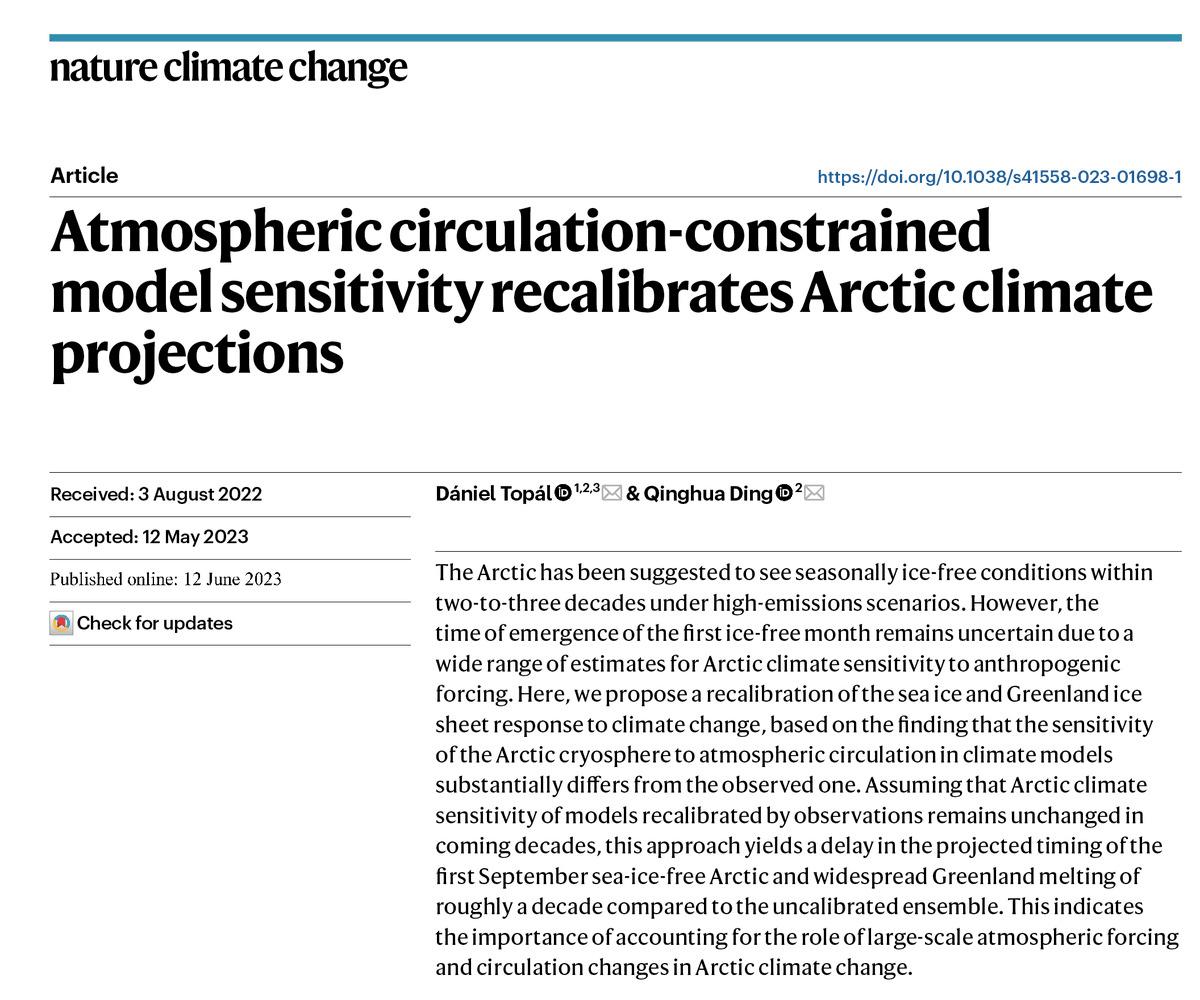
Bad news: emissions-driven wind changes are likely not well enough represented in climate models. Good news: when correcting for this issue, the first occurrence of a sea-ice-free Arctic is actually delayed.
More details in @NatureClimate
Free access: https://t.co/1Vhwbf8Kbd
@FMassonnet@NatureClimate Indeed! Yeon-Hee et al scale "(...) models’ sea ice response to greenhouse gases to best match the observed trend". This is exactly what we think is something to be cautious of as better described in the research briefing: https://t.co/PG1zC8HxUu
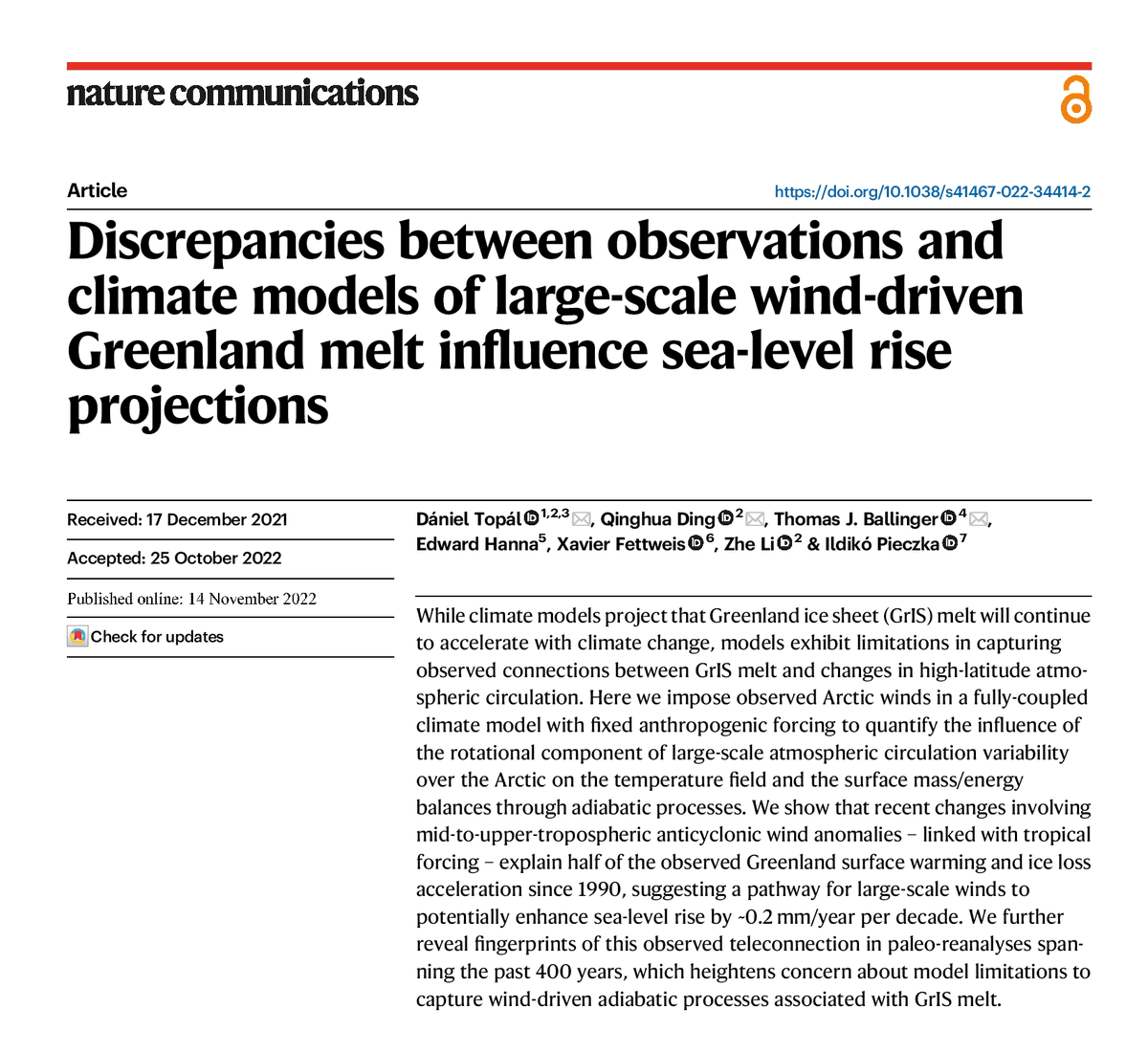
A better representation of wind-driven warming processes in models has potential for lessening sea-level rise projections uncertainties associated with Greenland melt. 👉👉
out today @NatureComms with
@xavierfettweis@zhelzlz and others not on twitter
https://t.co/Yf314mU0Kv
Our new paper is out today. I led this project to refine future hydroclimate uncertainties in Central Europe based on large ensembles.
https://t.co/uWSsdp6wsH