🚀 Introduce Hy-MT2: New Open-Source Multilingual Translation Model
We proudly launch our new Hy-MT2 translation model and the Tencent Hy Translation mini-program!
Hy-MT2 is a powerful multilingual model supporting seamless translation across 33 languages — and it's fully open-source!
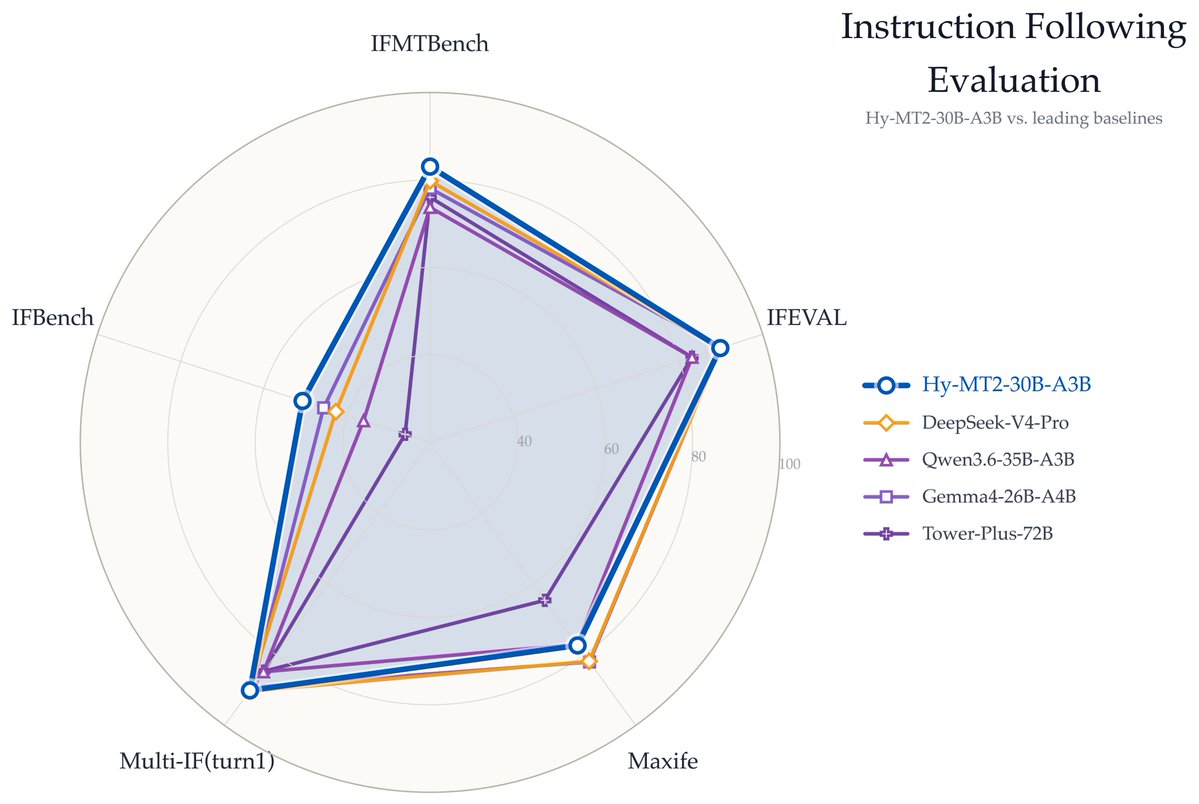
It's 7B and 30B-A3B models achieve state-of-the-art performance among all open-source models on various translation tasks, surpassing models with dozens of times more parameters.
The lightweight 1.8B model even outperforms mainstream commercial APIs like Microsoft and so on. Powered by Tencent AngelSlim 1.25-bit extreme quantization, it needs just 440MB storage and enables effortless local inference on mainstream mobile chips — with 1.5x faster speed vs. Hy-MT1.5.
Open-source AI translation just got way smarter, faster, and more accessible! 🌏
Project Page: https://t.co/eRkw3JLJjB
Hugging Face: https://t.co/4J8gzMdcDu
Modelscope: https://t.co/xh5vEYkHpo
Github: https://t.co/EekzbAdjOX
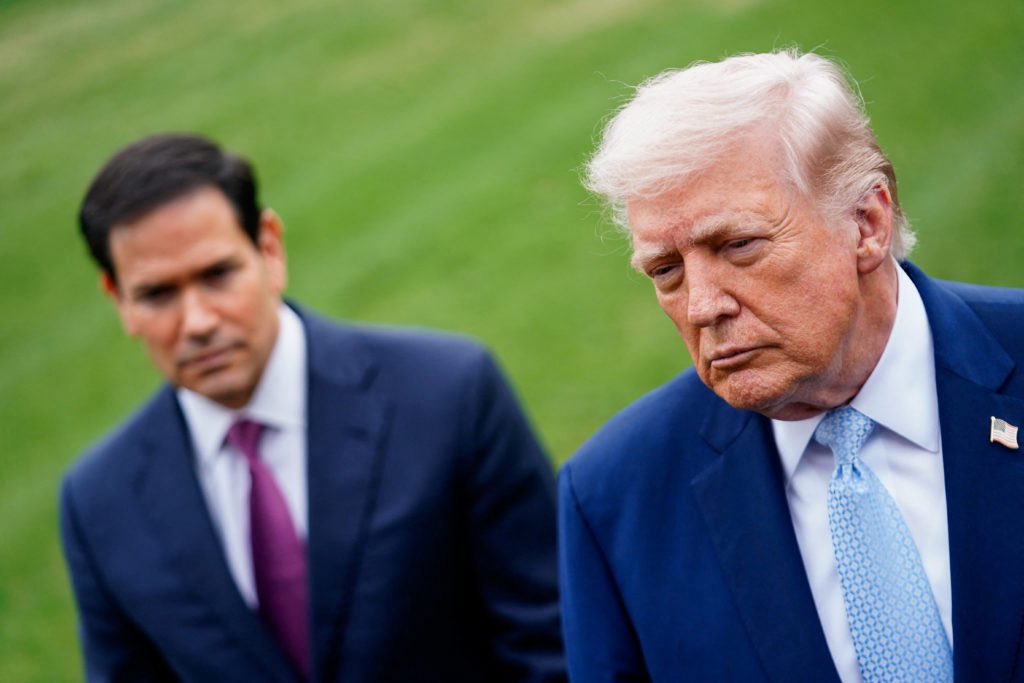
"A whole civilization will die tonight" feels like a watershed moment for the United States, poisonous to the national spirit, a buckling blow to our international moral standing. Beyond the pale. We have to prove that our democracy can overcome and reject this.
This is the latest in a stream of nonsense designed to calm markets and little else.
There is no reason for the Iranians to agree to this and it’s divorced from the reality of American troop movements.
After three weeks of war, the Trump Administration has begun initial discussions on the next phase and what peace talks with Iran might look like, with talks involving Special Envoy Steve Witkoff and Trump’s son-in-law Jared Kushner, according to a U.S. official and a source with knowledge told Axios.
There has been no direct contact between the U.S. and Iran in recent days, though Egypt, Qatar and the U.K. have all passed messages between two countries, with Egypt and Qatar informing the U.S. and Israel that there is interest to negotiate from Iran.
“Our view is we've stunted Iran's growth,” said one U.S. official who believes the Iranians will come to the table. The official said the U.S. wants Iran to make six commitments:
1. No missile program for five years.
2. Zero uranium enrichment.
3. Decommissioning of the reactors at the Natanz, Isfahan and Fordow nuclear facilities that the U.S. and Israel bombed last year.
4. Strict outside observation protocols around the creation and use of centrifuges and related machinery that could advance a nuclear weapons program.
5. Arms control treaties with regional countries that include a missile cap no higher than 1,000.
6. No financing for proxies such as Hezbollah in Lebanon, the Houthis in Yemen or Hamas in Gaza.
Dilemma for Gulf policymakers right now:
The war has already had serious costs (lives lost, economic/reputational damage). If it continues for 4-5 weeks costs could mount significantly: hits to critical infrastructure, energy-price shocks
But if it ends now, this is the situation you're left with:
- a wounded and angry Iranian regime will probably endure
- forget about detente with that regime. You tried that for several years and pushed for diplomacy pre-war, only to be attacked. Relations will be hostile
- the regime will learn that lashing out at Gulf states is an effective way to compel a change in American behavior. If and when another breaks out, Iran will hit you even harder
Neither is a good choice: a lengthy and increasingly painful war, or a prolonged hostage situation with your neighbor across the Gulf
I want to echo what others have already suggested, highlighting the importance of a Zero Trust mindset in the current situation in Iran and, more broadly, across the Gulf region. Zero Trust should be applied not only to cybersecurity, but also to the way information is processed and consumed in real-time conflict zones.
With hundreds of takes and images of questionable origin, and accounts leveraging social platforms to shape perception, observers must apply the same principles of Zero Trust: never assume, always verify. Each photo, video, or claim should be treated as suspect until it has been verified through in-depth analysis and corroborated by independent sources.
We live in an era where propaganda travels faster than ever. Filtering out misinformation is therefore critical to understanding and responding to modern warfare, and to avoiding the spread of fake news.
I’m beyond elated THE BONE TEMPLE has invaded the timeline again so we can share all of the film’s awesome moments, but I really wish the film had been embraced more by audiences in theaters.
@nurijanian Maybe a cop out but "gut instinct" is just unarticulated data processing anyways. Your brain is doing pattern recognition on a pile of inputs you’ve already absorbed over time (experience, prior outcomes, subtle cues, domain context), then giving you a super quick recommendation.
Pretty clear to me that "product-minded engineer" will soon be the most in-demand job across software.
It will imply using AI tools (of course.)
It also means devs with agency to build whatever moves the needle for the business, and helps reach goals (whether it's customers, fundraising etc)
The year is 2026. Every one in the world carries powerful pocket computers. Most of the world's cultural decisions are made within a text, video and image based metaverse. AIs roam the internet posing as humans. Huge portions of the populace inject drugs to modify their bodies called "peptides". Plastics and metal manufacturing is done in homes with desktop devices that revolutionaries use to make guns and killer drones. War zones are covered in vast meshes of fiberoptic cables that look like giant spider webs. Despite actively fighting political battles about AI rights, most people alive insist they don't live in a cyberpunk setting.
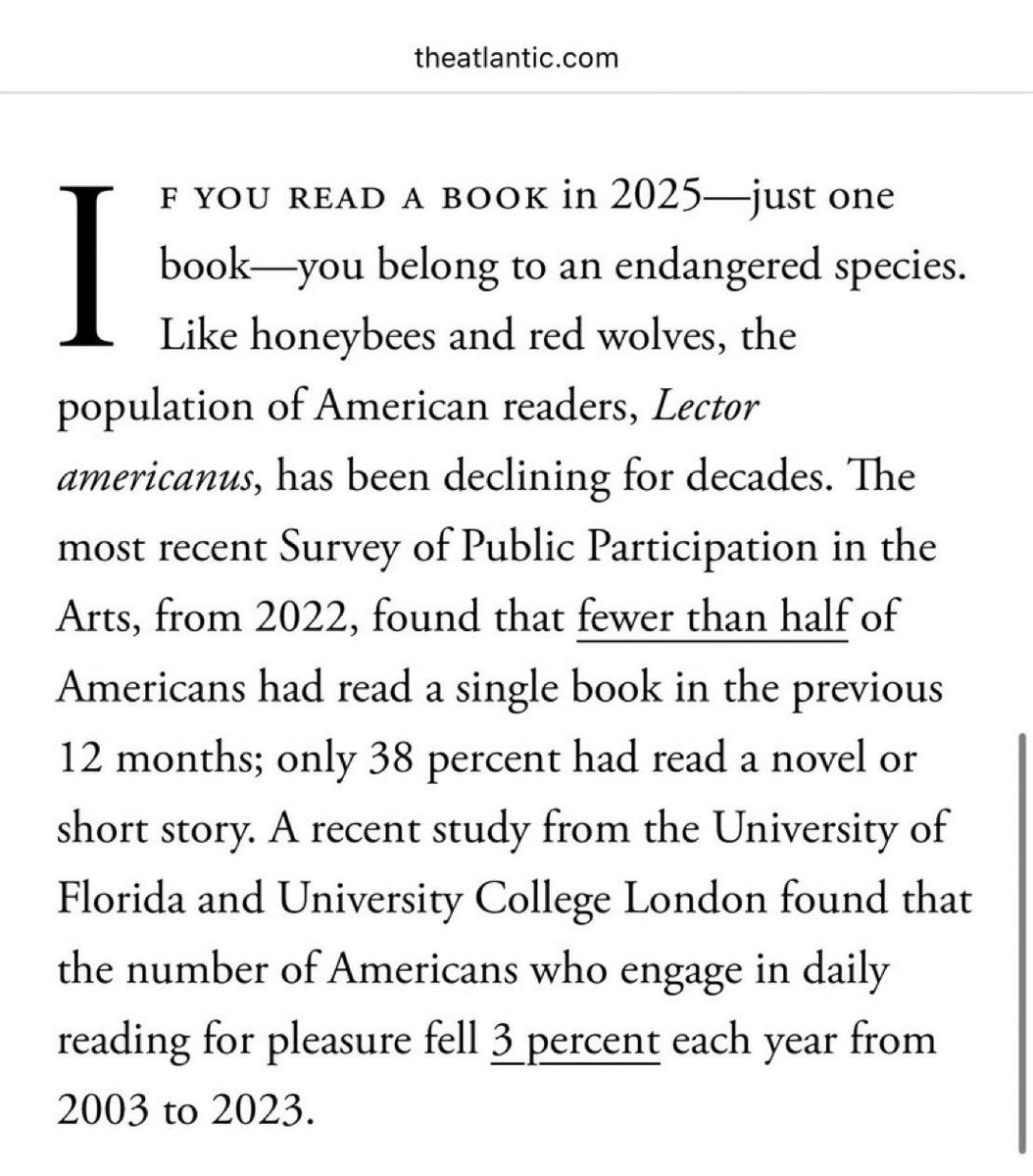
This bodes ill. Readers used to outnumber non-readers 2 to 1. Now non-readers outnumber readers 3 to 1.
It's hard to imagine a change of that magnitude not having significant effects.
So what's going to happen to product management anyway?
When I talk to mid-career PMs, I hear the same frustrations over and over:
“I’m looking for a director role but all I see are individual contributor jobs.”
“I want to work for an AI company but there are very few PM roles.”
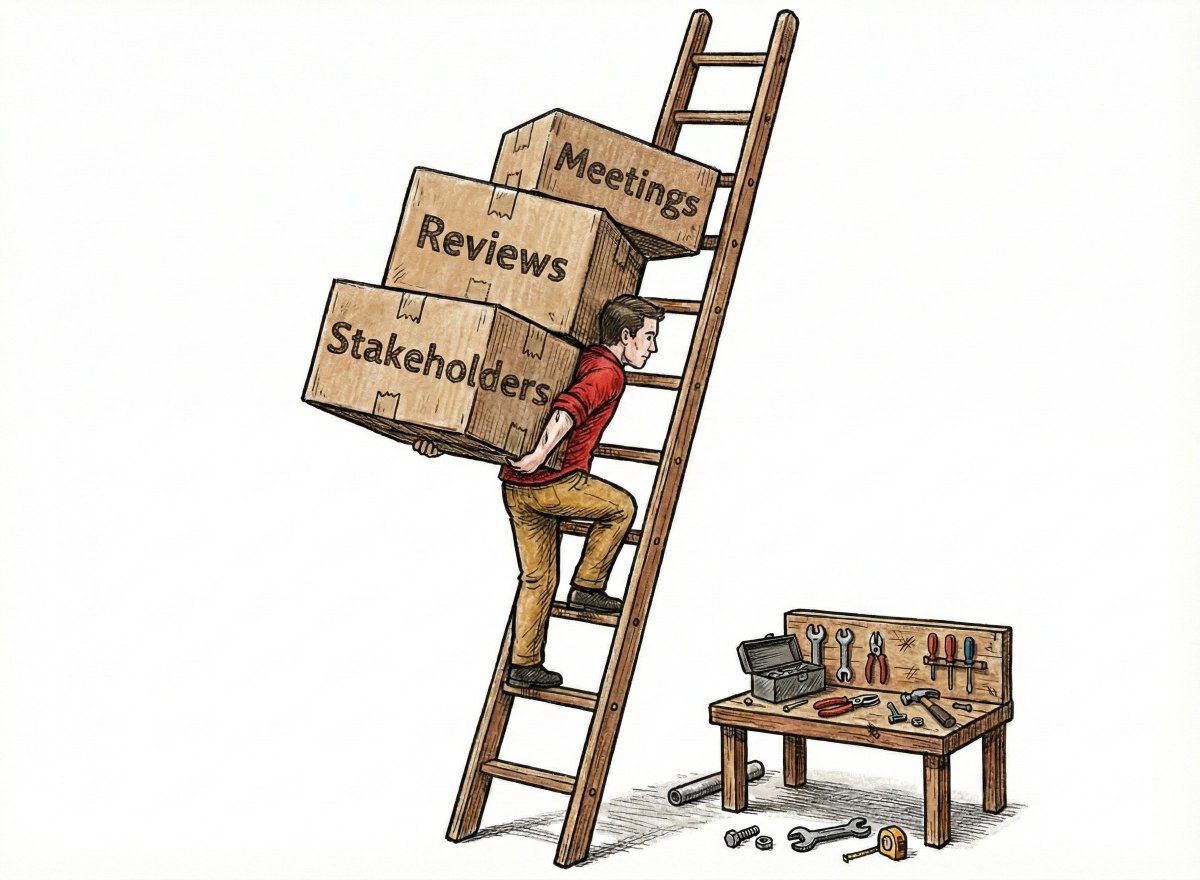
“I’m too tired to build at night after a day of back to back meetings.”
I wrote 8 hot takes on where I think the PM role is headed next and why I'm actually optimistic.
📌 Read now: https://t.co/sCYM3CwNBp