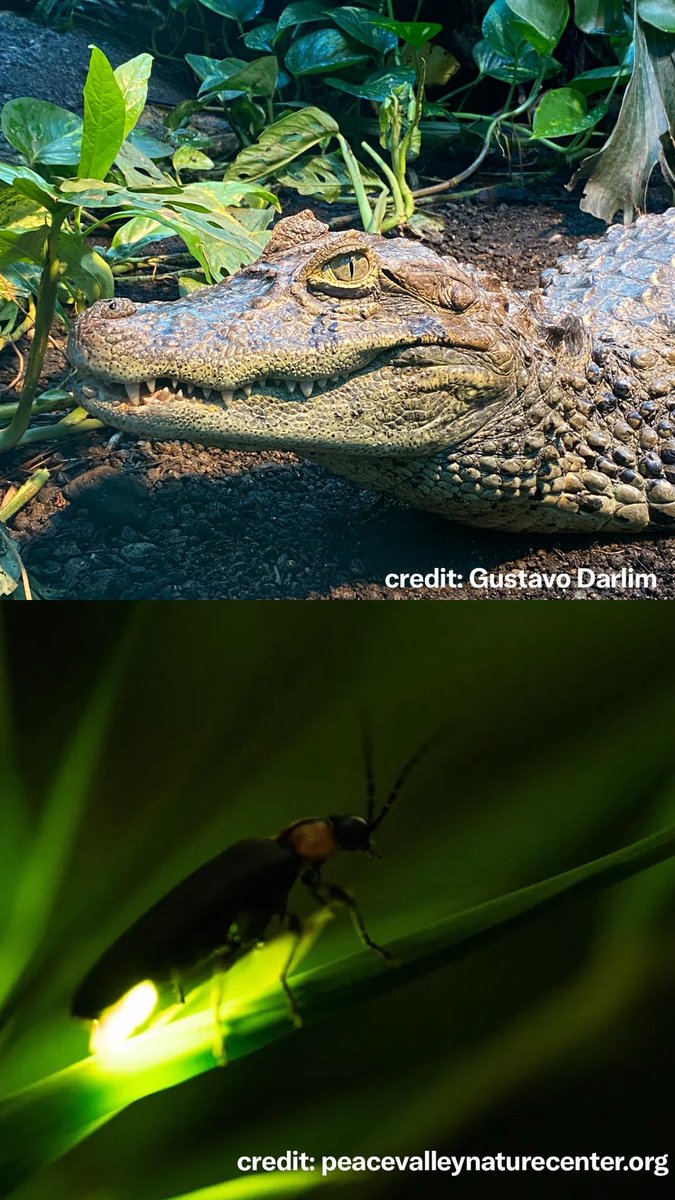
🚨 New terrestrial croc paper alert!
Another study led by @paiva_als (PhD student I co-supervise with Max Langer) is out today in Palaeontology!
We revisit a classic question with new tools: how big were notosuchians, really? 🐊📏
https://t.co/XzgnRiUvm6
Art: @MirantaKouvari
Happy to share our new paper published in Proceedings B! led by @acapomorphic and @SebastianHoehna
“How to date a molecular phylogeny: comparison of effective priors between node calibration and fossilized birth–death”
@RSocPublishing
🔗 https://t.co/VlzSOZ4ylW
Cualquier proyecto de investigación puede ser dañado por una lectura hostil, exigencias imposibles, criterios cambiantes, mala fe o por una posición de poder que decide qué cuenta como rigor y qué no.
Si lo que se quiere es destrozar un proyecto, se destroza.
With various colleagues including @lukejharmon I just published a new pre-print to @biorxivpreprint entitled "Unlocking a flexible set of phylogenetic models for discrete and continuous trait evolution using discretized stochastic diffusion." https://t.co/91Ow75YG7T 1/7
🚨 Out today: our Editorial in the Journal of Vertebrate Paleontology on an important issue in science - the reproducibility crisis in phylogenetic analyses.
In it, we analyze several years of editorial data to ask a simple question: are things improving?
https://t.co/rZ8273pOqa
Many thanks to the JVP Senior Editors (Mike, Adriana and Julie) for inviting me to serve as a phylogenetic editor and for the opportunity to write this editorial. And huge shout-out to my colleague and friend @danielcasali13, who was with me throughout this insightful journey!
Estou muito feliz e impressionado com a repercussão do nosso estudo envolvendo a nova espécie de Ave do Terror, Eschatornis aterradora.
Muito obrigado!
@ThePalAss@TwitiGalli@NatSciChannel
A new terror bird (Cariamiformes, Phorusrhacidae) from the Late Pleistocene of Brazil: insights into the last representatives of the family https://t.co/BILlUF8ATy #PapersinPalaeontology#FossilFriday
@franciscorazzo@Maagama@CharlieBarkley_ Perfeito, Francisco. É uma reflexão importante que você traz. No entanto, não me parece que o Domingos usou o termo nesse sentido, e chama a atenção que ele o use apenas em relação à teria evolutiva, e não em relação à todas as demais teorias científicas. O contexto aí importa.
Before science, humans had very little freedom because nature decided everything:
If crops failed → famine.
If you got an infection → death.
If winters were harsh → starvation.
If a child was born → high risk of dying.
Science changed that.
Vaccines → freedom from many diseases
Fertilizers → freedom from constant famine
Electricity → freedom from darkness and cold
Antibiotics → freedom from deadly infections
Science doesn’t just produce knowledge. It removes the constraints that used to control human life.
And when constraints disappear, people gain freedom.
Science is the technology of human freedom.
Are you asking about the tradeoffs and strategy of sex vs asex, or the historical conditions in which eukaryotes arose? Either way I recommend: The Major Transitions in Evolution (1995) by John Maynard Smith and Eörs Szathmáry.
https://t.co/9TOzujTgM6
Nanotyrannus is real.
For years I’ve considered many mid-sized gracile tyrannosaurs to be juvenile T. rex.
But I was wrong. This stunning new skeleton of a mature long-armed small tyrannosaur is clearly a different species.
Isn’t science fun?!
https://t.co/EUWFzZyos6
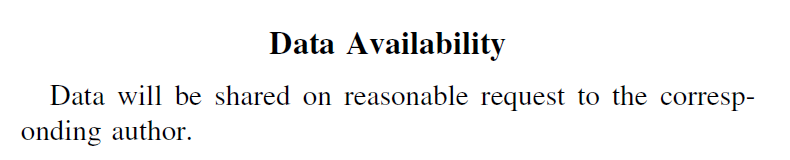
Publishers should not accept this. If you wanna play the true scientific game, share the data.
And what is a "reasonable request"?
That's too subjective.
🚨New paper out in Palaeontology! Check it out if you're interested morphological evolution, fossil phylogenetics, and macroevolution
"Assessing the impact of character evolution models on phylogenetic and macroevolutionary inferences from fossil data"
https://t.co/2tybKkd8G7
First pterosaur from Syria, only 10% less than Quetzalcoatlus. New article added to the series of " Recovering lost time in Syria.
Paleoart by Caetano Soares
https://t.co/sdFzFQRnOl
Alhalabi, W.A., Pinheiro, F.L., Jaoude, I.B. et al. Recovering lost time in Syria: a gigantic latest Cretaceous azhdarchid pterosaur from the Palmyrides mountain chain. Sci Nat112, 78 (2025). https://t.co/7j9B5Rngtf
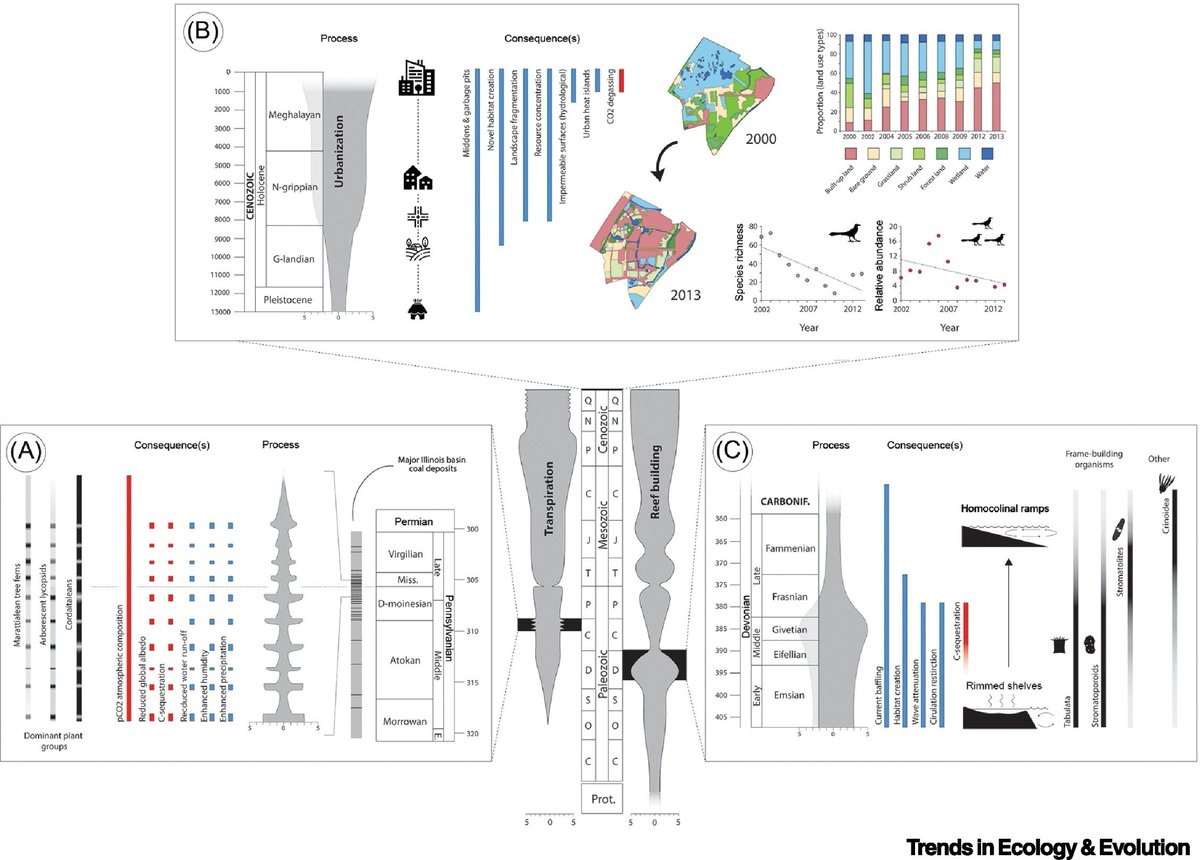
🚨 ‘Earth system engineers’ and the cumulative impact of organisms in deep time
https://t.co/JB77naMVX0
Honored to be among the long author list of this new paper out now in @Trends_Ecol_Evo that looks to bridge the ecosystem engineering and paleontological literature.