hosting an event with @floguo@charlesxjyang@anjazehfuss and alan gou on the meaning of work and ambition in the age of AI on 1 Dec!!
in person for folks in Waterloo (location TBD), speakers will be calling in :D
What makes an idea worth dedicating your life to?
I talked to @traestephens about Palantir, Founders Fund, Anduril, the risks of sky-high startup valuations, and what it really takes to build in defense.
Watch the full conversation at @spc now.
(00:30) Finding the Right Mission: Why Great Startup Ideas Find You
(02:57) From Government to Palantir: Finding the Right People and Culture
(11:44) Leaving Palantir: How Peter Thiel Recruited Trae to Founders Fund
(17:27) Learning Venture Capital: Why Trae Took 500 Startup Pitch Meetings
(21:19) Founders Fund's Investment Strategy: Why Only a Few Companies Drive Returns
(23:00) The AI Valuation Boom: Why Founders Must Be Careful About Raising Too Much
(30:06) Founding Anduril: How Trae Stephens and Palmer Luckey Built a Defense Tech Company
(34:18) Building Anduril's First Products and Competing With Defense Giants
@floguo@charlesxjyang@anjazehfuss This was inspired by events organized by @ACTS17org and the Vocare Collective over the summer. As LLMs become increasingly great at what they do, how should one approach thinking about their career? What are we ultimately working towards?
hosting an event with @floguo@charlesxjyang@anjazehfuss and alan gou on the meaning of work and ambition in the age of AI on 1 Dec!!
in person for folks in Waterloo (location TBD), speakers will be calling in :D
All university rankings are very flawed.
I wondered how we could rank unis as purely as possible? So I looked at the career path of ~100,000 engineers over 10yrs. Universities rank high when its graduates work at companies, ranked PageRank style, that engineers compete harder to join.
Stanford, MIT, Harvard were top 3, but the extent they were above the rest surprised me. Brown at #6, Waterloo at #7!
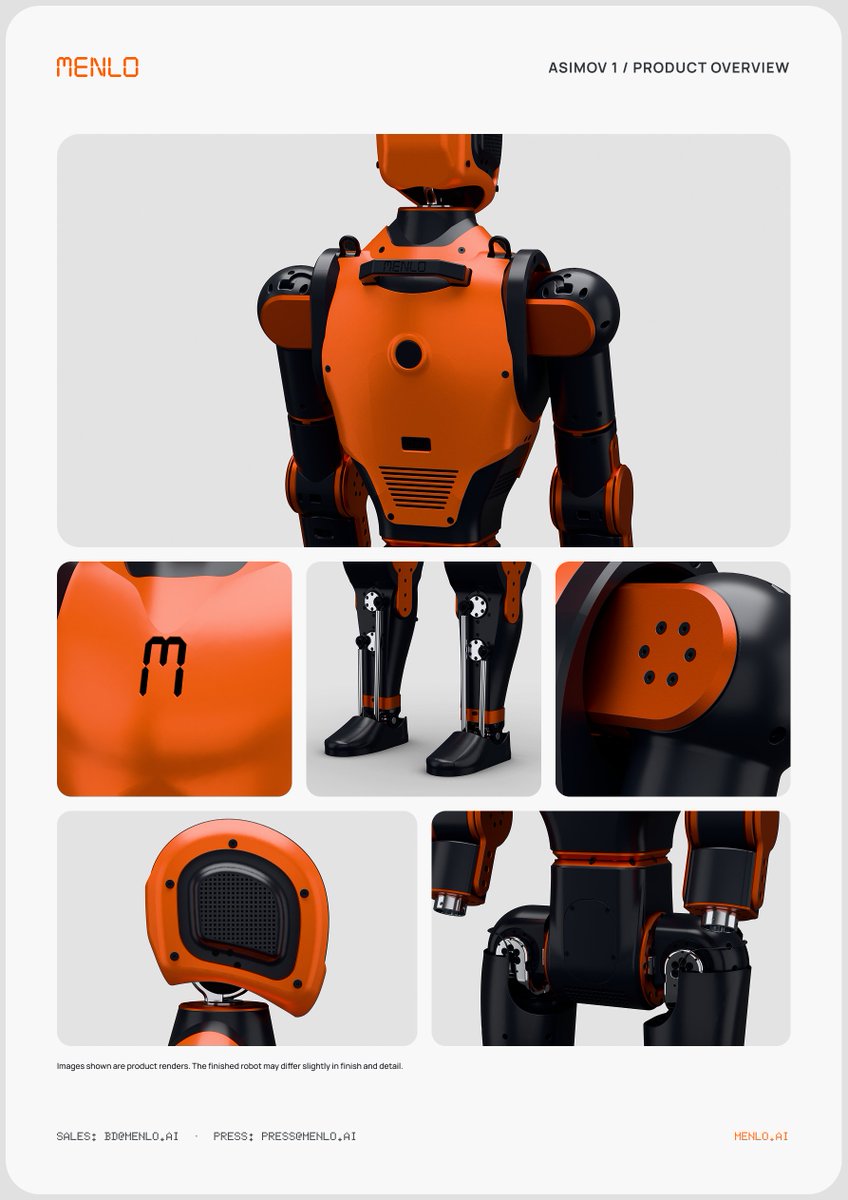
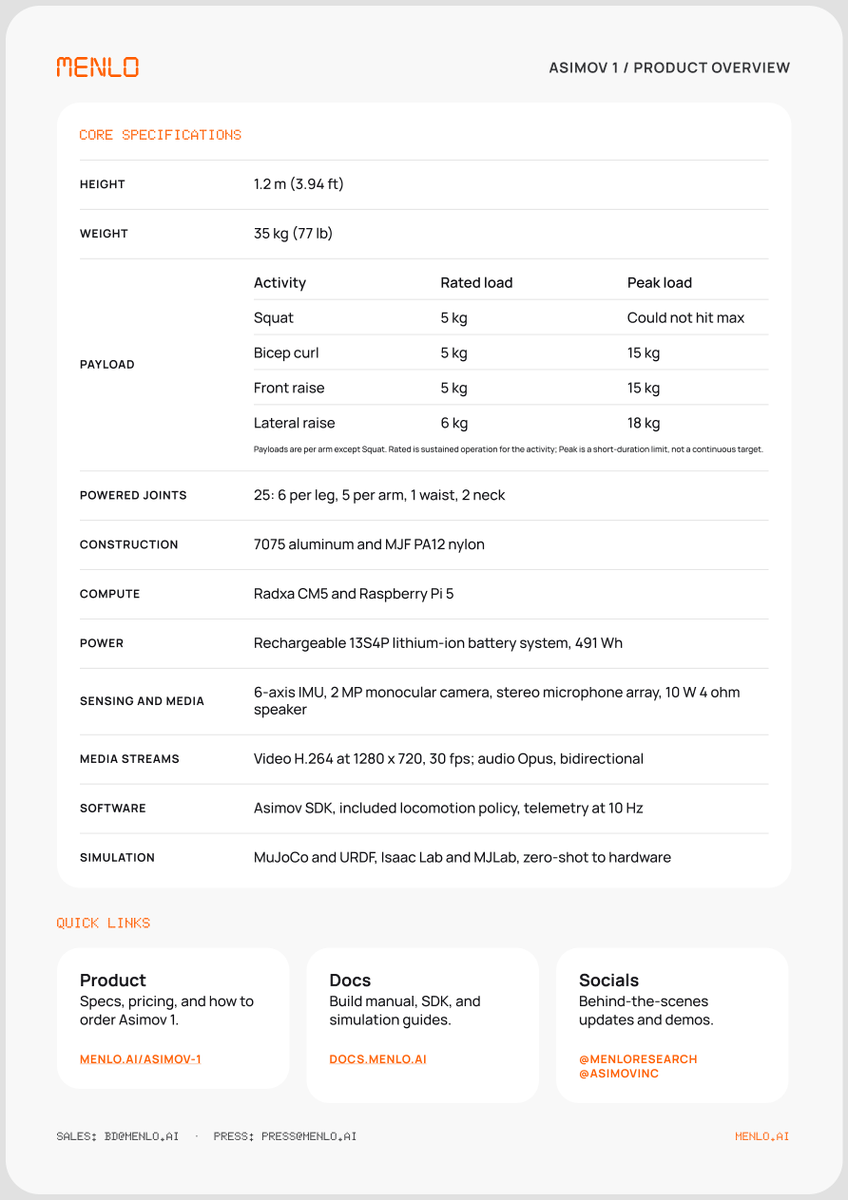
Asimov 1 is an open-source humanoid robot you can build, train, and customize.
- 1.2 m tall, 35 kg
- 25 powered joints
- Open hardware with off-the-shelf parts
- Open-source SDK and simulation models
Available as a DIY kit.
Order yours at https://t.co/fd0IzZKvFM
in April, we published a launch essay for @tacitlabsco
that outlined a thesis for frontier AI research in biology -
1. if we want models to be useful for curing disease, we must evaluate them on tasks with roughly that shape and complexity. optimize directly on the thing you care about - i.e. discovering & developing a drug
2. we should aim to model the biotech (process, reasoning, decision-making), rather than the underlying biology. biology is an empirical science - develop better empirical methods rather than treating it as an analytical domain
3. the most difficult part of all of this will be verification of those empirical methods with signal that actually matters (does the proposed drug actually work in a human?). biological time is a tough wall to run up against (most expensive forward-pass of all time). figuring out how to turn scientific problems into learning problems is a first-class research problem
4. if we believe (1) and (2), and we do a bunch of good work and figure out some clever solutions to (3) then we unlock increasingly agentic discovery/development, with the logical extreme being this concept of the "zero-person biotech", which is now (somehow) percolating in mainstream discourse
5. (4) has extremely exciting implications for the overall economics and practicalities of how we develop novel therapeutics (broadening viable aperture to rare disease, n-of-1 trials; new mechanisms of distribution) all of which are net positive for the world. much to be optimistic on here
discovering and developing a drug is one of the most complex and long-horizon tasks in the broad spectrum of human endeavors. inarguably one of the most important and high-impact research directions in AI today
I trained a 750K-parameter world-model agent on my M5 Pro to play video games!
Presenting NanoDreamer: a tiny Dreamer-inspired agent that learns game dynamics and trains an actor–critic in latent imagination.
Write-up: https://t.co/bXoODifBDX