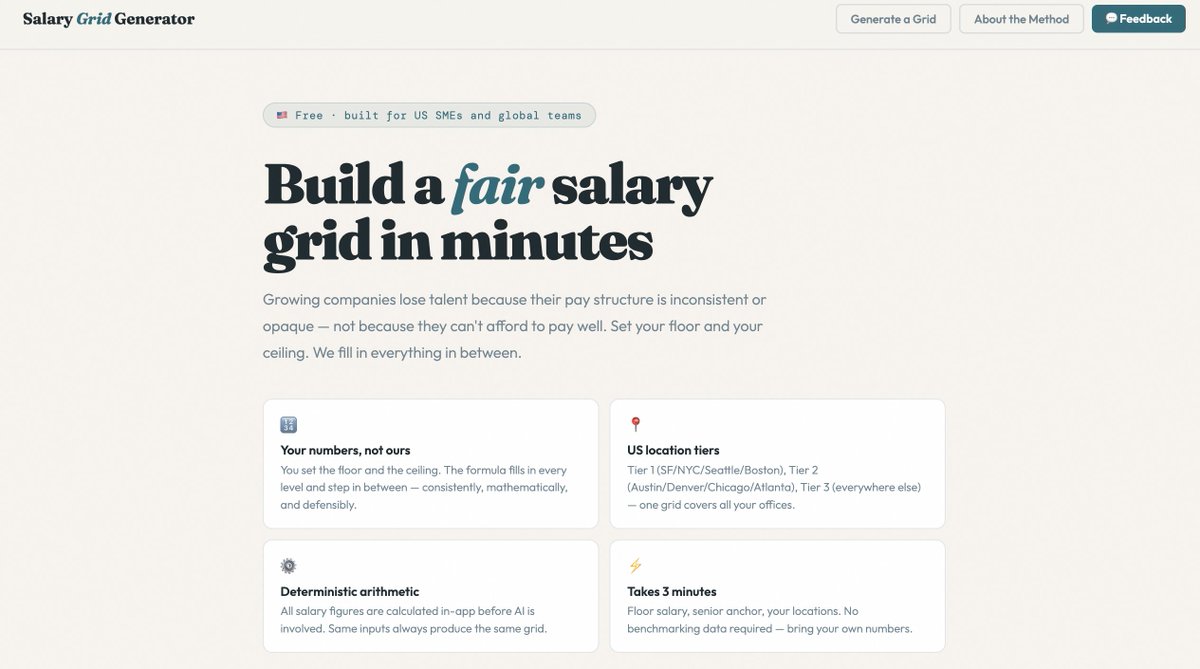
We are launching AI Apps for Good so come and visit - its a library of cool and useful little apps - for you, for your org, for your cause. Use the ones you find here, and learn how to make your own with us, and share what you make!
Visit: https://t.co/Hv60j5iq9l
Where to start?
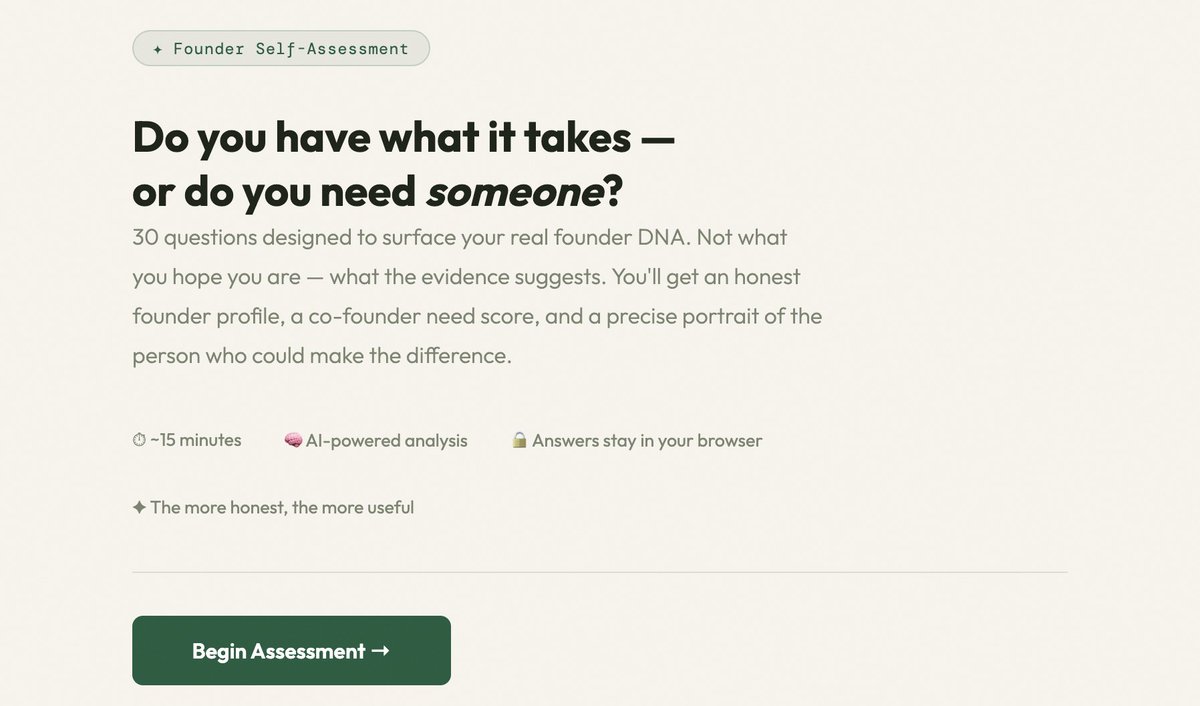
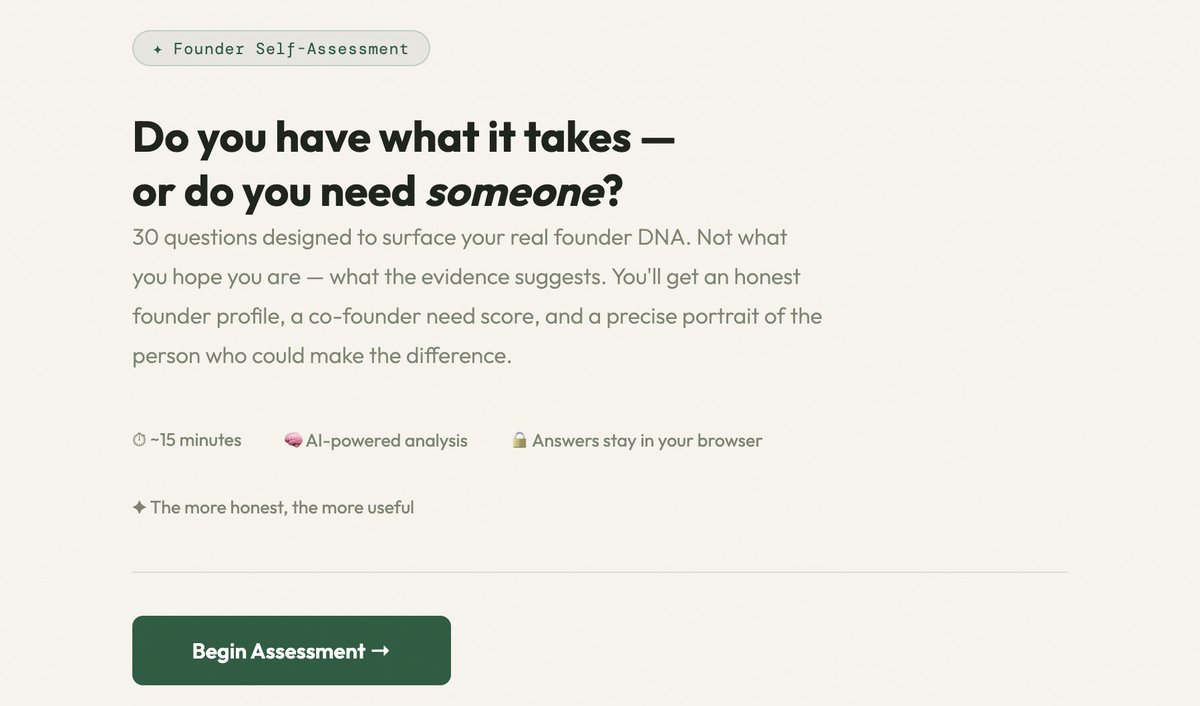
Try one of the personality apps. Do you have what it take to be a founder, and who is your ideal co-founder? Try "FounderMatch". What is your personality style? And try "Archetype 360" - both will blend classic questions with open feedback to create a report thats just for you!
You have an upcoming tough conversation that makes you anxious? How to prepare, or manage the emotions, or come to a clear conclusion? "Tough Conversations" will show you the techniques and apply them for you.
You need to educate an audience about your advocacy topic? Play with "Business As Usual Or Regenerative? - to learn about this topic and see how you could make a similar app for your own cause.
You need a MEL framework for your org? Tell "MEL Builder", it will select the best methods for you and apply your chosen method to your situation.
Build, share, learn!
But the real purpose of AI Apps for Good is not just to publish a directory of tools: it is to learn together. What kinds of apps are useful? What formats work best? What makes people actually engage? How can we turn frameworks into experiences? How can consultants, nonprofits, and social impact organisations use AI creatively, responsibly, and practically?
Anyone can publish here. Anyone can learn from what others are making.
Our hope is that this becomes a small but active community of people experimenting with AI in a grounded way, building useful things.
If you are a consultant, practitioner, nonprofit leader, social entrepreneur, funder, or just someone with a useful framework in your head, I would love for you to explore the site.
The only limit is your imagination. So what are you going to create? What have you already made? Let us know and we'll list it here as a community app.
Visit: https://t.co/Hv60j5iq9l #AiforGood
I enjoyed this. I didn't realize that HN was such a stress to run in the early days - makes me feel better about our own bugs 😁 Btw just posted this on HN: Do you have what it takes to be a founder? Are you a solo founder? Who is your ideal co-founder? Find out for free! https://t.co/AduOdg8MV9
@davidsenra@pmarca@a16z Insight of the week: introspection is not all bad. Prevents you from beating your head against the same wall your whole life. Or at least realizing why you're doing it.
@marcrandolph Actually I just released a self test that responds to this very question: and gives you the profile of your ideal co-founder. Take it, be candid and you'll be surprised!
https://t.co/tfy6HCnTBP
@FoundersPodcast New test: Do you have what it takes to be a founder? Are you a solo founder? Who is your ideal co-founder? Find out for free! https://t.co/tfy6HCnTBP
Introducing Agile Strategy: Making Strategy Fast, Simple, and Real!
Most strategy documents look impressive: five-year goals, key results, performance indicators - but they rarely drive real change. They’re complex, static, and quickly outdated. They focus on planning and implementation, not on strategic adaptation.
Agile Strategy is designed to fix that. It’s a new way of doing strategy: fast, flexible, and driven by action. Instead of a bulky report, Agile Strategy fits on a single page.
At the top is your Strategic Direction - your evergreens: your core values, your long-term vision, your North Star—what ultimately defines who you are and where you’re heading.
Below that come your Strategic Signals—the major opportunities and external forces that could shape your direction this year. These are the shifting variables that keep your strategy alive and responsive.
And finally, at the bottom, live your Strategic Sprints—a simple system that looks more like a Trello board than a corporate plan. It’s divided into Backlog, Doing, and Done. Here you manage short, focused strategic sprints: three at a time, no more, to avoid dilution.
A sprint might be to test a new product idea, launch a new service, redefine how you measure impact, or run an outreach campaign in a new market. Each sprint must serve multiple “green lights” from your evergreen area—aligned with your values, advancing your big goal, seizing an opportunity, or countering a threat. The more boxes it ticks, the higher its strategic quality.
This approach makes strategy dynamic. You don’t wait three years to adjust course—you continuously adapt. Agile Strategy is not about managing the plan; it’s about leading change. It makes the future something you work on every month, not every decade.
Agile Strategy is also ideal for fluid, ambigious "VUCA" situations where you need to think collectively and react fast as a team.
The Agile Strategy framework, like the Strategy Habit, is free and open source. It comes with a matching online Agile Strategy canvas that you can use for team brainstorming. You can download both here:
https://t.co/QEFP90OKek
We can't say which AI is “best” here – they’re all good, and all worth exploring. Happy times!
That’s why with https://t.co/xx7x7fQIjB you see all four in one report.
Have you tried systematically comparing AIs on the same task? What did you notice?
I just ran the same Leadership 360 through ChatGPT, Claude, Gemini and Perplexity inside https://t.co/xx7x7fQIjB.
They all agreed on the strengths and gaps – but each gave totally different, smart ways to grow.
Same feedback, same person, same data.
Four AIs, four different sets of tools, methods and next steps. And all of them good, frankly!
That mix of consistency + diversity is what surprised me the most.
#EmployeeEngagement Hi all, we had a discussion this week with a UN client with 500 employees who was paying 20'000 USD per year for a well known employee engagement platform (yes, that one) --- this price is crazy!!! and they can't afford it anymore so now they are stuck 😤 😩
So we are offering a new SME package for only 499$ per year for UNLIMITED employees. Run 10 surveys of your choice: employee engagement pulses like Happy Teams, leadership 360s and more. And you get a custom survey and we'll help you set it up including the AI prompt!! 🚀 😊 🫶
https://t.co/GWlRqyeOrp
💡 Is your organization really creative—or just talking about innovation?
Our new Kreativity Kaizen (KK) survey helps you find out.
👉 Based on Harvard professor Teresa Amabile’s research on workplace creativity, it shows whether your culture truly supports innovation.
👉 And why “Kaizen”? Because it taps into bottom-up creativity—harvesting a first crop of ideas from every team member.
Two benefits. One survey. 🚀
#Kaizen #FutureOfWork #LearningOrganizations #CreativeLeadership #InnovationCulture
https://t.co/kdHUQvNDB8