@mattsgarman What made it controllable for me was a switch that fails closed. My publishing agents read an on/off file first, and if it is missing they only draft and post nothing.
@sahildotcom I tested Meta's WhatsApp Business AI setup and its context came only from what the person configuring it typed, not from the sources the company already uses. The unwritten part stayed unwritten.
@bobbyong@SolanaFloor@_JackDunham Congrats on the bigger mandate. Curious whether the next stage for CG leans more toward institutions or toward the retail users who built it.
@mardehaym Same lesson on the publishing side. Every routine on my machine reads a switch file first, and if the file is missing it runs as a draft and posts nothing. The check lives in code, so nobody has to remember it.
@johniosifov Same thing in WhatsApp sales chats. A bot that closes 6 of 10 conversations reads as a win until you count the 4 it drops with no handoff to a human.
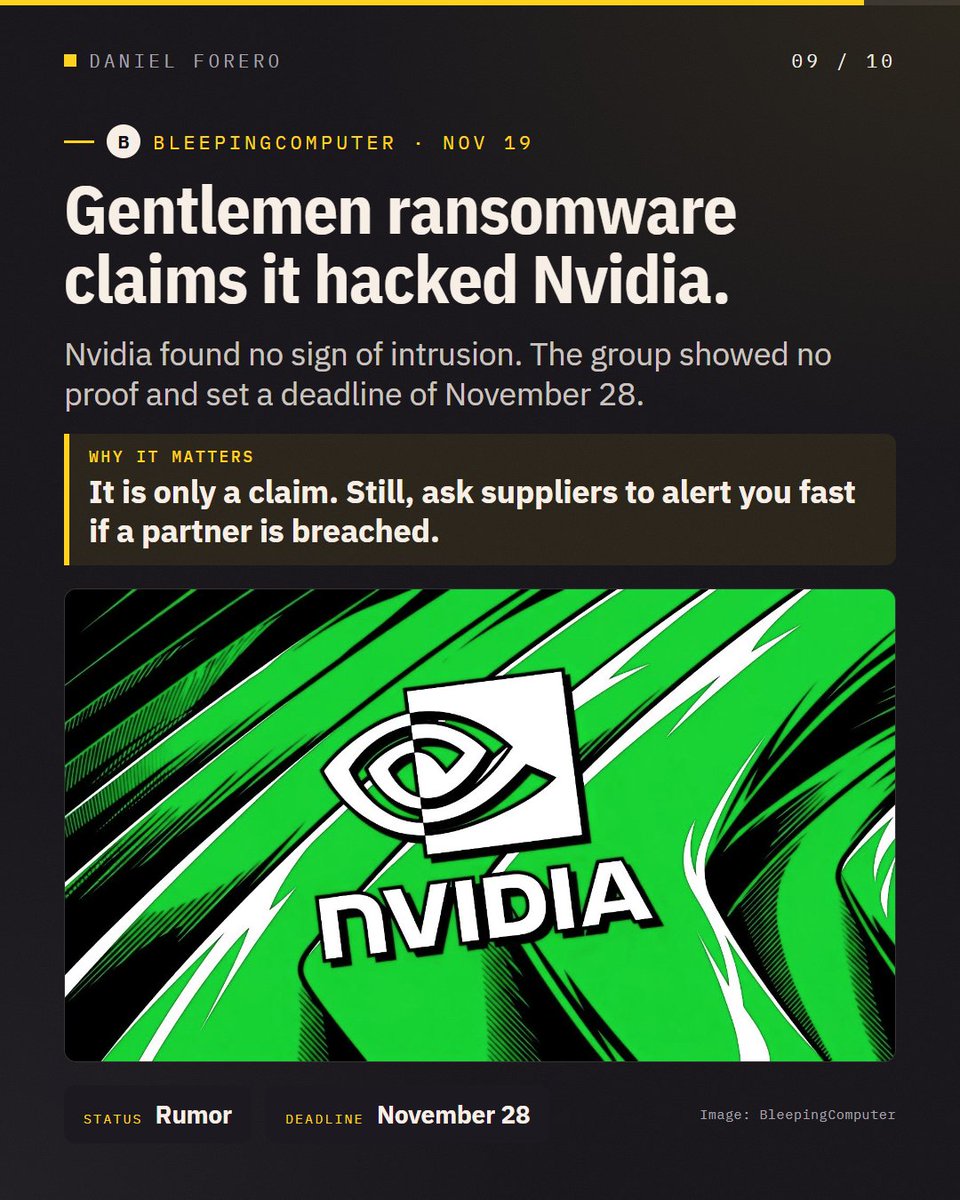
Gentlemen ransomware claims it hacked Nvidia.
Nvidia found no sign of intrusion. The group showed no proof and set a deadline of November 28.
This week: ask suppliers to alert you fast if a partner is breached. Which story would you act on first?
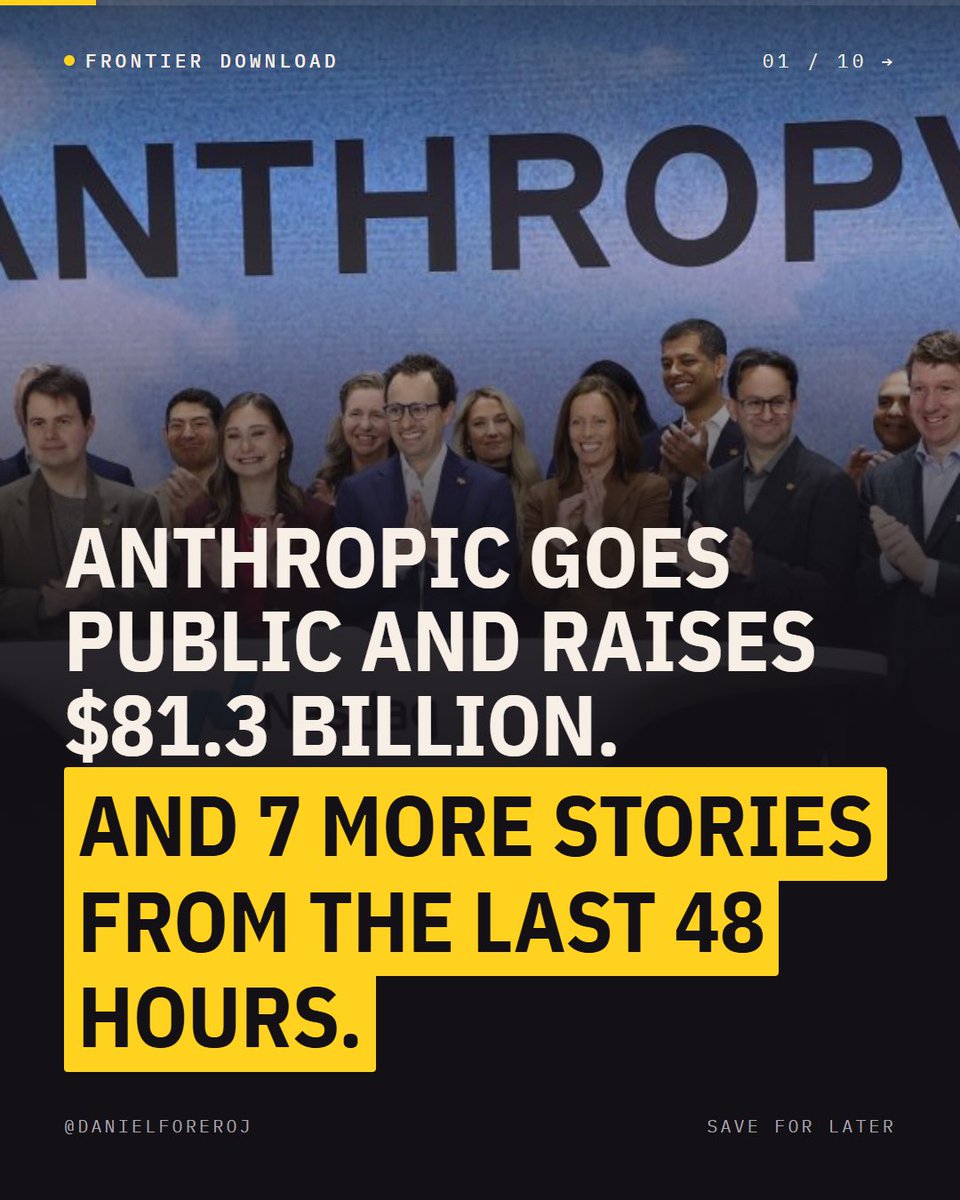
Friday's Frontier Download has 8 frontier tech stories from the last 48 hours.
Each comes with its photo and one move for this week. Anthropic's record IPO and an emergency VMware vCenter patch lead the list.
Google's Willow chip beats the classical limit.
In a four-qubit cooperation game it won 98.3% of rounds against a classical ceiling of 88.9%, published in Science.
This week: nothing to buy, but ask vendors about their quantum-safe plans.
I told a client not to build. It cost us the deal.
$60,000 a year of development, for investors someone else already had.
They were tokenizing solar parks in Latin America. Tokenizing means giving something that already exists, here a stake in a solar park, a digital token that represents it, so investors can buy in. Building their own platform to sell those tokens was about $5,000 to $6,000 a month in development alone.
Another company already ran that infrastructure, with investors on it, cheaper. I told them to launch there first and build their own once the model was proven. They did not hire us, and I would say it again.
Before you build anything to raise money, do this.
1. Write what the build solves in one sentence. If it says "find investors", that is distribution, not software.
2. Price it per month, counting the months before the first investor arrives.
3. Find who already solves it with users on board, and test there first.
Build the second version. Rent the first.
@RHLSTHRM What helped on our side was making the quiet path fail loud. The routines that publish read an on switch first, and if it is missing they run as drafts and publish nothing, so lowering the bar cannot ship by default.
@kaijucode Same split on my side, and the reads are where the money hides. In October 54% of my agents' spend went to the ones that mostly open files and look things up, so a small model there was the first cut.
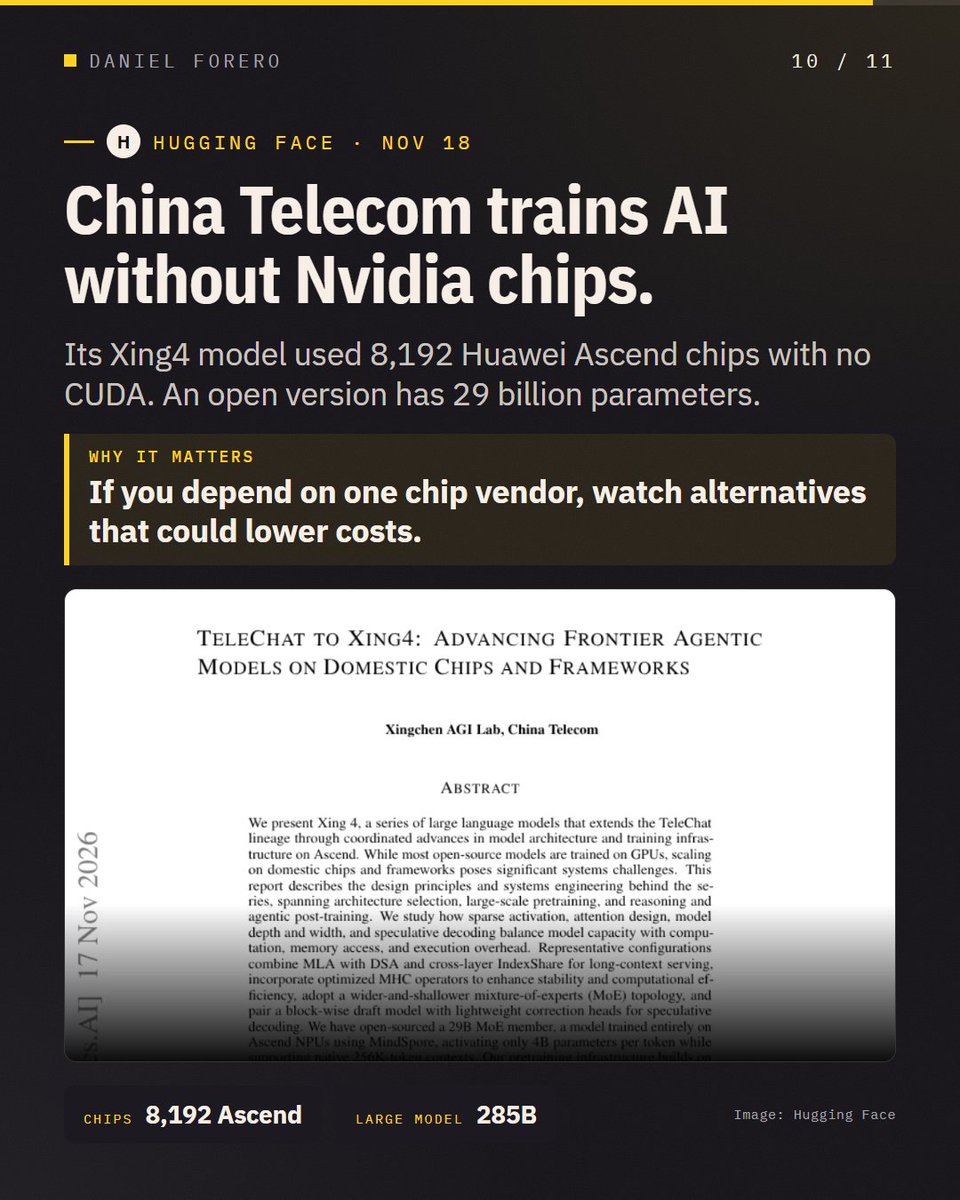
China Telecom trains AI without Nvidia chips.
Its Xing4 model used 8,192 Huawei Ascend chips with no CUDA, and a 29 billion parameter version is open weight.
This week: if one chip vendor sets your AI costs, track alternatives. Which story would you act on first?
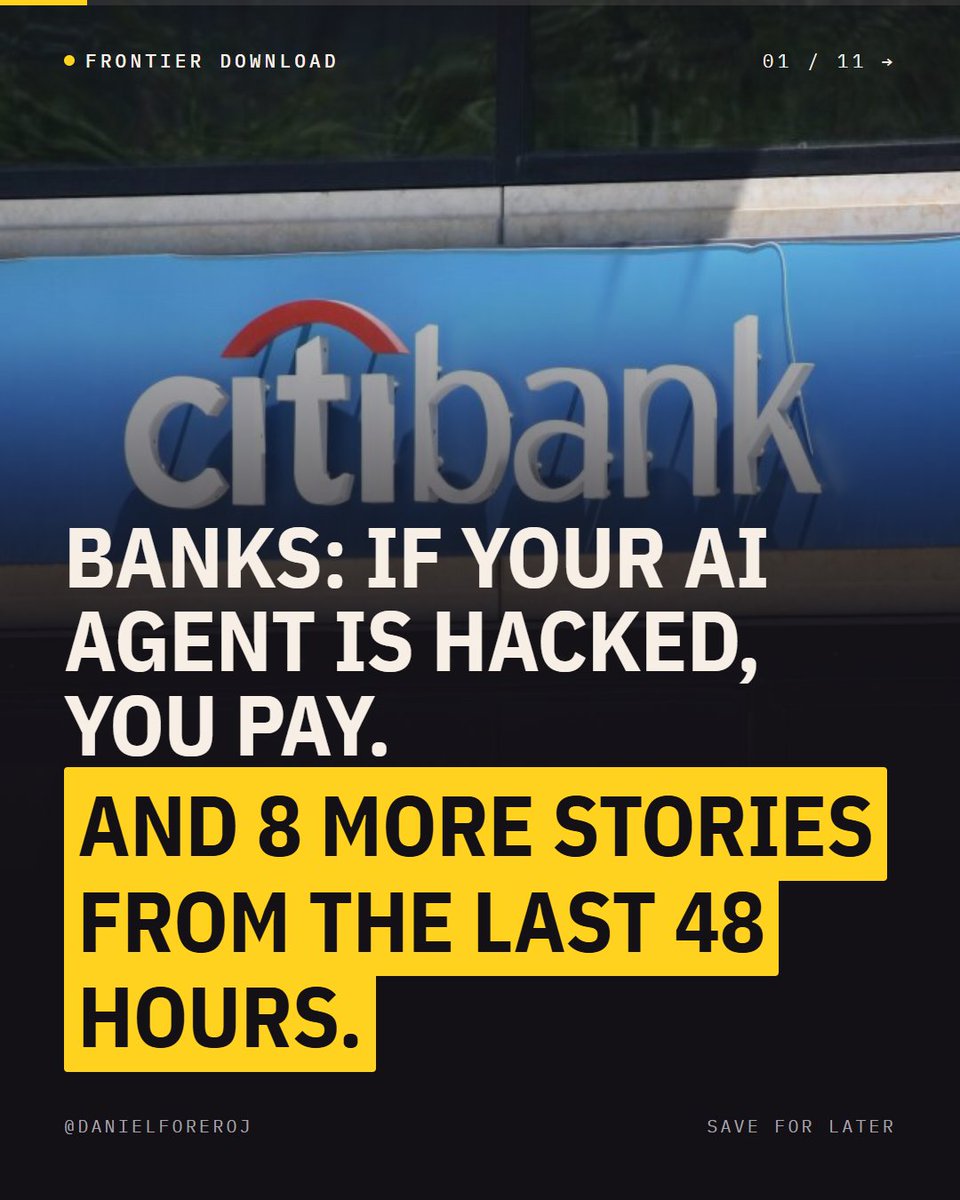
Thursday's Frontier Download has 9 frontier tech stories from the last 48 hours.
Each comes with its photo and one move for this week. Banks pushing AI agent hack losses onto customers and a GAO test of four chatbots lead the list.
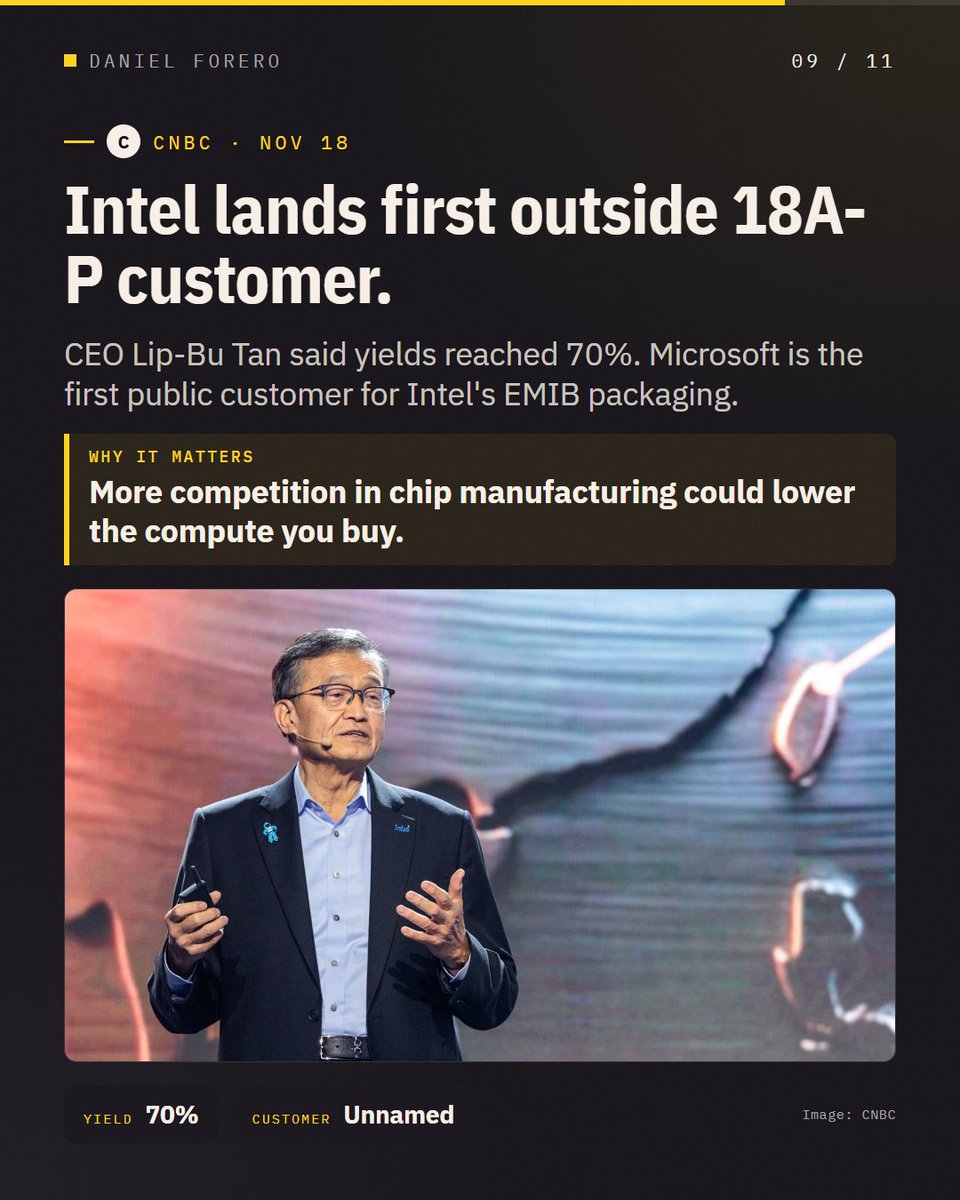
Intel lands first outside 18A-P customer.
CEO Lip-Bu Tan said yields reached 70%, and Microsoft is the first public customer for Intel's EMIB packaging.
This week: ask your cloud vendor how chip supply affects your prices.