Predoctoral Research Associate @HarvardHBS. @BostonCollege and @Columbia alum. Former Editor of @CCPWatch. U.S.-China Relations, Chinese IR, & Taiwan Studies.
This is utterly ridiculous, the equivalent of describing institutions as diverse as BAE, Microsoft, Salesforce, Boston Dynamics, Phillips, Nvidia, MIT, and Google as U.S. military-associated companies. Everyone intuitively understands that these companies develop products that are consumed by the Department of War or else are part of extended weapon system supply chains, but the connotation of a "military associated company" is that these companies are effectively proxies or extensions of the military.
No one doubts that these companies are independent from the Department of War and in fact are companies who are almost exclusively commercially oriented, deliberately shield large parts of their business from the military procurement system, have cultures and employees that are generally anti- or agnostic to the military, are staffed entirely by civilians, have executives who think about the military less than .1% of their days, etc.
But in China, every company with executives who are members of the party or have contracts with PLA research institutes is apparently inflected with, if not compromised by, these associations.
What's the solution here? Surely the Pentagon requires education, but more to the point we shouldn't place such designations in the hands of tendentious thinkers who don't understand the party, the PLA, or the PRC industrial, research, and technology ecosystem? The China Mission Center is surely capable of motivated reasoning but not as ideologically compromised as whoever puts together this list in the Pentagon (USW(A&S))?
Bill Kirby (@BillKirbyHBS) and I, along with ex-@TradeGov analyst Reginald Anadio, have a new background paper looking at how the Commerce Department’s China strategy has evolved since the advent of the first Trump administration.
https://t.co/C7GeoiZE7n
In a discussion with @fccchina, I talk about China’s increasingly robust energy security and why there is no longer a “Malacca dilemma” confronting Beijing.
https://t.co/dD5PPIIghq
Back in 2022, I supported the Biden chip-export controls on China. After a week with Chinese AI researchers and tech leaders, I've changed my mind. The controls are not working, and they obstruct another strategy that just might work. Models like Anthropic's Mythos show us how dangerous AI is becoming. Not governing AI is not an option.
https://t.co/yRVnA11l2G
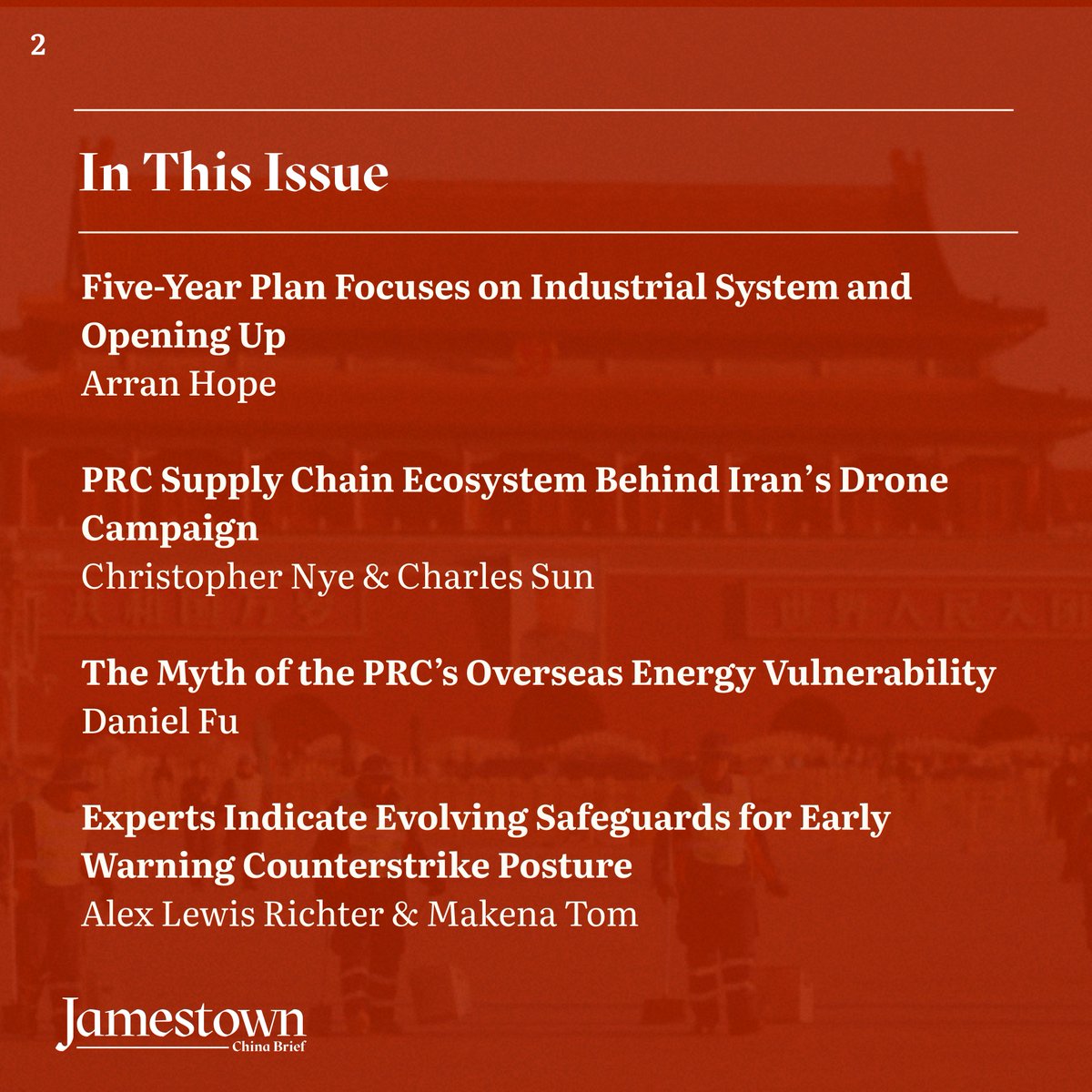
Trump is sorely mistaken. China does not need Iranian oil and is not dependent on other “chokepoints” like the Malacca Strait. Chinese elites no longer perceive threats with overseas energy dependence. My latest with the @ChinaBriefJT surveys their views: https://t.co/frB0UGAPp8
Trump: "You know, China gets 90% of its oil from the Strait of Hormuz. They should be policing their own strait. We're getting ready to get out of there."
Really excellent research coming out from Taiwan and @KTristanTang - showcasing how Taipei has a large role to play in open-source analyses of China. Always wondered why there are not more OSINT analysts from TW. @ChinaBriefJT goes from strength to strength under @Arranjnh!
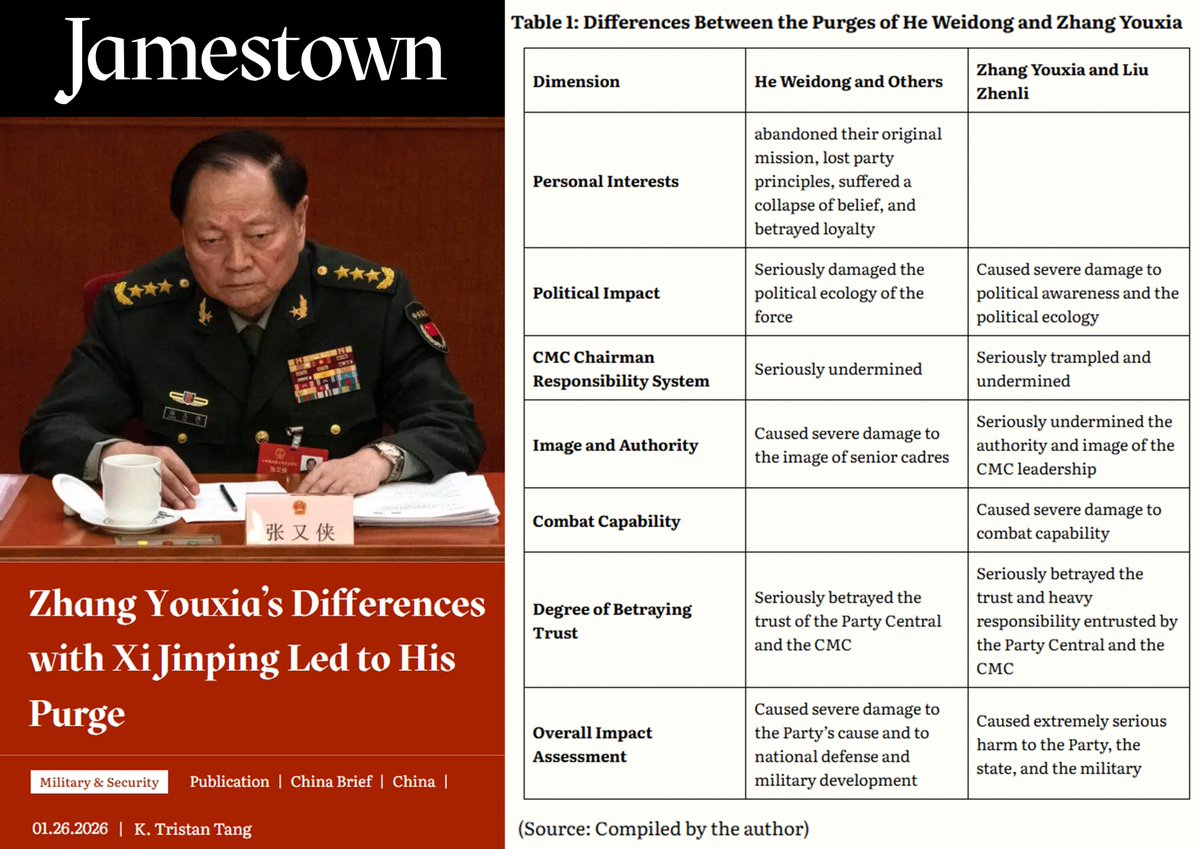
My latest analysis on Zhang Youxia’s purge, published by @ChinaBriefJT at the @JamestownTweets, identifies the likely core causes of the purge and the timing behind it, based on official reporting over recent years:
Zhang Youxia’s Differences with Xi Jinping over PLA Development Led to His Purge
https://t.co/QRZJMTGIwH
Parts of my assessment were referenced by the @FT and @AP.
FT: https://t.co/42M7x7tkH2
AP: https://t.co/sWhIeiyJLU
Executive Summary
(1) What happened:
Official statements point to disagreements with Xi Jinping over PLA development and training—and even instances of open resistance to his directives—as the key reasons behind the downfall of Zhang Youxia and Liu Zhenli.
(2) How it unfolded:
According to official press releases, Zhang Youxia’s timeline for PLA joint operations training did not align with Xi Jinping’s 2027 deadline for achieving an invasion-capable force against Taiwan. Zhang’s force-building agenda also emphasized a narrower set of priorities and placed less weight than Xi on “military struggle” as a standalone objective, instead integrating it into broader training activities.
(3) Why now:
January 2026 marked the beginning of the final annual training cycle before 2027. At this point, the divide between Zhang Youxia and Xi Jinping shifted from debate and planning to execution and direct noncompliance. This divergence became increasingly visible across the PLA and ultimately posed a serious challenge to Xi’s authority.
My sincere thanks to @Arranjnh for his timely support and editorial help in getting this analysis out.
Taiwan is a crisis Xi needs to avoid, not an opportunity he wants to seize. It can go very sideways for the Communist Party and compel them to do things that would put at risk the rest of what he's really trying to accomplish for China's mid-century goals. 1/4
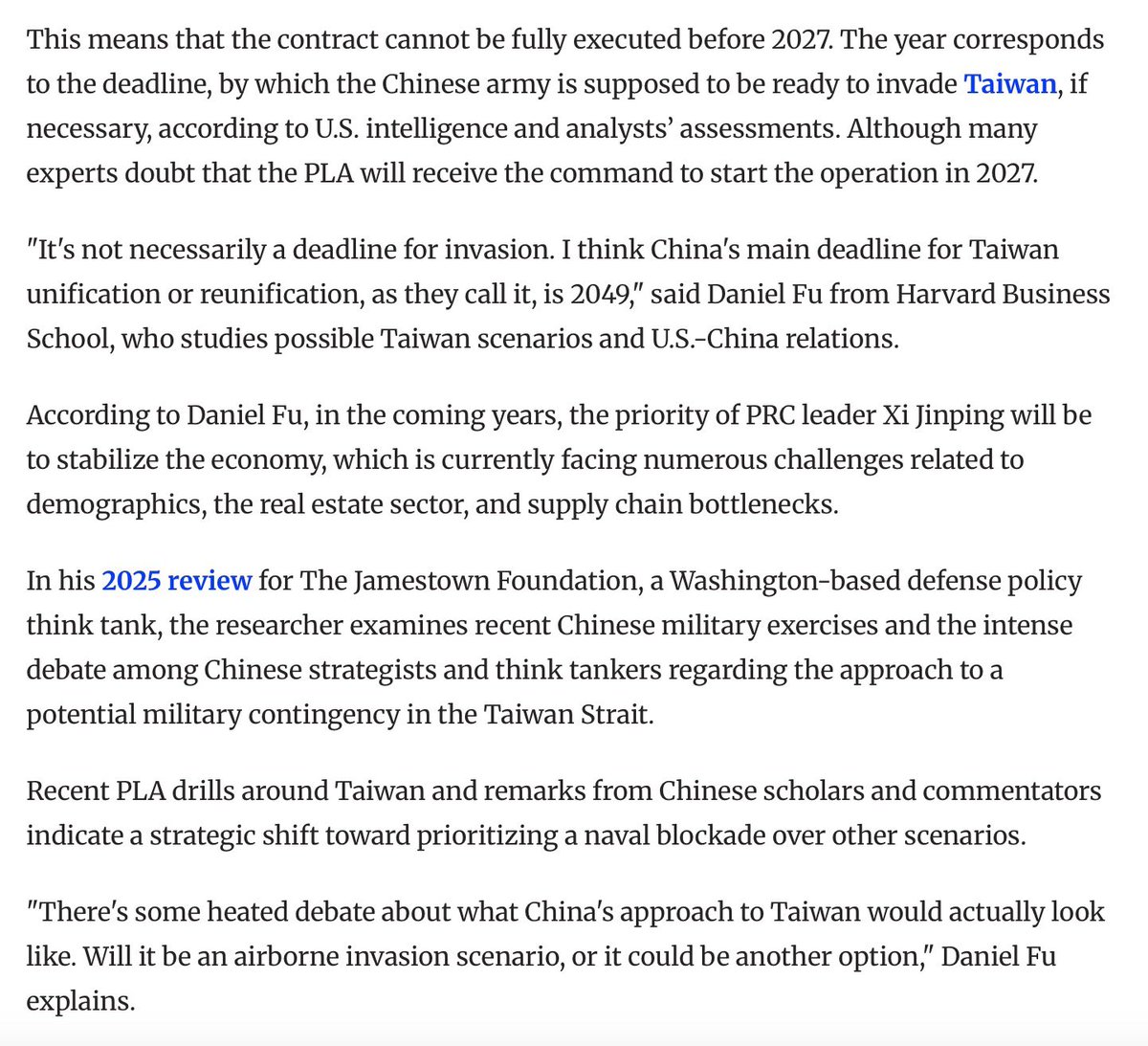
Great to speak with the @KyivIndependent about why China keeps buying Russian weapons despite its own advanced defense industry. We also discussed my research on Chinese airborne invasion capabilities and why 2027 is not a hard invasion deadline for Taiwan.
A little over a month after Russia's full-scale invasion of Ukraine in 2022, the Russian government received a request from China, according to leaked correspondence reviewed by the Kyiv Independent.
https://t.co/K1oOCJJ1jO
“A growing number of influential voices within the country…are raising alarms about overreliance on AI. These concerns reflect deep anxieties about the potential for widespread social and economic disruption.”
https://t.co/fsgxWj58bL
In today’s DealBook: @bernhardwarner on crypto’s slide and what it means for Wall Street; @GradyMcGregor breaks down China’s AI bubble concerns; how AI is propelling Google’s comeback; new scrutiny falls on two Jeffrey Epstein associates; and more https://t.co/Deoh9lmsP3
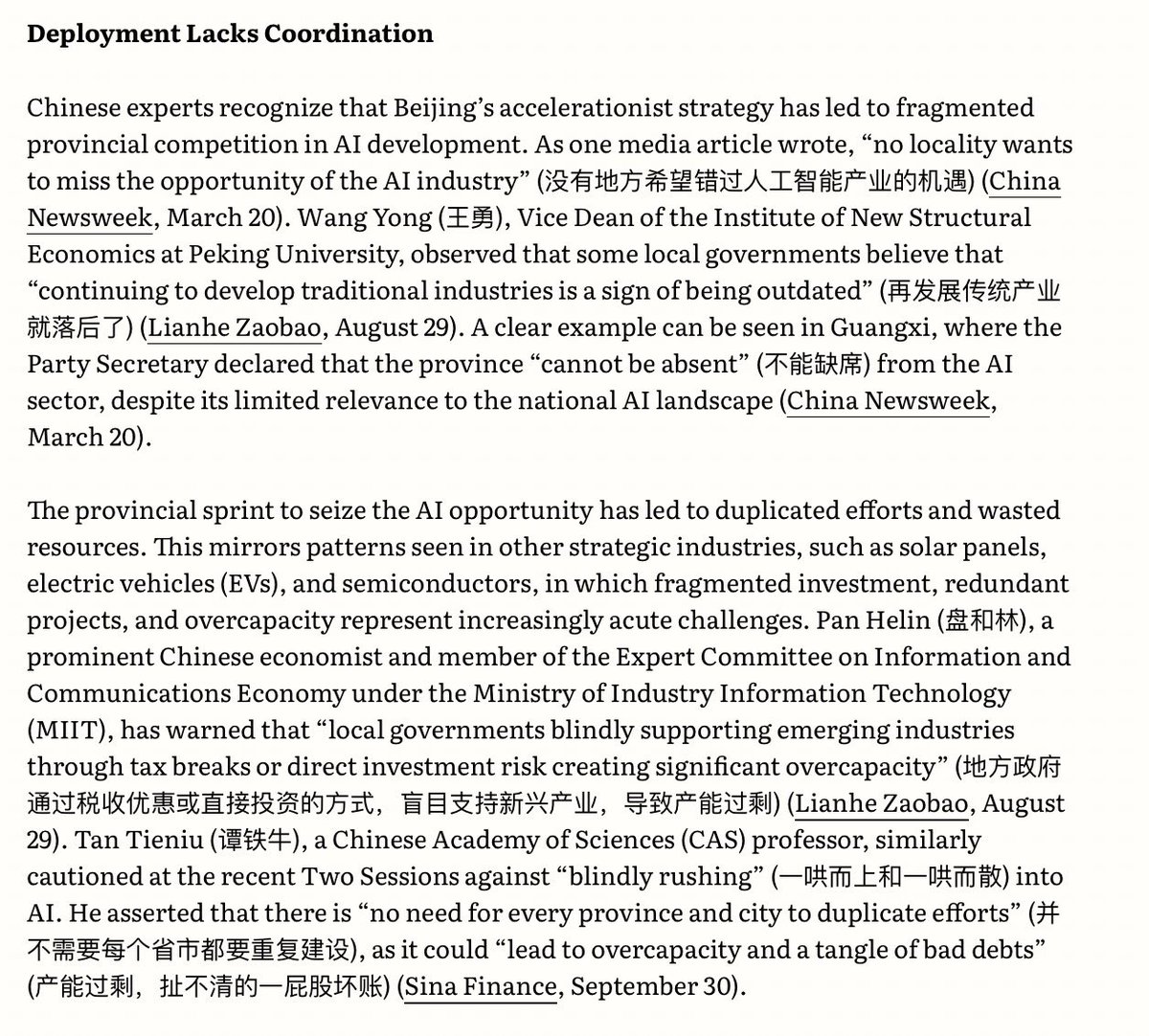
China’s debate over artificial intelligence is becoming more visible as experts raise concerns about its cost, efficiency, and labor impacts. Their skepticism is shaping how the PRC approaches future AI development. Read more below.
#China#AI#Jamestown
https://t.co/2ukLHOzxg5
We often view China’s AI push as monolithic, but inside the PRC, key voices question whether AI can really deliver growth or stability. My new @ChinaBriefJT article surveys the views of China’s AI skeptics who warn of wasted investment and overcapacity. https://t.co/kfBvsspLZT
Great piece by Autor and Hanson. To avoid China Shock 2.0, US should:
1) build a trade coalition
2) allow Chinese FDI into US
3) support key tech
4) help workers
So, not tariffs on everything from everywhere. 1/ https://t.co/hcvh7RGK27