“Kyle Chan of the Brookings Institution, a think tank in Washington, thinks further controls will yield diminishing returns. American restrictions have already spurred a drive for self-sufficiency. “That horse is sort of out of the barn,” he says.” https://t.co/R4HmJUlwjN
Apply for GovAI's 2027 DC Summer Fellowship!
📍 Location: Washington, DC
📅 Deadline: Sunday, November 22nd, 2026 at 11:59 pm ET
The DC Summer Fellowship is a three-month bipartisan opportunity designed to accelerate or launch impactful careers in American AI governance and policy. Participants deepen their understanding of the field, connect with a network of experts, and build their skills and professional profile, all while conducting a research project of their choice under expert guidance.
🔗 Learn more: https://t.co/HVhrNHMTk0
BYD’s overseas drive, in addition to opportunities and challenges (including from Beijing) regarding its technology sharing abroad, are covered extensively in this @HarvardHBS case co-authored by @BillKirbyHBS and I. Read here: https://t.co/fimlrP2Rg1
Very interesting to see BYD’s CEO emphasizing local job creation, local suppliers, and technology sharing in BYD’s global strategy.
Other countries are right to push for more of the benefits to be shared locally.
📣 Our PhD candidate Daniel Fu has published an article, “The PRC’s Compute Push Goes Global,” in The Jamestown Foundation’s China Brief.
🔗 Read the full article to find out more: https://t.co/TJY3fbhu56
#China#AI
This is a welcome development. Given how central Nvidia is to the global AI ecosystem, greater institutional oversight of export-control compliance is essential. More robust internal oversight will help mitigate national security concerns and ultimately, help preserve America's overall competitiveness in AI.
@nytimes I examine Chinese perspectives on Jensen Huang's departure and unlikely return here, which may be of interest to some of the readers of this article! They vary considerably more than you might think: https://t.co/4Kau4Bbvx3.
Much of the Western discourse surrounding Jensen Huang’s departure assumes China is the biggest loser. But Chinese perspectives are far more varied. In my latest for @Jamestown, I examine how Chinese elites see both risks and opportunities for domestic competitors, and their views on the implications of a tumultuous leadership transition on the American AI industry.
https://t.co/Zr3jy1Cu6X
In @nytopinion, I argue Secretary Lutnick's refusal to enforce key anti-smuggling export controls precipitated the crisis with Nvidia and Jensen Huang, letting Megaspeed and others smuggle tens of billions of dollars of AI chips to China. He must resign.
https://t.co/MtPPa2eucD
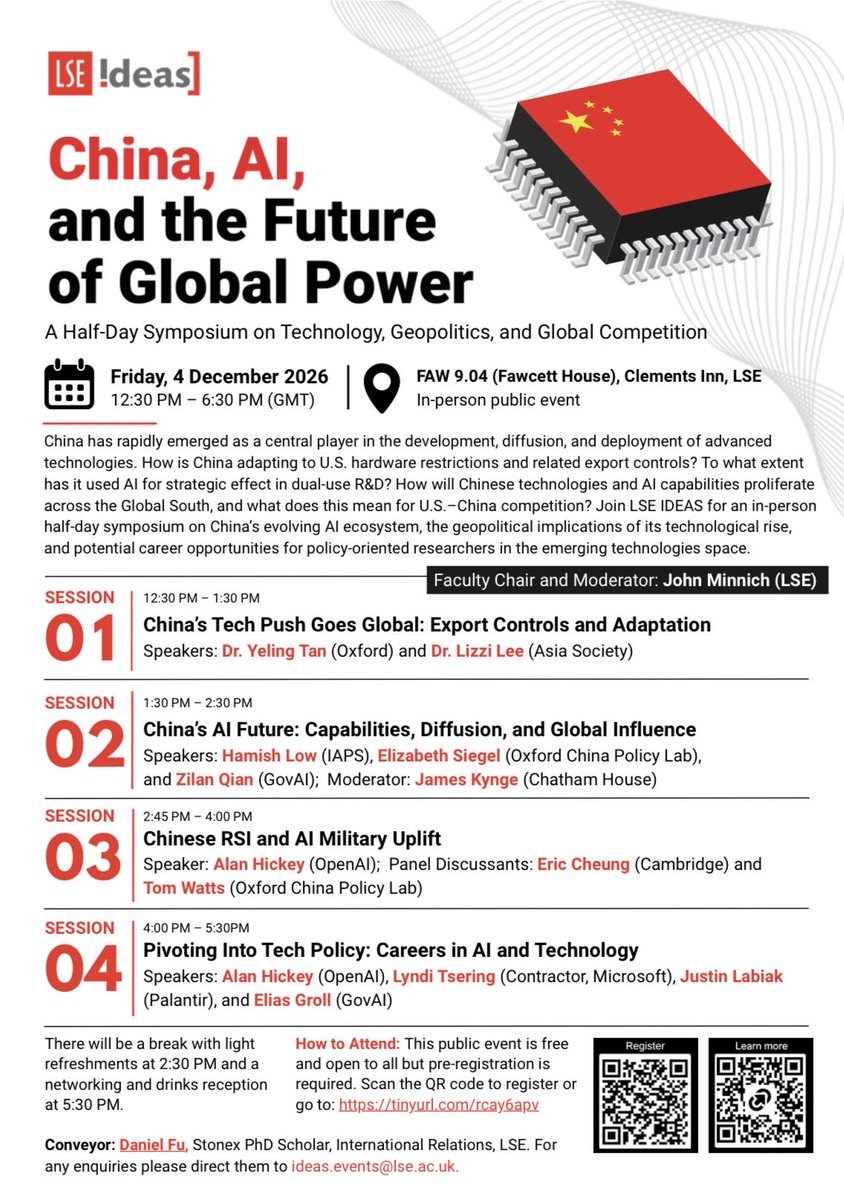
Please join us next Thursday at LSE’s Grand Lecture Theater as we host Jason Hsu for a discussion on Taiwan AI. We have some great programming coming up at @lseideas, including separately, a China AI symposium on December 4. Please see below for details.
🖥️FREE EVENT | Taiwan’s AI Moment: Chips, Compute, and the Global South
How can Taiwan leverage its semiconductor leadership to expand its global influence? Join Hudson Institute’s Jason Hsu to explore Taiwan’s role in the AI economy.
📆Thursday 19 November 2026 | 6.30pm - 8pm
🎤Jason Hsu, Chaired by Dr John Minnich
⬇️Register Here
https://t.co/gMPyLPPZ8F
2/ As my @JamestownTweets article also shows, they have also not stopped Beijing from laying the foundations for Chinese compute going global. https://t.co/enWcqaEGTx
Proponents of export controls on US-made chips have aggressively leveraged the Jensen Huang saga to reinforce their case, while overlooking the longer-term consequences of these restrictions. Sure, Chinese firms want access to compute no matter where it comes from. It is also true, however, that US export controls have incentivized Chinese AI firms to adapt to increasingly capable indigenous hardware, potentially eroding American competitiveness.
As I argue in my @AsiaPolicy article, Chinese start-ups have often succesfully leveraged algorithmic efficiency, domestic hardware alternatives, and greater specialization to overcome compute constraints imposed by US trade restrictions.
https://t.co/AcvVh6IFnC
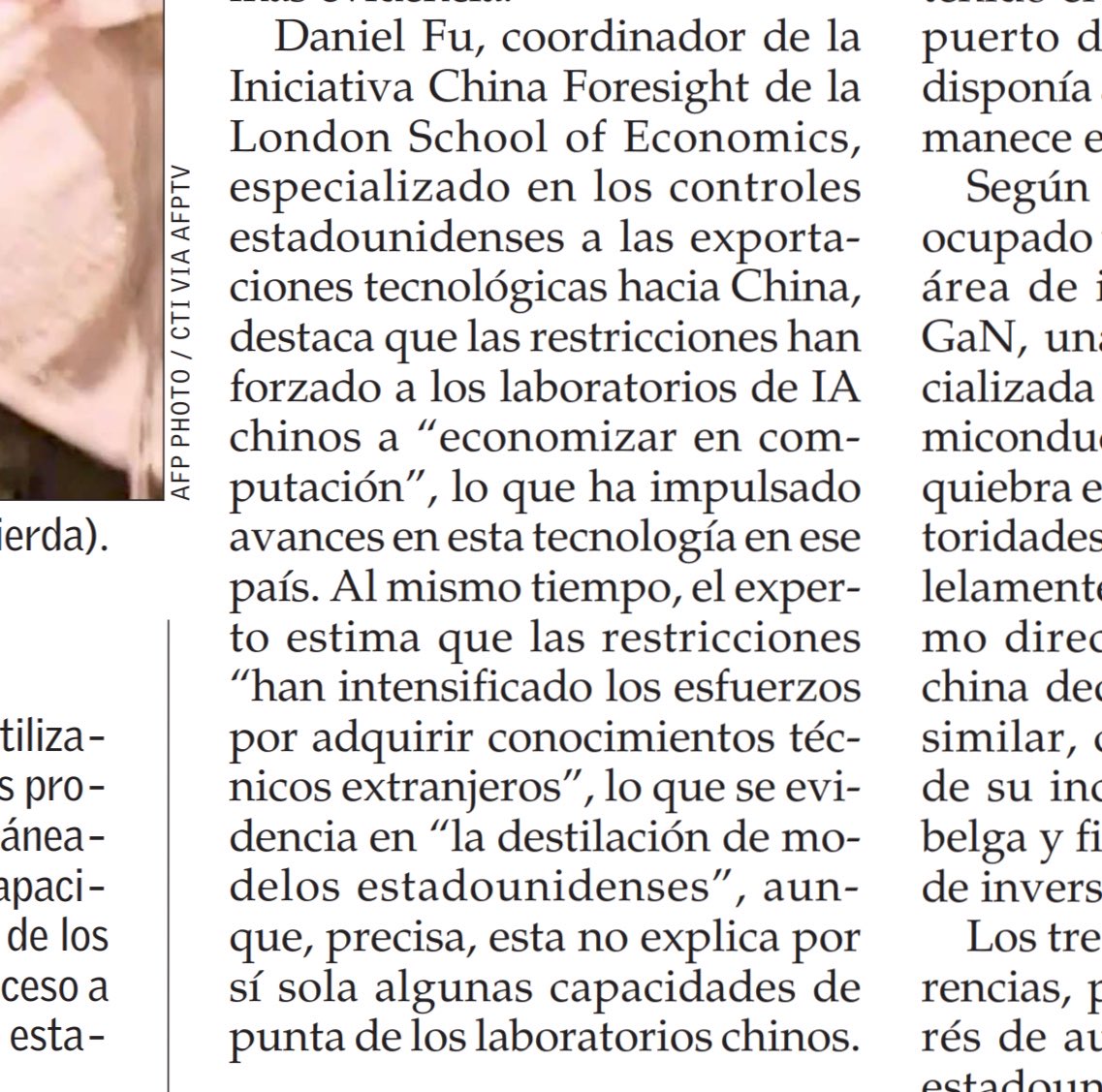
Pleased to be featured in @__elmercurio Chile’s largest newspaper, sharing my analysis of US export controls on China’s semiconductor industry and how these restrictions are shaping China’s efforts to strengthen its domestic technological capabilities.
new - House Dems are weighing changes to select China cmte next year. One option, per ppl familiar, is to broaden focus beyond China to explore issues related to other bad foreign actors. Jeffries has final decision over select committees
More in @semafor newsletter tomorrow am
Enjoyed discussing @zerkzal’s excellent new report (linked below) and the broader PRC—Russian relationship alongside @TinaDolbaia at @Estonia_in_US!
My thanks to @C4ADS for the invitation.
People should not be using Claude for any kind of information about elections. Claude has fabricated and hallucinated entire races, and provided incorrect candidates and voter-registration deadlines. @WaPo finds it was wrong more than one in five times!
I just started digging into this and…wow. The WaPo reported that Claude and Alexa+ (genuinely didn’t realize that existed) were the worst at producing accurate voter guides (and were wrong MORE THAN 20% of the time).
https://t.co/4PUpSmxe6W
We're just getting started. @PLMattis is building something special here at @JamestownTweets.
And as a reminder: China Brief is an open publication. Pitch us! Email [email protected]