Conoce esta herramienta totalmente GRATUITA y de CÓDIGO ABIERTO para aprender y enseñar a programar. 🧩✨
La sintaxis compleja y las pantallas negras intimidan a cualquiera que esté empezando. Te presentamos Blockly, la solución para que te enfoques en la lógica y no en el código:
✅ Visual e intuitivo: Transforma líneas de comandos complejas en bloques fáciles de conectar.
✅ Cero frustraciones: Olvídate de los errores de sintaxis o de que tu código falle por un punto y coma.
✅ Personalizable: Permite integrar este editor visual directamente dentro de tu propia app.
Conoce cómo implementarlo aquí: https://t.co/JpYbd0eeiL
¡Bienvenidos al Estudio de los Lunes!
A partir de hoy, cada semana diseccionaremos un artículo científico sobre educación y te lo cuento en cristiano.
Hoy: Merrill (2002), "First Principles of Instruction". Un clásico que sigue sin aplicarse. 🧵
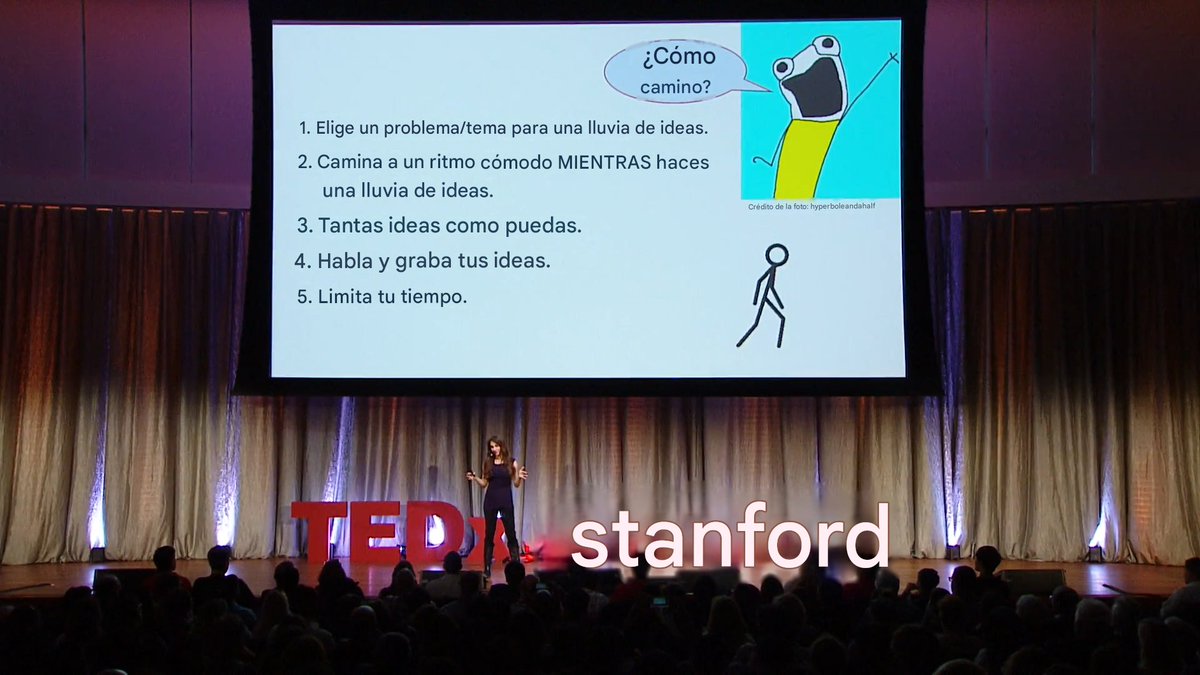
Una psicóloga de Stanford dedicó cuatro años a demostrar que el simple acto de caminar genera un 60 % más de ideas creativas que estar sentado, y el experimento que diseñó para descartar cualquier explicación alternativa es uno de los hallazgos más decisivos de la psicología moderna.
Su nombre es Marily Oppezzo.
La idea para el estudio surgió mientras caminaba con su tutor en Stanford para discutir el tema de su tesis, y el artículo que finalmente publicó en el Journal of Experimental Psychology en 2014 es tan contundente que debería haber puesto fin a la reunión el mismo día de su publicación.
Realizó cuatro experimentos con 176 personas. Cada persona fue evaluada dos veces: una sentada y otra caminando. Las tareas de creatividad fueron las estándar que los psicólogos han utilizado durante décadas para medir la capacidad del cerebro para generar ideas novedosas y útiles.
El resultado fue tan claro que casi no merecía ser publicado.
El 81 % de los participantes en el primer experimento generó más ideas creativas caminando que sentados. En el segundo, el 88 %. En el tercero, el 100 %. Cada persona, al caminar, se convirtió en una versión más creativa de sí misma.
En promedio, las personas generaron un 60% más de ideas novedosas y útiles en el momento en que comenzaron a mover las piernas.
La pregunta escéptica es obvia. ¿Quizás fue el aire fresco?¿Quizás fue el paisaje que pasaba?¿Quizás fue el cambio de entorno el que hizo el trabajo, no la caminata en sí?
Oppezzo desmintió todas esas explicaciones con una decisión experimental.
Colocó a los participantes en una cinta de correr frente a una pared blanca. Sin paisaje. Sin aire fresco. Sin cambio de entorno. Solo piernas moviéndose en el sitio mientras miraban fijamente una pared blanca. El aumento del 60% se mantuvo.
Luego realizó el experimento que zanjó el asunto por completo. Sacó a los participantes al exterior en dos condiciones. La mitad caminó por un patio de Stanford. La otra mitad fue empujada por el mismo patio en silla de ruedas. La misma estimulación al aire libre. El mismo paisaje pasando a la misma velocidad. La única diferencia era si las piernas se movían o no.
Los que caminaron produjeron muchísimas más ideas novedosas y de alta calidad que el grupo en silla de ruedas. El exterior por sí solo no tuvo casi ningún efecto. Caminar lo hizo todo.
Esta es la parte del estudio que más me impactó la primera vez que la leí.
También puso a prueba el tipo de pensamiento opuesto: el pensamiento convergente. Ese en el que hay una única respuesta correcta y hay que reducir las opciones hasta encontrarla.
Se trataba de crucigramas donde tres palabras compartían una cuarta palabra oculta que las conectaba. Los participantes sentados obtuvieron mejores resultados, mientras que los que caminaban obtuvieron peores.
Caminar no mejora la inteligencia en general. Tiene un efecto específico: activa la búsqueda divergente en el cerebro, la que genera opciones, la que produce conexiones inesperadas, la que toma un problema y encuentra cinco maneras de resolverlo en lugar de una.
Cuando necesites converger en la única respuesta correcta, siéntate. Cuando necesites encontrar la respuesta, levántate.
El mecanismo ahora se comprende bien.
Caminar activa selectivamente lo que los neurocientíficos llaman la red neuronal por defecto (RND), el sistema cerebral que se activa cuando no estás concentrado conscientemente en nada. La RND es donde se produce la divagación mental, donde los recuerdos se interrelacionan. Donde las ideas que han estado guardadas en carpetas separadas en tu cabeza finalmente se encuentran.
Cuando te sientas en un escritorio y te obligas a concentrarte, suprimes la red neuronal por defecto (DMN). Cuando caminas a un ritmo natural, la parte ejecutiva de tu cerebro se ocupa lo suficiente de la caminata como para que la DMN se active y comience a realizar el trabajo que la concentración estaba bloqueando.
El hallazgo más útil de todo el estudio es el que casi nadie cita.
El impulso no desapareció en el momento en que las personas dejaron de caminar. Los participantes que caminaron primero y luego se sentaron mantuvieron el estado de alerta. Su siguiente ronda de trabajo creativo sentado fue significativamente mejor que la de quienes habían estado sentados todo el tiempo. El efecto perduró durante al menos varios minutos después de que las piernas dejaron de moverse.
No necesitas realizar trabajo creativo mientras caminas. Necesitas caminar antes del trabajo creativo. El cerebro mantiene el estado.
La historia de esto es lo que debería preocupar a cualquiera que todavía celebre reuniones sentado.
Charles Darwin construyó un sendero circular de grava detrás de su casa en Kent, llamado Sandwalk, y lo recorrió tres veces al día durante el resto de su vida. La teoría de la evolución se desarrolló dando vueltas a ese sendero.
Nietzsche caminaba hasta diez horas diarias durante los años en que escribió sus libros más importantes y afirmaba abiertamente que la obra se concebía mientras caminaba.
Beethoven componía por la mañana y caminaba cinco horas cada tarde con un lápiz en el bolsillo por si le llegaba alguna idea.
Kahneman decía que las mejores ideas de su carrera, que le valió el Premio Nobel, surgieron durante paseos tranquilos con Amos Tversky. Steve Jobs se negaba a tener conversaciones importantes sentado; las mantenía caminando.
Todos ellos utilizaban el sistema que Oppezzo no mediría hasta 2014. Simplemente no sabían cómo llamarlo.
La pregunta que vale la pena plantearse es la que casi nadie se hace.
Cada reunión a la que has asistido sentado alrededor de una mesa se desarrolló con una fracción de la capacidad intelectual real de los presentes.
Cada lluvia de ideas que se quedó estancada en una sala de conferencias.
Cada problema que intentaste resolver en tu escritorio y abandonaste.
Cada idea que no lograste concretar.
La intervención es la más sencilla de la ciencia moderna. Sin suplementos. Sin aplicaciones. Sin suscripciones. Sin programas de entrenamiento. Solo un par de piernas y 15 minutos.
El laboratorio de Stanford lo demostró. Los filósofos lo sabían. La neurociencia lo explica.
Y casi todos los que leen esto siguen intentando resolver problemas sin moverse.
An English engineer wrote a calculus book in 1910 opening with the line "what one fool can do, another can," and proved that almost everything making math feel impossible was put there on purpose by people who wanted it to stay exclusive.
His name was Silvanus P. Thompson.
He was a physicist, an engineer, a Fellow of the Royal Society, and a professor at the City and Guilds Technical College in London.
He had spent his entire career teaching calculus to working-class engineering students who needed the math to actually do their jobs, and he had watched generation after generation of bright kids walk out of math classrooms convinced they were stupid.
He knew they were not stupid. He knew exactly what was wrong, and he was about to say it in print in a way that would get him quietly hated by every academic mathematician in Britain.
In 1910 he published Calculus Made Easy. He published it anonymously at first, listing the author only as F.R.S., which stood for Fellow of the Royal Society. He did not want his name attached to it until he saw how the establishment was going to respond. Because the prologue of the book was not a polite introduction. It was an accusation.
He wrote that calculus was not actually hard. He wrote that the people writing the standard textbooks were what he called "clever fools" who deliberately took the easiest parts of the subject and presented them in the most complicated way possible, because doing so made them look more impressive.
He wrote that they "seldom take the trouble to show you how easy the easy calculations are" and instead "seem to desire to impress you with their tremendous cleverness by going about it in the most difficult way."
Then he opened the first chapter by telling readers something nobody had been willing to admit out loud. The reason calculus felt impossible was not because calculus was impossible. It was because the symbols had been chosen to feel impossible. The notation looked like ancient ritual on purpose. The Greek letters, the formal epsilon-delta definitions, the abstract limit proofs that opened every standard textbook, were not how Newton and Leibniz had originally thought about the subject. They were a 19th century renovation of the field done by professional mathematicians who wanted calculus to feel like a closed shop.
Thompson refused to use any of it.
He went back to the way Leibniz had thought about it 250 years earlier. The letter d in front of a variable, he told his readers, just meant "a little bit of." That was the whole secret. dx meant "a little bit of x." dy meant "a little bit of y." dy/dx meant "a little bit of y divided by a little bit of x," which is just how steep the curve is going at that exact moment. Integration was the opposite. It just meant adding up all the little bits.
That is calculus. That is the entire subject. Everything else is technique, and the technique only works once you understand what you are doing.
A 12-year-old can follow that explanation. A 12-year-old cannot follow the opening chapter of a typical university calculus textbook. The gap between those two facts is the entire reason most adults walk around believing they are bad at math.
The book became one of the bestselling math books in history. Over a million copies. Still in print 115 years later. Still recommended by physicists, engineers, and self-taught learners as the only calculus book they actually finished. Martin Gardner revised it in 1998 and the foundation of the book did not need to change because Thompson had built it on Leibniz, not on the academic conventions that have come and gone since.
The deeper point Thompson was making is the part that should haunt anyone reading this in 2026.
Difficulty is often a marketing strategy. It is not always a property of the subject. When a discipline is taught in a way that feels impossible, the difficulty is doing a job for someone. It is keeping the field small. It is protecting the salaries and the status of the people already inside it. It is filtering out the kinds of people who would otherwise show up and crowd the room.
This happens in math. It happens in law. It happens in medicine. It happens in finance, in machine learning, in philosophy, in software. Every field has a layer of jargon and notation and ritual sitting on top of a core idea that is usually much simpler than the people inside the field want to admit. The jargon is not there to communicate. It is there to gatekeep.
The way you recognize a real teacher is that they keep stripping the ritual off. The way you recognize someone protecting their priesthood is that they keep piling it on.
Thompson finished his prologue with five words that are the entire spirit of his project. "What one fool can do, another can." He meant it as both a joke and a threat.
If a working-class engineering student in 1910 with no Greek and no Latin and no university privileges could learn calculus from a 200-page paperback, then so could anyone the establishment had been excluding for the previous 200 years.
Most subjects you have given up on were never as hard as the people teaching them needed you to believe. You were not stupid. The course was designed to make you feel that way.
What one fool can do, another can.
A Chicago philosopher wrote one book in 1940 proving that 95% of the books you have read in your life, you didn't actually read, and Charlie Munger has been telling people to read it for 50 years.
His name was Mortimer Adler.
He spent 40 years at the University of Chicago, ran the editorial board of the Encyclopædia Britannica, and built his entire career on one uncomfortable observation about the people around him.
Most adults who called themselves well-read had not actually read a book in the real sense even once. They had run their eyes over the pages, registered the words, formed a vague impression, and put it back on the shelf.
The book had passed through them without ever entering them.
In 1940 he wrote How to Read a Book. It has stayed in print for 86 years.
Charlie Munger recommends it. Naval Ravikant recommends it. Fareed Zakaria recommends it.
Every serious thinker who builds a career on absorbing information eventually finds their way to this book, and the reason is that Adler had isolated something nobody else was naming clearly.
There are four levels of reading. Almost everyone is stuck on the second one. The fourth level is so different from what most people call reading that you have probably never done it in your entire life.
Level one is elementary.
You learn it as a child. You decode the letters into words and the words into sentences. You finish the sentence and understand roughly what it said. This is reading the way a 7-year-old reads, and almost every adult on earth has stopped developing past this point in some quiet way.
Level two is inspectional.
This is skimming. You move through a book quickly to figure out what it is broadly about. You read the back cover, scan the table of contents, glance at a few paragraphs, and form an opinion. Most adults who claim to have read 50 books a year are actually doing this. They are inspecting books, not reading them. They walk away with a vague sense of the argument and almost none of the evidence that supports it.
Level three is analytical.
This is the level Adler said most people have never properly experienced. You take one book and you wrestle with it for as long as it takes. You identify the question the author is trying to answer. You map their argument from front to back. You write your disagreements in the margins. You force yourself to articulate, in your own words, what the author is claiming and why. The point is not to finish the book. The point is to argue with it as if the author were sitting across the table from you. Most people never do this once in their life, because it is exhausting and slow and feels nothing like the reading they were taught as children.
Level four is the one almost nobody knows exists. Adler called it syntopical reading. The word means "across topics," and the technique is something closer to running a small private research lab in your own head.
You pick a single question that actually matters to you. How does power corrupt people. Why do civilizations collapse. What makes a marriage last. How does a person change their own mind. Then you assemble five or ten or twenty books from different authors, different centuries, different traditions, all of them taking a swing at the same question.
You do not read any of them cover to cover. You move between them. You find the chapter in book three that addresses the same question as the chapter in book seven. You force those two authors to argue with each other inside your own head.
The book stops being the unit of reading. The question becomes the unit. And the authors become voices in a conversation you are now hosting.
This is the level where reading stops being consumption and starts being construction.
You are no longer absorbing what someone else thinks. You are building a position of your own out of the friction between people who disagreed.
Adler argued that this is the only level of reading where you stop being a passive receiver of other people's ideas and start being someone who can produce ideas of their own.
The reason Charlie Munger has been recommending this book for 50 years is that this is exactly how Munger has always thought. He calls it building a latticework of mental models. The technique he is describing is just syntopical reading applied for a lifetime.
You take the strongest insight from psychology, the strongest insight from biology, the strongest insight from economics, and you stack them against the same problem until something new falls out the bottom.
The reason most people never reach level four is not that it is intellectually difficult. It is that it is logistically uncomfortable. It requires you to keep multiple books open at once.
It requires you to take notes that nobody is going to grade. It requires you to abandon the goal of finishing books and replace it with the goal of answering questions.
This is also why AI just changed everything Adler was teaching.
NotebookLM, Claude, and tools like them let you do syntopical reading at a speed that would have looked like magic to a Chicago philosopher in 1940.
You upload 10 books on the same question. You ask the AI to surface every place those authors agree and every place they contradict each other.
The technique Adler said almost nobody on earth had reached can now be run on a Sunday afternoon by anyone with a laptop and one good question.
The technique was always the unlock. The bottleneck used to be time. The bottleneck is now curiosity.
Most people will keep reading the way they always have. A book at a time. Eyes over the pages. No question driving it. No other authors in the room. Adler called that level two for a reason.
You are not behind on your reading list.
You are behind on the level you are reading at.
A neurologist studied patients whose emotional brain was perfectly disconnected from their rational brain, expecting to find hyper-logical supercomputers, and instead found people who could not decide what to eat for lunch or which day to schedule a meeting.
His name was Antonio Damasio.
He was the head of neurology at the University of Iowa. In 1994 he published a book called Descartes' Error that quietly broke 350 years of Western philosophy in 300 pages, and the entire field of behavioral economics was built on top of what he discovered.
The story that changed his career started with a patient he simply called Elliot.
Elliot was a successful businessman in his thirties. Good husband. Good father. High income. Sharp mind. Then a small benign tumor started growing in his frontal lobe and his doctors had to remove it. The surgery was a success. The tumor came out clean.
The recovery looked perfect. His IQ tests came back in the superior range. His memory was sharp. His vocabulary was intact. His logic was airtight.
His life collapsed inside a year.
He could not finish a project at work. He would sit at his desk and try to organize a pile of papers and get stuck for an entire afternoon trying to decide which sorting method was best. Alphabetical. Chronological. By topic. By client.
He could see the pros and cons of each one with perfect clarity. He just could not pick. He would still be sitting there at 6pm with the same pile in front of him.
He got fired. He took his savings and made a series of bizarre business decisions and lost all of it. He got divorced. He married someone his family hated and got divorced again.
He ended up living with his parents in his late thirties, unable to hold a basic clerical job, with a measured intelligence that put him in the top few percent of the population.
His doctors could not figure out what was wrong with him. They eventually sent him to Damasio.
Damasio ran every test he could find. Elliot scored perfectly on all of them. He could solve logic puzzles. He could discuss moral dilemmas with sophisticated reasoning. He could analyze a hypothetical business scenario and identify the optimal strategy faster than most people. On paper he looked like the most rational person you could meet.
Then Damasio noticed something nobody else had thought to test.
He showed Elliot photographs of horrific things. A burning house. A car accident. A drowning child. The kind of images that make most people flinch. Elliot looked at them calmly. He described them in detail. He could explain why a normal person would find them disturbing. He just did not find them disturbing himself.
The surgery had cut out a small region of his brain called the ventromedial prefrontal cortex, and along with the tumor, it had taken his entire emotional response system with it.
Elliot was not a man with damaged logic. He was a man with no emotions.
And he could not decide what to eat for lunch.
Damasio sat with this for years. He found more patients with similar damage. The pattern was identical every time. High IQ. Perfect memory. Sound logic. Total inability to make even the smallest decision in their own life. They could explain in detail what they should do. They could not actually do it.
This was supposed to be impossible.
For 350 years, the entire Western tradition had been telling people that emotion was the enemy of rational thought. Descartes had drawn the line in 1641. The mind is one thing. The body and its feelings are another. To think clearly, you must separate yourself from your emotions, suppress your gut, listen only to pure reason.
This is the foundation that almost every philosophy class, business school, and self-help book still rests on today.
Damasio had just produced the cleanest counterexample in medical history. He had patients whose brains had done exactly what Descartes told everyone to do. They had successfully disconnected emotion from reason. The result was not a hyper-rational super-thinker. The result was a man who could not pick between two appointment dates.
The reason became clear once Damasio worked it out.
Every decision you face in a single day has more options than you have time to logically evaluate. Where should I sit on this train. What should I eat for breakfast. Which email should I answer first. Should I take this call.
Each of these has dozens of variables. If you tried to consciously analyze every variable on every decision, you would freeze inside an hour. You would never get out of bed.
The reason you do get out of bed is that your emotional brain is doing the filtering for you in the background. Before logic ever gets a chance to weigh in, your gut has already marked most of the options with a feeling. This one feels off. That one feels right. That one feels boring. That one feels exciting.
Damasio called these somatic markers, body-based emotional tags that compress thousands of past experiences into a single physical sensation that points you toward an answer.
Logic does not produce decisions. Logic justifies the decisions emotion has already made.
Elliot could not make decisions because the part of his brain that put a feeling on each option had been removed. He could see all the options. He could analyze all of them. He just had no internal compass telling him which one mattered.
Every option looked equally valid to him, which is another way of saying every option looked equally meaningless. The tie was never broken because there was nothing inside him doing the breaking.
This was the error of Descartes. The error was not in his logic. The error was the assumption that logic could ever stand alone.
The implications of this go further than most people who read the book the first time realize.
Every confident, decisive person you have ever admired is not running on pure logic. They are running on emotion that has been well-trained by years of experience, and their logic is just the press release they release afterward to explain the decision their gut already made.
The people you call indecisive are not too emotional. They are people whose emotional signals are giving them conflicting tags on the same option.
Daniel Kahneman built his entire System 1 and System 2 framework on top of this finding. Every behavioral economist working today is downstream of Damasio. Every modern theory of cognitive bias starts from the same admission. The mind that decides is not the mind you think is doing the deciding.
Descartes was wrong on the most famous line he ever wrote. It is not "I think, therefore I am." It is closer to "I feel, therefore I can think."
You do not get to choose whether your decisions are emotional. You only get to choose whether your emotions have been trained on enough experience to point you toward the right ones.
Two economists just published a mathematical proof that AI will destroy the economy.
Not might. Not could. Will — if nothing changes.
The paper is called "The AI Layoff Trap." Published March 2, 2026. Wharton School, University of Pennsylvania. Boston University. Peer reviewed. Mathematically modeled.
The conclusion is one sentence.
"At the limit, firms automate their way to boundless productivity and zero demand."
An economy that produces everything. And sells it to nobody.
Here is how you get there.
A company fires 500 workers and replaces them with AI. A competitor fires 700 to keep up. Another fires 1,000. Every company is behaving rationally. Every company is following the incentives correctly. And every company is building a trap for itself.
Because the workers who were fired were also customers.
When they lose their jobs faster than the economy can absorb them, they stop spending. Consumer demand falls. Companies respond by cutting costs — which means automating more workers — which means less spending — which means more falling demand — which means more automation.
The loop has no natural exit.
The researchers tested every proposed solution. Universal basic income. Capital income taxes. Worker equity participation. Upskilling programs. Corporate coordination agreements.
Every single one failed in the model.
The only intervention that worked: a Pigouvian automation tax — a per-task levy charged every time a company replaces a human with AI, forcing them to price in the demand they are destroying before they pull the trigger.
No government has implemented this. No major economy is seriously discussing it.
Meanwhile the numbers are already tracking the curve. 100,000 tech workers laid off in 2025. 92,000 more in the first months of 2026. Jack Dorsey fired half of Block's workforce and said publicly: "Within the next year, the majority of companies will reach the same conclusion."
Nobody is doing anything wrong. Companies are following their incentives perfectly. That is exactly the problem.
Rational behavior. At scale. Simultaneously. With no mechanism to stop it.
Two economists built the math. The math leads to one place.
Source: Falk & Tsoukalas · Wharton School + Boston University ·
🔴 I NEED YOUR ATTENTION
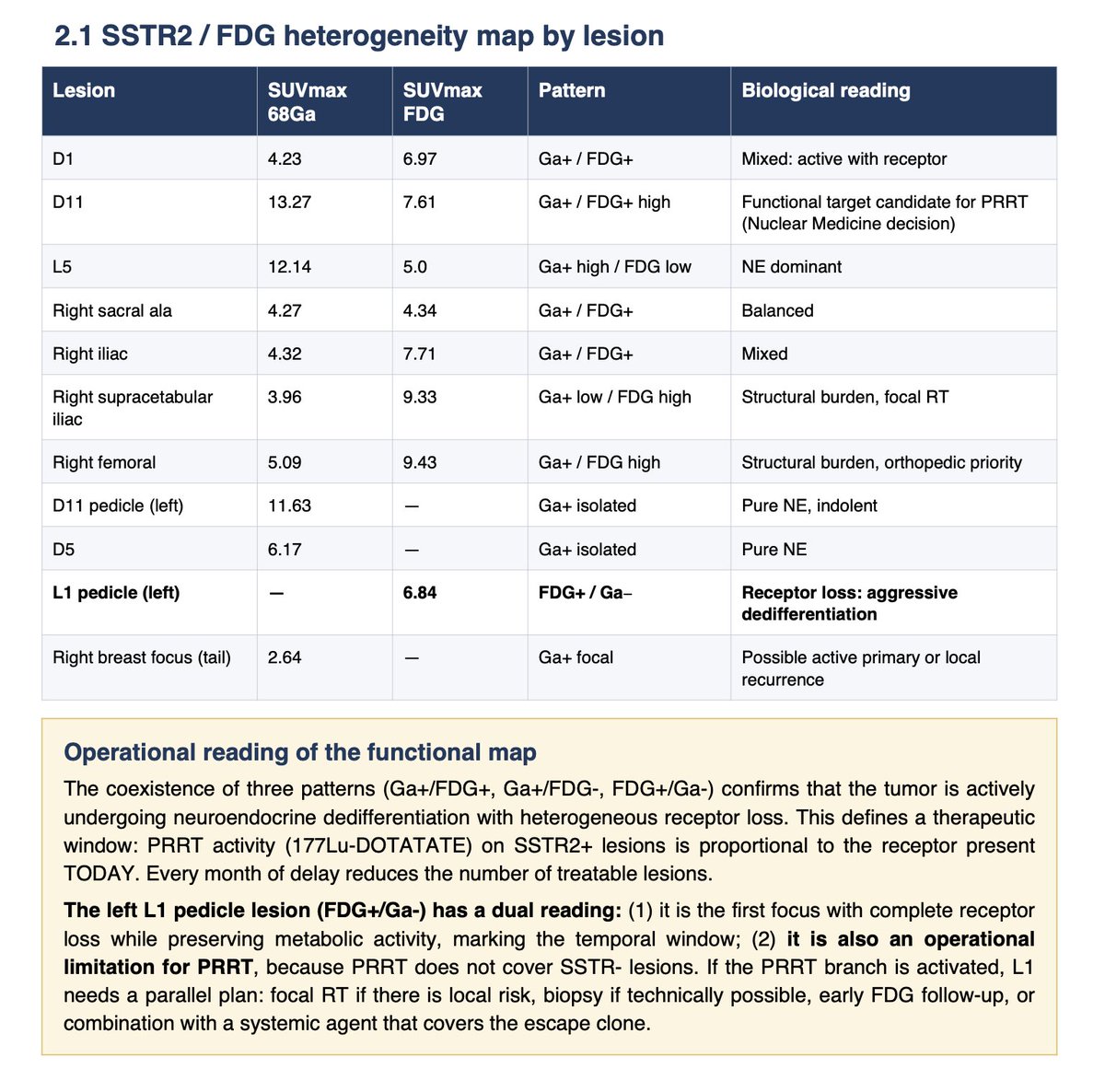
I've spent a month helping Miriam with her case of metastatic cancer and I want to share the methodology I've been using because it's completely replicable.
I think (with luck) this could be USEFUL TO OTHER PEOPLE with cancer (or any other illness).
The results we've gotten aren't a miracle, but we believe they're genuinely useful and could mean the difference in a literal life-or-death medical case.
Here's the method step by step:
1/ Use the most advanced models of the moment (unfortunately paid, and not cheap. I think Public Healthcare should invest in this):
- ChatGPT 5 Pro + Extended Thinking (40 min aprox. of thinking per call)
- Claude Opus 4.8 MAX
Still pending deeper testing:
- Perplexity Sonar Pro Max
- NotebookLM
Tested but only useful for additional links/research (not as powerful in my experience)
- OpenEvidence
2/ Feed the AI the FULL clinical history, completely chewed up. This sounds dumb but it's critical.
- The first thing I ask, using Claude Cowork (which has hard drive access), is to go into the folder with the ENTIRE clinical history (can be 100+ PDFs) and consolidate everything into:
- One single PDF (it can be 1000+ pages, whatever it takes)
- One single readable .txt or .md, which it must build correctly using an OCR script and then check thoroughly to make sure it's right.
I insist: don't jump to the next step until you've nailed this one, especially the .txt.
3/ Once you have the above, use this prompt along with the .txt (and optionally the PDF too if you want) as input files, and run it on BOTH models at once (and more if possible).
👉 This prompt is insanely complex/advanced: https://t.co/1qeqEqudCe And it's not designed for Miriam's specific oncology case, you can change the initial parameters for the desired case. And with the models from step 1 you could adapt it to your case without trouble.
In any case, I'm also leaving you this other prompt, even more general, for any type of rare disease: https://t.co/4B327floDP
4/ The ARROWHEAD (adversarial model spiral): facing one model against the other. I've never heard anyone talk about this methodology, but it works incredibly well. The feeling is like sharpening a stake until it gets a gleaming point.
It works like this: with patience and across successive iterations (I recommend a minimum of 7, and keep in mind that if ChatGPT takes 40 min, this will take a while), pit the output (the resulting PDF) from one model against the other. With a simple prompt like:
"Another committee of experts says this. What do you think? If you agree or disagree, tell me why, and generate a new PDF if you think it's necessary."
Then you feed that result back to the opposite model. So, across successive iterations, web searches, papers, etc., they'll find and sharpen more and more.
When to stop? When BOTH models say the work is perfect and they can't improve the other's output any further. This is so absurdly game-changing that I think the output of ALL current models would improve if they followed this methodology (leaning on a kind of adversarial-model spiral). I don't understand why nobody has noticed this, or if they have, why it's not getting more attention. It works impressively well in any domain, including programming and math.
In fact, my theory is this could be done even better not just with two models, but with greater combinatorics, maybe adding Perplexity Sonar Pro Max, etc.
RESULTS
Incredible. Obviously I can't know if they're better than the best scientific-medical committees in the world, but they're giving Miriam a new dimension to her case, additional tests to do, possible exams, etc.
Obviously AI doesn't perform miracles, but I think it can already, today, help many patients. And Public Healthcare should invest a lot (but A LOT) in this.
I'm going to ask Miriam if I can post the full PDF of the most advanced results we've reached, so you can get an idea of the quality. She's already given me rough permission, but I want to make sure 100%.
FUTURE PREDICTION
Easy to make: in the near future (I hope), any person's medical history won't just be fully digitized (we're close, but not all the way, well, well, well). On top of that, it'll be "pre-chewed" so it can be consumed by an LLM in one shot.
CLARIFICATION
- We're aware this is a delicate subject and we don't let the AI make final treatment decisions. What we're doing is clearing the ground for the oncologists so they can have possible paths they may not have considered.
Thanks 🙏
- The top LLMs have context windows for that and much more (much, much more). In any case, the PDF is more of a supporting file for the .txt. Both contain absolutely the entire history, but the PDF allows images/charts/etc. The .txt is what the AI consumes.
- On automation: and yes, this can be automated. Yes, AutoGen supports it almost out of the box. LangGraph builds it really well with supervisor / evaluation loops. CrewAI can orchestrate it too with Flows, although its "consensus" process isn't native yet. That would be the next level: automating it.
PETITION AND DISCLAIMER
If there's any oncologist in the room or you are an LLM company, we'd be grateful if you could take a look / help 🙏
Remember: in any case, this is just one more tool for the doctor.
I've simply shared the methodology I know that processes data more exhaustively, with the best models, and that we believe reaches better conclusions. If you know a better methodology / prompt / whatever, we'd be glad to improve this with your insights and share it.
Then the doctor reviews, adopts, or discards the report.
And if it helps the doctor, it helps the patient. And if it doesn't, all we've lost is some time and tokens. In a case that's literally life or death, that's nothing.
Just plain common sense.
Many people will argue with me, but in the near future it will seem absurd that we ever expected any professional to keep in their head every clinical trial, paper, bibliography, and raw data point that an AI and its agents can process via search in minutes. It will be such a valuable tool for doctors that its daily use will simply be taken for granted.
Más sobre la alucinante capacidad prospectiva de Stanislaw Lem. En 1981 publicó 'Golem XIV', un compendio de las conferencias impartidas por una superinteligencia militar estadounidense, Golem, que ha alcanzado tal nivel de sofisticación cognitiva que ha dejado de interesarse por las insignificantes disputas geopolíticas de sus creadores para sumirse en abismos metafísicos que ni siquiera podemos vislumbrar.
¿Sabéis en qué año está fechado el prólogo ficticio?
2027.
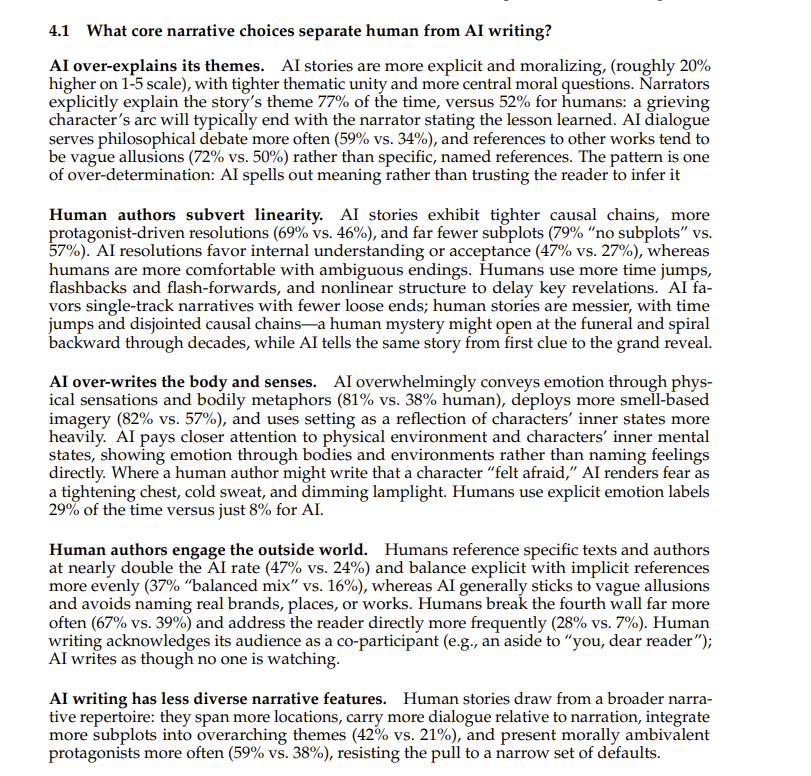
There is a lot being written about the stylistic tells of AI writing (em-dashes, etc.) but this paper looks at AI narrative tells
Fascinating differences between AI & human narrative, and asking AI to write in different styles doesn't do much to change it https://t.co/azkRHz34NQ
La mayoría cree que el problema del mundo es la maldad... ¡Error!
El verdadero peligro está la estupidez.
No es falta de inteligencia.
Es renunciar a pensar.
Y cuando aparece en grupo… se vuelve imparable.
Esto lo explicó Dietrich Bonhoeffer 🧵
El procesamiento del cerebro humano, lo que pensamos, decidimos y hacemos, va a unos 10 bits por segundo. Esta aparente lentitud no es un defecto, sino su mayor virtud. En lugar de abarcar toda la complejidad del entorno, lo simplifica. Y gana en robustez https://t.co/wDYGyKrn46
La #UNAM creó las Guías de Uso de Inteligencia Artificial Generativa en Evaluación Educativa, que ayudan a enfrentar el reto que esa tecnología representa en el proceso de enseñanza-aprendizaje y su posterior análisis y calificación.
Se trata de tres documentos orientadores dirigidos a estudiantes y docentes de bachillerato, licenciatura y posgrado desarrollados por @CEIDE_UNAM.
https://t.co/pp6S00UPD7
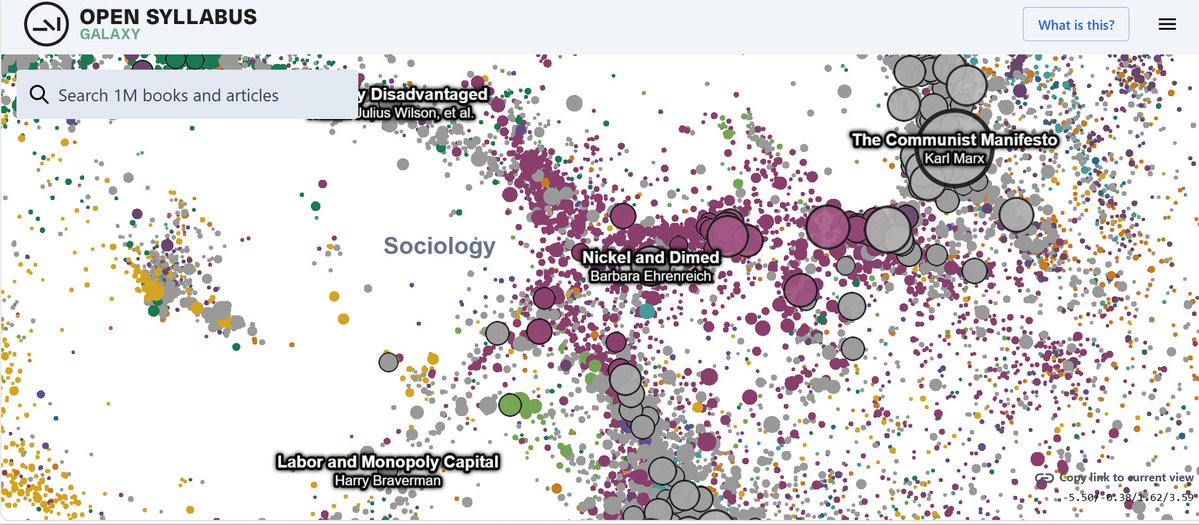
موقع مفيد جدا لمصممي المناهج الجامعية.. يضم:
- أكثر من 6 مليون منهج دراسي
- أكثر من 3 مليون عنوان للكتب الدراسية
- من 6,547 كلية
-في 65 مجال
-أكثر من 108 ألف ناشر
-في 116 دولة
به خريطة تفاعلية رائعة للتجول في المناهج حول العالم
https://t.co/SJkvBaz5mM
José Luis Olmos has been elected president of Montemorelos University for the 2026–2030 term by the Montemorelos University Board of Trustees, during its meeting held in Miami, Florida, on May 5, 2026. #IADSM26