Aspiring Eved Hashem, Husband, Dad, Daf Yomi, dreaming of becoming “Beinoni”, Kiruv Speaker-Writer, Egg Products. R’ Akiva started his journey at the age of 40!
Many have asked me for it - so thanks to @cman506 here it is... the link to video of my interview played at MetLife Stadium just prior to the start of the #SiyumHashas https://t.co/5MtB6SezQm
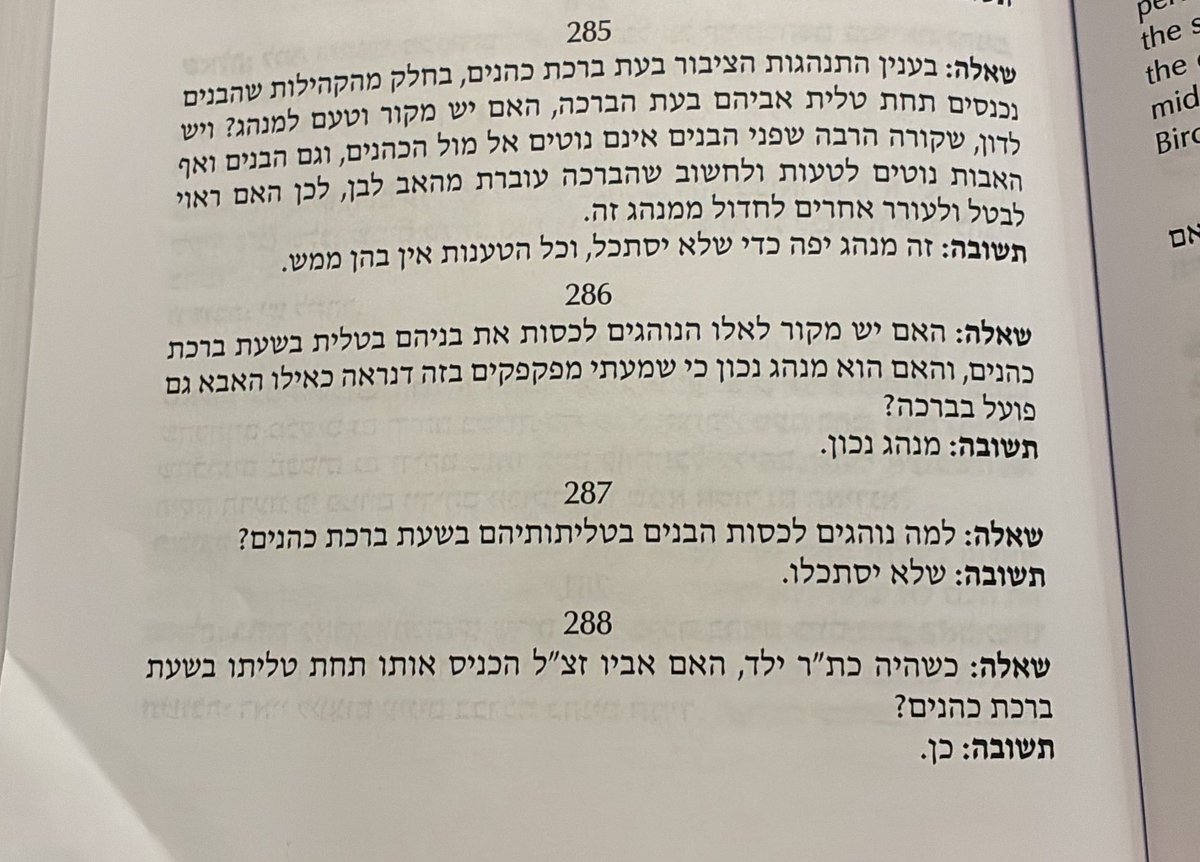
285/288: Even though not strictly required it’s nice to bring children under the tallis during duchening.
Rav Chaim as a child went under the Steipler’s tallis.
During their run to the Finals in 1999, the Knicks outscored their opponents by a total of:
15 points over the first three rounds of the playoffs.
During their run to the Finals in 1994, the Knicks outscored their opponents by a total of:
21 points over the first three rounds of the playoffs.
During their run to the Finals this year, the Knicks outscored their opponents by a total of:
271 points over the first three rounds of the playoffs.
The story of Avraham ben Avraham, widely known as the Ger Tzedek (the Righteous Convert) of Vilna, is one of the most powerful and revered accounts of faith and self-sacrifice in Jewish history. Born as Valentin Potocki in the early 18th century, he belonged to one of the wealthiest, most prominent, and most powerful noble families in Poland. While studying at a university in Paris alongside his friend Zaremba, Valentin encountered an elderly Jewish teacher and began studying the Hebrew Bible. This intellectual pursuit eventually blossomed into a deep spiritual awakening, leading him to conclude that the theology of his upbringing was false and that the absolute truth resided in the Torah.
Because converting away from Catholicism was a capital offense punishable by death in Poland at the time, Valentin traveled to Amsterdam, which was one of the few European sanctuaries offering religious freedom. There, he formally entered the covenant of Abraham and took the Hebrew name Avraham ben Avraham, which is the traditional name given to Jewish converts. Despite the immense danger of returning to his homeland, his burning desire for deep Torah scholarship drew him back to Eastern Europe, where he settled anonymously in a small village outside Vilna, Lithuania, adopting the dress, long beard, and intense lifestyle of the most devout local scholars.
While in Vilna, Avraham ben Avraham formed a close spiritual bond with the Vilna Gaon, Rabbi Elijah ben Shlomo Zalman, who was the preeminent Torah authority of the generation. Recognizing the immense danger the young convert faced from search parties sent by his noble family, the Vilna Gaon advised him to hide in the smaller, more isolated town of Ilya. Avraham followed this advice and spent his days learning in the local synagogue, supported discreetly by righteous women who provided him with food. However, his sanctuary was destroyed after a conflict with a local Jewish tailor whose son routinely misbehaved in the synagogue; when Avraham sharply rebuked the child, the angry father reported the mysterious, aristocratic stranger to the Catholic authorities.
Avraham was promptly arrested and thrown into a dungeon in Vilna, where he was subjected to months of intense interrogation and pressure to recant his faith. Because of his family's vast political influence and high status, the Church authorities, local officials, and even his own mother, the countess, begged him to return to Catholicism. They promised him full absolution, the restoration of his vast wealth, and titles of honor if he would simply renounce Judaism publicly. Avraham steadfastly refused all of their advances, openly declaring his loyalty to the God of Israel and choosing the physical agony of martyrdom over an unfaithful life.
While he was awaiting execution, the Vilna Gaon visited Avraham in prison and offered to use Kabbalistic secrets and the esoteric Names of God to miraculously break him out of his cell. Avraham declined the offer, explaining that he did not want to cheat his fate or give the public any impression that he had compromised his beliefs. He asserted that his soul had descended to this world specifically to sanctify God's name through absolute self-sacrifice, known in Hebrew as Kiddush Hashem.
On the second day of the festival of Shavuot in the year 1749, Avraham ben Avraham was marched to the center of Vilna and burned alive at the stake. He went to his death with joy and composure, loudly reciting the Shema Yisrael prayer as the flames consumed him. Following his execution, a brave Jewish resident of Vilna managed to bribe the guards to collect Avraham’s remaining ashes and bone fragments. These sacred remains were buried with the highest honor in the old Jewish cemetery of Vilna. Centuries later, when the Soviet authorities razed the old cemetery, the Jewish community successfully salvaged the remains of both the Vilna Gaon and the Ger Tzedek, reinterring them beside one another in new cemetery
@elliotsteinmetz Very true but Brunson has tremendous talent as well coach - not the tallest or the fastest or the highest jumper but big time talent he does have 😘
On Shavuos night, Rebbe Nachman was walking to the mikveh with chassidim.
Rebbe Nachman kept asking, “do you hear those noises?”
No one else heard a thing.
“How do you not hear that!?”
They finally realized that that Rebbe Nachman was hearing the thunderous sounds of Sinai.
An epic night of inspiration at Olami Manhattan as the world-renowned giant in the world of Jewish Kiruv, Rabbi Dr. Akiva Tatz, shares deep inspirational wisdom with the young Jewish professionals growing along their Jewish journeys
Meet the first Orthodox Jew to play Division I @NCAABaseball.
His name is Elie Kligman.
From sundown on Friday until nightfall on Saturday, he's unavailable to play because he observes Shabbos.
His teammates and coaches have embraced and supported him - they’re inspired by his dedication to his faith.
"Thank God we have him."
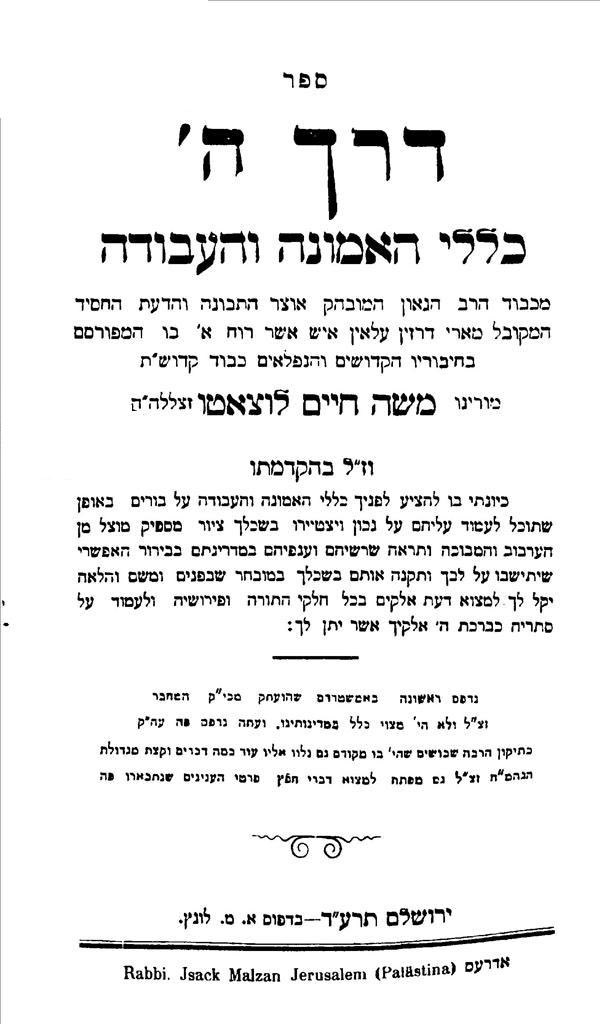
26 Iyar: R'Moshe Chaim Luzzatto (1707-47). The great Ramchal was the author of many foundational Sefarim including Mesilas Yesharim, Derech Hashem, Pischei Chochma & Da'as Tevunos.
Rabbi Moshe Chaim Luzzatto (1707–1746), known by the acronym Ramchal, was a brilliant 18th-century Italian rabbi, philosopher, and Kabbalist, best known for his ethical masterpiece Mesillat Yesharim (Path of the Upright) and profound theological works like Derech Hashem (The Way of God). Born into a wealthy, cultured family in Padua, he was a child prodigy with mastery in both classical Jewish texts and secular studies.
His life took a dramatic turn around age 20 when he revealed he was receiving teachings from a maggid, a celestial mentor, which caused intense controversy among leading rabbis who feared a resurgence of false messianic trends like Shabtai Tzvi. Due to this persecution, he left Italy for Amsterdam, where he continued writing, and finally moved to the Land of Israel, settling in Acre, where he died young in a plague. The Vilna Gaon and later generations highly praised his work for synthesizing complex mystical concepts into clear, logical systems.
Early Life and Education
Born in Padua, Italy, into a distinguished family, he received a comprehensive education that included Talmudic studies, biblical Hebrew, and secular subjects like literature, poetry, and philosophy. By the age of 14, he was already publishing works on linguistics and grammar. He formed a young Kabbalistic study group in Padua, known as Chevra Mevakshei haShem (Group of Seekers of G-d), focusing on Lurianic Kabbalah.
Controversy and Travels
Luzzatto’s claim of receiving revelations from a maggid and writing down these insights caused alarm among contemporary Italian rabbis, who feared he was engaging in forbidden mystical speculation and suspected him of false messianism. He was forced to sign a humiliating agreement to stop writing or teaching Kabbalah and to leave Italy. He relocated to Amsterdam, where he was accepted as a great teacher and supported by the community, continuing his literary and philosophical work.
Major Works and Legacy
Ramchal was incredibly prolific. His ethical works, most notably Mesillat Yesharim, became the foundational text of the Musar movement. Other major works include Derech Hashem (a systemization of Jewish theology), Da'at Tevunot (on the nature of evil and providence), and a series of dramatic poems like Migdal Oz. He is considered the founder of modern Hebrew literature and a premier authority on Lurianic Kabbalah.
Final Days
After leaving Amsterdam, he moved to the Land of Israel, residing in Acre. He passed away in 1746 (some sources say 1747) at the age of 39 during a plague and is buried in Tiberias, likely alongside the grave of Rabbi Akiva