Boring Computer Use for legacy systems | CEO of @IlmenAI (Techstars ’24, Xoogler, ex-Microsoft) EB1-A
Gateway between old systems and Super Intelligence.
In September 2026, we got second place with our Boring Computer Use in the "Enterprise Deployment Build Day" at @agihouse_org.
This time, we've showed how our UI Maps tech makes it easy to extract schema from the data grids of legacy systems of record, and then extract data according to that schema safely from the live production environment.
More here: https://t.co/bQsiIeN5Ub
Watch the video below:
I previously ran an accelerator with a new batch every few months. Some already had a lot of revenue, close to $100k a month. Others had nothing. You'd think the revenue leaders would still be leading at the end of the program. But that almost never happened. Read on >>
For Computer Use, we've invented own mechanism for sandboxing half a year ago.
We've built UI Maps that cover apps, and own action firewall that won a hackathon at @agihouse_org back in April.Ore idea: we ground each action in our understanding of UI and then apply policy.
Open sourced experimental tech a month ago:
Computer-use agents have a data and grounding problem.
Language models had an enormous corpus to learn from: the web, books, code, conversations.
Computer-use systems don't yet have an equivalent corpus of structured experience describing how real software behaves.
To operate software reliably, an agent needs to answer questions like:
* Which control is this?
* What actions does it support?
* What changed after the click?
* Have I seen this state before?
* Where did this popup come from?
* And what evidence tells me any of this is true?
Today, much of that understanding still has to be reconstructed from pixels, accessibility information, and the current interaction context.
So we started asking a different question:
What if software could be mapped instead of rediscovered from scratch every single time?
Today, @emiliiale and me (with support from @MikhailBurtsev and our friends and advisors) at @AISuccessors are open-sourcing UI Atlas.
UI Atlas is our experiment in open infrastructure for computer-use data and grounding.
It observes real desktop software and turns UI evidence, controls, interactions, states, and transitions into structured, reusable UI Maps.
The goal isn't to build another autonomous agent.
It's to explore whether persistent, evidence-backed representations of software can become useful infrastructure for:
grounding → evaluation → testing → and eventually better computer-use training data.
The first release is deliberately narrow: Windows, local-first, attended observation and map construction. The project is MIT-licensed, and we're opening it because this problem is much bigger than the applications and environments we can test ourselves.
And alongside the code, we finally wrote down what we actually mean by a UI Map — what it is, what it isn't, how UIAtlas constructs one, and which assumptions we want the community to challenge.
O UI Map, What Art Thou? Introducing UI-Atlas
→ Medium: https://t.co/vMgf9oNIEq
Try / inspect / break UI Atlas:
→ GitHub: https://t.co/8dBqRv5Wjr
LLMs had the web.
Computer-use agents need a map of the software world.
#ComputerUse #Autonomy #AIAgents #AGI
We've integrated Codex CLI into our experimental "Boring Computer Use" harness at @IlmenAI back in February-March timeframe precisely for that.
It has a separate repo that can build the rest of the harness using Codex CLI :)
Introducing Octopus OS, a reinvented agent harness.
Agents can edit their own harness in the middle of a task, on their own. Unlike Harness² and similar projects, self-improvement isn’t a separate stage bolted onto the agent. The whole architecture is just the environment they work in.
Over 8 months, chasing self-improvement that feels truly native, I dropped the usual agent loop entirely and designed a new architecture that works a lot like a real operating system, with a 45k-line Rust kernel holding it all together. The system state lives in JSON files: goals act as real environments where agents work, along with inputs, outputs, and custom triggers they respond to. Agents can edit all of it while they work inside.
It was also built as a product from day one, not a research demo. The full desktop app took 3 months, built on top of the Codex source.
The client already works, and you can use it today like any other agent, Codex included.
And it’s open source.
@zacbowden Well, at least they've shipped it. Yes, it has a lot of limitations, and yes, it's fragile, but it also has all the goodies a dream foldable should have.
This will lead to better foldables from Samsung and the like.
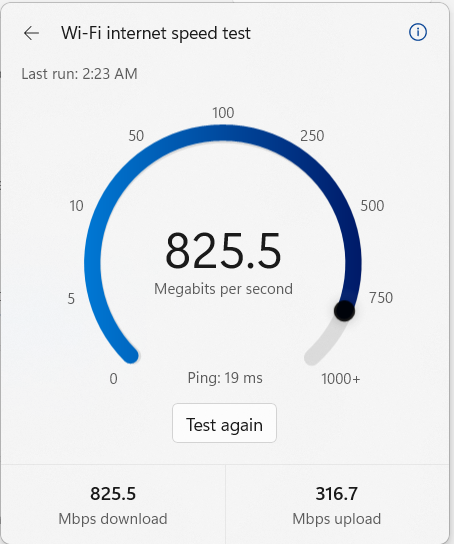
Checked out new Speed Test on my @Lenovo
X1 Fold (first ever foldable laptop, made in 2020) on Windows 11 26H2. Going strong!
@windowsinsider you rock guys! Special thanks to @JenMsft :)
AI agents are writing more code. How can developers ensure that code is correct?
Microsoft Research’s Proof-Driven Development (PDD) Kit explores a more rigorous approach: it translates a developer’s intent into a formal specification, then uses formal verification to prove that generated code meets it.
PDD Kit works with Verus for Rust and is integrated with @GitHubNext’s Chopin, bringing formal methods into an AI-assisted development workflow for teams.
See the work in action at @github Universe, Oct. 28–29, 2026.
1/
Why is reliable computer use still so hard, even with increasingly capable AI models?
One reason: knowing the steps of a task is not the same as understanding how to perform it.
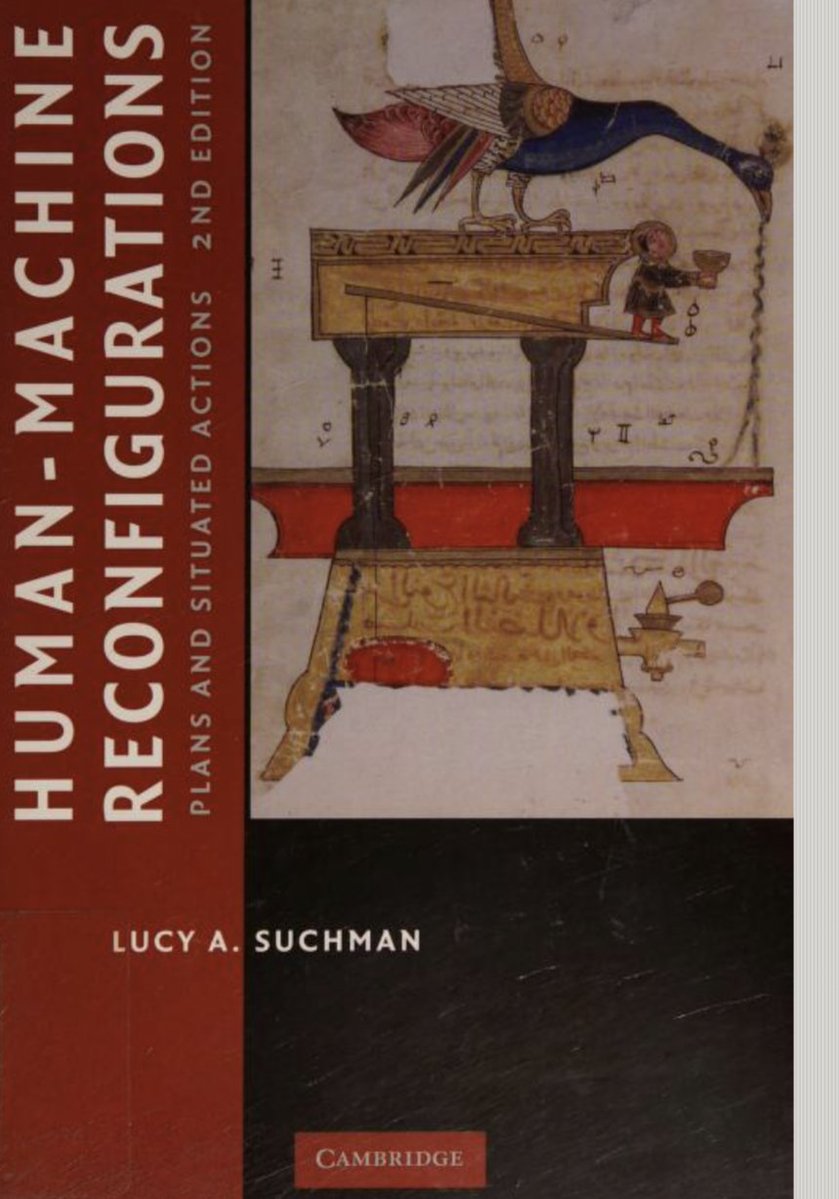
Lucy Suchman explored this problem decades ago in Plans and Situated Actions. Her work is surprisingly relevant to today's AI agents.
Congratulations, Stephanie! Back in 2023, you took our unconventional AI research seriously, challenged us to think harder about productization, and generously helped us along the way.
Your emphasis on independent conviction and intellectual curiosity really resonates. Excited to see what you build!
I'm excited to launch Relational Capital, a $50m solo GP fund.
I spent the last 8 years as a founder, building @usekojo into the largest US construction procurement platform.
Now I'm backing founders at the earliest stages with $1m-$5m checks.
An abundant future lies ahead 🇺🇸
6/
For anyone building AI agents for real-world enterprise software, I highly recommend Suchman's work.
Read it with one question in mind:
What must an agent understand about a situation before an instruction becomes usable?
Human–Machine Reconfigurations: Plans and Situated Actions
https://t.co/IS9kTo96Pq
5/
This is one of the problems we're exploring at @IlmenAI.
Instead of treating human interventions as exceptions to automation, what if we treated them as opportunities to learn how the business actually operates?
Not just what the human clicked, but what they noticed, why they intervened, and how they knew the problem was resolved.
Introducing Flint, @Recursive_SI’s first model: a fast local coding model built with our automated research system, the Eureka Machine.
• Best-in-class fast local coding
• Up to 2x faster than comparable models: 125+ tokens/sec on a MacBook Pro, 150+ on RTX Spark
• Built from scratch in under 4 months
Private, unmetered intelligence on your own machine. Open weights available now on @huggingface, run it locally on your favorite framework or try it for free on @opencode or @pidotdev.
Every once in a while, some unsuspecting country's domain economy goes vertical 😂
.𝚌𝚘 → Colombia
.𝚒𝚘 → I/O → Island Ocean
.𝚖𝚍 → Markdown → Moldova
.𝚛𝚜 → Rust → Serbia
.𝚊𝚒 → AI → Anguilla
.𝚜𝚒 → SI → Slovenia
Windows 11 Copilot+ PCs are set to gain new on-device AI capabilities in the coming months, as announced at Microsoft's Windows event a couple weeks back.
https://t.co/DacNXaswCp
Exclusive to Copilot+ PCs, Copilot will be able to understand context, take action, and lean on local AI models without always reaching out to the cloud, though it will still be able to do so when necessary.
I think this is Microsoft's natural evolution of Copilot+ PCs. It's been a while since Microsoft last built any experiences that lean on the NPU, and it sounds like Hybrid Intelligence inside Copilot will be the first set of AI features to do this (at least in part) in over a year.
We already know that Microsoft is slowly moving away from Copilot+ PC as a marketing brand, and that makes me wonder if "Hybrid intelligence" is the new "AI PC" identity that Microsoft wants to get in front of buyers looking for their next PC.