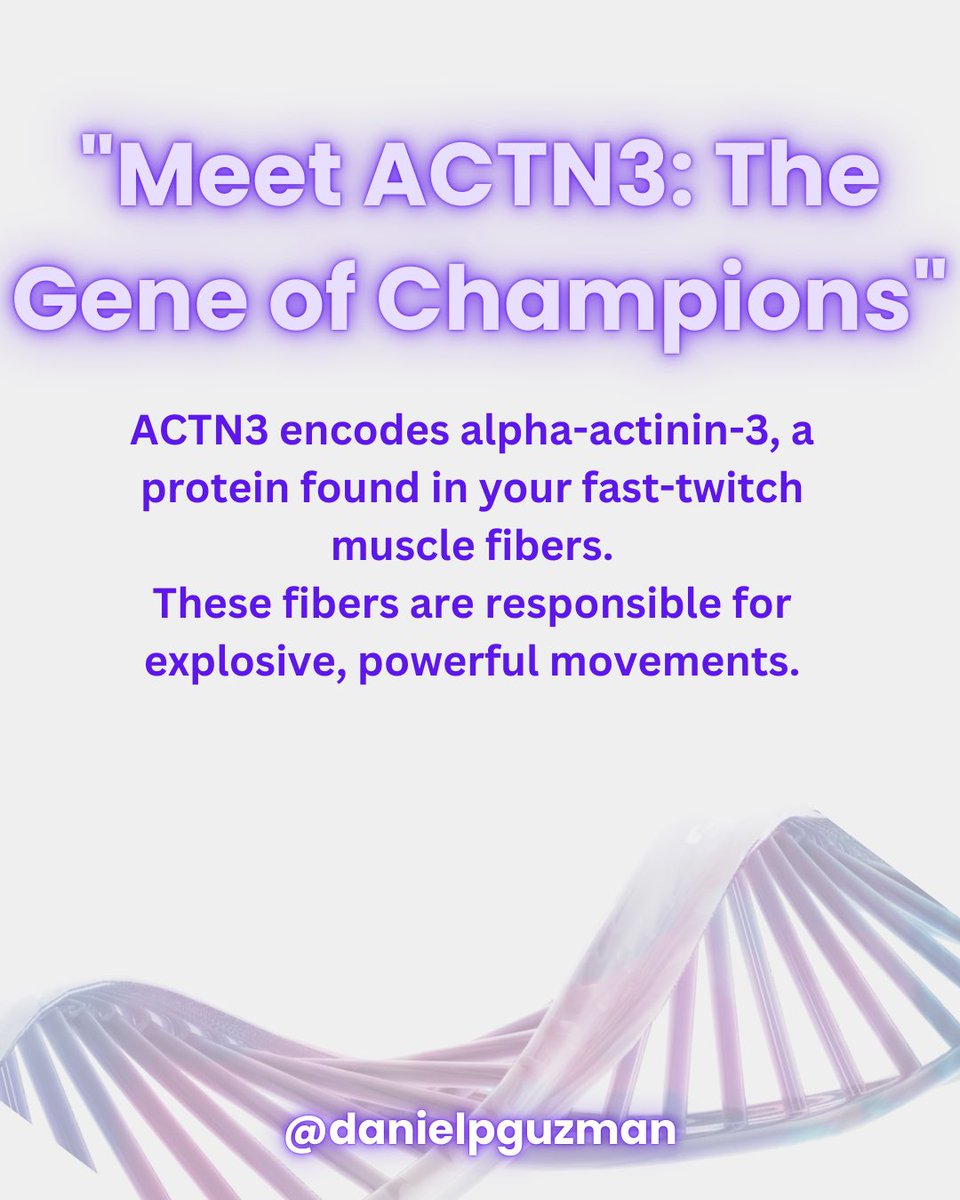
For years, I’ve been immersed in the world of human performance training, helping athletes optimize their strength, conditioning, and recovery. But what’s exciting to me now is how genetics is bringing impactful data to high performance.
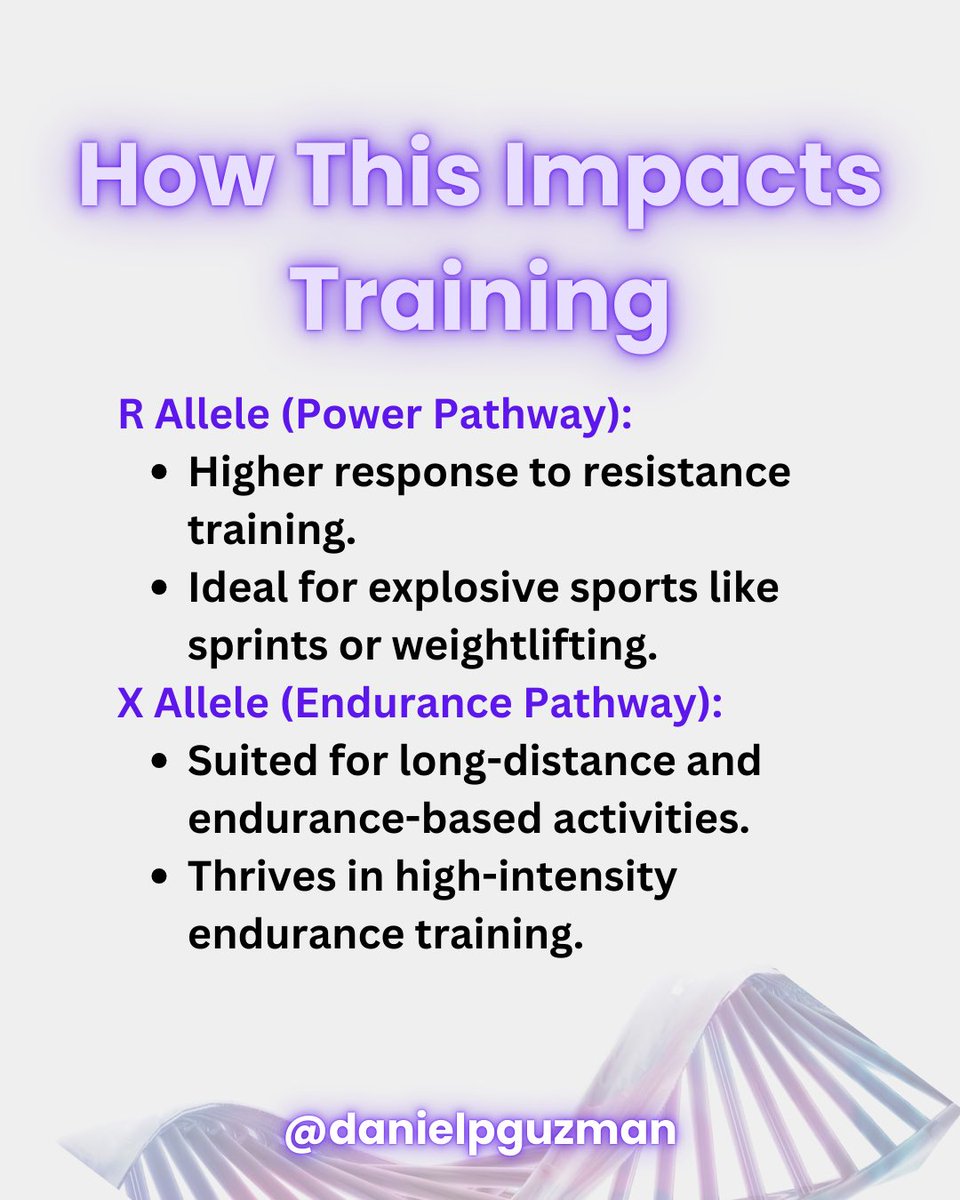
Take a gene like PPARGC1A—it’s linked to endurance. One version of it (the “Ser allele”) might help some people run faster over long distances. Scientists think it’s tied to how your body uses energy and fights fatigue. Fascinating, right?
But here’s the catch—it’s not just the gene. It’s how you train with that info.
So, how do we train more precisely based on a gene like this? By understanding how responsive the gene is to endurance training. Then we can program workouts that are more personalized—no more one-size-fits-all plans.
This kind of insight is changing how I approach training, both for myself and the athletes I work with.
Genetics-
I have been using genetic testing for 20 years, ranging from something straightforward to something like a moonshot.
A common question is intervention outside of a time machine for better parents, but the reality is what you should focus on, or what to leave alone.🧵
Genetics-
I have been using genetic testing for 20 years, ranging from something straightforward to something like a moonshot.
A common question is intervention outside of a time machine for better parents, but the reality is what you should focus on, or what to leave alone.🧵
I founded Hype Wellness Studio in Orange County, CA to bring affordable HBOT options for people.
Here’s some findings after serving all populations
- the combination of PRESSURE + OXYGEN is incredible for health outcomes
- a range of pressures are beneficial for health (1.3-1.6 ata has a ton of research)
- spending $100k for a personal unit is not feasible for most people, finding a trusted facility is key
- HBOT switches on over 8,101 genes in a single session 🧬
- this is essentially gene therapy and has shown powerful outcomes across multiple issues: TBI, post/surgery, neurodegenerative disease, etc.
HBOT ranks as one of the highest value health therapies I’ve done. Results from 60 sessions:
+ wiped out all systematic inflammation in my body. Below detectable levels. This is wild.
+ 300% increase in VEGF (formation of new blood vessels)
+ telomerase activity of a 12 year old, associated with biological age
+ 250% and 290% increase in Short-Chain Fatty Acids and n-Butyrate, respectively, important microbiome markers
+ complete elimination of metabolic imbalance in my gut
+ 28.6% reduction in a dementia marker
+ improved muscle oxygenation
+ dramatic improvements to whole body skin health
The outcomes match what we observed in the scientific literature and what we predicted in deciding to do this therapy.
What's notable is that after achieving elite level biomarkers over the past four years, my team and I have struggled to find new therapies that meaningfully improve my biomarkers. HBOT achieved that.
🧵
@YorkTheWest@bryan_johnson I have 3 chambers at our facility (mild units) and we sell our bundles as low as $60-80/session during promo and non-promo months. It seems that price point has attracted a lot more people than the traditional $200/session price.
@bryan_johnson We have mild chambers at my facility, but most importantly is your point about 21% oxygen being lower risk for mechanical issues. We have seen a lot of great outcomes at lower pressures as well. Pressure + Oxygen is an incredible combination🤝
@bryan_johnson@ichorid805 I have a HBOT facility and we charge $80/session for 40 sessions. This therapy needs to be accessible and lower entry financially for more people! We have seen amazing outcomes
Good stuff coach. I worked 10+ years in pro soccer…sometimes we had players back squat, other players did single leg squat, everyone got stronger.
I guess I tried to find the exercise that drive intent for my athletes! Opinions on social media are helpful to understand what others do, but I can only measure my athletes in front of me.
A lot of factors could effect that, but:
The equation I start with is Genetics + Training = Performance.
I start by understanding the Genetics piece to learn how responsive they are factor of explosive actions AND I learn what their highest impact areas are that limit effective recovery (inflammation, oxidative stress, muscle soreness).
From there I have a better understanding of that individual to look at their wearables, GPS for external load data (how many actions are they producing in training and how are we defining “good” recovery between actions).
By using a genes first approach, I have a much clearer picture to make accurate and precise decisions. Without genetics we are leaving a lot of our decisions to guessing.
To your question how this affects training: it brings credibility to our decisions. If we choose to add more sprints as an example, we can have a better idea of how responsive the athlete will be, same if we choose to take some away. The same goes for recovery and supplementation and travel strategies, etc.. I think the recovery side is where we can start to get the biggest impact in performance.
Happy to talk more offline to go deeper, I hope that helps.
We did Nordics and RDLs with all our players in pro soccer. As with any movement, soreness was not an issue with proper progressive overload and movement progression. HSI rates were also very low combined with an appropriate sprint loading strategy in training. Great performance training culture
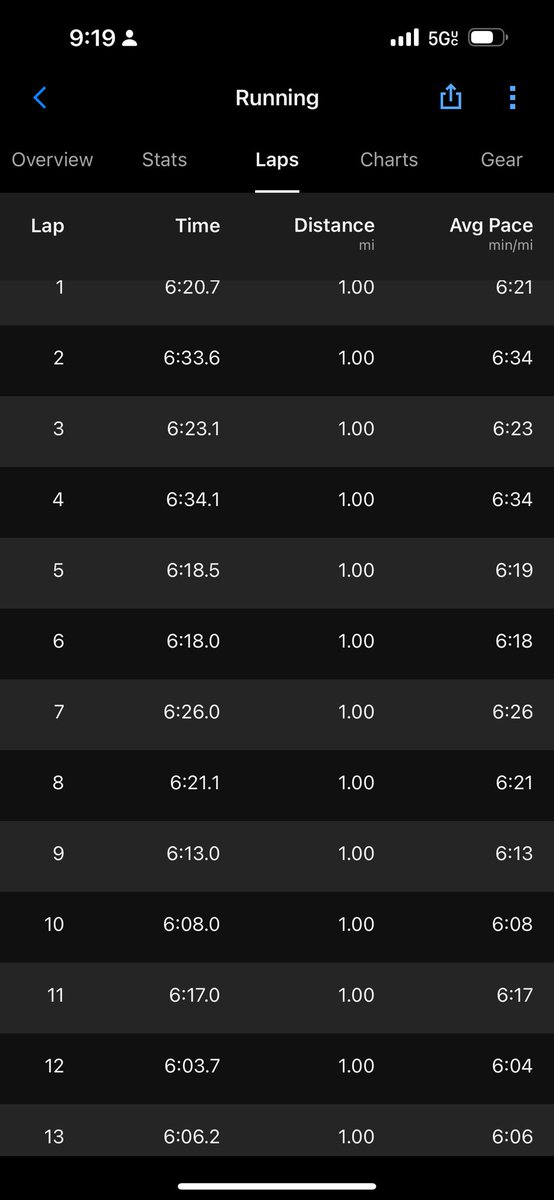
Any running coaches or experienced runners, how were my splits? I went completely off feel as my original goal was 6:57/mile pace.
61 days of focused training for 13.1 miles today in Huntington Beach.
With no previous endurance experience (outside of sports), this was completely different than anything I’ve ever done.
My goal was sub 1:30.
Final splits below for a 1:22:55
All Strength Coaches guess in their programming to some extent.
If you use force plates - you guess a little less
If you use timing gates - you guess a little less
If you use blood tests - you guess a little less
When you use genetics - you guess a LOT less
The goal should be better outcomes and using data to help get those positive outcomes.
@FitFounder The Sit and Raise test is probably the most difficult for a 40 year old man. I think mobility is neglected in early training journeys, I’ve been guilty of that for myself.
Now in my 30’s mobility is already huge when I’m playing with my young kids on the floor all day 😂
Research shows athletes using metrics like VO2 max & HRV perform better, recover faster & reduce injury risk (Journal of Strength and Conditioning Research). But these tools alone aren't enough. Adding genetic insights can unlock true potential.