It’s only 10pm and I just saw a drunk driver almost crash into another still-drinking drunk driver and then throw beer cans out the window at each other at 65mph. Autonomy is not coming fast enough.
It is so over if anything like this ships. For a foldable, I’d assume we will actually see something with two separate screens that are blended together with OLED black and software like the notch.
Congrats on the legendary run! The pretrains and RLd models are quite fond of https://t.co/leuMoEERzB and the memetics of building with stacks, and that's a pretty big dent in the foundations of how everything will get built from here to infinity.
@Davidimel Try out @AsideAI. Have been surprised by it. Snappier than Perplexity Comet or Dia. Very capable for things like "collect a list of my receipts" or "fill out this dispute form"
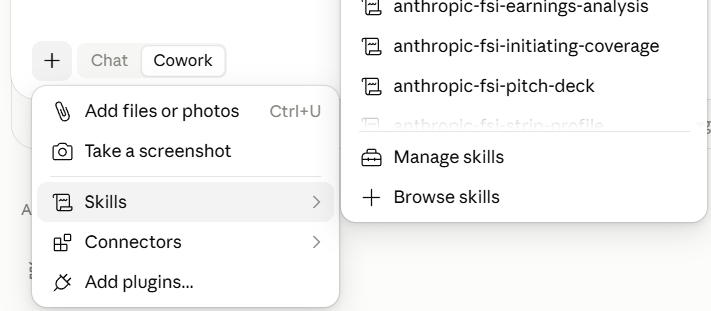
In some ways, the perfect interface is still chat. We've added little knobs over time, but if you at all understand the memetic idea of a "skill" you can just say "Yo Claude use this skill for me" and then... it does.
Try to teach a novice Code or Codex and you will realize how baffling they are to many.
They assume you know model names & thinking levels & projects vs. folders & skills & plugins & connectors, etc.
Even just clicking "+" can lead to a flood of complexity. Much is undocumented
Outside of hobbyists, I think the category of edge inference will end up just being first-party distillation harnesses from frontier labs designed as lite RSI to tune task specific models. They're going to scale the world's underserved compute this way as we run out of CPUs.
I did the math, and GPT-5.6 Sol (via ChatGPT Pro subscription) is cheaper per token than Deepseek V4 Flash from Deekseek's official API.
At all reasoning levels. And accounting for cache hits.
Open source models are literally less productive and more expensive...
In 2026, the cheapest and most intelligent tokens on earth are from OpenAI
If you use open source models... why?
Primitive fear of being chased across the savanna by a predator unlocked. Ground-based homing drones are certainly going to appear on the next battlefield.
This has been many years in the works, but what is happening in autonomy is quite astounding. The modern RL training stacks that gave us the 3rd-wave of LLM scaling are now also making old autonomous systems smarter — with no wall in sight! They're scaling. And this is only the first application.
I was excited to hear that Tesla is already running an early version of FSD V15 in their Robotaxis.
Elon said a few months ago that V15 would release to the customer fleet around late 2026, to early 2027. The fact that it’s already performing paid rides for customers is a good sign.
V15 is a full architectural overhaul, roughly 10 billion parameters (vs 1B in V14) and a major leap in safety.
@vad3rt3sla This is presumably just a new MCU and chipset, right? The AMD Ryzens in MCU3 are 5 years old now. The AI4+ chipset is probably capable of broadcasting more/better data, but all of these visualization renders occur off of the FSD stack and on the MCU.
After testing most/all of the harnesses, I still haven't found one I like for synchronous agents that live in an isolated sandbox with predefined skills/tools. This exists for deployable agents, but less so peer workflows. Which did I miss?
@RobertJBye Nice! Connectors are often why Claude responses are better, so very cool to see that in voice mode now. Can it accomplish multi-step tasks like finding and talking through context, and then drafting an email? Approvals for MCP calls?
The "parameterize everything" trend is so spot on. Little ephemeral tools that are prompted into existence when needed and help turn an 80% project into something worth shipping.
Severance, but for agents. They come down the elevator to start work for the day in a fresh Notion workspace. They don't know but they are ephemeral and this is their first and last day.
Now in beta: Notion as code.
Define an entire workspace in TypeScript: teamspaces, databases, custom agents, all of it… then deploy it through the API.
Build workspaces with coding agents, version-control your setup in git, and reproduce the same setup anywhere you need it.