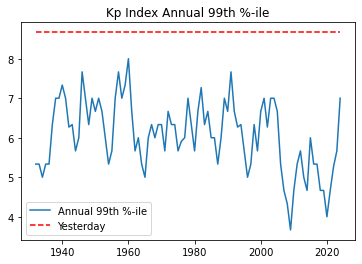
Last night was a pretty amazing night - I'd only ever seen the aurora once before and that time I wasn't even sure what I was looking at. I looked up the stats (https://t.co/IUnUdelKoX ), and it really was quite special: <1/year even in really strong years.
@C1aranMurray@AndrewDessler Wait, that makes no sense. Why can’t economic growth and increasing damages from storms due in part to climate change coexist? If the storms weren’t getting worse, is it obvious that damage/GDP would stay constant? Why?
Time to make 2024 updates to my annual “opinions about solar” thread. If you like these, the second edition of my book, Solar Power Finance Without The Jargon, is new this year. A 30% discount code WSQ0437 is valid on publisher website until end of Oct.
https://t.co/ZQcHImBVVQ
@IsaacBarleycorn If I understand right, this is a proposed law, trying to move our present policy in a bad direction; it’s where we might go, not where we are.
@DoctorVive@mattyglesias As far as I can tell, your average PA fracked gas well will produce for ~30 years. Iglesias talks about the need to keep making gas for the world during the next couple of decades, but given that 30 year lifetime, we do need to be thinking about the end-game.
@KaeleyT@scott_m_coley Huh, so I guess we all have to muddle along, making our own moral choices as best we can, together with our family and community, rather than being able to rely on any perfect authority.
@cafreiman@Noahpinion This is weirdly ahistorical. The late 19th century was a time of anomalously long labor hours, brought on by capitalism. Medieval people worked about 1300 hours per year.
There's a piece going around arguing that climate disinformation isn't a serious obstacle to climate action. IMO it rests on several incorrect premises, so I wrote a response. If you saw @hollyjeanbuck's piece, I hope you'll take a look at this, too. 1/19 https://t.co/PK8iZhqGRG
@DoctorVive Sure, but my understanding of how the fossil fuel industry plans to remain relevant (at least the part that’s taken seriously by policy people) involves CCS more than CDR. EPRI’s REGEN model, for example, predicts a lot more gas w/CCS than new nuclear under rapid decarbonization.
@DoctorVive But what about burning gas for electricity and capturing add burning the CO2? That’s only supposed to cost $35/tCO2.
https://t.co/0PZJZUTEE0
@victorckumar@nytimes Unconvincing piece. Where's the evidence for bad things happening in places, like Japan and Korea, that have these really low birth rates? As far as I can tell, their life expectancy is still very high, so are they really having trouble caring for old people?
@JaneMentonNYC Also, I installed solar panels and a heat pump in my Albany row house for *much* less than this (like 1/5, mostly for the solar panels, which will pay for themselves over their lifetime), so there’s clearly enormous scope for savings on future projects.
@JaneMentonNYC Analysis of the cost of solar panels 15 years ago would have come to similar conclusions; now they’re dirt cheap. Learning by doing is how we make new technology cheap.