Journalist. Author. Teacher. New book Why We Think What We Think: The Rise and Fall of Western Thought out Feb 20! Also: Dancing to the Drum Machine. Same guy.
My pal @anniezaleski has a wonderful take on @PaulMcCartney’s latest (and more) here. A great read!
Paul McCartney's vibrant modern moment , by @anniezaleski https://t.co/bpWAFR0FU4
Always love picking up a new favorite record from a fellow writer’s year-end list. Thanks @Schneider_CM for turning me on to @momma_band. Welcome to My Blue Sky is everything you love about @lushbandtweets and @MBVofficial. I highly recommend it as well! https://t.co/XqLBI4fU5j
My friend @anniezaleski has a great new @Substack column in which she talks about the great #teardropexplodes album #Kilimanjaro. I like the 2nd album, Wilder, even better—but if you don’t know the genius of @JulianHCope, this is a good place to start! https://t.co/IPo1jvSGKu
@davidclowery As a contributor to Launch for a few years at the end of the Nineties and early Oughties, this is heartwarming. I never wrote about Cracker, though!
My pal Joe Reciniello of @withjoeandjoe has a great new book of Advent reflections out now. It's called #Catholic Men Will Change America, & you can get it here: https://t.co/XW1exmasOs!
From @HolyWaterBooks, & with endorsements from the likes of Joseph Pearce and @BearWoznick!
Here is today’s timely must-read by @markgjudge, about the soon-to-be-40 classic “Back to School.”
I joke to my students that I learned all I needed to know about education from this film, but it’s not really a joke. Mark shows why here.
https://t.co/bfCHryjTqT
A great piece from @markgjudge that makes you feel bad for people who have grown up with #Colbert.
Looking back on Johnny Carson’s America https://t.co/ISpLIme5XL via @dcexaminer
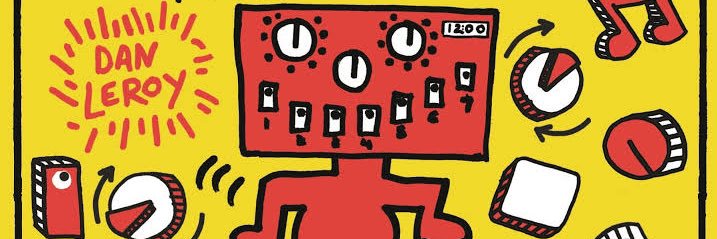
The latest installment of Dan LeRoy's Bonus Beats is a homage to the way the #PowerStation changed music forever in the #80s--one drum hit at a time!
https://t.co/7aXfXrlS9M
Alasdair MacIntyre has died. His classic After Virtue had a tremendous effect on me when I was an undergrad and still in my atheist days, greatly reinforcing the attraction to Aristotelian ethics I had even then. (The spine of the light mauve cover of my copy, like that of pretty much any copy printed in the 80s, has long since turned green.) It was, of course, part of a larger body of work which had a similarly great impact on so many people, in philosophy, theology, and beyond. RIP.
Shameless plug -- but if you want a clear analysis of what Pope Leo XIII wrote on what makes for a strong and just society, check it out.
I don't just do Rerum novarum. Leo was ALWAYS writing about social issues. I look closely at 30+ of his letters:
https://t.co/t8AvGXhJk5
Delighted to say that my @333books volume on the @beastieboys album #paulsboutique is out now as an #audiobook through @Spotify for Authors, narrated by Stacy Carolan!
Hard to believe that this little book is 20 years old next year! If you check it out, LMK what you think!
If the salvation of souls is the supreme law (as the Catholic Church teaches), then perhaps Immortal Souls: A Treatise on Human Nature is the most important thing I’ve written. From the back cover copy:
Immortal Souls provides as ambitious and complete a defense of Aristotelian-Thomistic philosophical anthropology as is currently in print. Among the many topics covered are the reality and unity of the self, the immateriality of the intellect, the freedom of the will, the immortality of the soul, the critique of artificial intelligence, and the refutation of both Cartesian and materialist conceptions of human nature. Along the way, the main rival positions in contemporary philosophy and science are thoroughly engaged with and rebutted.
“Edward Feser's book is a Summa of the nature of the human person: it is, therefore, both a rather long – but brilliant – monograph, and a valuable work for consultation. Each of the human faculties discussed is treated comprehensively, with a broad range of theories considered for and against, and, although Feser's conclusions are firmly Thomistic, one can derive great benefit from his discussions even if one is not a convinced hylomorphist. Every philosopher of mind would benefit from having this book within easy reach.” Howard Robinson, Professor Emeritus of Philosophy, Central European University
“Feser defends the Aristotelian and Thomistic system, effectively bringing it into dialogue with recent debates and drawing on some of the best of both analytic (Kripke, Searle, BonJour, Fodor) and phenomenological (Heidegger, Merleau-Ponty, Dreyfus) philosophy. He deftly rebuts objections to Thomism, both ancient and modern. Anyone working today on personal identity, the unity of the self, the semantics of cognition, free will, or qualia will need to engage with the analysis and arguments presented here.” Robert C. Koons, Professor of Philosophy, University of Texas at Austin
Available at Amazon: https://t.co/aih0BQHqMj
24 February 2024 @foxxmetamedia
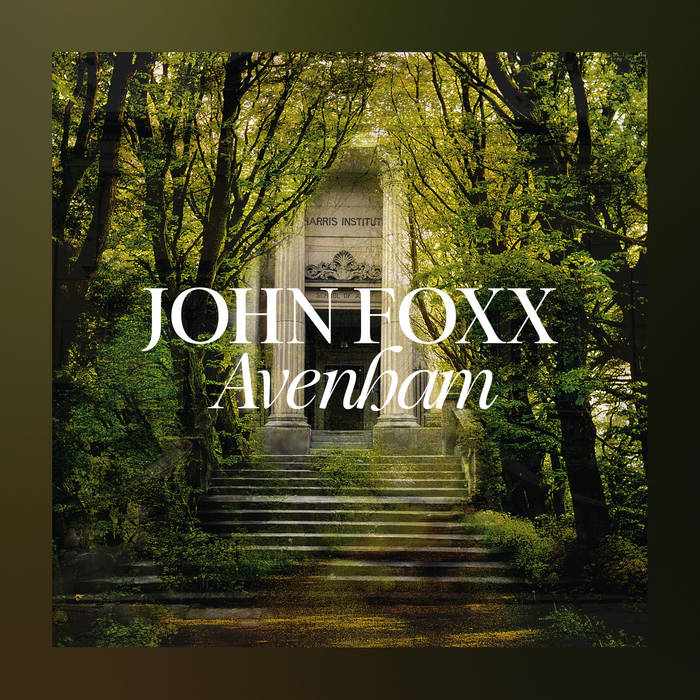
JOHN FOXX released the beautiful 'Avenham' on Metamatic Records
It’s a real place, that’s also as mythical as the gates of Eden. So the music is likewise nebulous and impressionistic
@davidclowery It’s also fun to remember that Brian Wilson tried to get the late Matt Dike—Matt Dike of Paul’s Boutique fame—to produce his own, Eugene Landy-written hip hop song, “Smart Girls.” I was lucky enough to have Matt tell me the story here: https://t.co/1oOO5T26Wf
A great look @ the surprisingly conservative moments of @nbcsnl by one of my fave culture writers, @Schneider_CM.
For those ask, “How has #SNL survived for so long when it’s so one-sided?” maybe it hasn’t been…at least not as much as you might think.
https://t.co/5bZfc4W3Z9
Excited to see that @JoeBiden signed with @caafoundation. Here’s what should happen now: he takes over the #StanLee cameo role in all future @MarveStudios films. There are dozens of bits he could do. He wears a #MAGA hat; he says “C’mon man!”; he sniffs someone’s hair; etc., etc.
@FeserEdward It’s probably apocryphal, but I like Hegel’s alleged final quote: “There was only one man who ever understood me…and even he didn’t understand me.”
I’ve found for decades that if you teach classic works in a way that simply presents them on their own terms, making clear what they are trying to accomplish and why so many have been drawn to them, young people are often fascinated by them. I’m sure this can be as true in literature as it is in philosophy. There is no need for some extra step of trying to make them “relevant,” and indeed that is counterproductive. For it typically involves either badmouthing older works as either bigoted or scientifically outdated (in which case, what’s the point of reading them?), or focusing on bits of them that seem to prefigure what people generally believe today anyway (in which case, again, what’s the point of reading them?). But the classics are most fascinating to young people when they reveal ways of looking at things which are both different from what people now take for granted, but also nevertheless intelligible and even reasonable. “Relevance” is boring because there is no challenge in it. Being challenged by older works is interesting – and indeed, for that very reason makes their true relevance clear.