In the shower 3 months ago, I drew a diagram on my notepad. It made me retire the system that made my students $1,408,413.15:
The Money Maker Map is a 33-step system for building and operating an agency. What I saw on that page was something it can’t give agency owners: simplicity. Even though the 33 steps provide clarity, it’s a lot.
Letting go is hard, because the Map still works and I still love it. One of my students said the Map showed him exactly which stage his business was in and what to focus on, and it cut through the constant pull between working on positioning and getting work in the door. That’s the kind of result I’m giving up.
So I’m teaching the entire Map one last time in a half-day workshop, because the new system replaces it in January. I’m opening it wider than I ever have because I hate having to turn people away.
This one’s for you if:
↳ You freelance, and a program like mine has never been open to you
↳ You have a full-time job and you’re still planning your way into an agency
↳ You run an agency under $100K and you want a clear order to do things in
↳ You’ve wanted to learn from me, but three months or the money was too much
Reply or DM me “MAP” for first access. I’ll share the details tomorrow.
One weird thing about the internet is how quickly some strangers seem to hate you.
Another weird thing about the internet is how some strangers see you more clearly and treat you better than some of your friends and family do.
The real test of your agency’s positioning isn’t the sentence you put at the top of your website.
It’s how people introduce you.
Positioning happens in the mind of the prospect. It‘s not what you say. It’s what people think about you.
Check the last introduction email you got. What do they say after, “Meet Dan. He’s…”
Whatever comes next is your position. At least to them.
If you don’t like that introduction, convince them to change it however you can.
If you like that introduction, get more people to think it too.
Pouring leads into a broken back end doesn’t make you rich. It just breaks your agency faster.
Before you try to get more attention, you have to diagnose the actual constraint.
I’m breaking down the full roadmap live on November 19th.
Details here: https://t.co/KJAJXUXhfk
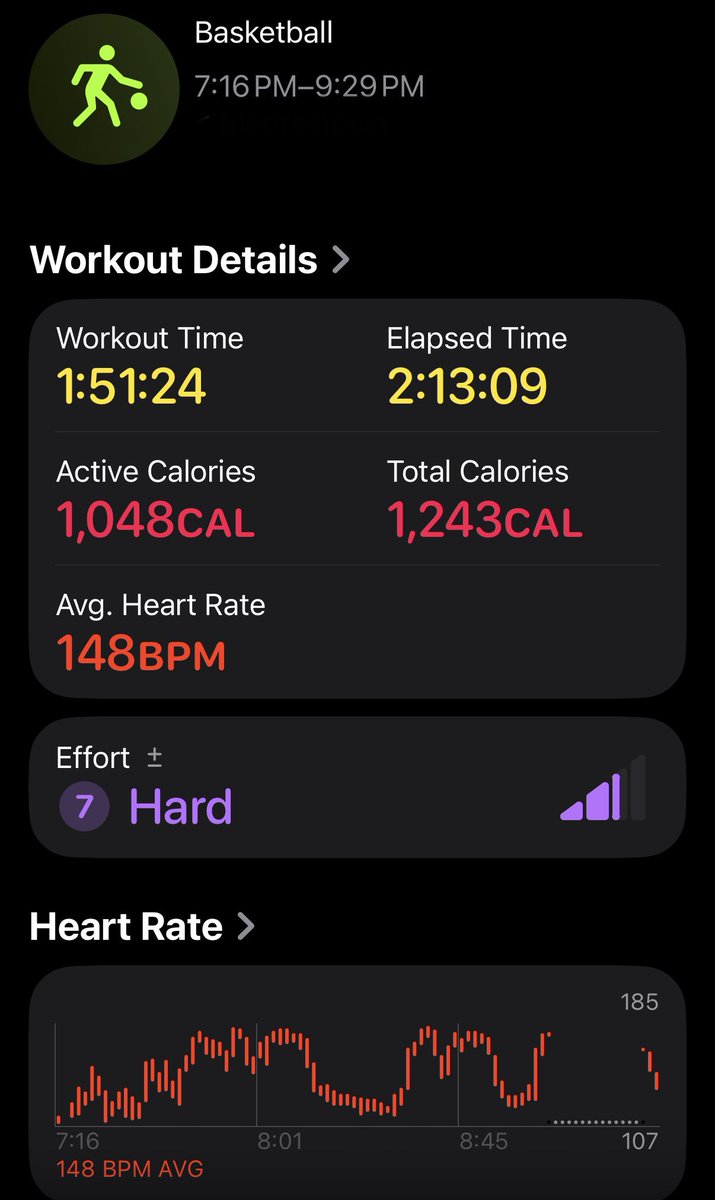
Played great tonight. Started strong but then dipped a bit. My go-to middy wasn't falling but I remembered to attack the paint (which I always forget), which then got the middy going again. Finished the night 4-2.
@Rubio_tv The wedding guy line is right. When cash is thin, being the wedding guy for a while is fine. It keeps the lights on.
The trap is still being the wedding guy years after the lights have been on.
In year 6 of running my agency, we took a $155,000 website redesign project. The client was wonderful and the project went great. It was the worst business decision of that year.
Our cashflow was lighter than I would have liked, but we weren’t in trouble. We took the project because the cash was good and the client was nice. But we didn’t need more cash or more nice clients then. We needed more examples of the exact kind of design system work we wanted to be known for, not more website redesigns.
Every week we spent on that redesign was a week we weren’t spending on design system work. The price of the project was $155,000. The cost of the project was the reputation we punted to 6 months down the road.
It’s like taking a job waiting tables when you really want to be a professional musician. Yep, you need to eat and pay rent. And every night you’re running entrees is a night you're not playing a gig. Both things are true.
There is a time to turn away good cash from a nice client.
At some point, you’ve collected enough paychecks to cover rent and food for a while. You eventually have to decide to go play some gigs instead of doing more dinner shifts.
I know why this happens for so many agency owners. If you’ve run out of cash once, it’s hard to forget that pain. Even when the account is healthy, you keep saying yes to anything that pays, because the fear of running dry doesn’t go away even when the money is there. So you take projects for cash long after cash stopped being the priority.
When you’re building a reputation, the right project is the one that strengthens it. Every other project—even good projects from nice clients—pulls you somewhere else.
My Money Maker Map’s 33 steps sit inside 6 phases. The first two—building your cash reserve and building your positioning—are the two this decision comes down to. That’s what the Map is for: it shows where your agency is, so you know whether the answer to “should I take this project?” is “yes” or ”no.”
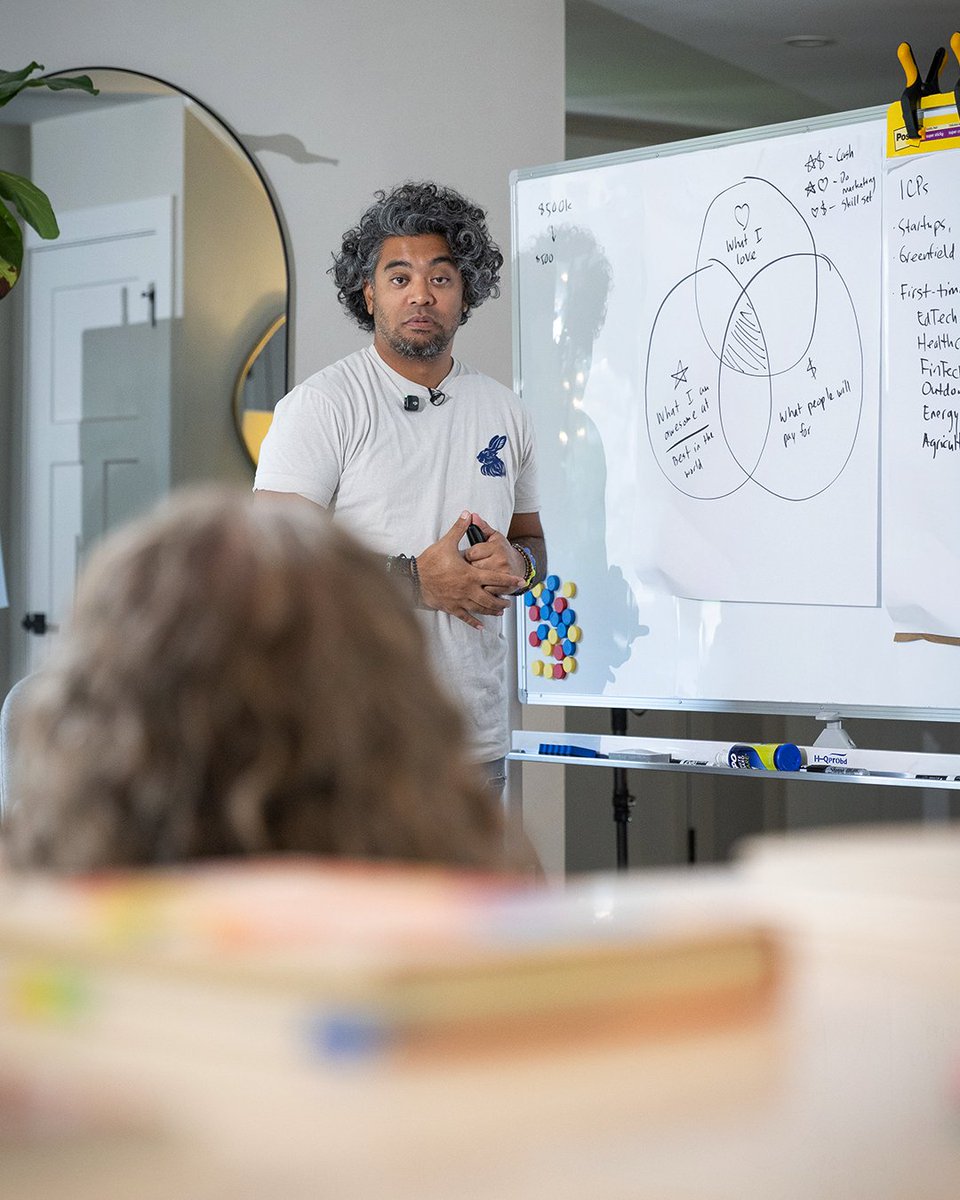
On November 19, I’m teaching the Map live for the last time, all 33 steps in a half-day workshop: offers, leads, sales, fulfillment, margins, hiring, and delegation.
It’s for you if:
↳ You’re deciding on a project this week and can’t tell whether saying yes is smart or a detour
↳ You have a full-time job and want to start an agency but don’t know the steps
↳ You’re a freelancer who wants to choose clients on purpose
↳ You run an agency and want to know which phase you’re in
General Admission is $99 and includes access to the live workshop.
VIP is $299, adds a private Q&A with me (limited to 20 spots, and 4 are already taken), with recordings of each.
Reserve your spot here: https://t.co/VWoRcYawhM
My wife and I had a son 5 months ago.
We were both uncertain if we wanted him.
Why? We really enjoyed our life and the fear of a new variable disrupting that was very scary.
And the first 2 months into it, we were still uncertain. It felt more like a nuisance than a benefit.
We also lived a life of extremes. Each with 120+ nights per year in a hotel, hiking every weekend, racing cars and a ton of solo time. The relative change was real.
There's a mourning of your old life.
But then the postpartum hormonal extravaganza ends, you settle into the change and adapt to the new.
You realize how incredibly special a child is.
It's difficult to explain until you have one, but I liken it to the gut punch feeling and chemistry you experience with a first love. There's a draw to that person that is more important to you than anything else. And the weirdest part is no one else feels this same yearning.
If you don't have a kid, this might also help you understand how looking at your kid is way different than looking at someone else's... because I really don't care for anyone else's.
But mine? When I'm away for more than 4 hours I catch myself smiling at a photo of him and anxiously anticipating when I get to see him again
You solidify the family unit. And imagine a future together that's much greater than "happy".
Then there's a wonderful realization you can still thread in the parts of your old life that mattered.
Prioritization becomes clear.
My wife and I learned how to work even better together for each other, ourselves and the family.
Could we have been fine without kids? Probably. We're pretty adaptable as humans.
But does the good outweigh the bad and is that worth taking a chance on the regret index? Absolutely. 100x.
It's difficult to explain, but I suppose anything encoded into us over millions of years is.
I’ve seen lots of comments both in favor of having kids and not, but one thing I haven’t seen much discussion around:
Parents talking about enjoying their kids.
Personally, I’m around a lot of parents because of my kids’ school and sports activities. And the conversation is overwhelmingly the parents whining about their kids, complaining about everything from their kids’ attitude to friends and everything in between.
We need more conversation from parents who ENJOY their kids.
I enjoy my kids. I have a blast with them. I love their jokes, their friends, their interests. I also love who I'm becoming as a result of having them.
Do you enjoy having kids?
Tell us.
Seth Rogen says he and his wife are now more grateful than ever that they decided not to have children he’s not afraid to explain why.
He admits they used to question whether they’d made the right decision, but now their conversations have shifted to, “Honestly, thank God we don’t have children.”
His reasoning? They’re in the prime of their lives, understand themselves better than ever, and have the freedom to pursue their careers, enjoy life, and build the kind of relationship they’ve always wanted.
But Seth took it a step further, saying he sees people with children struggling to find the same time for work and personal enjoyment that he and his wife have.
“I seem to get a lot more active enjoyment out of not having kids than anyone I know seems to get out of having kids.”
That statement will probably divide people. Some see raising children as life’s greatest joy, while others believe a fulfilling life doesn’t have to include parenthood.
Do you think Seth has a point, or is there a kind of happiness you can only understand after having children?
@danmall I love when my kids come home and tell me about something they just learned. Two recent favorites: Elvis Presley and pointillism.
They just have this total joy at discovering something new
Also, I don’t care if other people don’t have kids. Even better if they feel sure