Waaah!
Jeff Koinange got triggered and lost it completely after Cleophas Malala called him the Atwoli of the media, and he fries his hair!!
Jeff Koinange snapped back by calling him a party hopper, a prøstitute, Little Ruto, and saying Methu has taken Cleo Malala’s position and thunder at DCP…. 🤣🤣🤣 This is pure comedy 🤣🤣
A stolen watch doesn't become yours just because you pass it down to your children. So why apply a different rule to stolen labour, wealth and land?
Reparations are about inherited benefit and inherited loss. Time doesn't erase injustice.
Economists spent 200 years assuming humans make perfect decisions, until a political scientist proved we just grab the first option that's good enough, won the Nobel Prize in economics for it, and then taught a machine to think the exact same way.
I read this and immediately thought about every decision I made today. Not one of them was perfect. All of them were good enough.
His name was Herbert Simon. The book is called Administrative Behavior.
It started with a college paper about playgrounds.
In 1935, Simon was a student in Milwaukee studying how the city spent its parks budget. He expected the managers to weigh every option and pick the one that gave the city the most value.
That's not what he saw.
The people who maintained the playgrounds wanted the money for repairs. The people who ran activities wanted it for staff. Nobody was comparing every possible choice. Each side just pushed for what looked reasonable from where they stood, and they called it a day.
That small observation broke something huge.
Economics was built on a fantasy person. Economists called him "economic man." He knows every option. He has unlimited time. He calculates the perfect choice every single time.
Simon looked around and asked one question. Who actually lives like that?
Nobody does.
Your brain has a small amount of attention and a short amount of time. So instead of searching for the best choice, you search until you find one that clears the bar, and then you stop.
You do it all day without noticing.
- You park in the first open spot, not the closest one
- You pick a restaurant after reading three reviews, not three hundred
- You hire the first candidate who checks the boxes
- You take the job offer before seeing every other job on Earth
Simon gave this a name. Satisficing. Satisfy plus suffice.
And he gave the bigger idea a name too. Bounded rationality. We are rational, just inside walls we can't climb over.
He wrote about the real enemy decades before anyone had a smartphone.
"A wealth of information creates a poverty of attention."
In 1978, the man who wasn't an economist won the Nobel Prize in economics for telling economists their perfect human didn't exist.
But that wasn't even his most important work.
Back in 1955, Simon and his colleague Allen Newell asked a wild question. If humans solve hard problems with shortcuts instead of checking every possibility, could a machine do the same?
They built a program called the Logic Theorist. They gave it a famous math book full of proofs that took two of the greatest minds in philosophy years to write.
The program didn't try every path. That would take forever. It used rules of thumb to chase the paths that looked promising and skip the rest. The same way you skip the parking spots at the far end of the lot.
It proved 38 of the first 52 theorems. One of its proofs was cleaner than the original.
In January 1956, Simon walked into his class and told his students:
"Over Christmas, Allen Newell and I invented a thinking machine."
It became one of the very first AI programs ever written.
Think about the loop he closed. He studied why humans can't be perfect. Then he built a machine that worked because it stopped trying to be perfect too.
We keep asking AI to be flawless.
The man who helped invent it already knew the secret.
Good enough is how every mind gets anything done.
Before you marry any woman, kindly look out for these:
1. Shame. A shameless woman, no matter how beautiful she looks, is not someone you should do life with.
2. Cooking. Marriage has nothing to do with modernization. An adult who does not know how to cook is a disgrace. Now imagine that adult is a woman whose primary duty is to cook. She is a terrible woman.
3. Abortion history. Do not bother asking her because she will not tell you. Check so you don't go childless in marriage. You can get that information from her friends.
4. Her ideology on marriage. If you believe in male leadership, avoid feminists. Many women do not identify as feminists because they know it is terrible, but deep down they are feminists. Listen to them speak.
5. Transparency. When she makes money or you give her money for something, watch how she moves. Does she carry you along or spend however she pleases? Be mindful.
6. Sexual compatibility. Do not listen to what people say about religious doctrine. If she is not a virgin and you are not either, it is best you check.
7. Family pattern. Take your time to go deep into her family without her knowledge. Ask deep questions. Use third parties to extract your information.
8. Respect. No matter how good she is in bed, never marry her if she does not respect you. The woman you marry must be someone who respects you above even her father and mother.
9. Religious compatibility. Do not joke with it. Make sure you marry a woman whose religious views align with yours. You might think it does not matter until the divide starts.
10. Control (You might want to call it lead). Make sure the woman you marry is someone you are able to control. If you say "jump", she should jump, or if she questions you, it should be "Honey, how high should I jump?"
Listen 👂
Above all, love God.
SOME PSYCHOLOGICAL, SOCIAL AND BEHAVIOURAL CONCEPTS YOU SHOULD KNOW
1. STOCKHOLM SYNDROME: A term used to describe situations where hostages or abuse victims develop positive feelings towards their captors or abusers. Example: A hostage begins defending their captor and opposing people trying to rescue them.
2. ZERO-SUM GAME: A situation where one person's gain is exactly equal to another person's loss. Example: Two friends apply for the same job, but only one person will be employed. In this situation, one person's gain is indeed the other's loss.
3. COGNITIVE DISSONANCE: The mental discomfort that occurs when your actions contradict your beliefs, often leading you to justify your behaviour rather than admit you are wrong. Example: Someone who believes lying is wrong gets caught lying and starts explaining why their own lie was justified.
4. THE JUST-WORLD FALLACY: The belief that people generally get what they deserve. Example: Someone loses their job and struggles to feed their family, and instead of acknowledging that bad things can happen to anyone, people conclude that they must have been lazy or irresponsible. They assume that because someone is suffering, they must have done something to deserve it.
5. LEARNED HELPLESSNESS: When repeated experiences of having no control over a situation lead someone to stop trying to change it, even when opportunities become available. Example: An employee who has repeatedly been ignored when reporting workplace problems eventually stops speaking up, even when a new manager is willing to listen.
6. THE PRISONER'S DILEMMA: A game theory scenario in which two people acting in their individual interests may end up worse off than if they had cooperated. Example: Two competing businesses keep slashing their prices to outdo each other until neither makes a reasonable profit, even though both would have benefited from avoiding the price war.
7. THE BYSTANDER EFFECT: The tendency for people to be less likely to intervene in an emergency when others are present. Example: A passenger collapses in a crowded bus, but everyone waits for someone else to help, assuming another person will take responsibility.
8. THE HEDONIC TREADMILL: The tendency to get used to the things that once made us happy, causing their excitement to fade as they become part of our everyday lives. Example: Someone spends years working towards owning their dream car. When they finally buy it, they are overjoyed, but a few months later, the excitement wears off, and they start wanting a better car. They forget that what they now take for granted was once what they prayed and worked so hard to achieve.
9. PLURALISTIC IGNORANCE: When people privately disagree with something but assume everyone else supports it, so they publicly conform. Example: Everyone in a meeting thinks a proposal is terrible, but nobody objects because each person assumes the others support it.
10 THE MATTHEW EFFECT: The tendency for people who already have advantages to accumulate even more advantages. Example: Two equally talented graduates apply for jobs, but one gets more opportunities because they attended a prestigious university and already have influential connections.
11. THE EINSTELLUNG EFFECT: When a familiar way of solving a problem prevents us from recognising a better solution. Example: A business owner keeps using an outdated system because it is what they have always used, even though a simpler and cheaper alternative is available.
12. THE HALO EFFECT: When one positive quality makes us assume someone possesses other positive qualities. Example:People assume an attractive, well-dressed person is intelligent and trustworthy without having any evidence of either.
“In whatever you get, get wisdom.”
Wisdom is not just about making money or succeeding in your career. It also helps you make some of the biggest decisions in life, including choosing a life partner.
Choosing the wrong person can make life incredibly difficult. You can have money, a great career, and everything else people consider success, but if you come home to the wrong person every day, peace can become very expensive.
As one of my friends once said, “Even those of us who married good women sometimes wonder if we actually made the right choice. Imagine marrying the wrong one.”
Marriage is too important to enter simply because you are afraid of being alone. It is better to be single than to rush into a marriage that leaves you miserable.
Wisdom matters most when the decision will affect the rest of your life.
There is a big cultural divide between East & West sides of Nairobi, that cannot be sufficiently explained by material inequality. In Eastlands, not only are folks louder, the cultural is more rabid, more predatorial, & it starts from Afya Centre. I find Majengo/Soweto more intimidating than Kibera.
A man needs resources to become a member of his own family. His own family. The one he built from scratch.
Otherwise, without resources, he becomes a pariah, a vagabond, homeless, and a stranger in the eyes of his own family.
@XivTroy So true,
Actually a truly intelligent person is one that can talk to anyone educated or uneducated without making them feel stupid. They are able to come down to anyone’s intellectual level and still hold a solid conversation.
In 1974, both governments in Cairo and Khartoum sat in a room and signed a paper. “The Sudd is wasting water. Let us dig a 360km canal from Jonglei to the Sobat. We will split the extra water 50/50.
The people of Twi East, Duk and Bor. The people whose cows drink from the toic. Whose fish breed in the Sudd. Whose history is written on water were never considered.
So, in 1974, mostly students of defunct Bor District in Juba protested over the project of canal were many of them were shot and killed by Khartoum government.
In 1978, the French company CCI shipped this behemoth from Pakistan. Guided by a laser beam, it dug 130 feet wide, 20 feet deep. It consumed 10,400 gallons of fuel a day.
However, history had already prepared a man, when a man decides to fight, he fights for something bigger than his village..
Dr. John Garang de Mabior was in Iowa State University at that time doing his PhD with thesis “Identifying, Analyzing and Evaluating Development options for The Jonglei area”. The very canal that wanted to kill his people.
the government's plan for the locals was nothing but "misery management." A few boreholes and schools to make people keep quiet while they steal Nile river to Egypt.
Dr. Garang decided to used Sudd as a yardstick.
In Nairobi, at UNEP headquarters, there was a group called the ELC. One Professor Richard Odingo of Nairobi University who in 1977 stood at a UN Conference and shouted, "Here is a canal being built that will make Africa's next desert!"
On October 1982, at the Royal Geographical Society in London, they held a meeting. Topic: "The impact of the Jonglei Canal." The white man who once wanted the canal now said, "Stop it”
When SPLA was formed on 16th May 1983 after the Bor Mutiny, the first military order was not to attack Juba. It was, Go and stop the Bucket Wheel.
In 1984, they chased the workers. CCI ran away. “makarawin” was left there, alone, rusting in the bush of Nyaken, birds nesting in its buckets. 260km of unfinished canal, disappearing under grass.
The Bucket Wheel did not cause the war alone. But it gave the war a story that the world could understand. It turned SPLA from "rebels" to "saviors of the world's largest wetland."
May the soul of a man who could have lived the life many of us only dream of, but chose instead a fight that forced him to leave his family behind.
Credit:Desmond D. Mabior.
For women, romance may be a primarily emotional endeavor; for men it is, first & foremost, an economic one. Among men, investment in romance is directly proportional to their yields in unromantic endeavors like careers. The more men you have out of productive labor, the lesser they will want for romance.
Don't make a vocation of diminishing others & call it banter. If all you can conceive is contempt, and all you can inspire is pain, it's not banter. Banter is a faculty of imagination, which does not need to wound to amuse. It's not misunderstood genius in you. You are just sad.
Pain is all you have.
And every enactment of contempt is a confession; of self-loathing, of battered self-esteem, of starved attention, and, of a gaping absence of imagination.
That you are so bereft of substance, malice is all you could conjure.
A little fact you didn’t know: pineapples take two full years to reach their flowering stage and then another six months for the fruit to mature and become edible. A pineapple plant produces only one pineapple and then dies. And so it follows that if you ever come upon a pineapple, you should know that you are eating a fruit that took roughly thirty months to become what it is, and that should, at the very least, inspire you eat it with the patience it took to get there.
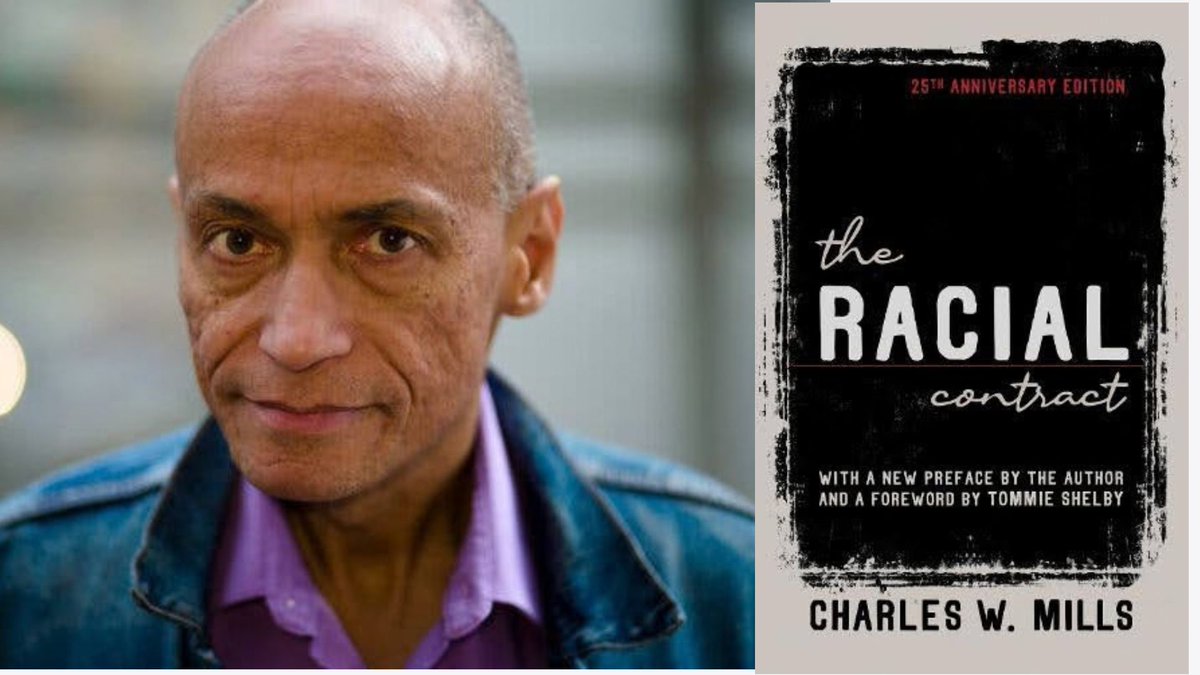
Charles W. Mills was a Caribbean philosopher who taught for a long time in the US. He is famous for his book "The Racial Contract," in which he argued that Western civilization pontificates about its great principles of human equality, but behind those principles, is a powerful but unspoken contract, where "Western political theory, is not a contract between everybody (“we the people”), but between just the people who count, the people who really are people (“we the white people”)."
For this contract to remain in place, there must be an "epistemology of ignorance," where the West is committed to not knowing about non-Europeans, or to inventing mythologies and stereotypes about them. That ignorance is the only way to commit massacres and expand conquest. Because once people are unknowable, killing and exploiting them is common sense. So in the western institutions, to be educated is to hate knowledge, lack self-awareness, and live in a delusional fantasy world based on myth rather than social reality.
Kenya's knowledge philosophy is the racial contract. We hate knowledge. We call knowledge arrogance, or we say it's useless to the market because it offers no solutions. And this ideology is repeated ESPECIALLY in the media and the school system. Educated Kenyans pretend it exists only in the church, and only talk about it in the school in terms of old complaints of 1960 about culture and language.
But tell Kenyans that 2025 PISA tests are a colonial tool of control of our children's minds, and they will not understand what you're talking about. The only problem in Kenyan education is the English language and the fact that we do not call "explorers" invaders. Tell Kenyans to go beyond that, and they get a headache.
The Racial Contract is very much the foundation of knowledge in Kenya. Kenya isn't for knowledge. If you're knowledgeable and skilled, the Kenya government will sell you to a government in Europe or West Asia. The more ignorant you are, the more Kenya rewards you. The more you can repeat myths and old lines that are 70 years old, the more you're respected. And then that ignorance is called authentically African.
Imagine that. An African country so in love with racism, it teaches ignorance to its children and calls that "African culture."
But has the milk production increased 87% or not? Why are you addressing issues that are not part of my assessment...
Do you guys even know what bloodthirsty really means in the political square? Let me tell you a little history:
In the 70s, Liberia had one of the best African statesmen in William Tolbert. He loved education, he spearheaded an economic resurgence, he mainstreamed a politics of tolerance, even inviting his greatest critic Charles Taylor and other dissidents to join him charting a course forward for the nation.
Then in 1979, there were riots and unfortunately, the police, out of inexperience or impunity, killed over 40 protestors. There was also disgruntlement with the macroeconomics here and there. But Liberia was on a reasonably promising political & economic trajectory.
But human beings, we will always want more. It's nature.
So what does Liberia do? Citizens are not satisfied. It's good but it could be better. Dissidents take advantage of that, they whip up emotion, in comes Samuel Kanyon Doe, who runs a coup, and executes William Tolbert. Public execution.
The Liberians are happy. They have been liberated from the bloodthirsty Tolbert who had 40-100 people killed by police in his administration.
In comes Doe, with grand promises. And within a span of 10 years, brutally murders over 250,000 Liberians. Not to mention amputations. We are talking machete deaths, not just bullets.
Charles Taylor takes over in 1997, politically executes another 100,000 people within 5 years. Not to mention the previous 150,000 he killed as a warlord.
For years, Liberians mourned William Tolbert, the very man They excoriated for the deaths of the rioters. So much so that they eventually gave him a state funeral/reburial in 2025.
You don't know what you have until it's gone
And this is not to say that the political murders that happened under Ruto are be ignored. But I am saying, words mean something beyond your feelings. You folks don't know what bloodthirsty means in this region.
And it's not a competition for who kills most, but there is method to, bloodthirsty, as a metric, that is not reflected here. Kibaki was bloodthirsty. 07 is nothing short of political executions. Ruto's case is not that.
There will never be a president for whom excesses are not part of the administration. And they should be criticized for that. But not at the expense of every other life in thos country. Not every other institution.
Corruption, my brother - lamentable as it is - is a cultural problem down here that can be politically mitigated, but never politically eradicated. It would require making it a capital offense, death by hanging or public executional, how many Kenyans would be for that?
With that said, I believe personally, that you are applying to politics what would better serve the clergy.
Politics is a game of interests with very dire and regrettable consequences. It's a system of organisation that invites both the good and the bad of society. So there will always be attempts to subvert the law and that is why the law is there in the first place. To tame our inconsistencies.
I do agree, we should aspire to fidelity, but go beyond that to the interests in examining potential leaders.
None of these leaders will never not try to subvert the law despite their lofty promises. That does not mean you should stop insisting they do.
But understand that vigilance is not a destination, which ends at the doorstep of a political candidate.
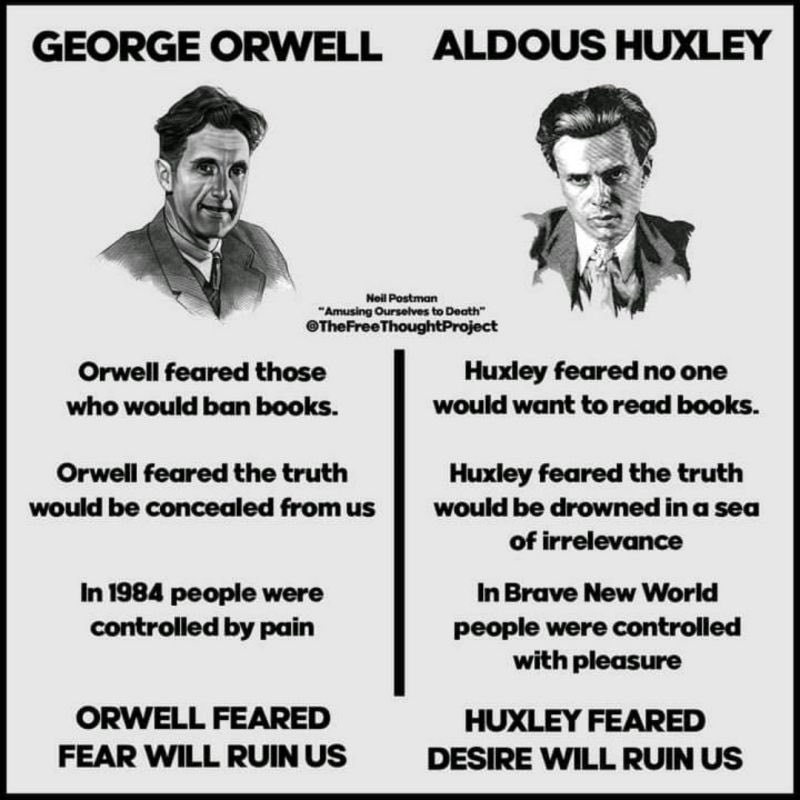
One of my longest-standing arguments is that we are not living in Orwell’s 1984, where truth is centrally suppressed and censored by force (that’s former communist societies, modern-day China, Russia, North Korea).
We are living in something much closer to Huxley’s Brave New World.
The truth is not hidden - it is almost always readily available. But it is buried beneath an industrial quantity of noise: propaganda, outrage, half-truths, conspiracy theories, influencer theatre, algorithmic rage bait and an endless stream of content designed not to inform us, but to keep us emotionally stimulated.
The modern information system does not need to censor the truth when it can simply drown it in noise.
A fact no longer has to be disproven - it only has to be surrounded by a hundred competing claims, stripped of context and nuance, turned into partisan ammunition and pushed into the same feed as celebrity gossip, memes and 15 second videos engineered to deliver the fastest possible dopamine hit. By the time the truth reaches us, it appears as just another piece of content competing for our attention.
That is the more sophisticated form of control: not preventing people from knowing, but exhausting their capacity to care.
Orwell feared a world in which people would be deprived of information. Huxley feared a world in which they would be given so much distraction, stimulation and triviality that they would lose the desire to seek it.
The defining struggle of our age is therefore not simply between truth and censorship, but between truth and indifference.
@OtitoNosike The idea that the purpose of education is material and financial success and so if you do not meet this metric your education is useless and anyone who makes more money than you is better than you even if they have no education.