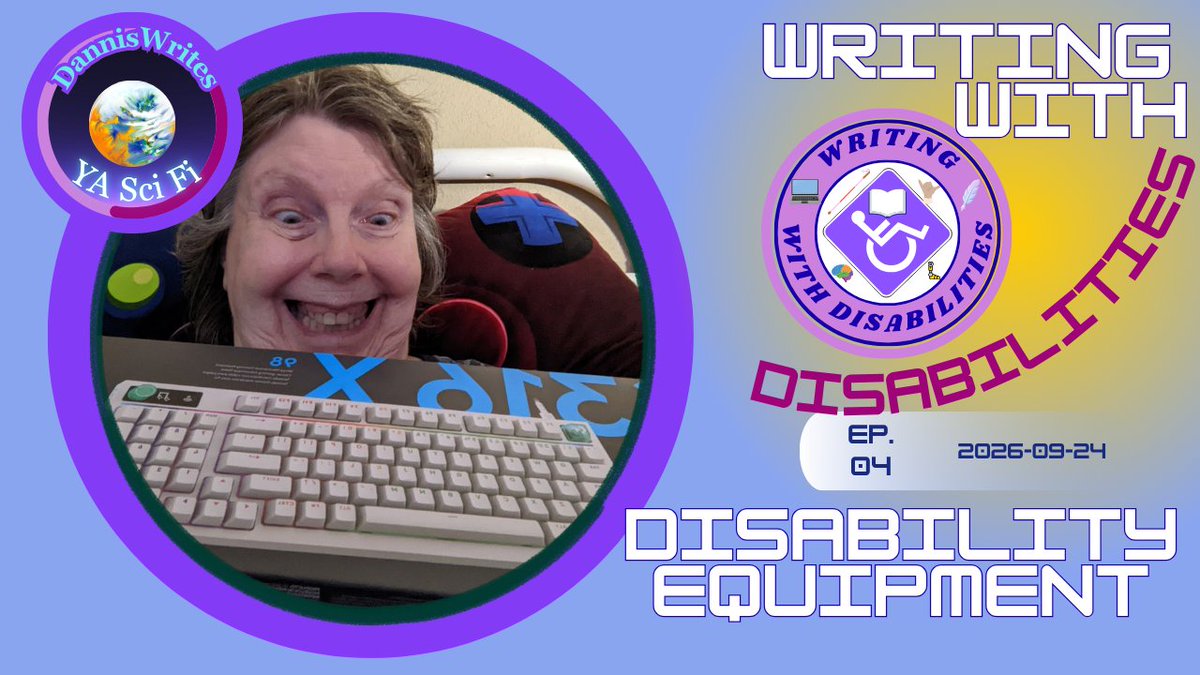
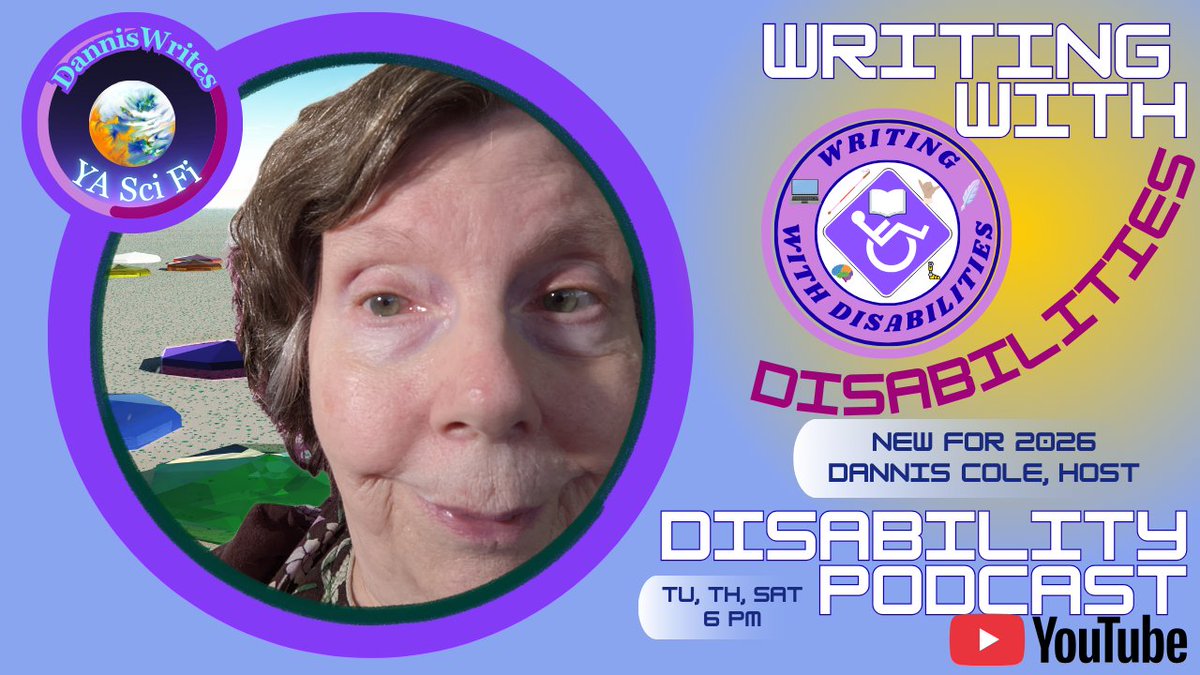
DannisWrites With #Disabilities#Podcast No. 4 2026-09-24 Disability #Equipment
I'll be talking about the things I use to make my life easier. Some of it isn't sold as 'disability equipment' but if it helps, it really is! Live now on YouTube @DannisWrites
DannisWrites #Disability Product #Reviews Ep 01 Live now!
This is a quickie #podcast where I talk about why I got a new keyboard and what I use wrist straps for.
The products I will be unboxing are:
https://t.co/8sYIlUjeZX Hand Straps
https://t.co/OP9LfHGMgI Logitech G316 X98
she did this magnifically, one of the most beautiful song in history, by Hildegard - O frondens virga
(I have a few thought from this chant on gregorian chant, I will try to write them down in the next few days)
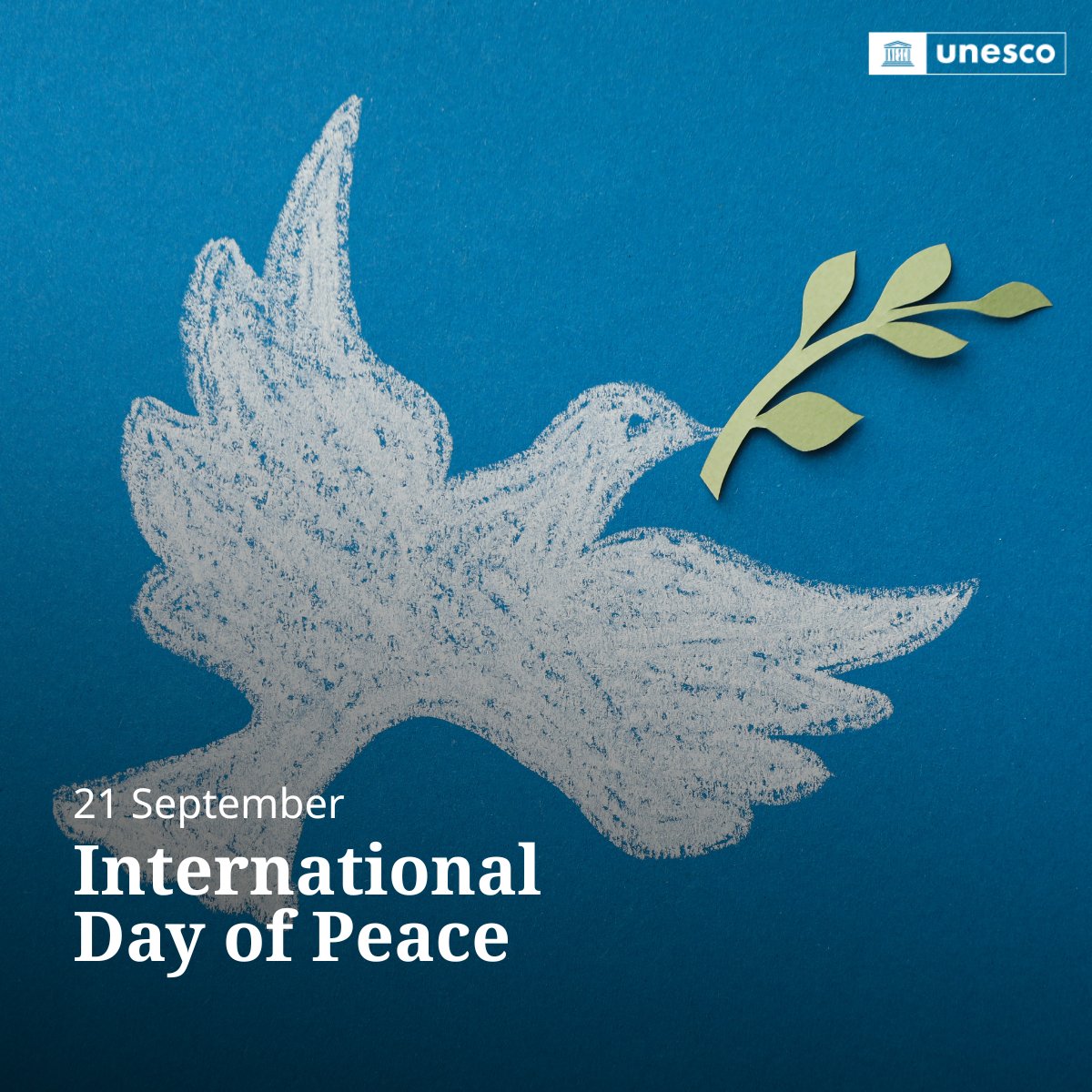
Peace is not simply the absence of war. It depends on the ability of societies to confront disagreement without violence, protect human rights and dignity, and keep dialogue open when tensions rise.
Today, conflict, displacement, discrimination, hate speech, backsliding on rights and polarization are fracturing communities and eroding trust.
On this #InternationalDayOfPeace, @UNESCO calls for greater investment in the institutions, skills and relationships that allow societies to address tensions before they turn into violence.
https://t.co/lLwBETs0Y8 #ForThePeople
This map should be included in every history book...History is not there for you to like or dislike. It is there for you to learn from it. And if it offends you, even better. Because then you are less likely to repeat it. It’s not yours for you to erase or destroy.
The Atlantic just made it to September 21 without a hurricane.
Last time that happened? 1914.
Fay almost ruined it last night. It hit 70 mph. Hurricane strength is 74.
Now it’s falling apart, and nothing else is expected for at least a week.
Le plus grand péril que représente l’intelligence artificielle n’est pas qu’elle accomplisse nos tâches, mais qu’elle nous épargne la transformation intérieure qu’exige leur accomplissement.
Une forme de paresse se répand aujourd’hui à l’échelle planétaire de façon insidieuse. Elle n’est ni oisiveté, ni indolence, mais une dissociation croissante entre le résultat obtenu et l’être qui aurait dû se former pour l’obtenir.
Car désormais, l’IA nous permet de diagnostiquer sans comprendre, de traduire un texte sans maîtriser la langue, de publier un livre sans en avoir écrit une ligne, ou de créer une œuvre sans l’avoir conçue. L’ignorance elle-même est en train de changer de nature. Elle n’est plus seulement une absence de connaissance, elle devient une incapacité à estimer ce que l’on ne sait plus faire.
Le danger ultime est qu’après avoir confié aux IA nos tâches cognitives, nous leur abandonnions aussi ce désir d’apprendre qui a fait de nous des êtres pensants.
Jargon is the problem. You have to remember to write simply. I saw this at Georgia Tech Library with experts I asked questions. I was good at translating this to lay people but it's a skill I had to develop. #jargon#experts#communication
I kept wondering why smart people write things nobody understands.
Then a Harvard professor gave it a name that stopped me cold: the moment you understand something deeply, you lose the ability to remember not knowing it.
I watched his writing talk at 1am and ended up rewinding the same ten minutes three times.
The professor name is Steven Pinker.
He's spent 40 years studying how language works inside the human brain, and he opened with a question I'd never had the guts to ask out loud. Why is so much writing terrible? Not just school writing. Work emails. Government forms. Half the stuff experts put online.
His answer had nothing to do with effort. Or intelligence. Or how much someone knows.
He called it the Curse of Knowledge.
Here's what it means:
The second you truly understand something, you forget what it felt like to not understand it. The gaps in a beginner's head become invisible to you, because in your head those gaps got filled years ago. You're standing on ground you can't even see anymore, and you assume everyone else is standing there too.
He gave one example I can't shake. A brilliant scientist got on stage at a big event in front of 400 people and lost the entire room in under a minute. He dove straight into words only his lab used. Never said what problem he was solving. Never said why anyone should care. And the worst part? He had no clue it was happening. He thought he was being clear.
That's the curse. You can't feel it from the inside.
Then Pinker said the line that rearranged how I think about writing.
Bad writing isn't a character flaw. It's a failure of imagination. You cannot get inside your reader's head by trying harder or caring more. Trying harder just makes you explain it more confidently in the same language they already don't understand.
So how do you actually fix it?
You find one real person. Not a crowd. One human being who is smart but lives outside your little world. You hand them your writing and you watch their face while they read it. Not the page. Their face. The exact second their eyes go flat and confused is the exact spot your writing broke.
Pinker did this with his own mother. Not because she wasn't sharp. She was. But she wasn't a language scientist, so the moment he drifted into his private vocabulary, she'd get lost, and he'd know instantly.
I sat with that for a while, because I've been doing the opposite my whole life. When someone didn't get what I wrote, I assumed they weren't paying attention. Turns out I was the one who couldn't see the hole. I'd filled it so long ago I forgot it was ever there.
That's the trap. The better you know your subject, the worse you get at teaching it, and you can't feel yourself getting worse. It feels like clarity the entire time you're losing people.
Which means the smartest person in the room is often the hardest one to learn from. Not because they're hiding anything. Because they genuinely can't remember what it's like to not already know.
The cure isn't a bigger brain. It's borrowing someone else's for one uncomfortable minute.
Find one person outside your world. Show them what you wrote. Watch their face, not the page. Everything they don't understand is the part you were too close to see.
Thank you for this. As one of the two-thirds of folks in Georgia, USA who live in poverty in the lowest income level, what can we do? We vote and all the politicians ignore us. Money ties every one of them to the billionaires. No one represents us.
10-year-old Victory Blinker who set the Guinness World Record for the youngest opera singer in the world, sings Mozart’s 'Der Holle Rache,’ considered one of the most difficult arias to sing.
I hear the approaching thunder that, one day, will destroy us too. I feel the suffering of millions. And yet, when I look up at the sky, I somehow feel that everything will change for the better, that this cruelty too shall end, that peace and tranquility will return- Anne Frank
I wonder if they saw a polling place in Georgia, USA they would still rank us so highly. In several counties in NW, NE and SW GA where I have voted in the past years since 2007, the computer monitors are so big that across the room, someone can easily see how I voted. #elections
Well said! I'm sorry you've had to deal with so much hate. I'm self-published, but I don't use AI to write any of it. I wrote two of my ya science fiction novels in 17 days apiece, and livestreamed some of it.
The amount of people I've had to mute and block these past few days... then I lost a lot of followers.
And from some of the quote-reposts of my posts, it's clear there are people who write off indie and self-published authors entirely.
So, for the umpteenth time: self-publishing is NOT vanity publishing. We put our blood, sweat, and tears into these books. We hire editors, designers, marketers — or learn to do it ourselves. We answer for every single decision, because there's no one else to hand it off to. That's not a shortcut. It's the harder road, taken on purpose.
Look down on it all you want. We'll be over here, still publishing.