Jesus did not kill Brazilian football. Pep Guardiola did. Brazil’s dominance relied on a creative “No. 10” to shred Europe’s physical static gameplay with crazy passes and dribbless. Guardiola’s shift to positional play killed the No. 10 and Brazil’s main weapon with it 🧵
JAPAN QUIETLY BANNED A STUDY METHOD AFTER STUDENTS STARTED BREAKING EVERY BENCHMARK.
It's Called The Shadow Study Technique.
Here's Why It Works:
- THREAD 🧵
Aldi's co-founder was once kidnapped and held in a wardrobe for 17 days. His captors were so confused by the cheap, ill-fitting suit he was wearing that they made him show ID to prove it was really him.
His family paid a 7 million Deutsche Mark ransom, around $2 million at the time and the largest Germany had ever seen. Theo Albrecht later tried to write the whole thing off as a business expense on his taxes. After that he barely appeared in public again. Almost no photographs of him surfaced for the next 30 years, and he took a different route to work every single day.
The chain started in one corner store. Theo and his brother Karl grew up working in their mother's tiny grocery in a poor suburb of Essen. Their father had been a coal miner until his lungs gave out, so the shop became how the family ate. Both brothers were sent off to fight in the war. When they came home, most of Essen was rubble, but the little store was somehow still standing.
They rebuilt it on one rule: only stock what sells, and sell it for less than anyone else. They spent nothing on advertising or decorating the stores. The shops were barely the size of a dorm room, with products left sitting in their shipping boxes. By 1955 there were more than 100 of them across Germany.
Then one argument split the company down the middle. Karl was sure that selling cigarettes at the register would attract shoplifters, while Theo wanted them on the shelves. Neither brother backed down, so around 1961 they drew a line across the country, Theo keeping the stores in the north and Karl the south. People still call that border the Aldi Equator. The brothers shortened the company name, Albrecht Diskont, to Aldi.
Both brothers stayed cheap their whole lives. Theo used pencils down to the stub, and the two of them turned down the public honors and awards they were offered. When Karl died he was the richest man in Germany, worth around $25 billion, and Theo was worth close to $17 billion.
The bare-bones format they pioneered went on to take over their home country. Discount chains now take close to 40 cents of every euro Germans spend on groceries, and Aldi and its rival Lidl have grown into the two biggest sellers of store-brand groceries anywhere in the world.
Aldi opened its first US store in Iowa in 1976. It now runs more than 2,600 of them, the third-largest grocery chain in America by number of stores, each one about 10,000 square feet, a fraction of a Walmart Supercenter's 178,000. The crowd lined up on West 42nd Street was waiting for a business that began as one tiny shop in Essen, run by two brothers who counted every coin.
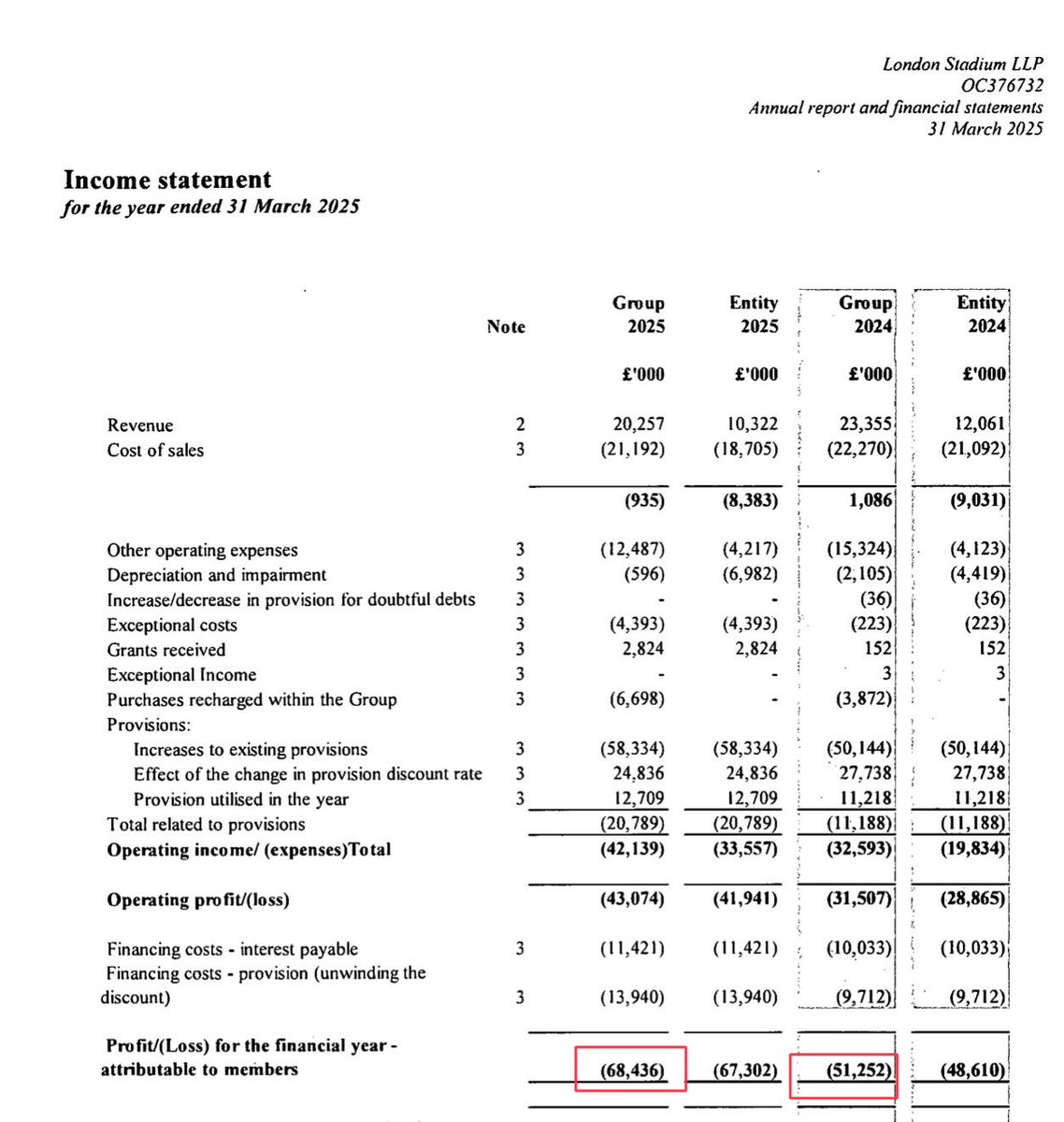
West Ham pay rent of £90,000 a week at the London Stadium. This will halve if the Club are relegated.
The stadium, even taking into account the landlord, which is the London taxpayer, earns money from other events, conferencing and catering etc, loses over £1m a week.
This is a classic example of big event legacy costs (similar for World Cups in South Africa, Brazil, Qatar etc) where the short term gain is replaced by long term pain.
This century only the World Cup in Germany in 2006 has had a positive impact on the economy in terms of Olympics and World Cups, because the stadia and infrastructure were already in place.
🧠🥶 | تيري هنري يشرح فخ أسلوب لويس إنريكي!
هنري يوضح كيف نجح نظام باريس سان جيرمان في تفكيك دفاع بايرن ميونخ.
لاحظ المسافات بين المدافعين، وكيف تم سحب "تاه" ليصبح حرفياً "تائه" في الرقابة! 😂
Even his own FRIENDS recorded their private phone calls & then sold them. how lonely must he have felt living in a reality where he couldn't trust anyone, where NOBODY had his best interest at heart? do people realize how depressing that is??
She was watching the game live in the stadium, but her livescore app had already updated that Manchester City scored before it even happened .
How is that even possible? 🤔
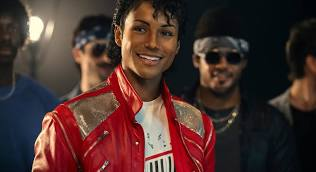
One of the most iconic moments of Michael Jackson's career was at Wembley Stadium in 1988.
He performed in front of 72.000 people on 7 consecutive dates.
The British royal family attended, and Michael even dedicated "Dirty Diana" to the princess, which caused quite a stir.
The Michael Jackson biopic is tracking to be the the biggest movie of 2026.
Oh, and the biggest music biopic in history.
Mind you, Michael Jackson has been dead for 17 years. When he died in June 2009, his estate was $500 million in debt. Not $500 million in assets. $500 million in the red. He had burned through decades of earnings on a lifestyle that cost up to $50 million a year, borrowed $270 million against his music catalog, and owed $40 million to his tour promoter for a concert series he would never perform.
The entertainment industry wrote off the brand.
Seventeen years later, that estate has earned $3.5 billion.
The Michael Jackson biopic opened this week to $12.6 million in previews, the biggest of 2026 and the biggest preview number for a music biopic in history. It is tracking for a $65 to $80 million domestic opening and $140 to $150 million worldwide. That would make it the largest music biopic debut ever, beating Straight Outta Compton at $60.2 million and Bohemian Rhapsody at $51 million. It set the record for the biggest opening day for a musical biopic in Germany, France, the UK, Italy, and Australia.
And the biopic is just one line in a 17-year revenue sheet that never stopped growing.
This Is It, the documentary released four months after Jackson's death, grossed nearly $270 million worldwide and became the highest-grossing music documentary of all time. In 2016, Sony paid $750 million for Jackson's share of Sony/ATV. In 2024, Sony paid another $600 million for half of Jackson's personal music catalog, valuing it at over $1.2 billion. MJ the Musical has grossed over $319 million on Broadway and sold more than 7 million tickets worldwide. Michael Jackson ONE by Cirque du Soleil has run more than 5,000 performances and sold 5.5 million tickets in Las Vegas. Thriller is still the best-selling album of all time at over 70 million copies.
Forbes named Jackson the highest-earning deceased celebrity in 2025 at $105 million for the year. Elvis Presley's estate is second at $1.2 billion total. Elvis has a 32-year head start. Jackson passed him years ago.
The estate went from $500 million in debt to $3.5 billion in earnings. Not because someone kept spending money to promote Michael Jackson. Because what he built was so deeply embedded in the culture that every new surface that appeared, streaming, Broadway, Cirque du Soleil, catalog licensing, and now a record-breaking biopic, could draw from the same foundation and produce new revenue without starting from scratch.
Nobody rebuilt Michael Jackson's brand for the streaming era. The music was already there. Nobody rebuilt it for Broadway. The catalog and the cultural authority were already there. Nobody rebuilt it for this biopic. The name, the music, the global footprint were already there. Each new surface just harvested what had already been planted.
This is exactly what is happening with the businesses that are winning in search and AI visibility right now.
(If you want to see where your site stands across Google and AI search, start here:
https://t.co/Pn764BHwyL)
Most businesses treat every marketing dollar like a one-time transaction. They pay for an ad campaign: it runs, it ends, the budget depletes. They post on social media: 48 hours of reach, then the algorithm buries it. They send an email blast: one open rate, one click-through, done. They book a PR placement: one news cycle, forgotten. They pay an influencer: one burst, the attention fades.
Every one of those channels stops producing the moment you stop paying. No library. No compounding. No residual value. If Michael Jackson's team had marketed him exclusively through channels that expired, there would be no $3.5 billion estate. There would be no biopic breaking records 17 years later. There would be nothing left to harvest.
What the estate proved is what the smartest businesses already know: the value of what you build is not what it earns today. It is what it keeps producing after you stop.
SEO and AI search visibility works the same way.
You build one genuinely authoritative piece of content. It ranks in Google. Then ChatGPT cites it. Then Perplexity references it. Then Google AI Overview pulls from it. Then AI Mode surfaces it. Then an AI agent retrieves it on behalf of a buyer who never even opened a browser.
One asset. Multiple surfaces. The original investment keeps compounding across every new channel that emerges, the same way Thriller kept generating revenue across vinyl, CD, streaming, Broadway, Cirque du Soleil, and a $1.2 billion catalog sale, all from music recorded in 1982.
When ChatGPT cites a source, it cites the most authoritative, most structured, most useful content it can find. When Google's AI Overview selects a page to reference, it selects based on content depth, trust signals, and extractability. When Perplexity assembles an answer, it pulls from the sources that actually answer the question best.
No ad budget influences that. No social following affects it. No campaign calendar determines the outcome. The channel itself selects for the best answer.
That is why it compounds. A DR50+ backlink strengthens every page on your domain, not just the one it points to. Structured content that AI models learn to associate with your brand builds equity that grows every time a new AI surface launches. An article that ranked in Google in 2024 can get cited by ChatGPT in 2025 and surfaced by an AI agent in 2026.
The businesses that built owned visibility are compounding. The businesses that are still spending exclusively on paid ads, social, email, and PR are watching the ground shift underneath them.
That is the gap SEO Stuff was built to close.
https://t.co/eh1auroJF7
Michael Jackson died $500 million in debt. Seventeen years later, his brand generates $105 million a year and his biopic just set the record for the biggest music film opening in history. The assets he built did not need a marketing budget to keep producing. They just needed to be genuinely authoritative, and every new surface that appeared kept harvesting from the same foundation.
The question is whether your marketing budget is building something that still produces 17 years from now or buying exposure that dies the moment you stop paying for it.