Bachelors in Nutrition. Everything I learnt was misinformation. Quantum Biology and the Photo-Electric Effect is Einstein’s greatest work. Financial Freedom.
People are part of our health environment. Look carefully who surrounds you. Who you select resonates and affects your metamorphosis.
No modern disease ever really goes away if the environment remains the same; it just morphs into something else. Something concerning, nasty, and potentially deadly. AI gastritis comes to mind.
The caterpillar does not become a butterfly by posting that it already has wings.
Look at this photo carefully.
Smiles calibrated.
Bodies sculpted.
Lighting perfect.
Every surface polished until it reflects only what the world is supposed to want.
This is the dominant religion of our age: false positivity as identity.
We are told that if you just “manifest,” “protect your energy,” and keep the highlight reel running, darkness will politely leave the room.
It doesn’t.
Denial of the dark never produces more light.
Denial of who you actually are never produces the person you could become.Outward appearance has been crowned king.
Surgery, filters, staged intimacy, curated “wellness,” brand deals dressed up as self-work; all of it sells the same lie:
If the outside looks finished, the inside must be fine. But the inside is still a caterpillar.
And caterpillars do not transform by announcing their wings on a podcast, a reality show, or a red carpet.
They disappear.
They enter the dark.
They dissolve.
Only then do real wings grow.True health is not the absence of struggle on camera.
True love is not the performance of connection.
True metamorphosis is not a glow-up montage. It is the willingness to stop performing the version of yourself that gets likes
and start becoming the version that can actually feel, break, rebuild, and love without an audience.
The people in this picture are not the disease.
They are the most visible symptom of a culture that has made the mirror more important than the soul looking into it.
Stop living in the phantasm.
The real work is underground.
The wings only grow in the dark.
It should become clear that a health story only matters, I suspect, to the extent that the people in the story, also changes.
It is clear that we are all butterflies, but to the versions in this picture below, not one of them realize how we experience the Earth determines our chrysalis
I don't understand why people don't use @perplexity_ai for stock trading.
Everyone has charts. Everyone has news. Very few have clear thinking. It helps with the last part.
Here are 16 practical prompts to use for stock trading and investing:
@DanielTNiles with your thesis of $70 handle on oil. Love to know your thoughts on what a potential rate hike does to the market before the end of the year ? Is the bond market incorrect in selling 2 years ?
@zaidkdahhaj That’s awesome bro. I love them too. Does Enzo like them? I’ve upped my sauna game since I’ve been smashing a can of them a day because I’m not sure about the research into heavy metal contamination. So just staying on the safe side because I’m not giving them
Up.
No mystery.
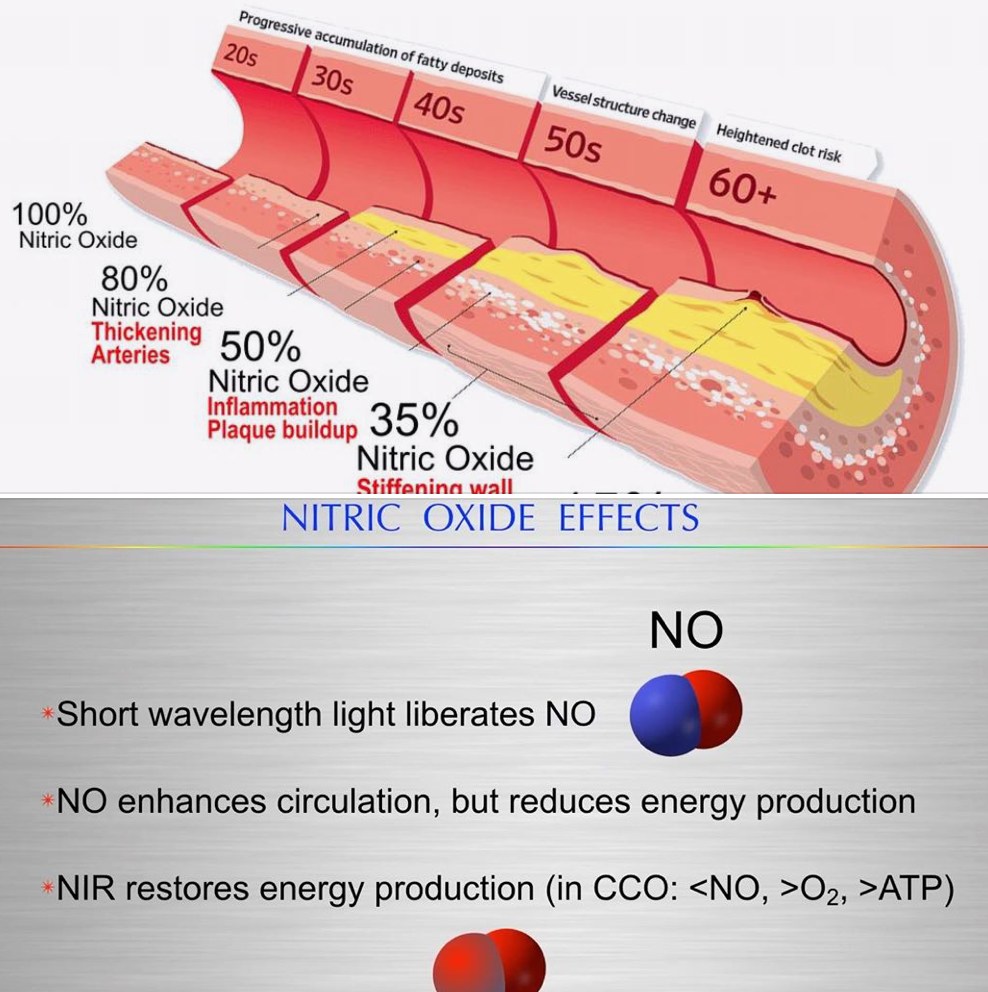
The progressive decline in endothelial Nitric Oxide (eNOS) production, dropping from 100% in your 20s to 35% in your 50s, is not an arbitrary chronological decay. It represents a systematic, quantum-level collapse of the endothelial glycocalyx and inner intimal wall, directly driven by electronic stalling, forbidden spin-flips (ISC failure), and a resulting hyper-ubiquitination cascade.
NO is paramagnetic just as triplet oxygen is. If ISC fails for any reason, vessel disease is the results because the entire vessel wall is is made from CISS chemicals that rely on ISC physics.
Funny I did not hear any of that in the podcast from either one of you.
BIOPHYSICAL FACTS I ALSO DID NOT HEAR
1. The Glycocalyx as the Primary Dielectric Shield.
The glycocalyx acts as a macroscopic transducer of shear stress. As blood flows, it bends the glycocalyx hairs, generating a localized piezoelectric current that signals eNOS to synthesize Nitric Oxide (NO) and maintain vascular compliance. Because it is packed with highly organized, negatively charged sulfate groups, the healthy glycocalyx serves as a high-capacity dielectric capacitor. It keeps positively charged particles and circulating native LDL physically repelled from the delicate endothelial intima.
2. How does circadian biology impact the ISC story?
Under proper circadian solar exposure, short-wavelength light liberates NO into the bloodstream to dilate vessels, while Near-Infrared (NIR) light strikes CCO to selectively break the NO-enzyme bond (<NO). This allows paramagnetic triplet oxygen (^3O2) to cleanly enter the engine, restoring optimal ATP synthesis (>O2 >ATP).
The Diamagnetic Collapse: Without the proper circadian input of solar NIR wavelengths to continuously purge NO from CCO, the mitochondrial engine remains chronically blocked. Electrons backing up behind the NO-choked CCO complex are forced into an Intersystem Crossing (ISC). This spin-flip converts safe, paramagnetic ground-state oxygen into highly destructive, diamagnetic singlet oxygen (^1O2).
3. Once diamagnetic singlet oxygen is unleashed inside the endothelial cells due to this circadian uncoupling, the structural decay of the vessel wall accelerates rapidly. Diamagnetic singlet oxygen directly oxidizes the core proteins (like syndecans and glypicans) of the glycocalyx, stripping away the endothelial layer's protective negative charge.
What happens if someone occassional grounds or gets a it of sun? They do not have the same phenotype of disease as the patients who always break the rules of Nature.
4. The structural collapse of these oxidized, damaged intimal proteins flags the immediate activation of E3 ubiquitin ligases. The cell is forced to rapidly upregulate ubiquitination rates to mark the degraded glycocalyx fragments and structural matrix components for proteasomal disposal. This massive protein-turnover tax drains the localized energy pool, permanently lowering baseline eNOS output.
With the negative dielectric shield of the glycocalyx dissolved, the electrostatic barrier is gone. Native LDL particles freely diffuse across the compromised endothelial barrier into the sub-endothelial space. Trapped within an intimate matrix that is actively bleeding ultraweak photons (UPEs) from singlet oxygen decay, the native LDL is instantly chemically modified into oxidized LDL (oxLDL), unlocking the scavenger receptors on macrophages to form the foam cells and plaque deposits depicted in my slide below in the 40s and 50s timeline.
SUMMARY
Why do people with the same disease have different phenotypes?
Vascular aging is not a guaranteed linear march toward a 35% NO deficit and stiffened arterial walls. The progressive accumulation of fatty deposits is the direct macroscopic readout of a chronic subatomic brownout.
By utilizing circadian biology to preserve the negative charge of the glycocalyx, and using NIR wavelengths to keep CCO clear of NO blockades, you maintain oxygen in its safe paramagnetic state. This cuts off the intersystem crossing at the pass, prevents the hyper-ubiquitination of the vascular lining, and keeps the endothelial engine young.
I told ya' it was no mystery.
I am Patient #27 in the McCairn–Edogawa Protocol at Edogawa Hospital in Tokyo. I have personally undergone 3 DFPA treatments and 17 SGF infusions. I don't need to speculate about what this protocol is because I have lived it.
That is why I found the closing remarks of this report disappointing. Rather than simply evaluating the protocol on its scientific merits, the author spends considerable time describing his interactions on X and characterizing many of the patients he encountered as belonging to "anti-vaccine" movements driven by ideology rather than science.
That does not reflect my experience or the experience of many of the patients I met in Japan, our families, followers and supporters.
This Protocol is not a treatment reserved for people who became ill after vaccination. It has also been offered to patients suffering from LC who were never vaccinated. The physicians at Edogawa Hospital treat patients based on their clinical presentation, laboratory findings, and response to therapy—not on their vaccination status or political beliefs.
I also believe the report oversimplifies the treatment itself. The protocol I underwent is far more than a brief description of "DFPP."
It combines repeated plasma filtration ADSORPTION (DFPA) with Stem Cell Growth Factor (SCGF) therapy as part of a broader treatment strategy developed from the team's clinical experience.
Evaluating this protocol requires understanding what is actually being done, not reducing it to a single therapy or comparing it as though it were interchangeable with something else!! The synergistic effect must be fully understood.
The comparison with IVIG also deserves careful consideration. IVIG is a treatment derived from pooled donor antibodies and serves a different therapeutic purpose than plasma filtration. These are distinct approaches with different mechanisms, risks, accessibility, and costs. For many patients, IVIG is financially out of reach or simply not an available option, me being one. Even if I had millions, I would NEVER choose IVIG over this treatment in Japan. Traveling to Japan was not a luxury for many of us—it was the only opportunity we had left after exhausting conventional treatments.
In fact, I hope more independent research is conducted on this protocol.
But meaningful scientific discussion begins with accurately describing the treatment being evaluated and engaging respectfully with the patients who have actually undergone it. Dismissing chronically sick patient experiences because of assumptions about their beliefs does not strengthen the science—it limits it. And is outright disrespectful!
Finally, there is one point on which we actually agree. This protocol is not currently available in the US or Europe. That is precisely why so many of us traveled thousands of miles to Japan.
Thankfully, Japan has been willing to think differently, innovate, and make this treatment available to patients who have exhausted every other option. Whether the rest of the world embraces it tomorrow, five years from now, or never, doesn't change the fact that it exists here today and that patients from around the world have the opportunity to pursue it. I am grateful that Japan chose to investigate new possibilities rather than tell us there was nothing left to try. Without it, many of us would still be sitting at home with no hope and nowhere left to turn.
This so called "doctor" and wannabe author must have needless time to waste and no real patients to treat.
@AaronSiriSG@MaryBowdenMD@DrMargaretShow@IamJessicaSutta@CatsRule2023@ChildrensHD@CharlesRixey@KevinMcCairnPhD@CoyoteSanctuary@RFKJr_Official@Brad7910@HouseLyndseyRN@IreneMavrakakis@KenCaptn20114@KennyCarmody@robert65968@POTUS@RFKJr_Official@shonyan@AprilWW911LC@mycityapartment@kelseyshields08@LK_ERnurse@Victoria_Parm@PierreKory@EmAdJustice@rexesrule
Understanding the Infeasibility of '1% Risk to Equity' and Benefits of High ADR% Securities
Your question is excellent, and I’d like to clarify why aiming for a 1% risk-to-equity ratio is often unrealistic due to position sizing constraints. I’ll also compare lower ADR% products, like $XRT at 1.41% ADR, with higher ADR% products, like $RETL at 4.06% ADR (a 3x leverage of $XRT, sharing the same price structure on intraday timeframes).
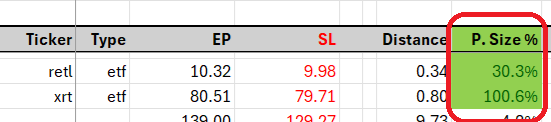
In the example below, I simulate an entry price and stop-loss price based on $XRT and $RETL high and low range and automate the calculation of position size % required for a “1% risk” approach relative to account equity (excluding existing unrealized gains/losses of other positions).
Using a 1% risk model, you would need to allocate almost your entire account (without margin) to $XRT and about 30% of your account to $RETL with its higher ADR%. The 1% risk approach may work for traders constraining themselves to securities with ADRs above 5%, as structuring trades based on high/low intraday ranges often only requires 10-25% of equity, enabling a minimum of four concurrent positions on swings. However, with names like $TSLA, $MSFT, or $NVDA, even synthetic leveraged of those names like $TSLL, $MSTU, or $NVDU wouldn’t allow for comfortable positioning. This is no secret if you have the right metrics on your spreadsheet. @stamatoudism have also highlighted about inflexibility of even 0.5% risk in his first interview with @traderlion
I suggest starting with a 0.15% risk per trade, increasing only when you begin to see the benefit of having a ADR% cut off in your screening and share structure of higher ADR% securities. Personally, I max out at around 0.33%, especially when most active names now are in the 2b-25b market cap range, with floats below 50 million shares and ADRs above 4.5%. This are the trademark of momentum names, and it make alot of sense why are able to move in such rapid fashion on those share structure.
I just wish to add that High ADR% securities offer the benefit of greater intraday range expansion without substantial capital lock-up compared to lower ADR% names. I avoid trading products like $XRT or $TSLA directly, preferring leveraged ETFs when they provide sufficient liquidity for the same reason. It gives you alot of capital excess when a 5-star/A-rated setup in the latter stage of your position building.
Gavin Baker: "my model is we're in 1996 - a group of stocks compounded at 40% per year for a decade - Oracle, Cisco, Microsoft, Dell - we're entering year three of AI"
this is him explaining why AI is not ending anytime in the next 5 to 10 years, why deregulation alone could push America to 5% real GDP growth, and what the US government made SpaceX do to baby seals
"$40 billion budgeted for EV chargers - in four years they built seven chargers - seven"
"$30 billion to connect low-income rural areas to broadband - they connected a dozen homes - and they wouldn't let SpaceX be part of it"
"the US government made SpaceX kidnap baby seals, put headphones on them, and hire a baby seal psychiatrist to watch if they were emotionally distressed during a simulated rocket launch
multiply that by 10,000 and you see how regulations have been slowing us down"
bookmark & watch the full conversation ↓
Morgan Stanley put out a really great 58-page report this morning as they began covering $APLD, $HUT and $RIOT.
They started $APLD at equal weight with $36.50 price target, implying 21% upside.
They started $RIOT at overweight with $36 price target, implying +53% upside
They started $HUT at overweight with $263 price target, suggesting 141% upside.
MS says their bull case price target for $HUT is $320 which implies 194% upside from yesterday's close.
Three other names mentioned in the report are $WULF, $CIFR and $GLXY.
$WULF price target implies 262% upside
$CIFR price target implies 105% upside
$GLXY price target implies 46% upside
MS is calling these companies "PSPs" which stands for Powered Shell Providers.
Obviously I can't share the full report but I want to highlight a few paragraphs...
What are the key drivers of our bullish stance with respect to these Powered Shell Providers?
(1) The magnitude of improvement in AI capabilities will continue to increase at a non-linear rate;
(2) the value creation for both AI Adopters and AI Enablers is high (with attractive ROIC for AI-related capex);
(3) the demand for compute is likely to be systematically much higher than the supply, with the result that
(4) the economic incentives (like powered shell leases) to eliminate key bottlenecks to the growth of compute will grow;
(5) in the US and Europe, data center (DC) developers face a significant power access bottleneck—especially with recent state-level moratoriums;
(6) Bitcoin-to-DC conversions represent the most attractive "time to power" option for DC developers; and
(7) even if data center developers secure all large US and European Bitcoin company power access, they would still be, in our view, short access to power.
We are seeing signs of increasing willingness among key AI players to pay higher "time to power" in the form of increasingly rich economics to powered shell providers for using their power access to serve DC developers.
In March, we introduced our 15/15/15 framework; the conviction that future powered shell deals would appear with terms of 15 year leases, 15% yields on capex, and $15/watt of equity value creation. Recent deals—like those by $HUT this week and $WULF earlier this month—exceeded our expectations, with terms of 15 years, 17% yield, and $17/watt for the former and 20 years, 18% yield and $19/watt of equity value creation for the latter.
Importantly, we expect future terms for $HUT and $RIOT close to those in the $WULF and $HUT deals, reflecting the strong past precedent and consistency of the former and the strength of sites for $RIOT. In our evaluation of $APLD, we lower our expectations on terms to approximately $10/watt, significantly below our 15/15/15 framework but aligned with $APLD's existing deal terms. If we see evidence that $APLD can replicate terms closer to recent $HUT, $CIFR, or $WULF deals, we would expect to increase our valuations of these stocks accordingly.
That's all I can share for now.
If you can get your hands on this report, I would highly suggest doing so. It's one of the better sell side reports I've seen this year on the DCs/HPCs/PSPs.
NFA.
DYOR.
*We are long $RIOT $CIFR $HUT $WULF at @FirstWaveFund
**Our favorite DC/NC name is still $NBIS