Marcario García received the Medal of Honor from President Truman.
A few weeks later, a café in Texas wouldn't serve him.
García was born in Mexico in 1920. His family moved to Texas when he was a kid, and he grew up working on farms around Sugar Land. When the war came, he joined the US Army even though he wasn't a US citizen.
He landed in Normandy with the 4th Infantry Division and was wounded. He recovered and went back to the front.
By November 1944 his company was in the Hürtgen Forest, one of the bloodiest fights the US Army had in Europe. It was dark, wet, freezing forest full of mines, bunkers, and German machine guns that could cut down a company in seconds.
On November 27, near the village of Grosshau, two German machine guns pinned his company down. García was hit in the shoulder.
He refused to be evacuated.
Instead he crawled forward alone to the first machine-gun nest and attacked it with grenades. He destroyed the gun and killed three Germans who tried to escape.
Then a second machine gun opened up. García went forward again, still wounded. He stormed that position too, killed three more, and took four prisoners.
He stayed in the fight until the objective was taken. Only then did he let the medics take him off the line.
On August 23, 1945, Truman put the Medal of Honor around his neck at the White House. He was the first Mexican immigrant ever to receive it. Mexico gave him its own medal for valor too.
His hometown threw him a party.
Then on September 10, he walked into the Oasis Café in Richmond, Texas, in full uniform with his medals on his chest. The owner refused to serve him because he was Mexican.
García protested. A fight broke out, and the owner hit him with a baseball bat. García was the one who got arrested and charged with assault.
The case made national news, and eventually the charges were dropped.
In 1947, García became a US citizen. He spent the rest of his life fighting for veterans and civil rights in Houston.
Today there are schools and an Army Reserve center named after him.
A @WSJopinion harsh summary of Spain’s premier: ‘Mr. Sánchez, 54, is the most Machiavellian, amoral, corrupt and unprincipled head of government in Western Europe. If one fact stands out as proof of his undemocratic and unaccountable character, it is that he and his ruling Socialist Party have failed to present a single budget before Parliament in his last four years in office. This would be unthinkable even in a country like Nigeria, let alone in a $2.09-trillion Western economy ranked fourth in the European Union and 15th globally.
Mr. Sánchez has governed in coalition with outright and unabashed communists. He has partnered with Catalan separatists, whom he granted amnesties from well-deserved charges of sedition after repeated attempts to break up Spain; and with former Basque terrorists, extending to them a political respectability. Mr. Sánchez has “handed the country over to its enemies.”
All the while, Mr. Sánchez has positioned himself as the leader of a global anti-Israel and anti-American coalition. ‘
Tutti lo possono fare, perfino Schlein, Bonelli, Fratoianni, Conte e Renzi, ma lo stile e la credibilità lo noti specialmente nei silenzi: di Giorgia Meloni ce n'è una sola.
Diciamo che, in questo caso, l'albero di Natale è quello originale gli altri sono l'albero del dono.
Facciamo chiarezza. A chi ci accusa che stiamo tagliando le pensioni, rispondiamo coi fatti. Con questo Governo nessuna pensione è stata mai tagliata. Anzi, è accaduto il contrario. In questi anni, tutte le pensioni sono state rivalutate e dal 1° gennaio 2027 non cambierà nulla. Perché la pensione è il frutto di una vita di lavoro e noi continueremo a proteggerla.
Hollywood got lucky with one of its greatest films because the U.S. Army got there first.
In the summer of 1942, Warner Bros. was shooting what everyone involved thought was just another wartime movie. It was set in Casablanca, in French Morocco, a city most Americans couldn't find on a map.
The script was being rewritten while they filmed. According to the stories from the set, the actors weren't sure how it would end.
Then on November 8, 1942, American and British troops stormed ashore in North Africa in Operation Torch. One of the main landing points was Casablanca.
Overnight, the name of the movie was in headlines across the country.
Warner Bros. moved fast. They rushed it into the Hollywood Theater in New York for a premiere on November 26, 1942. It went into general release in January, the same week FDR and Churchill were meeting at the Casablanca Conference.
You couldn't have bought better advertising.
The movie has a lot of real war in it. Many of the actors playing refugees had actually fled Nazi Europe themselves. Conrad Veidt, who played the Nazi major, had escaped Germany with his Jewish wife. When the crowd at Rick's drowns out the Germans by singing "La Marseillaise," some of the tears on screen were real.
And a myth. You'll hear that Ronald Reagan was almost cast as Rick. That came from an early studio press item. Humphrey Bogart was always the plan.
The film won Best Picture.
84 years ago today.
This is not the nativity story you’re used to seeing. Tension, danger, and a real historical thriller. Hollywood stopped putting real Christmas movies in theaters, and this is our chance to prove them wrong.
Zero A.D.: The Birth of Christ, in theaters December 11.
🚨 A young guy walked into a Lowe's looking for a cheap paintbrush for his kid's school project.
"I've only got a dollar on me though."
The 83-year-old man in the red vest didn't even blink.
"That's alright, don't worry about it."
"Why would you do that for me?"
"Why not?"
His name is Les. A veteran. Still on the floor at Lowe's.
"The bills just kept going up & up & up."
"What little retirement I had wasn't enough."
Then he listed it like it was nothing.
Part of his left lung. Gone.
Pieces of both kidneys. Gone.
Prostate cancer.
The chemo ruined the nerves in the bottom of his feet. By the end of an 8-hour shift:
"My feet are just like somebody has hot coals on them."
He works four days a week. And he was about to go FULL TIME, to keep the house.
"That's the one thing I have to hang on to."
At home, his wife is sick. She's the one who nominated him.
Then the guy with one dollar told him the truth. He was Sam Weidenhofer. And he handed Les a $500 tip.
"You've gotta be kidding me?"
Then came the fundraiser to retire him.
Les went quiet. Then:
"It means I can give up my job & stay home to take care of my sick wife."
"I never expected anything would ever come. But I prayed anyway."
6,600 strangers answered that prayer with $186,054.
He's $13,946 from going home for good.
And to Lowe's: for years, every customer who walked up to that red vest got a veteran's kindness for free. Thank you for keeping a place for men like Les. 🇺🇸❤️
Palmer Luckey on why Anduril is named after Aragorn's sword:
"It's named the Flame of the West in Elven. The idea being that it is the sword that allows the kingdom of man to stand against the oncoming thralls of Mordor."
"'I love the sword not for the brightness of the blade, nor the keenness of the edge, but for that which it protects.' And that was what we wanted to get across, and internally too."
"I wanted to reinforce this to my employees. We're not building weapons because it's cool... We are building it because of that which it protects, which is America and our allies around the world who believe in self-determination, democracy, freedom of speech."
"We're not an inanimate object. We are a conscious sword that fights for a specific side."
@PalmerLuckey at Abundance 360, 2023
At 16 the future Henry V took an arrow six inches into his face, and the man who got it out had just been in prison on suspicion of forging coins.
Shrewsbury, 21 July 1403. The Prince of Wales was commanding a wing of his father's army when an arrow went in beside his nose. He fought on. Somebody pulled the shaft out afterwards and the head stayed where it was, lodged in the bone at the back of his skull.
The learned doctors were called first. They proposed drinks and plasters to draw the iron out. It did not move.
So the court sent for John Bradmore, a London surgeon who was also a metalworker, and who had lately been locked up for allegedly using the second skill to make money in the most literal way.
Bradmore wrote down exactly what he did. He cut probes from the pith of elder, wrapped them in linen soaked in rose honey, and over several days eased the wound wider and deeper until he could reach the bottom. Then he went to his forge and made a new instrument: narrow hollow tongs with a screw running through the middle. He slid them down the track of the arrow, turned the screw until the tips gripped inside the socket of the arrowhead, and worked it loose.
He washed the hole with white wine. He packed it with wads of barley flour and honey, a little shorter each day for 20 days, so that it closed from the bottom up.
The boy lived, kept the scar, and twelve years later won Agincourt.
Honey and alcohol in a deep wound, changed daily, more than 450 years before Lister. Hospitals put medical honey back on the dressing trolley in this century and called it an innovation.
England's great soldier king owed his face to a forger with a forge.
Ada Colau a Abascal: “¿Qué le debe usted a Netanyahu después de este gran reconocimiento de que usted es su máximo portavoz en España?”
Abascal: “¿Qué le debe usted a Hamás?”
Este es el minuto exacto en el que Feijóo ha ganado este debate.
Advierte que va hacer una auditoría y sacar a la luz toda la corrupción de su gobierno y investigar a Zapatero.
Le pregunta además si Zapatero va a devolver la comisión del 1% de Plus Ultra. Silencio sepulcral de Sánchez.
🔴 @Santi_ABASCAL deja KO a Pedro Sánchez:
"Este gobierno se ha convertido en un enemigo de los trabajadores. A los poderosos es a los que les ha ido bien con Sánchez".
#AbascalDebate
I want to thank the guys from the Special Operations Forces of Ukraine. Today, our drones struck a Russian military airfield. The very airfield from which Russian aircraft take off to wreck lives in Ukraine. We are now verifying the exact extent of the damage. We will continue responding: Russian aircraft, Russian warships, and vessels transporting Russian weapons are all legitimate targets for us.
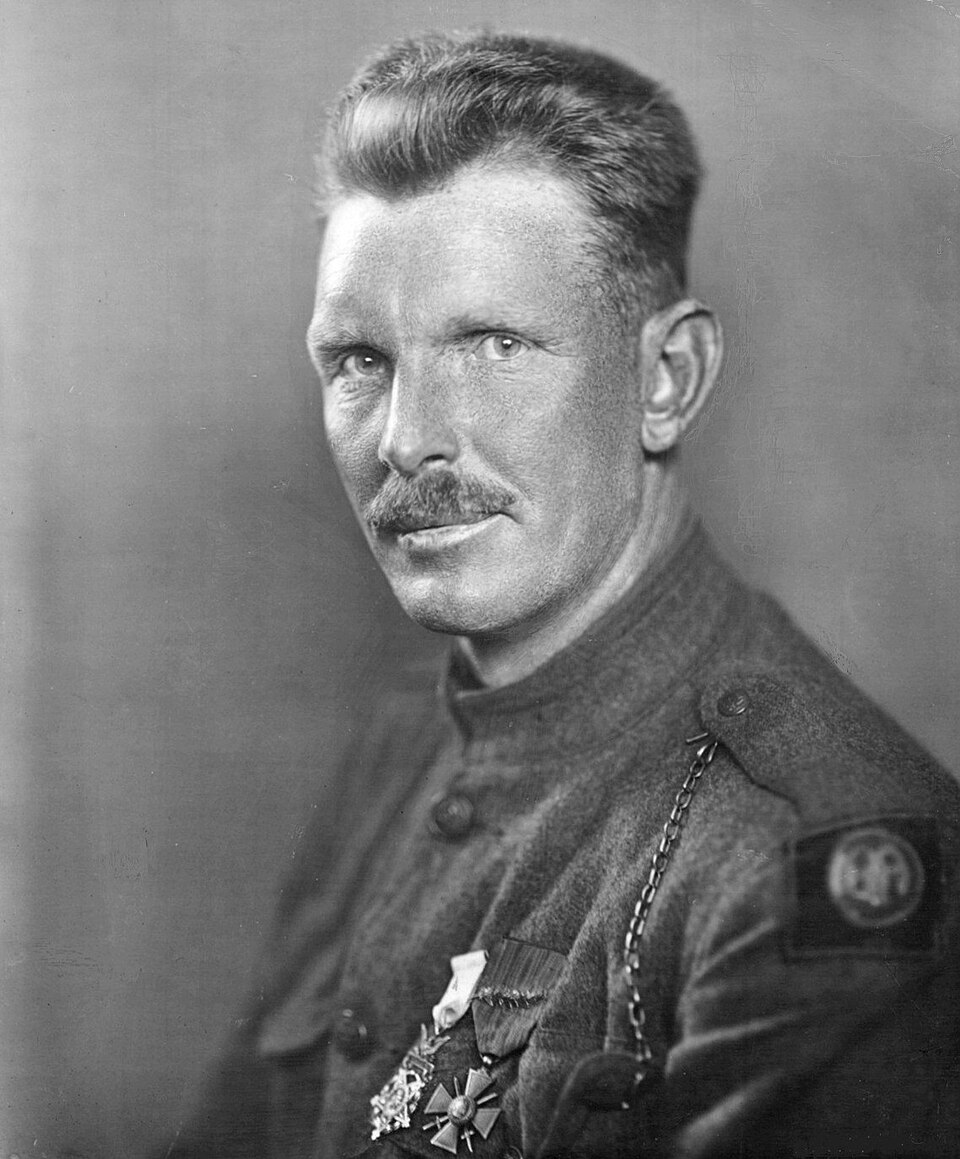
New York businessmen stacked $30,000 in cash offers on the table in 1919 so America's biggest war hero would wear his uniform on stage for a few weeks.
Alvin York looked at the money, said his uniform was not for sale, and took the train back to a dirt-road cabin in Pall Mall, Tennessee.
Before World War I, York was a poor mountain blacksmith who hunted wild turkeys to feed ten younger brothers and sisters after his father died.
After finding faith in a small country church, he filed papers as a conscientious objector because he believed God forbade killing.
His company commander and battalion major sat down with him over an open Bible and respected his conscience.
They let him go home to pray on a Tennessee mountainside until York felt peace about defending his fellow soldiers.
On October 8, 1918, in France's Argonne Forest near Chatel-Chehery, hidden German machine guns cut down nine of the seventeen Americans in Corporal York's patrol, including three sergeants.
Pinned in a muddy valley with bullets snapping the brush overhead, York took command of the seven unwounded privates left alive.
Working his rifle and pistol the exact way he hunted turkeys in Tennessee, he picked off enemy gunners from the back of the line to the front so the others would not realize where the shots were coming from.
Six German soldiers fixed bayonets and charged straight up the slope at him.
York dropped them with his Colt .45 pistol before they reached him.
Even while shooting, he kept shouting for the Germans to come down and surrender because he hated taking another life.
The German commander blew a whistle and surrendered his entire force.
York marched four officers and 128 enlisted prisoners back into American lines.
He turned down Broadway fortunes, newspaper syndicates, and theater tours when his family barely had running water.
Years later, he only allowed Hollywood to film his life on one condition: every dime of his share had to build a free Bible and agricultural high school so poor Tennessee mountain kids could learn to read.
Sergeant York died in 1964, buried beside his small country church in the valley he never left behind.
On November 14, 1965, unarmed medical helicopters turned back from heavy gunfire in the Ia Drang Valley, leaving roughly 450 surrounded Americans with no way out.
That morning, 32 year old pilot Bruce Crandall had led 16 Hueys carrying Hal Moore's 1st Battalion, 7th Cavalry into Landing Zone X Ray beneath the Chu Pong mountains.
Thousands of North Vietnamese regulars waited on the slopes above, pouring machine gun, mortar, and rocket fire into the clearing.
Wounded men piled up behind termite mounds as ammo ran low, and rules barred unarmed medical aircraft from landing under fire.
Back at base, Crandall's assigned lifts were done, and pulling out casualties in an unarmed Huey with no medical gear was not in his orders.
Knowing those men would run out of bullets first and bleed to death second, Crandall asked for volunteers, and his wingman Ed Freeman stepped forward.
Loaded with ammo crates and water, Crandall dropped down the narrow tree chute where enemy gunners waited for Hueys to hover.
Soldiers ran through gunfire to drag off the crates and heave badly wounded men onto his open aluminum floor.
At the Pleiku aid station, before anyone could wash off the blood, crews stacked fresh ammo crates onto the wet floor and Crandall flew back.
All afternoon, bullets shattered glass and severed hydraulic lines until mechanics grounded his riddled Huey on the spot.
Crandall climbed into a second Huey, and when mechanics grounded that shot up aircraft too, he strapped into a third and went back.
After dark, with no night vision goggles and thick smoke in the valley, he flew in anyway, guided by artillery flashes and small flashlights below.
He kept his landing lights off so gunners could not track him, flicking them on only in the final seconds to avoid crushing the wounded in the grass.
Over 14 hours, three helicopters, and 22 runs ending past 10:30 that night, he delivered the ammo that held the perimeter and carried over 70 wounded men out.
For four decades, Hal Moore and the survivors of that clearing petitioned the military to recognize what Crandall and Freeman had done.
On February 26, 2007, 74 year old Bruce Crandall received the Medal of Honor at the White House while the men he had lifted off that dark grass sat in front of him, alive to watch.
A guapo, dicen, me gana Sánchez.
A fuerte, sin duda, Abascal.
Pero soy un político honrado y si me das una oportunidad no te voy a fallar.
MI CARTA A LA CIUDADANÍA 👇
In 1998, a Yale senior turned in a draft of her thesis on a terrorist most Americans had never heard of.
His name was Osama bin Laden.
That same night, she was stabbed to death on a quiet street corner. Of the 15 murders in New Haven that year, hers is the only one never solved.
Suzanne Jovin was 21. She was born in Germany and came to Yale to study political science and international studies. Friends said she was brilliant, kind, and always doing something for somebody else. She ran the Yale chapter of Best Buddies, a group that works with adults with intellectual disabilities.
Friday, December 4, 1998. Around 4:15 that afternoon, she dropped off the next-to-last draft of her senior thesis. It was about bin Laden and his network. Three years before 9/11.
That evening, she hosted a holiday pizza party for her Best Buddies group at a church near campus. She'd borrowed a university car for it.
After the party she returned the car keys. Around 9:25 p.m. she ran into a friend on campus and chatted for a minute. Then she started walking.
Just before 10 p.m., people in the East Rock neighborhood heard a woman screaming. Someone called 911.
Police found Suzanne on the sidewalk at the corner of East Rock Road and Edgehill Road. She'd been stabbed 17 times in the head, neck, and back. The tip of the knife had broken off inside her skull.
She died at Yale New Haven Hospital at 10:26 p.m.
She was fully dressed. Still wearing her watch and earrings. A crumpled dollar bill was in her pocket. It wasn't a robbery.
And nobody could explain why she was there. The corner was well out of the way from where she lived. Something, or someone, had taken her there.
Witnesses reported a tan or brown van stopped in the road right next to where she was found.
Then the investigation went off the rails. Police publicly said that her thesis adviser was among the people in a pool of suspects. He was never charged. He always said he had nothing to do with it, and his life and career were wrecked by it. DNA found under her fingernails reportedly didn't match him.
Other theories came and went. A stranger. Someone from the neighborhood. Someone she knew from campus.
Nobody has ever been arrested.
The state of Connecticut and Yale have put up a combined reward of $150,000.
Last December, on the 27th anniversary, the retired detective who led the case went back and stood on that same corner. He pointed out that every other murder in New Haven that year was solved. Only hers is still open.
Next week, it'll be 28 years.
Somebody walked up to a 21-year-old girl on a quiet residential street and stabbed her 17 times. Then they disappeared into the dark, maybe in a van, maybe on foot, and nobody has seen them since.
If you know anything: 1-866-623-8058 or [email protected].