TranslAGE: A Comprehensive Platform for Systematic Validation of Epigenetic Aging Biomarkers
"Providing harmonized datasets, precomputed biomarker scores, and interactive data tools, TranslAGE establishes the first standardized, reproducible framework for benchmarking epigenetic aging biomarkers across populations, and accelerates the translation toward clinical use..."
https://t.co/82mSk8YWd3 [TranslAGE: https://t.co/oPdqMVDRSo 👨⚕️]
🧬 Imagine your biological age changing overnight without you aging a day.
Epigenetic clocks promise to quantify how fast we’re aging. But are their “ticks” reliable?
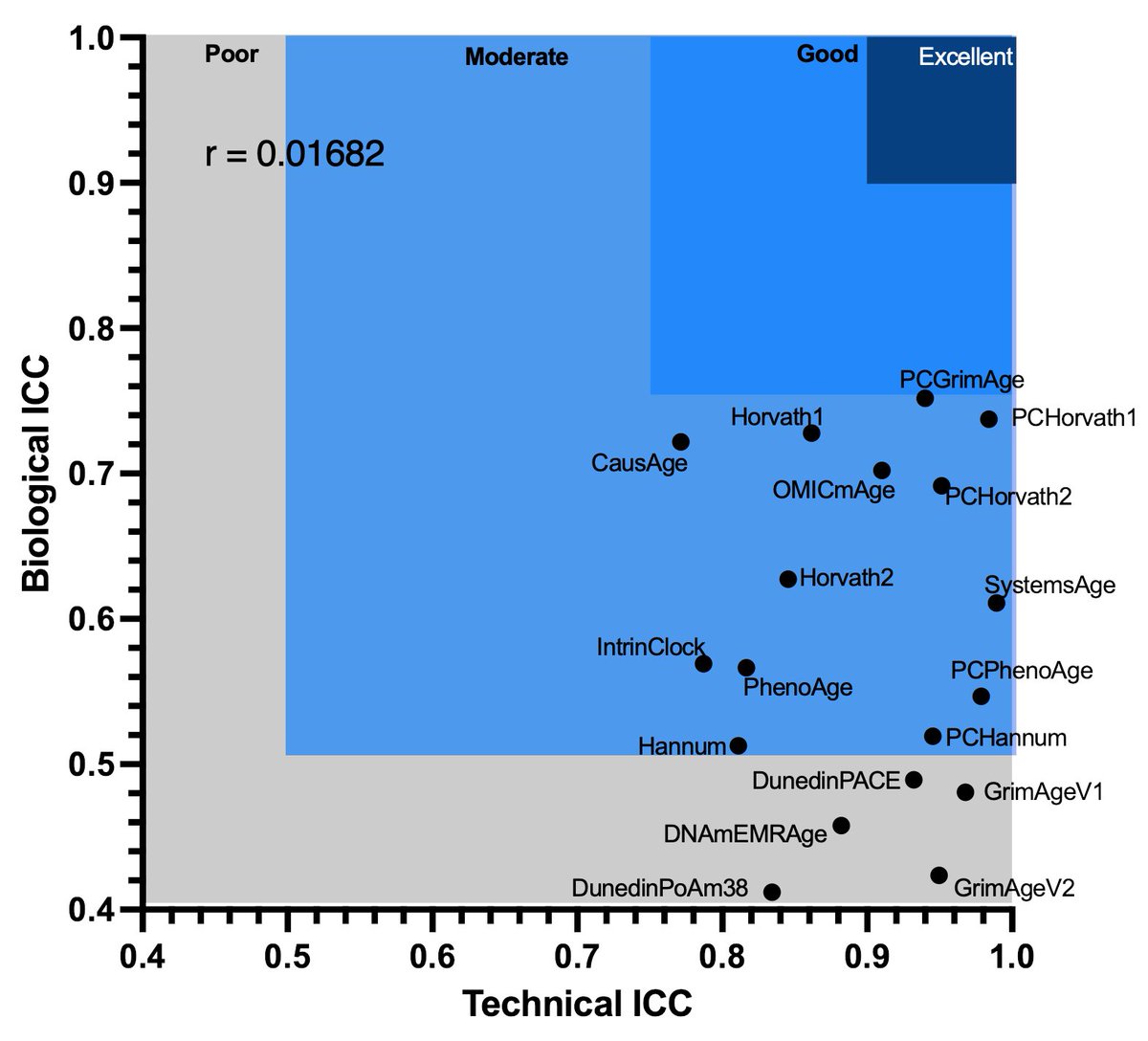
In our latest study using the TranslAGE platform built at @Yale , we systematically evaluated the technical and biological reliability of 18 leading DNA methylation–based aging biomarkersm including chronological clocks, mortality predictors, pace-of-aging measures, and explainable next-generation models.
🔹 Technical reliability:
Across four independent datasets on EPIC and 450K arrays, nearly all clocks achieved excellent reproducibility under standard conditions. Yet, subtle factors such as DNA extraction protocol and slide position introduced significant variation for some models.
🔹 Biological reliability:
When tested across repeated samples collected hours or days apart before and after meals, under acute stress, and across environmental exposures most clocks showed only moderate stability. Only PCGrimAge maintained good biological reliability (ICC > 0.75).
🔹 Key insight:
Technical precision ≠ biological reliability.
Clocks that were technically flawless often fluctuated within the same individual.
🔹 Why it matters:
Reliable clocks yielded consistent prognostic associations (e.g., with cognitive decline) and stable responsiveness to interventions (e.g., a vegan diet). Unreliable ones produced noisy or spurious results.
Bottom line:
To translate aging biomarkers into clinics, we must prioritize biologically reliable clocks those that measure aging, not short-term noise.
A big thanks to all the co-authors for their help Daniel Borrus, John Gonzalez, Yaroslav Markov and my mentor Albert Higgins-Chen!
TranslAGE is LIVE! We launched the first standardized platform for DNAm aging biomarker validation. We harmonized 179 datasets (>42K samples) to benchmark 41 clocks & 1,694 proxies using a new STAR framework. https://t.co/6MKfTxzpKc #TranslAGE#Epigenetics
It feels surreal, but here we are!
I’m thrilled to share that I’ve been named to the @ForbesUnder30 list in the Healthcare category!
@Forbes#ForbesUnder30
I had a great time chatting with @siimland about the exciting work we’re doing on epigenetic clocks—exploring their responsiveness to 51 longevity interventions and finding ways to make them even more insightful!
Excited to share CpGPT, a new foundation model for DNA methylation, crafted to understand the 'language' of epigenetics! 🧬🤖
What’s CpGPT?
CpGPT is a transformer model pre-trained on CpGCorpus, a huge dataset of public DNA methylation info. By integrating sequence, positional, and epigenetic data, it captures complex epigenetic interactions from even a small part of the methylome.
📄 Preprint: https://t.co/ZpIAbYa59V
Why CpGPT?
DNA methylation is key for gene expression and chromatin structuring, with CpG sites often varying in diseases like cancer and aging. Here’s what sets CpGPT apart:
✨ CpGPT Highlights:
🔧 Deep Pretraining: Trained on over 100K samples from 1,500+ studies, covering 1M+ CpG sites.
🗺️ Zero-Shot Skills: CpGPT imputes methylation from minimal data, mapping different Illumina arrays to a common reference.
🐭 Cross-Mammalian Reach: When fine-tuned, CpGPT accurately imputes methylation in new mammalian species.
📈 Strong Performance: Fine-tuned CpGPT ranks 2nd overall and 1st on the public leaderboard for age and mortality prediction in the Biomarkers of Aging Challenge.
Special shoutout to Lucas (@ollimacsacul) for his outstanding leadership on this project! Big thanks as well to all the co-authors (@rv_sehgal, @prof_horvath, etc.) for their dedication and swift feedback throughout.
We're committed to open science and are actively preparing the code. Expect the full code and model weights to be available soon—likely within the next few weeks!
This week will be all about pre-prints, kicking off with my debut as a corresponding author on a paper titled, "Epigenetic aging biomarkers are responsive: Insights from 51 longevity interventional studies in humans."
This study is the first of its kind, bringing together clinical trials and intervention studies focused on longevity to evaluate which interventions might systematically reduce epigenetic age. It examines 110 epigenetic aging biomarkers to identify those consistently responsive across various interventions. We hope this work encourages the aging biomarker field to rigorously test these biomarkers for responsiveness—since not all DNAm aging biomarkers respond to interventions, even if they may be prognostic. Additionally, it aims to shift the field toward using multiple responsive biomarkers together to assess whether an intervention genuinely reduces epigenetic age, potentially impacting healthspan or lifespan.
Interventional study DNA methylation data for this study was compiled at @Yale in the Albert Higgins-Chen lab in the @YaleCBB program using publicly available resources such as @NCBI GEO and @embl as well as private sources such as @TruDiagnostic , thanks to @RyanSmithEpiAge ,@VarunDw and Natàlia Carreras Gallo!
And this was a huge team effort which could have been complete with help from support from my amazing colleagues and co-authors @Dansb95, @JessicaKasamoto , Jenel Fraij Armstrong, John T. Gonzalez, @MarkovYaro and Ahana Priyanka!
Check out more details at the link below!
https://t.co/ha90nvEcSa
🧬Maximum mammalian lifespan is inversely related to rate of change in methylation at specific DNA regions (bivalent regulatory regions): ROC= 1/maximum lifespan. Several beautiful equations link age-related methylation changes to maximum lifespan. Methylation data bring a dream of many physicists to life: mathematical modeling in aging biology. We previously found only a weak overlap between methylation changes associated with maximum lifespan and those linked to chronological age because species lifespan is genetically fixed and doesn’t vary with age. The final part of our trilogy on mammalian lifespan addresses this counterintuitive result. It took five years to publish because we found that studies linking the rate of change in aging biomarkers to lifespan are inherently biased. Strong negative correlation between the rate of change and lifespan can occur even without any signal! We developed a framework to highlight this bias and collected data from 348 mammalian species.
Zhe Fei (2024) Fundamental equations linking methylation dynamics to maximum lifespan in mammals. https://t.co/6hZhZ5Kgtc
@agingbiomarkers #Aging #Methylation #Lifespan #EpigeneticClocks
Aging biomarker aficionados: consider joining me at Biomarkers of Aging Conference Boston Nov 1 2024 , where I'll present my recent work on epigenetic biomarkers of aging. Secure your ticket at https://t.co/Rhb9WRRsTR. #BoAC2024@agingbiomarkers
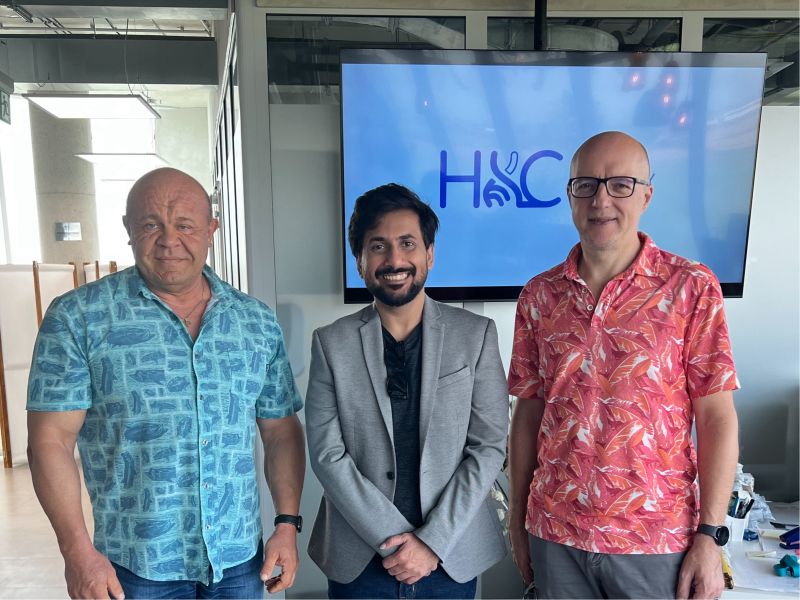
I had the wonderful chance to visit one of the clinics for https://t.co/lvPpZ8C9r3 (HLC) which is located in the beautiful city of Prague!
Since taking on the role of Director of Bioinformatics at HLC, I've been eager to explore the facilities and gain a deeper understanding of the assessments, diagnostic tools, and interventions provided to the patients whose data I've been analyzing and for whom I've been developing innovative N = 1 interventional trial approaches.
I must say, I was truly impressed by the cutting-edge work being carried out by the clinicians, all credit goes to František Zámola, @PetrSramekBench , Dr Ana Baroni MD PhD MSc and Morten Scheibye-Knudsen!
10 Gifts For a Yogi https://t.co/Vsphj18GN8
Excellent blog written by an excellent yogi 😍 Suspicious timing her writing this a month before Christmas but we'll let that slide








![agingdoc1's tweet photo. TranslAGE: A Comprehensive Platform for Systematic Validation of Epigenetic Aging Biomarkers
"Providing harmonized datasets, precomputed biomarker scores, and interactive data tools, TranslAGE establishes the first standardized, reproducible framework for benchmarking epigenetic aging biomarkers across populations, and accelerates the translation toward clinical use..."
https://t.co/82mSk8YWd3 [TranslAGE: https://t.co/oPdqMVDRSo 👨⚕️]](https://pbs.twimg.com/media/G34sXOPXkAAZLBX.jpg)