"Although people respond with moral outrage to taboo trade-offs, they often acquiesce when secular violations of sacred values (e.g. love, honor, justice) are rhetorically reframed as routine or tragic trade-offs."
https://t.co/Jrvl7EiG8k
Derek Parfit: "He wondered whether it was more likely that Continental philosophers would become more lucid or analytic philosophers less trivial. He decided that the second was more likely, and returned to Oxford."
https://t.co/GVBMOwhMdh
@infiniturtle (Maybe) growth is from low hanging fruit and the cracks of legibility haven't shown up yet. Or maybe there's more creative destruction than is typically perceived? Tangentially related: https://t.co/0MPpjVDsze
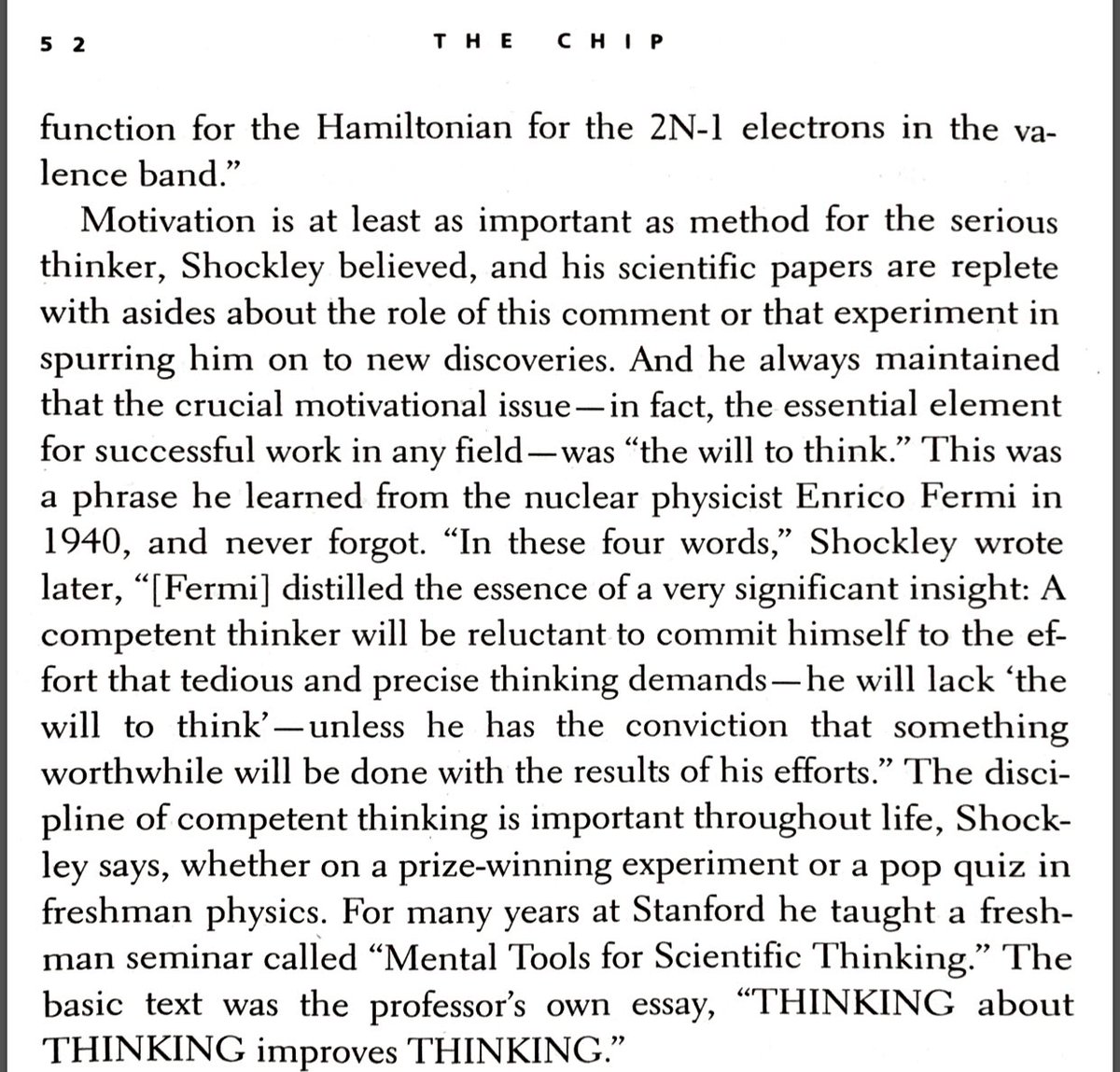
Ted Chiang on free will and the essence of definite optimism: it's only important that you believe.
Reminds me of @tylercowen's idea in Stubborn Attachments that all fruitful societies are based on some notion of faith.
5 • @Melanie_Xue's "Topics in Economic History". How have culture and institutions shaped modern growth in China? Focused and sequential readings.
https://t.co/QUPlQpMnM2
4 • @tylercowen's "Fall Industrial Organization". What you'd expect from MR. Articles and papers curated from every corner of the web.
https://t.co/vC07uXbCPH
And I love the conclusion, "Teach out of the exact same book as in the principles courses, but do so at a higher intellectual level. Just as a literary scholar might re-read Hamlet 50 times, each time gaining a deeper understanding."
Scott Sumner writes against teaching behavioral economics: "Our primary goal should not be to add new information, it should be to have people unlearn false ideas about the world." https://t.co/HhjkN6KS8y
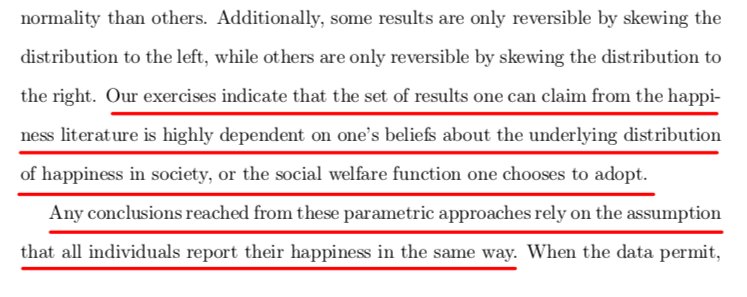
"The set of results one can claim from the happiness literature is highly dependent on one's beliefs about the underlying distribution of happiness in society, or the social welfare function one chooses to adopt."
https://t.co/1vcau6XZFk